Category: Current Affairs

Explore a daily current affairs blog, delivering timely news, insightful analysis, and comprehensive coverage. Stay informed and engaged with our curated content on trending topics and important events.

  • 1st and 2nd February 2025 current affairs

    1st and 2nd February 2025 current affairs

    We at Edusprint Academy are committed to bringing you the most relevant and updated 1st and 2nd February 2025 current affairs January 2025 current affairs curated from trusted and official sources. These updates are designed to keep you ahead in your exam preparation journey.

    Our comprehensive Current Affairs of 1st and 2nd February 2025 coverage aims to enhance your knowledge and boost your scores in Banking, Insurance, SSC, Railways, UPSC, and all State Government Exams. Explore our Current Affairs tailored to simplify your exam preparation.

    Edusprint Youtube Channel : Edusprint Academy

    National news

    India with 89 Sites has the largest number of Ramsar sites in Asia
    India with 89 Sites has the largest number of Ramsar sites in Asia

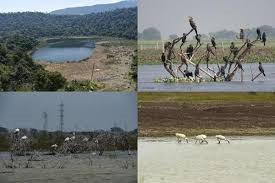
    India has recently added four new wetlands to the Ramsar Wetland Sites list, bringing the total number of Ramsar sites in the country to 89. This makes India the third-largest country in the world in terms of Ramsar sites, after the United Kingdom (175) and Mexico (142). India leads Asia in the number of Ramsar sites, ahead of China (82 sites). Tamil Nadu has the highest number of Ramsar sites in India, with 20 sites.

    The four new sites are:

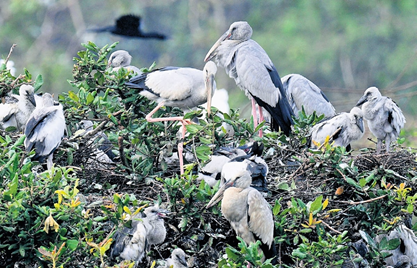
    1. Sakkarakottai Bird Sanctuary (Tamil Nadu): A man-made tank from 1321 A.D., home to 116 bird species, including some near-threatened species.
    2. Therthangal Bird Sanctuary (Tamil Nadu): Another man-made tank, home to 48 bird species, also important for migratory birds.
    3. Khecheopalri Wetland (Sikkim): A high-altitude lake surrounded by forest, hosting Trans-Himalayan migratory birds.
    4. Udhwa Lake (Jharkhand): A large lake connected to the Ganga River, home to 83 bird species, including endangered and near-threatened species.

    Wetlands are crucial ecosystems that provide flood mitigation, groundwater recharge, improve water quality, and serve as carbon sinks. The Ramsar Convention, established in 1971, aims to protect these vital areas globally. India ratified the convention in 1982 and has progressively added wetlands to the Ramsar list, starting with Keoladeo National Park and Chilika Lake in 1981.

    The largest Ramsar site in India is the Sunderbans, while the smallest is Renuka in Himachal Pradesh.

    Ramsar Convention and India
    • on 1 February 1982, India ratified the Ramsar Convention.
    • First Indian wetland sites- Keoladeo National Park (Rajasthan) and Chilika Lake (Odisha) in 1981.
    • Tamil Nadu has a maximum of 20 sites.
    • Largest Ramsar site: Sunderban of West Bengal.
    • Smallest Ramsar: Renuka in Himachal Pradesh.
    India Gate Lighted to Mark World Neglected Tropical Diseases Day 2025
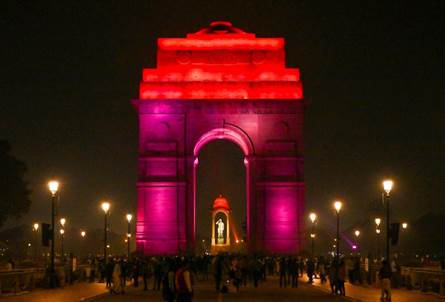
    The iconic India Gate was illuminated on 30th January 2025 in vibrant hues of purple and orange colours on the occasion of World Neglected Tropical Diseases Day. The World Neglected Tropical Diseases Day is observed every year since 2022 on 30th January to raise awareness about neglected tropical diseases. 

    On this occasion across the world, iconic landmarks are lit up to emphasize the importance of the world’s collective action to combat these debilitating diseases.

    Who organised the event in India?

    • The lighting of the India Gate event on the occasion of the World Neglected Tropical Disease was organised by the Union Ministry of Health and Family Welfare. 
    • The special focus during the event was on Lymphatic Filariasis and Visceral Leishmaniasis or Kala-Azar, diseases that threaten around 40 crore people in India.
    • The illumination of India Gate was accompanied by a street play focussed on these diseases and on the importance of eradicating these diseases through behavioral changes and mass participation in the Ministry’s initiatives like Mass Drug Administration rounds for Lymphatic Filariasis.

    About the World Neglected Tropical Diseases Day

    • The apex decision-making body of the World Health Organisation (WHO), the World Health Assembly passed a resolution on 31 May 2021 to observe 30th January as the World Neglected Tropical Diseases. 
    • The first World Neglected Tropical Disease Day was observed on 30th January 2022.
    • The day seeks to raise the awareness of global leaders and the public about the neglected tropical disease which threatens an estimated 1.5 billion people mainly in poor developing countries.

    Theme of the World Neglected Tropical  Disease Day 2025

    The theme of the 2025 World Neglected Tropical  Disease Day is Unite. Act. Eliminate.

    About the Neglected Tropical Disease   

    • According to the WHO, neglected tropical diseases refer to a diverse group of diseases caused by viruses, bacteria, parasites, fungi, and toxins.
    • These diseases are mainly prevalent among poor people in tropical areas and an estimated more than 1.5  billion people are affected by them.
    • Many of these diseases are vector-borne, have animal reservoirs, and are associated with complex life cycles. 

    About the India Gate 

    • The 42-meter-tall India Gate designed by Edward Lutyen is situated in the Indian capital city of New Delhi.
    • The foundation stone was laid by Prince Arthur, the Duke of Connaught in 1921.
    • It was inaugurated by Viceroy Lord Irwin on 12 February 1931.
    • The India Gate is dedicated to the British and Indian soldiers killed during the First World War. After Independence Amar Jawan Jyoti was constructed beneath India Gate in memory of the soldiers who died during the India-Pakistan war of 1971.
    • India Gate arch stands on the base of red Bharatpur stone and rises in stages to a huge moulding.
    Centre Allocates Rs 3,027 Cr for Disaster Mitigation
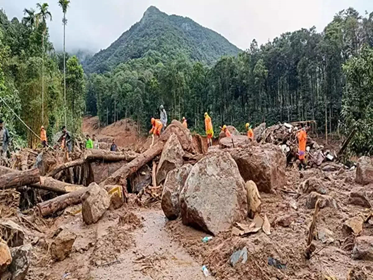
    A High-Level Committee (HLC), chaired by Union Home Minister Amit Shah, has approved a substantial allocation of Rs 3,027.86 crore for various disaster mitigation projects across different states in India. The committee, which includes key members such as Finance Minister Nirmala Sitharaman, Agriculture Minister Shivraj Singh Chouhan, and the Vice Chairman of NITI Aayog, reviewed and approved a range of projects aimed at addressing lightning safety, drought-prone regions, and forest fire management. These projects are intended to strengthen India’s disaster preparedness and reduce the impact of natural disasters.

    Total Financial Approval: Rs 3,027.86 crore approved for various disaster mitigation projects across multiple states.

    Committee Composition:

    • Chaired by Union Home Minister Amit Shah.
    • Includes Finance Minister Nirmala Sitharaman, Agriculture Minister Shivraj Singh Chouhan, and NITI Aayog Vice Chairman.

    Funding Source: The funds will be sourced from the National Disaster Mitigation Fund (NDMF).

    Approved Projects:

    1. Drought-Prone Areas:
    1. Total Cost: Rs 2,022.16 crore.
    2. Central Share: Rs 1,200 crore.
    3. Target: 12 drought-prone states.
    4. States Covered: Andhra Pradesh, Bihar, Gujarat, Jharkhand, Karnataka, Madhya Pradesh, Maharashtra, Odisha, Rajasthan, Tamil Nadu, Telangana, Uttar Pradesh.
    5. Lightning Safety:
    1. Total Cost: Rs 186.78 crore.
    2. Target: 10 states with high lightning-prone areas.
    3. States Covered: Andhra Pradesh, Bihar, Chhattisgarh, Jharkhand, Madhya Pradesh, Maharashtra, Meghalaya, Odisha, Uttar Pradesh, West Bengal.
    4. Forest Fire Risk Management:
    1. Total Cost: Rs 818.92 crore.
    2. Central Share: Rs 690.63 crore.
    3. Target: 144 high-priority districts.
    4. States Covered: Andhra Pradesh, Arunachal Pradesh, Assam, Chhattisgarh, Gujarat, Himachal Pradesh, Jharkhand, Karnataka, Kerala, Manipur, Maharashtra, Mizoram, Madhya Pradesh, Meghalaya, Nagaland, Odisha, Tamil Nadu, Telangana, Uttarakhand.

    Other Previously Approved Projects:

    • Urban Flood Risk Mitigation: Rs 3,075.65 crore for 7 major cities.
    • GLOF (Glacial Lake Outburst Flood) Risk Mitigation: Rs 150 crore for 4 states.
    • Landslide Risk Mitigation: Rs 1,000 crore for 15 states.

    Objective: The projects are aimed at strengthening India’s disaster preparedness and reducing the impact of natural disasters such as droughts, lightning, forest fires, floods, and landslides.

    International news

    EAM Jaishankar Chief Guest of the 1st Raisina Middle East Conference
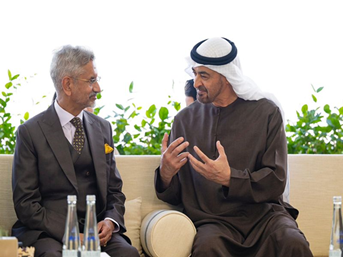
    The first Raisina Middle East Conference was held in the United Arab Emirates (UAE) capital city, Abu Dhabi, on 28 and 29 January 2025. External Affairs Minister Dr S. Jaishankar was the Chief Guest of the first Raisina Middle East Conference.

    • Dr S.Jaishankar was on a three-day official visit to the UAE on 27 and 29 January 2025. 
    • This was the third visit to the UAE by Dr Jaishankar since he was reappointed as the External Affairs Minister in June 2024.
    • The Raisina Dialogue is India’s premier conference on geopolitics and geoeconomics which brings together experts to discuss the most challenging issues facing the world community.
    • Organizing Body: The event was organized by the Union Ministry of Health and Family Welfare in India.
    • Focus on Specific Diseases: The special focus was on Lymphatic Filariasis and Visceral Leishmaniasis (Kala-Azar), which affect around 40 crore people in India.
    • Awareness Campaign: A street play accompanied the lighting, aiming to raise awareness about the diseases and encourage participation in initiatives like Mass Drug Administration for Lymphatic Filariasis.


    Niger Achieves Historic Milestone: First African Nation to Eliminate Onchocerciasis

    On January 30, 2025, the World Health Organization (WHO) announced that Niger has become the first country in the African region to officially eliminate onchocerciasis, also known as river blindness, as a public health threat. This remarkable achievement places Niger alongside just four other countries globally—Colombia, Ecuador, Guatemala, and Mexico—that have successfully halted the transmission of the parasitic disease. It marks a significant moment in public health, especially for sub-Saharan Africa, where onchocerciasis has long been a major concern. According to WHO, Niger’s success reflects the progress made in controlling and eliminating neglected tropical diseases.

    Global Context:

    • Niger joins only four other countries globallyColombia, Ecuador, Guatemala, and Mexico—that have successfully halted the transmission of onchocerciasis.

    What is Onchocerciasis (River Blindness)?

    • Cause: A parasitic worm transmitted by the bite of infected blackflies.
    • Symptoms: Can cause severe itching, skin rashes, and, in severe cases, blindness.
    • Impact: It is the second-leading infectious cause of blindness globally and affects millions in sub-Saharan Africa, especially rural communities near fast-flowing rivers where blackflies breed.

    How Niger Achieved the Milestone:

    • Start of Effort: Niger joined the WHO’s Onchocerciasis Control Programme (OCP) in 1976.
    • Initial Strategy: Focused on controlling blackfly populations through aerial insecticide spraying.
    • Ivermectin: Distribution of Ivermectin (donated by Merck & Co.) to reduce the parasitic burden.
    • Shift in Strategy (1995): African Programme for Onchocerciasis Control (APOC) introduced community-directed treatment with Ivermectin, involving local communities in the distribution process.
    • Progress: By 2014, the prevalence dropped dramatically from 60% to just 0.02%.

    Significance for Public Health in Africa:

    • Beacon of Hope: Niger’s success is a powerful example for other African nations dealing with neglected tropical diseases.
    • Global Recognition: WHO’s acknowledgment of Niger’s achievement underscores the importance of sustained, long-term public health efforts.
    • Inspiration for Other Countries: Niger’s victory serves as an inspiring model for other countries in Africa to replicate, showing that elimination of onchocerciasis is possible with the right strategies, international cooperation, and community involvement.

    What This Means for the Future:

    • Public Health Victory: This milestone reinforces that concerted efforts can make a significant difference in combating neglected tropical diseases.
    • Catalyst for Change: Niger’s example could catalyze further public health campaigns across Africa and other regions facing similar challenges.

    World health organisation:

    • Headquarters: Geneva, Switzerland
    • Founded: 7 April 1948
    • Director-General: Tedros Adhanom Ghebreyesus

    Economy news

    Union Budget 2025-26: Focus on Growth, Fiscal Discipline, and Social Welfare; Here’s a detailed analysis

    The Union Budget 2025-26 outlines a comprehensive framework for India’s economic growth, focusing on infrastructure, inclusive development, fiscal prudence, and job creation. With a total expenditure of ₹50.65 lakh crore, the government aims to enhance various sectors, focusing on agriculture, MSMEs, infrastructure, and social development, while targeting a fiscal deficit of 4.4% of GDP.

    Key Focus Areas in the Budget:

    1. Agriculture & Rural Prosperity:

    • Programs: National Mission on High Yielding Seeds, Makhana Board to boost agricultural productivity.
    • Farmer Support: Enhanced credit through Kisan Credit Cards and missions promoting sustainable cotton farming and pulses production.

    2. MSME Support:

    • Revised MSME Classification: Updated limits for investment and turnover to encourage growth.
    • Credit Guarantees: Custom credit cards for up to 10 lakh micro-enterprises.
    • Focus on labor-intensive sectors such as footwear, leather, toy, and food processing industries.

    3. Infrastructure & Urban Development:

    • Urban Challenge Fund: ₹1 lakh crore allocated for city redevelopment and water management.
    • State Support: ₹1.5 lakh crore allocated for capital expenditure, including interest-free loans.

    4. Technological & Educational Advancements:

    • Medical Education Expansion: Increased focus on AI and Atal Tinkering Labs.
    • Rural Connectivity: Broadband in rural schools and development of Centers of Excellence for skilling.

    5. Tax Reforms:

    • Income Tax Relief: Targeted reforms for the middle class, including deductions for senior citizens and changes to TDS for rent.
    • Simplified Tax Filing: Proposals for rationalizing tax structures and extending deadlines for filing updated returns.

    6. Financial Sector Reforms:

    • Increased FDI limits in the insurance sector.
    • Introduction of Grameen Credit Score and revamped KYC registry to improve rural credit access.

    Government Revenue Sources:

    1. Corporation Tax: 17% of total revenue
    2. Income Tax: 22% (includes Securities Transaction Tax)
    3. Customs Duty: 4%
    4. Union Excise Duties: 5%
    5. GST & Other Taxes: 18%
    6. Non-Tax Receipts: 9%
    7. Non-Debt Capital Receipts: 1%
    8. Borrowings & Liabilities: 24%

    Government Expenditure Breakdown:

    1. Total Expenditure: ₹50.65 lakh crore
    1. Revenue Expenditure: ₹39.44 lakh crore
    2. Capital Expenditure: ₹11.21 lakh crore
    3. Effective Capital Expenditure: ₹15.48 lakh crore
    4. Major Expenditures:
    1. Interest Payments: ₹12.76 lakh crore
    2. Defence: ₹4.91 lakh crore
    3. Pensions: ₹2.77 lakh crore
    4. Subsidies:
      • Food: ₹20,34,20 crore
      • Fertilizer: ₹16,78,87 crore
      • Petroleum: ₹12,100 crore

    Deficit Indicators:

    • Fiscal Deficit: ₹1,56,89,36 crore (4.4% of GDP)
    • Revenue Deficit: ₹5,23,846 crore (1.5% of GDP)
    • Primary Deficit: ₹2,92,598 crore (0.8% of GDP)

    Key Infrastructure and Development Allocations:

    • Rural Development: ₹2,66,817 crore
    • Education: ₹1,28,650 crore
    • Healthcare: ₹98,311 crore
    • Urban Development: ₹96,777 crore
    • Transport Infrastructure: ₹5,48,649 crore

    Major Government Schemes & Allocations:

    1. Agriculture & Rural Development:
    1. PM-KISAN: ₹63,500 crore
    2. Mahatma Gandhi NREGA: ₹86,000 crore
    3. PM Awas Yojana: ₹74,626 crore
    4. Education & Employment:
    1. PM Schools for Rising India: ₹7,500 crore
    2. Samagra Shiksha: ₹41,250 crore
    3. Skill Development: ₹13,560 crore
    4. Health & Social Welfare:
    1. Ayushman Bharat – PMJAY: ₹9,406 crore
    2. POSHAN 2.0: ₹21,960 crore
    3. Social Assistance Programs: ₹9,652 crore
    4. Infrastructure & Industrial Development:
    1. Jal Jeevan Mission: ₹67,000 crore
    2. PM Gram Sadak Yojana: ₹19,000 crore
    3. PLI Schemes: ₹2,445 crore

    Budget Allocations for Key Ministries:

    1. Ministry of Finance: ₹19.39 lakh crore
    2. Ministry of Defence: ₹6.81 lakh crore
    3. Ministry of Consumer Affairs, Food & Public Distribution: ₹2.15 lakh crore
    4. Ministry of Railways: ₹2.55 lakh crore
    5. Ministry of Road Transport & Highways: ₹2.87 lakh crore

    Other Key Ministry Allocations:

    • Ministry of Education: ₹1.28 lakh crore
    • Ministry of Health & Family Welfare: ₹99,858 crore
    • Ministry of Rural Development: ₹1.90 lakh crore
    • Ministry of Commerce & Industry: ₹18,446 crore

    Summit news

    India to Host BRICS Youth Entrepreneurship Meet in March 2025
    India is set to host the BRICS Youth Council Entrepreneurship Working Group Meeting from March 3 to 7, 2025, under the Ministry of Youth Affairs and Sports. The event, themed “Youth Entrepreneurship for Sustainable Growth,” will bring together approximately 45 youth representatives from the BRICS nations: Brazil, Russia, India, China, and South Africa. The focus of the discussions will be on enhancing youth entrepreneurship across these nations, fostering innovation, and creating sustainable growth pathways.

    Purpose of the BRICS Youth Entrepreneurship Meeting

    The key objectives of this meeting include:

    • Establishing the BRICS Youth Council’s Entrepreneurship Working Group as a permanent initiative.
    • Aligning entrepreneurship efforts across BRICS nations for better coordination and synergy.
    • Identifying new strategies for strengthening youth entrepreneurship and promoting global market participation.
    • Developing innovative engagement formats to enhance cooperation and collaboration within the BRICS framework.
    • Connecting youth entrepreneurs with global business opportunities, helping them expand their reach.

    The ultimate goal is to create a long-term roadmap for cooperation among BRICS countries, particularly in the youth entrepreneurship sector.

    India’s Preparations for the Meeting

    To ensure the active participation of Indian youth and to prepare for the upcoming event, the Department of Youth Affairs has organized eight run-up events across various universities and institutions in India. These events aim to:

    • Promote discussions on entrepreneurship among Indian youth.
    • Spread awareness about the BRICS Youth Council’s goals.
    • Provide a platform for young Indian entrepreneurs to showcase their ideas and innovations.

    Completed Run-Up Events:

    • Miranda House, Delhi University – January 15, 2025
    • Mata Sundri College for Women, Delhi – January 17, 2025
    • IIM Jammu, Jammu & Kashmir – January 24, 2025
    • NFSU, Gandhinagar, Gujarat – January 28, 2025

    Upcoming Run-Up Events:

    • KIIT, Odisha – February 4, 2025
    • IIT Guwahati, Assam – February 7, 2025
    • IISc, Bangalore, Karnataka – February 11, 2025

    These events feature panel discussions, youth-driven conversations, and idea-sharing sessions, encouraging participants to delve into global economic trends and the importance of BRICS as a multilateral platform.

    Significance of the BRICS Youth Entrepreneurship Meeting

    The BRICS bloc represents a substantial portion of the global population, GDP, and international trade:

    • 42% of the world’s population
    • 27% of global GDP
    • 16% of international trade

    The BRICS Youth Council, launched at the 2023 Youth Summit in South Africa, plays a crucial role in enhancing collaboration among youth in various sectors, including education, innovation, entrepreneurship, health, and volunteerism. The Entrepreneurship Working Group aims to harness the collective power of the youth across these countries to drive sustainable growth and innovation.

    This meeting will not only boost entrepreneurial spirit but also create a network of young entrepreneurs across BRICS nations, fostering cooperation that can contribute to solving global challenges, particularly in terms of economic development, sustainability, and innovation.

    State news

    Goa CM Inaugurates Sci-Fi Science Film Festival in Panaji

    The Goa Chief Minister, Pramod Sawant, inaugurated the Sci-Fi Science Film Festival of India in Panaji on January 30, 2025. The festival, organised by Vidnyan Parishad Goa, celebrates science, innovation, and the spirit of curiosity, and is being held in honour of Dr. M. Swaminathan, a prominent scientist. The festival’s theme this year, “Green Revolution,” aims to inspire young minds and promote the path to a sustainable future. It is a 4-day event that emphasizes the importance of science and innovation for India’s progress and encourages the youth to engage actively in scientific endeavors.

    Inauguration and Theme:

    • Date: January 30, 2025.
    • Inauguration: Goa’s Chief Minister Pramod Sawant inaugurated the Sci-Fi Science Film Festival in Panaji, Goa.
    • Theme: The theme for this year’s festival is “Green Revolution,” which focuses on promoting sustainability and inspiring the next generation to pursue scientific endeavors aimed at achieving a sustainable future.

    Festival Details:

    • Duration: The event spans 4 days, celebrating science, innovation, and cinema.
    • Focus: It emphasizes the importance of science and innovation in India’s progress and encourages the youth to engage in scientific pursuits.
    • Tribute to Dr. M. Swaminathan: The festival is dedicated to Dr. M. Swaminathan, renowned for his pivotal role in India’s Green Revolution and agricultural advancements.


    Special Mention:

    • Encouragement for Youth Participation: CM Sawant highlighted the role of such festivals in stimulating scientific curiosity among young minds, nurturing potential careers in science, and contributing to India’s vision of becoming a “Viksit Bharat” (Developed India).
    • Goa as a Hub for Science: Sawant pointed out that Goa is increasingly becoming a center for scientific research, home to leading institutions like IIT, NIT, NIO, and National Forensic Sciences University.

    Notable Dignitaries:

    • Dr. Soumya Swaminathan (scientist).
    • Harilal Menon (Vice-Chancellor of Goa University).
    • Prasad Rangnekar (President of Vidnyan Parishad Goa).

    Origin and Legacy: Festival’s Conceptualization: The festival was conceived by the late Manohar Bhai Parrikar and Jayantrao Sahasrabuddhe, driven by their passion for science and innovation.

    Role of Sci-Fi Films: The festival also underscores the significance of sci-fi films in igniting curiosity, enthusiasm, and a scientific temperament among students. These films can play an important role in shaping India’s growth trajectory by fostering a deeper connection with scientific ideas.

    Science and tech news

    Sunita Williams Sets New Spacewalk Record

    Indian-origin astronaut Sunita Williams has made history by setting a new record for the longest spacewalking time by a woman. With a total of 62 hours and 6 minutes of spacewalking across nine spacewalks, she surpassed the previous record held by Peggy Whitson, who logged 60 hours and 21 minutes. This new achievement occurred during her most recent extravehicular activity (EVA) alongside fellow astronaut Butch Wilmore on the International Space Station (ISS).

    Key Highlights of Williams’s Record-Breaking Achievement

    • Spacewalk Duration: The record-breaking spacewalk lasted 5 hours and 26 minutes, starting at 7:43 am ET and concluding at 1:09 pm ET.
    • Purpose of the Spacewalk: During this EVA, Williams and Wilmore removed degraded radio communications hardware and collected samples to check for microorganisms on the exterior of the ISS.
    • Spacewalking History: With this accomplishment, Williams now ranks fourth on NASA’s all-time spacewalking list.

    Extended Stay on the ISS

    • Launch and Mission: Williams and Wilmore launched aboard Boeing’s Starliner spacecraft in June 2024 for an eight-day mission. However, due to technical issues with the spacecraft, including helium leaks and thruster malfunctions, the Starliner was deemed unsafe for their return.
    • Return Plans: They are currently awaiting their return to Earth, which is now scheduled for late March 2025 aboard a SpaceX spacecraft.

    Williams’s Notable Achievements

    • Triathlon in Space: In 2012, Williams became the first person to complete a triathlon in space, using the ISS’s exercise equipment to swim, bike, and run in microgravity.
    • Previous Spacewalks: This recent spacewalk was her ninth, while Wilmore completed his fifth EVA.

    NASA’s Announcement

    • NASA confirmed the record through a post on X (formerly Twitter), expressing their continued monitoring of Williams and Wilmore’s health and mission progress as they await their return.
    • Williams’s achievement not only highlights her impressive spacewalking skills but also her dedication to scientific and technical tasks aboard the ISS. It’s a monumental moment for space exploration, especially for women in space.
    Indian Railways Launches ‘SwaRail’ SuperApp for Seamless Travel

    On January 31, 2025, the Ministry of Railways launched the ‘SwaRail’ SuperApp, aiming to consolidate various railway services into a single, user-friendly platform. Currently in its beta phase, the app is available for download on the Google Play Store and Apple App Store. The primary objective is to enhance user experience by integrating multiple services, thereby reducing the need for several separate applications.

    Launch Date and Availability:

    • Launch Date: January 31, 2025.
    • Platforms: Available for download on Google Play Store and Apple App Store.
    • Current Phase: Beta testing.

    Objective:

    • The SwaRail SuperApp aims to consolidate various railway services into a single platform to improve the user experience, eliminating the need for multiple apps.

    Services Offered by ‘SwaRail’:

    1. Ticket Bookings: Both reserved and unreserved ticket reservations.
    2. Platform and Parcel Bookings: Enables users to book platform tickets and manage parcel services.
    3. Train and PNR Inquiries: Real-time updates on train schedules and PNR statuses.
    4. Food Ordering: Allows passengers to order meals during their journey.
    5. Rail Madad: Platform to lodge complaints and seek assistance.

    Beta Testing Participation:

    • Users can download the app and participate in beta testing.
    • Existing Users of RailConnect or UTS Mobile App can use their current credentials.
    • New Users can easily register with minimal data entry.
    • Feedback is encouraged to improve the app before the full public release.

    Unique Features of ‘SwaRail’:

    1. Single Sign-On: One set of credentials for access to all services, including those from previous apps like IRCTC RailConnect and UTS Mobile App.
    2. Integrated Services: Multiple services combined, for example, PNR inquiries also show train information.
    3. User-Friendly Onboarding: Easy sign-up process using existing credentials.
    4. Secure Login Options: Options for numeric m-PIN and biometric authentication for secure and seamless login.

    Award news

    BCCI Annual Awards 2025: Honoring Legends and Rising Stars
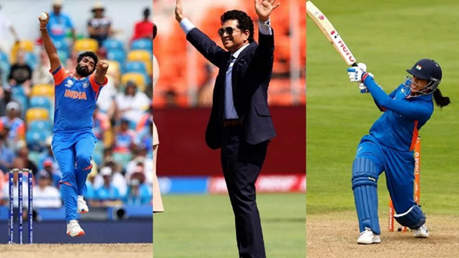
    The Board of Control for Cricket in India (BCCI) celebrated excellence in Indian cricket with its Annual Awards ceremony for 2025, recognizing outstanding achievements and contributions to the game.

    Key Award Winners:

    • Col. C. K. Nayudu Lifetime Achievement Award – Men: Sachin Tendulkar
      Recognizing his monumental contributions to Indian cricket, Tendulkar continues to be an icon of the sport.
    • Polly Umrigar Award – Best International Cricketer (Men): Jasprit Bumrah
      Honored for his exceptional performances, particularly in limited-overs formats.
    • Best International Cricketer (Women): Smriti Mandhana
      Acknowledging her consistent and stellar performances in women’s cricket.
    • Best International Debut (Men): Sarfaraz Khan
      Awarded for a remarkable debut at the international level.
    • Best International Debut (Women): Asha Sobhana
      Recognizing her impressive entry into the international cricketing scene.
    • BCCI Special Award: Ravichandran Ashwin
      Celebrating Ashwin’s continuous contributions and achievements in international cricket.
    • Highest Run-Getter in ODIs (Women): Smriti Mandhana
      A well-deserved recognition for her dominance in the format.
    • Highest Wicket-Taker in ODIs (Women): Deepti Sharma
      Honored for her brilliant bowling performances in ODIs.
    • Best Umpire in Domestic Cricket: Akshay Totre
      Recognized for his outstanding umpiring in domestic cricket.

    Domestic Cricket Awards:

    • M.A. Chidambaram Trophy – Highest Run-Getter in U-19 Cooch Behar Trophy: Kavya Teotia
    • M.A. Chidambaram Trophy – Highest Wicket-Taker in U-19 Cooch Behar Trophy: Vishnu Bhardwaj
    • Jagmohan Dalmiya Trophy – Best Woman Cricketer (Senior Domestic): Priya Mishra
    • Jagmohan Dalmiya Trophy – Best Woman Cricketer (Junior Domestic): Ishwari Awasare
    • Jagmohan Dalmiya Trophy – Highest Wicket-Taker in U-16 Vijay Merchant Trophy: Hemchudeshan Jeganathan
    • Jagmohan Dalmiya Trophy – Highest Run-Getter in U-16 Vijay Merchant Trophy: Lakshya Raichandani
    • MA Chidambaram Trophy – Highest Wicket-Taker in U-23 CK Nayudu Trophy (Plate Group): Neizekho Rupreo
    • MA Chidambaram Trophy – Highest Run-Getter in U-23 CK Nayudu Trophy (Plate Group): Hem Chetri
    • MA Chidambaram Trophy – Highest Wicket-Taker in U-23 CK Nayudu Trophy (Elite Group): P Vidyuth
    • MA Chidambaram Trophy – Highest Run-Getter in U-23 CK Nayudu Trophy (Elite Group): Aneesh KV

    Madhavrao Scindia Awards:

    • Highest Wicket-Taker in Ranji Trophy (Plate Group): Mohit Jangra
    • Highest Wicket-Taker in Ranji Trophy (Elite Group): Tanay Thyagarajan
    • Highest Run-Getter in Ranji Trophy (Plate Group): Agni Chopra
    • Highest Run-Getter in Ranji Trophy (Elite Group): Ricky Bhui (Andhra Pradesh)

    Lala Amarnath Awards:

    • Best All-Rounder in Domestic Limited-Overs Competitions: Shashank Singh (Chhattisgarh)
    • Best All-Rounder in Ranji Trophy: Tanush Kotian

    Best Performance in BCCI Domestic Tournaments: Mumbai

    Mumbai received this award for their outstanding performances across various BCCI domestic tournaments.

    These awards reflect the growth, talent, and commitment to excellence in Indian cricket at both international and domestic levels.

    BCCI:

    • President: Roger Binny
    • Headquarters: Mumbai
    • Founded: December 1928


    Sports news

    Govt extends financial support for Athletes of 9th Asian Winter Games
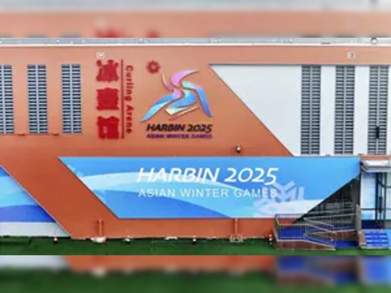
    For the first time, the government of India has extended full financial support to the Indian contingent participating in an Asian Winter Games under the Assistance to National Sports Federations (ANSF) Scheme. The Union Ministry of Youth Affairs and Sports has announced the inclusion of the Indian contingent participating in the 9th Winter Asian Games to be held in Harbin, China under its ANSF scheme. The Chinese city of Harbin is hosting the 9th Asian Winter Games from 7-14 February 2025.

    India’s Financial Support for Athletes:

    • Full Financial Support: For the first time, the government of India is providing full financial support to the Indian contingent under the Assistance to National Sports Federations (ANSF) Scheme.
    • Supported Events: Indian athletes participating in Alpine Skiing, Cross-Country Skiing, Figure Skating, Short Track Speed Skating, and Speed Skating (Long Track) will receive this financial support.
    • Contingent: India is sending an 88-member contingent to the 9th Asian Winter Games, including 59 athletes and 29 officials.

    About the 9th Asian Winter Games 2025:

    • Host City: Harbin, China, will host the games from 7-14 February 2025. This is Harbin’s second time hosting the event, having previously done so in 1994.
    • Events and Disciplines: Athletes from 45 countries will compete in 11 disciplines across 6 sports: biathlon, curling, ice hockey, skating, skiing, and ski mountaineering. The games will feature both men’s and women’s events as well as mixed events in certain sports.
    • Mascots: The mascots are Binbin and Nini, both tigers from Northeast China. Binbin represents ice sports, and Nini represents snow sports.
    • Slogan: “Dream of Winter, Love among Asia”.
    • Emblem: The emblem is called “Breakthrough”.

    About the Asian Winter Games:

    • The Asian Winter Games are organized by the Olympic Council of Asia and held every four years, modeled on the Winter Olympic Games.
    • First Games: The first games were held in Sapporo, Japan in 1986.
    • Japan’s Success: Japan is the most successful team in Winter Asian Games history, having won 397 medals (138 gold, 144 silver, 114 bronze).
    • India’s Performance: India has yet to win any medals at the Winter Asian Games.

    Olympic Council of Asia (OCA):

    • Overview: The OCA is the apex governing body for sports in Asia, affiliated with the International Olympic Committee (IOC).
    • Major Events: The OCA organizes the Summer Asian Games and Winter Asian Games, which are the continental multi-sport events for Asia.
    • Foundation: The organization was founded in 1949 as the Asian Games Federation and was renamed to the Olympic Council of Asia in 1981.
    • Headquarters: The OCA is headquartered in Kuwait.
    • Members: It has 45 member countries across Asia.
    • President: The current president of the OCA is Raja Randhir Singh.
    India successfully defends its ICC Women’s U19 T20 World Cup Title
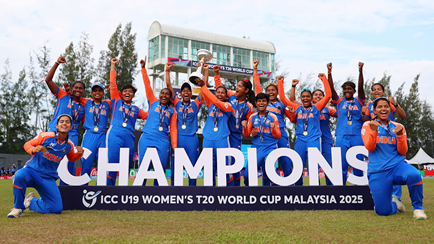
    The Indian women’s U19 cricket team demolished South Africa by nine wickets in the final of the 2nd ICC Women’s U19 T20 World Cup to retain their title, which was won two years back in South Africa. The final of the tournament was played on 2 February 2025 at the Bayuemas Cricket Oval, Kuala Lumpur Malaysia. This was the major title win for the Niki Prasad-led Indian team, having won the inaugural Asian Cricket Council Women’s U19 Asia Cup 2024 Title in Malaysia in December 2024.

    South Africa’s Performance:

    • South Africa’s Innings: South Africa, after winning the toss and choosing to bat, was all out for 82 runs in 20 overs.
    • Top Scorer for South Africa: Mieke van Voorst was the highest scorer with 23 runs.
    • Indian Bowling: Gongadi Trisha was the main bowler, taking 3 wickets for 15 runs.

    Awards:

    • Player of the Match (Final): Gongadi Trisha (India)
    • Player of the Tournament: Gongadi Trisha (India)

    Earlier Achievements:

    • Inaugural U19 Title: This was India’s second major title win after they also won the inaugural Asian Cricket Council Women’s U19 Asia Cup in December 2024 in Malaysia.
    Shrachi Rarh Bengal Tigers win men’s Hockey India League 2024-25 Title

    Shrachi Rarh Bengal Tigers won the 6th Men’s Hockey India League 2024-25 title, beating Hyderabad Toofans 4-3 in a tense final at a packed Birsa Munda International Hockey Stadium in Rourkela.Odisha on 1 February 2025. This was the first title win for the Shrachi Rarh Bengal Tigers, winning them a prize of Rs 3 crore. The runners-up Hyderabad Toofan won Rs 2 crore as prize money. The 6th men’s Hockey India league was held at the Birsa Munda Hockey Stadium in Rourkela, Odisha from 28th December 2024 to 1st February 2025.

    Key Players in the Final:

    • Jugraj Singh scored a hat-trick for Bengal Tigers, and Same Lane added a solitary goal.
    • Gonzalo Peillat scored twice for Hyderabad Toofans, and Amandeep Lakra scored once.

    Award Winners of the 6th Men’s Hockey India League:

    • Fairplay Award (Team): UP Rudras
    • Best Goalkeeper of the Tournament: Bikramjit Singh (Hyderabad Toofans)
    • Upcoming Player of the Tournament: Arshdeep Singh (Hyderabad Toofans)
    • Top Scorer of the Tournament: Jugraj Singh (Shrachi Rarh Bengal Tigers)
    • Player of the Tournament 2025: Sukhjeet Singh (Shrachi Rarh Bengal Tigers)

    About the Tournament:

    • The 6th Men’s Hockey India League took place from 28 December 2024 to 1 February 2025 in Rourkela, Odisha.
    • It marked the first title for Shrachi Rarh Bengal Tigers in this prestigious club-based tournament.

    Hockey India League Overview:

    • Organized By: The tournament is organized by Hockey India and includes participation from both Indian and foreign players.
    • History: The Men’s Hockey India League started in 2013 and ran annually until 2017. After a 7-year gap, the 6th edition was held in 2024-25 in Rourkela, Odisha.
    • The Women’s Hockey India League also had its inaugural edition, where the Odisha Warriors won the title by defeating Soorma Hockey Club 2-1 on 26 January 2025 in Ranchi.
  • 25th January 2025 current affairs

    25th January 2025 current affairs

    We at Edusprint Academy are committed to bringing you the most relevant and updated 25th January 2025 current affairs January 2025 current affairs curated from trusted and official sources. These updates are designed to keep you ahead in your exam preparation journey.

    Our comprehensive Current Affairs of 25th January 2025 current affairs January 2025 coverage aims to enhance your knowledge and boost your scores in Banking, Insurance, SSC, Railways, UPSC, and all State Government Exams. Explore our Current Affairs tailored to simplify your exam preparation.

    Edusprint Youtube Channel : Edusprint Academy

    National news

    India’s iSNR: Setting Global Standards in Sustainable Rubber

    On January 21, 2025, in Kottayam, Kerala, India unveiled the Indian Sustainable Natural Rubber (iSNR) initiative, aiming to establish new global benchmarks in sustainable rubber production. The launch event was graced by George Kurian, Minister of State for Fisheries, Animal Husbandry, Dairying, and Minority Affairs, and presided over by Thiruvanchur Radhakrishnan, Member of the Legislative Assembly. Notable attendees included G. Anil Kumar, Vice Chairman of the Rubber Board, and N. Hari, Member of the Rubber Board.

    Key Objectives:

    • Zero-Cost Certification: Free certification for farmers to encourage participation.
    • Global Compliance: Aligns with European Union Deforestation Regulation (EUDR) to meet international sustainability standards.

    Strategic Focus Areas:

    • Deforestation Prevention: Commitments to zero deforestation, supporting biodiversity and carbon sequestration.
    • Farmer Empowerment: Training and certification to improve yields, reduce environmental impact, and boost livelihoods.
    • Supply Chain Traceability: Ensures ethical and sustainable sourcing from farm to factory.

    Technology Partner:

    TRST01

    • Digital Monitoring: Real-time compliance with EUDR and sustainable practices.
    • Simplified Processes: Streamlined certification for farmers and exporters.

    Significance:

    • Promotes India’s adherence to the UN Sustainable Development Goals (SDGs) and the Paris Climate Agreement.
    • Establishes India as a leader in sustainable natural rubber production globally.
    International Conference Marks 125 Years of Solar Physics Research in India

    An international conference titled ‘Sun, Space Weather, and Solar-Stellar Connections’ was held in Bengaluru from January 20 to 24, 2025, to commemorate the 125th anniversary of the Kodaikanal Solar Observatory (KSO). Organized by the Indian Institute of Astrophysics (IIA), the event gathered over 200 solar physicists from India and abroad to discuss advancements in solar magnetism, solar-stellar connections, and space weather.

    Historical Significance of Kodaikanal Solar Observatory (KSO):

    Established: 1899

    Contributions:

    • Extensive photographic records of solar phenomena like sunspots, solar flares, and coronal mass ejections.
    • Pioneered solar astrophysics research in India.
    • Unique location and advanced equipment have significantly advanced global understanding of the Sun’s behavior and its influence on Earth.

    Key Highlights from the Conference:

    Digitization of Historic Records:

    • Prof. Abhay Karandikar (DST Secretary) emphasized the digitization of KSO’s archives.
    • Highlighted IIA’s contributions to ISRO’s Aditya-L1 mission and plans for the National Large Solar Telescope in Ladakh.

    ISRO’s Support:

    • A.S. Kiran Kumar (Former ISRO Chairman) stressed ISRO’s capabilities in supporting space-based solar research.
    • Invited proposals for new solar research instruments for future ISRO missions.

    International Collaboration:

    • Over 200 solar physicists participated, fostering international cooperation.
    • Notable presentations, including Prof. John Leibacher (National Solar Observatory, USA), praised KSO’s contributions to global solar research.

    Legacy and Future Directions:

    • KSO remains central to Indian astronomy, with significant contributions to solar astrophysics.
    • Ongoing projects like Aditya-L1 and the proposed National Large Solar Telescope aim to expand India’s leadership in solar physics.
    • The conference underscored India’s commitment to advancing solar research through innovation and international collaboration.
    “Hamara Samvidhan – Hamara Swabhiman” Campaign

    The “Hamara Samvidhan – Hamara Swabhiman” campaign, launched on January 24, 2024, by the Hon’ble Vice President of India at the Dr. B.R. Ambedkar International Centre in New Delhi, commemorates the 75th anniversary of India’s Constitution and its establishment as a Republic. This year-long initiative aims to deepen citizens’ understanding of the Constitution and promote legal empowerment across the nation.

    Campaign Objectives:

    • To deepen citizens’ understanding of India’s Constitution.
    • To promote legal empowerment across the nation, emphasizing the significance of legal awareness and citizens’ rights.

    Key Highlights of the Campaign:

    Nationwide Participation: Over 1.3 lakh citizens took the Panch Pran Pledge on the MyGov platform, committing to nation-building.

    Legal Awareness Initiatives: Under the Gram Vidhi Chetna initiative, law students organized legal awareness activities in adopted villages, reaching approximately 21,000 beneficiaries.

    Engagement with Marginalized Communities: Nari Bhagidari and Vanchit Varg Samman initiatives reached over 70 lakh individuals through webinars, empowering women and marginalized communities in legal and social matters.

    Youth Involvement: The Nav Bharat Nav Sankalp campaign conducted interactive competitions, inspiring youth to take responsibility for a better future and increasing their engagement in national development.

    Regional Events and Outreach:

    • Locations: Bikaner (Rajasthan), Prayagraj (Uttar Pradesh), Guwahati (Assam).
    • Attendance: Over 5,000 attendees at each regional event, with 8 lakh citizens engaged through sub-campaigns like Sabko Nyaya Har Ghar Nyaya, Nav Bharat Nav Sankalp, and Vidhi Jagriti Abhiyaan.
    • Concluding Event in Prayagraj (January 24, 2025):
    • Location: Parmarth Triveni Pushp, Arail Ghat, Prayagraj (coinciding with the Maha Kumbh Mela).

    Key Activities:

    • Release of Achievement Booklet: Documenting the campaign’s progress, including events, activities, and achievements throughout the year.
    • Launch of 2025 Calendar: Reflecting the campaign’s themes and initiatives.
    • Unveiling of Campaign Movie: Showcasing the year-long journey of the Hamara Samvidhan – Hamara Swabhiman campaign through audio-visuals.

    International news

    Trump Administration Officially Changes Name of Gulf of Mexico to Gulf of America

    Trump administration has officially changed the name of the Gulf of Mexico to the Gulf of America as part of a series of executive actions aimed at fulfilling campaign promises. This decision was announced by the Interior Department on a Friday, hours after President Donald Trump took office, marking the beginning of a new chapter for U.S. territorial names and symbols. Another prominent change was the renaming of Denali, Alaska’s towering peak, back to its former name, Mount McKinley. These actions reflect the administration’s focus on reaffirming the nation’s historical heritage and honoring the legacy of significant figures and places.

    Name Change to the Gulf of America:

    Symbolism and Nationalism:

    The name change reflects Trump’s administration’s focus on reasserting U.S. authority over its territories and resources. This change is seen as part of a broader nationalistic agenda to reaffirm American identity and honor the nation’s historical heritage.

    International Controversy:

    • The Gulf of Mexico, bordered by Mexico, the United States, and Cuba, has long been internationally recognized by this name.
    • The name change, while symbolic of U.S. sovereignty, has sparked debate, especially concerning its international implications.
    • Mexico has voiced strong concerns about the renaming, emphasizing that Gulf of Mexico is a historically recognized name used in international maritime navigation, trade, and cartography. The new title, they argue, could cause confusion in global communication and trade, especially considering the Gulf’s critical role as a key maritime route.

    U.S. Geological Survey Actions:

    • Despite Mexico’s objections, the U.S. Geological Survey has been directed by President Trump to update official U.S. government documents and maps to reflect the new title, Gulf of America.
    • However, it is expected that the international community will continue using the traditional name, Gulf of Mexico, as it remains entrenched in global cartography and maritime law.

    Other Symbolic Changes:

    Renaming of Denali to Mount McKinley:

    • In addition to renaming the Gulf of Mexico, the Trump administration also reversed the Obama-era decision to rename Mount McKinley (the highest peak in Alaska) back to its original name, Denali.
    • This move is part of the administration’s broader effort to celebrate American legacy and honor historical figures and places.

    Ranks and report news

    NITI Aayog Unveils Fiscal Health Index 2025 in New Delhi

    On January 24, 2025, NITI Aayog introduced the inaugural “Fiscal Health Index (FHI) 2025” in New Delhi. This comprehensive report evaluates the fiscal health of 18 major Indian states, aiming to guide policy reforms for sustainable and resilient economic growth.

    Key Highlights of the Fiscal Health Index 2025:

    Top-Ranked States:

    • Odisha leads the index with a score of 67.8, followed by Chhattisgarh (55.2) and Goa (53.6). These states have excelled in areas such as:
    • Revenue mobilization
    • Expenditure management
    • Debt sustainability

    States with Areas of Improvement:

    • Jharkhand has made significant strides in fiscal prudence and debt sustainability, showing progress compared to previous years.
    • Karnataka faces challenges due to weaker performance in areas like expenditure quality and debt management.

    Insights from Key Officials:

    • Dr. Arvind Panagariya (Chairman, 16th Finance Commission):
    • Emphasized that states should follow a stable fiscal path for balanced regional development and long-term sustainability.
    • Highlighted that the FHI provides a systematic approach to measuring fiscal performance at the state level, offering valuable insights into broader fiscal trends across India.

    Shri Suman Bery (Vice Chairman, NITI Aayog):

    • Stated that the FHI is not just a ranking but a tool for improvement, designed to help states assess and enhance their fiscal health.
    • Explained that the index serves as a framework to evaluate state economies’ financial well-being through key fiscal indicators.

    Shri B.V.R. Subrahmanyam (CEO, NITI Aayog):

    • Announced that the FHI report will be instrumental in helping policymakers make informed decisions.
    • Added that the report presents an objective picture of fiscal conditions across states, providing actionable insights to strengthen fiscal resilience and ensure sustainable development.


    Defence news

    Raksha Mantri Rajnath Singh flags-off ‘SANJAY – The Battlefield Surveillance System’

    Raksha Mantri Shri Rajnath Singh flagged off ‘SANJAY – The Battlefield Surveillance System (BSS)’ from the South Block, New Delhi. This indigenously developed system marks a major milestone in India’s defense technology, strengthening the surveillance capabilities of the Indian Army. SANJAY is designed to enhance battlefield transparency, improve situational awareness, and optimize intelligence collection, thus transforming the battlefield in the era of modern warfare.

    Key Features and Functions:

    Purpose:

    • Enhances battlefield transparency and situational awareness.
    • Strengthens Intelligence, Surveillance, and Reconnaissance (ISR) capabilities.

    Functionality:

    • Integrates inputs from ground and aerial sensors.
    • Validates, de-duplicates, and fuses data to create a Common Surveillance Picture (CSP).
    • Transmits CSP over a secured Army Data Network and Satellite Communication Network.

    Capabilities:

    • Operates in conventional and sub-conventional military scenarios.
    • Detects intrusions along India’s land borders.
    • Provides real-time battlefield insights for better decision-making.

    Technological Highlights:

    Centralized Web Application:

    • Supplies critical data to Command and Army Headquarters.
    • Integrates with the Indian Army’s Decision Support System, enabling strategic analysis.

    Significance in Defense:

    Operational Efficiency:

    • Offers a seamless, real-time view of the battlefield to commanders.
    • Acts as a force multiplier by optimizing surveillance and intelligence.

    Indigenous Development:

    • Developed under the ‘Make in India’ and ‘Aatmanirbharta’ initiatives.
    • Represents India’s growing capability in designing and producing advanced defense technology.

    Investment: The SANJAY BSS has been developed with an investment of Rs 2,402 crore, reflecting India’s commitment to modernizing its defense infrastructure.

    Impact:

    • Strengthens India’s defense preparedness in the era of modern warfare.
    • Positions India as a leader in indigenous military innovation.
    Operation Sard Hawa: BSF Intensifies Vigil on Pakistan Border

    Ahead of Republic Day, the Border Security Force (BSF) has heightened its vigilance along the India-Pakistan border at Jaisalmer to prevent any potential infiltration attempts. The BSF has initiated a special operation named ‘Operation Sard Hawa’, starting on January 22, aimed at foiling infiltration efforts by taking advantage of the reduced visibility caused by the dense winter fog. The operation will continue until January 29, with a focus on strengthening security along the border during this critical period.

    Purpose:

    • To prevent infiltration attempts during the dense winter fog that reduces visibility.
    • Enhance vigilance along the border to ensure security ahead of Republic Day celebrations.

    Key Features of Operation Sard Hawa:

    Season-Specific Focus:

    • Designed to counter low visibility challenges caused by winter fog.
    • Complements Operation Garam Hawa, conducted in summer to address heat-related border security challenges.

    Enhanced Security Measures:

    • Deployment of ultra-modern weapons and advanced technical instruments.
    • Increased patrolling and monitoring to detect unauthorized crossings.

    Technological Integration:

    • Use of advanced surveillance systems for effective monitoring in low-visibility conditions.
    • Ensures round-the-clock vigilance despite weather-related challenges.

    Significance:

    • Strengthens India’s border security during a critical period.
    • Demonstrates the BSF’s proactive approach to adapting security measures to seasonal conditions.
    • Reinforces India’s commitment to maintaining territorial integrity and national security.

    Science and tech news

    Reliance Industries to Build World’s Largest Data Centre in Jamnagar, Gujarat

    Reliance Industries, led by Chairman Mukesh Ambani, is set to build the world’s largest data centre in Jamnagar, Gujarat. This ambitious project is poised to be a game-changer in India’s digital infrastructure, especially in terms of its rapidly expanding artificial intelligence (AI) capabilities. With this massive investment, Reliance aims to help India become more competitive on the global AI stage while contributing significantly to the nation’s digital and technological growth.

    Strategic Importance of the Data Centre:

    Digital Transformation Backbone:

    • The Jamnagar data centre is crucial for India’s digital infrastructure, offering unprecedented storage, processing, and AI-driven capabilities.
    • Expected to serve as a central hub for AI applications, machine learning, and other advanced technologies, it will support India’s growing digital needs.

    Global AI Competitiveness: This facility will contribute significantly to India’s position in the global AI race, enhancing the country’s competitiveness by enabling advanced processing of vast datasets.

    One-Gigawatt Capacity: With a capacity of one gigawatt, the data centre will be the largest of its kind in the world, underlining its importance for India’s AI and digital aspirations.

    Reliance’s Partnership with NVIDIA:

    AI Technology Leadership:

    • NVIDIA, a global leader in AI technology, will provide Blackwell AI processors for the Jamnagar data centre.
    • These processors are designed to accelerate AI computations, enabling the data centre to efficiently handle complex AI workloads.

    Strategic Collaboration: The collaboration with NVIDIA highlights Reliance’s commitment to building cutting-edge AI infrastructure in India, reinforcing its vision to be at the forefront of the global AI landscape.

    Sports news

    Arshdeep Singh Becomes India’s Leading Wicket-Taker in T20Is

    In a remarkable achievement, Arshdeep Singh has overtaken Yuzvendra Chahal to become India’s highest wicket-taker in T20 Internationals. This milestone was reached during the first T20I against England on January 22, 2025, at Eden Gardens in Kolkata.

    Record-Breaking Performance:

    • Milestone: Arshdeep Singh overtook Yuzvendra Chahal to become India’s highest wicket-taker in T20 Internationals.
    • He achieved this feat by dismissing Ben Duckett of England, bringing his total to 97 wickets in 61 matches, surpassing Chahal’s tally of 96 wickets in 80 matches.
    • Arshdeep’s achievement came 19 matches earlier than Chahal, highlighting his impressive strike rate and consistency
    Madison Keys Wins Australian Open 2025 Women’s Champion

    Madison Keys, the 29-year-old American tennis star, has made history by clinching her first-ever Grand Slam title at the 2025 Australian Open. In a nail-biting final, she defeated two-time defending champion Aryna Sabalenka with a scoreline of 6-3, 2-6, 7-5 in Melbourne. This victory has cemented her position as one of the most remarkable players of her generation. Here’s an in-depth look at the journey of Madison Keys, her achievements, and her rise to prominence.

    Early Career and Professional Debut:

    • Professional Debut (2009): Madison Keys made her professional debut at just 14 years old.
    • ITF Circuit Titles: By 2010, she won her first title on the ITF circuit, followed by two more titles in 2012.

    Breakthrough Year (2013): Madison broke into the WTA Top 100 for the first time, finishing 2013 ranked 39th in the world, signaling her arrival as a rising star in women’s tennis.

    Science and tech news

    ISRO Set To Launch Its 100th Satellite On Jan 29

    India’s space agency, ISRO (Indian Space Research Organisation), is preparing to make history with the launch of its 100th satellite. This milestone mission is set to take place on January 29 from the Satish Dhawan Space Centre in Sriharikota, with the GSLV-F15 NVS-02 mission. This achievement marks a significant step for India in space exploration and satellite technology, reinforcing the country’s growing space capabilities.

    Launch Details and Mission Overview:

    • Rocket: The GSLV-F15 rocket, equipped with India’s Indigenous Cryogenic Stage, will carry the NVS-02 satellite into orbit.
    • Orbit: The satellite will be placed into a Geosynchronous Transfer Orbit (GTO).
    • Launch Pad: The mission will take place from the Second Launch Pad (SLP) at the Satish Dhawan Space Centre, ISRO’s main hub for space missions.

    Significance of GSLV-F15:

    • This is the 17th flight of the Geosynchronous Satellite Launch Vehicle (GSLV) and the 11th flight featuring the Indigenous Cryogenic Stage.
    • The cryogenic stage has become a cornerstone in India’s rocket propulsion technology, with this being the 8th operational flight using the cryogenic stage.

    ISRO:

    • Headquarters: Bengaluru
    • Founded: 15 August 1969
    • Chairman: Dr. V. Narayanan

    Appointment news

    Micheál Martin Reappointed as Irish PM

    Micheál Martin has been re-elected as Ireland’s Taoiseach (Prime Minister) following a parliamentary vote on January 23, 2025. This marks his second term, having previously served from 2020 to 2022. The vote concluded with 95 in favor and 76 against, leading to the formation of a coalition government comprising Fianna Fáil, Fine Gael, and independent lawmakers.

    Akhil Gupta Appointed as Chairman of Bharti AXA Life Insurance

    In June 2024, Akhil Gupta, Vice Chairman of Bharti Enterprises, was appointed as the new Chairman of Bharti AXA Life Insurance. With over 40 years of experience, Gupta has been instrumental in the growth of Bharti Airtel and has led strategic partnerships with investors such as Warburg Pincus, Temasek, KKR, Qatar Foundation Endowment, AIF, and Sequoia Capital. He has also overseen the successful public listings of Bharti Airtel, Bharti Infratel, and Airtel Africa.

    Ayushmann Khurrana Appointed Brand Ambassador for FICCI Frames 25th Anniversary Edition

    FICCI Frames, India’s premier global media and entertainment convention, is gearing up to celebrate its 25th anniversary this year. This significant milestone in the history of the event marks a special moment for the media and entertainment industry, and in recognition of this achievement, renowned Bollywood actor Ayushmann Khurrana has been appointed as the brand ambassador for this year’s edition of FICCI Frames.

    Ayushmann Khurrana’s Excitement and Commitment:

    Honour of Being Brand Ambassador:

    • Ayushmann Khurrana expressed immense pride and excitement at being named the first-ever Brand Ambassador for FICCI Frames during its 25th anniversary year.
    • Khurrana reflected on his journey, sharing that coming from Chandigarh to Mumbai with just dreams in his eyes, he never imagined such a remarkable path, where his work has contributed to shaping India’s pop culture.

    Commitment to FICCI Frames:

    • The actor emphasized his dedication to working closely with the FICCI team to promote innovation, disruption, and excellence in the media and entertainment industry.
    • Khurrana’s role will include championing disruption, celebrating industry innovations, and highlighting the achievements that the media and entertainment industry continues to deliver.

    About FICCI Frames:

    FICCI Frames is a global media and entertainment convention that serves as a premier platform to bring together industry leaders, innovators, and creators from across the globe. The 25th edition of this event promises to showcase India’s growing influence in the global media landscape and further solidify the country’s role as a hub of creativity and innovation in entertainment.

    With Ayushmann Khurrana as the brand ambassador, the 2025 edition of FICCI Frames is poised to be a memorable celebration, marking a milestone for the industry and setting the stage for its future growth.

    Important days

    National Voters’ Day 2025: Date, Theme, History and Significance

    India marks its 15th National Voters’ Day (NVD) today, January 25, 2025, celebrating the power and importance of every vote in strengthening the democratic fabric of the nation. This annual observance commemorates the establishment of the Election Commission of India (ECI) and highlights the critical role of voters in sustaining democracy.

    Theme for National Voters’ Day 2025: “Nothing Like Voting, I Vote for Sure”

    • The theme continues to emphasize participatory democracy and encourages citizens to take pride in their right and duty to vote.
    • It promotes the transformative power of each vote, urging voters at all levels (national, state, district, and local) to recognize the critical role of their participation in strengthening democracy.
    National Tourism Day 2025: Date, Theme, History and Significance

    National Tourism Day is celebrated annually on January 25 to promote responsible, sustainable, and accessible tourism across India. It is an occasion to showcase the country’s diverse tourist destinations, rich cultural heritage, and natural landscapes to the world, emphasizing the immense potential of India’s tourism industry.

    • Theme of National Tourism Day 2025:
    • “Tourism for Inclusive Growth”

    The theme for this year’s celebration highlights the following priorities:

    Cultural Exchange & Heritage Preservation:

    • National Tourism Day serves as a platform to showcase India’s 43 UNESCO World Heritage Sites, natural landscapes, and the diverse cultural heritage of the country.
    • Fosters international understanding and cultural exchange, positioning India as a top global tourism destination.

    Economic Impact:

    • Tourism contributes significantly to India’s economic growth, creating jobs and driving regional development.
    • Supports the growth of small and medium-sized enterprises involved in the tourism industry, from handicrafts to hospitality services.

    History of National Tourism Day:

    Inception (1948):

    • The Government of India established a dedicated Tourism Department in 1948 with the goal to Preserve and promote India’s vast cultural heritage.
    • Make tourist destinations accessible and enjoyable for both domestic and international visitors.

    Ministry of Tourism’s Role:

    The Ministry of Tourism is responsible for:

    • Developing and promoting tourism across the country.
    • Designing policies to foster the growth of the tourism sector.
    • Enhancing tourism infrastructure to create memorable travel experiences.
    • Uttar Pradesh Foundation Day 2025: Celebrating 76 Years of Legacy
    Uttar Pradesh Celebrates 76th Foundation Day: A Journey of Cultural Heritage and Development

    Uttar Pradesh, India’s most populous state, commemorates its Foundation Day every year on January 24. This occasion reflects the state’s rich cultural heritage, remarkable contributions to India’s development, and its historical journey. In 2025, Uttar Pradesh celebrates its 76th Foundation Day, with grand events scheduled from January 24 to January 26 at Awadh Shilp Gram in Lucknow. Let us delve into the historical significance, achievements, and contributions of Uttar Pradesh on this momentous occasion.

    Historical Evolution of Uttar Pradesh

    Formation of United Provinces (1902):

    • Renamed from North-Western Provinces to the United Provinces of Agra and Oudh under British rule.
    • Administrative capital shifted from Allahabad to Lucknow, marking the region’s rise in cultural and political importance.

    Post-Independence Integration (1947–1950):

    • After independence, the United Provinces became an administrative unit.
    • Princely states like Tehri Garhwal and Rampur were merged in 1949.
    • Officially renamed Uttar Pradesh on January 24, 1950, coinciding with the adoption of the Indian Constitution.

    Revival of Uttar Pradesh Day

    Initial Celebration (1989):

    First observed in 1989 but discontinued due to political opposition from the Samajwadi Party.

    Revival (2017):

    • Resumed by the Yogi Adityanath government.
    • Since then, celebrated annually with grand cultural and developmental programs.
    • Celebrations in 2025
    • Location: Awadh Shilp Gram, Lucknow
    • Duration: January 24–26
    • Purpose: To honor the state’s cultural heritage, historical journey, and contributions to India’s growth.

    Uttarpradesh:

    • Capital: Lucknow (Executive Branch)
    • Chief minister: Yogi Adityanath
    • Governor: Anandiben Patel
    Himachal Pradesh Statehood Day 2025: Celebrating a Rich History

    Himachal Pradesh (H.P.) celebrates its Statehood Day on 25th January every year, marking the day when it officially became the 18th state of the Indian Union in 1971. On this occasion, the Prime Minister of India extended greetings to the people of H.P., acknowledging its unique cultural and historical heritage.

    Historical Background of Himachal Pradesh

    During British Rule:

    • 1858: After Queen Victoria’s Proclamation, British territories in the hills, including Chamba, Mandi, and Bilaspur, came under British Crown control.
    • World War I (1914-18): The rulers of Himachal’s hill states supported the British Empire, contributing men and materials.

    Post-Independence History:

    • Formation as Chief Commissioner’s Province (1948): Himachal Pradesh was formed by merging 30 princely states.
    • Part C State (1950): Following the adoption of the Indian Constitution, Himachal became a Part C state under Article VII of the Constitution.
    • Integration of Bilaspur (1954): The princely state of Bilaspur merged with Himachal Pradesh.
    • Union Territory Status (1956): Following the State Reorganisation Commission’s recommendations, it became a Union Territory.
    • Expansion with Punjab Hill Areas (1966): Kangra and other hill areas of Punjab were merged into Himachal Pradesh.

    Statehood Achievement (1971):

    • December 18, 1970: The State of Himachal Pradesh Act was passed in Parliament.
    • January 25, 1971: Himachal Pradesh became the 18th state of India, completing its long journey towards full statehood.

    Significance of Himachal Pradesh’s Statehood Day

    • Cultural and Historical Heritage: Acknowledging Himachal Pradesh’s unique cultural legacy, the Prime Minister of India extended greetings to the state’s citizens on this occasion.
    • Economic Progress and Development: Over the years, Himachal Pradesh has evolved into a self-reliant and economically vibrant state, with successive governments focusing on its development.
    • Contribution to National Identity: Himachal Pradesh’s history is an essential part of India’s diverse and unified heritage, contributing significantly to the country’s progress.

    Himachal Pradesh:

    • Capitals: Shimla (Summer), Dharamshala (Winter)
    • Chief minister: Sukhvinder Singh Sukhu
    • Governor: Shiv Pratap Shukla
  • 26th and 27th January 2025 current affairs

    26th and 27th January 2025 current affairs

    We at Edusprint Academy are committed to bringing you the most relevant and updated 26th and 27th January 2025 current affairs curated from trusted and official sources. These updates are designed to keep you ahead in your exam preparation journey.

    Our comprehensive Current Affairs of 26th and 27th January 2025 coverage aims to enhance your knowledge and boost your scores in Banking, Insurance, SSC, Railways, UPSC, and all State Government Exams. Explore our Current Affairs tailored to simplify your exam preparation.

    Edusprint Youtube Channel : Edusprint Academy

    National news

    Nation celebrates 76th Republic Day at Kartavya Path

    On 26th January 2026, President Droupadi Murmu led the nation in celebrating the 76th Republic Day with a grand parade and cultural showcase at Kartavya Path (formerly Janpath) in New Delhi. Indonesian President Prabowo Subianto was the Chief Guest for the 2025 Republic Day celebration.
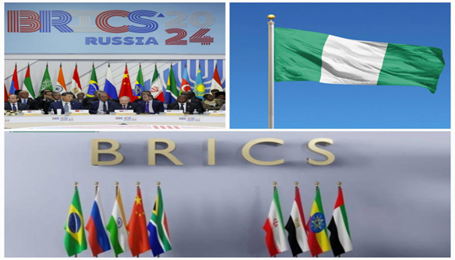
    • Republic Day has been celebrated annually on 26th January since 1950 to mark the adoption of the Indian Constitution.
    • The President of India hoists the National Flag during the Republic Day Parade, while the Union Ministry of Defence organizes and oversees the Republic Day festivities.

    Republic Day Celebration: Since 2022, Republic Day celebrations in New Delhi begin on 23rd January and continue until 30th January. 23rd January is commemorated as Parakram Diwas, honoring the birth anniversary of Netaji Subhas Chandra Bose. The first Parakram Diwas was celebrated in 2021.

    The main Republic Day event on 26th January features an impressive parade and cultural performances along Kartavya Path.

    Beating Retreat Ceremony: The Beating Retreat ceremony, marking the conclusion of Republic Day celebrations, is held on 29th January at Vijay Chowk, New Delhi. This ceremony includes musical performances by the bands of the Indian Armed Forces, such as the Army, Navy, Air Force, Central Armed Police Force (CAPF), and the Delhi Police. The President presides over the ceremony, which signifies the end of the Republic Day festivities. The tradition of “Beating Retreat” originates from a centuries-old military custom when troops would cease fighting at sunset, sheath their arms, and return to their camps. During the ceremony, the Armed Forces seek the President’s permission to return to their barracks. The President serves as the Commander-in-Chief of the Indian Armed Forces.
    Martyrs’ Day: Martyrs’ Day, observed on 30th January, marks the death anniversary of Mahatma Gandhi and officially concludes the Republic Day celebrations.

    Highlights of the 2025 Republic Day Parade

    • Lieutenant General Bhavnish Kumar, the General Officer Commanding of the Delhi Area, served as the Commander of the 2025 Republic Day Parade.
    • The parade featured a 152-member contingent from the Indonesian National Armed Forces and a 190-member Military Band from Indonesia’s Military Academy.
    • The first foreign military contingent to participate in the Republic Day parade was the French Army Band in the 67th Republic Day parade of 2016.
    • Assistant Commandant Aishwarya Joy M. led a 148-member all-women marching contingent from the Central Reserve Police Force (CRPF).
    • Deputy Commandant Manohar Singh Kheechee led the Border Security Force (BSF) Camel contingent.

    Tableaux and Theme: Each year, India showcases its historical, cultural, and developmental diversity through tableaux. The theme for the 2025 Republic Day tableaux, selected by the Union Ministry of Defence, was “Swarnim Bharat: Virasat aur Vikas.” 15 States/Union Territories and 10 Ministries/Departments of the central government presented their tableaux.

    Jayati Jaya Mamaḧ Bharatam: A grand cultural performance, “Jayati Jaya Mamaḧ Bharatam,” featured 5,000 artists from across the country. The performance, encompassing over 45 dances, spanned the entire length of Kartavya Path, ensuring a unified viewing experience for all attendees.

    Bharat Parv: Organized by the Union Ministry of Tourism, the Bharat Parv festival takes place from 26th to 31st January 2025, coinciding with the Republic Day celebrations at the Red Fort in New Delhi. During the festival, the tableaux displayed on Kartavya Path will be showcased, along with cultural performances and static military band displays.

    India Eyes 10,000 GI Tags by 2030, Goyal Announces

    Union Minister of Commerce & Industry, Shri Piyush Goyal, announced an ambitious target to achieve 10,000 Geographical Indication (GI) Tags by 2030. This announcement was made during the GI Samagam held in New Delhi, organized by the Department for Promotion of Industry and Internal Trade (DPIIT) in collaboration with the India Today Group. The Minister emphasized a whole-of-government approach to achieve this target, including the formation of a dedicated committee to oversee its progress. Currently, India has 605 GI tags.

    Shri Goyal highlighted the government’s initiatives under Prime Minister Narendra Modi’s leadership to strengthen India’s Intellectual Property Rights (IPR) ecosystem. These include initiatives like One District One Product (ODOP) and the Anusandhan National Research Foundation Fund. He emphasized the dual focus of “Vikas bhi aur Virasat bhi” (Development along with Heritage), stressing the importance of promoting and protecting GI-tagged products for both economic and cultural benefits.

    Key Highlights of the Announcement:

    GI Tag Target:

    • The government aims for 10,000 GI tags by 2030, up from the current 605.
    • A dedicated committee will be established to oversee the implementation and progress of the GI tag target.
    • The approach will involve whole-of-government coordination to meet the target.

    Strengthening the IPR Ecosystem:

    • The number of authorized GI tag users has grown significantly from 365 to 29,000 in the past decade.
    • The number of patents granted has surged from 6,000 to 100,000 over the last 10 years.

    Promoting Indian Heritage Products:

    The government is focusing on promoting heritage products through initiatives like:

    • One District One Product (ODOP): Aimed at showcasing and promoting unique products from each district.
    • Anusandhan National Research Foundation Fund: Focused on promoting research and innovation, particularly in heritage and traditional sectors.
    Banke Bihari Temple Secures FCRA License to Accept Foreign Donations

    The Union Ministry of Home Affairs (MHA) has granted the Banke Bihari Temple in Vrindavan, Uttar Pradesh, a license under the Foreign Contribution (Regulation) Act (FCRA), allowing the temple to receive foreign funds. This approval comes after the intervention of a court, which led to the establishment of a management committee to oversee the temple’s operations. The committee had applied for the FCRA license, highlighting the temple’s significant foreign currency receipts and its desire to accept international donations.

    Background and Management Transition: Historically, the Banke Bihari Temple was managed privately by a family of priests. However, following legal proceedings, the court directed the formation of a management committee to handle the temple’s administration. This shift in management has enabled the temple to meet regulatory requirements, including the application for the FCRA license.

    FCRA License Details: The FCRA license allows the Banke Bihari Temple to accept foreign contributions, which will be utilized to support the temple’s religious and cultural activities. The approval from the MHA came after a detailed application process, including the required court approvals.

    Indore, Udaipur Join Global Wetland Cities Network

    Indore and Udaipur have achieved a significant milestone by becoming the first two cities from India to be included in the global list of accredited Wetland Cities under the Ramsar Convention on Wetlands. This recognition underscores India’s commitment to sustainable urban development and ecological conservation. Prime Minister Narendra Modi congratulated both cities, emphasizing the importance of balancing urban growth with environmental sustainability. The accreditation highlights the essential role of wetlands in providing ecological, social, and economic benefits, making them crucial for the sustainable development of urban areas.

    Key Highlights

    • Indore and Udaipur’s Recognition
    • Indore and Udaipur are the first Indian cities to be recognized under the Ramsar Convention on Wetlands.
    • Both cities were nominated by the Ministry of Environment, Forests, and Climate Change (MoEF&CC).

    Wetlands in Indore and Udaipur

    • Indore: Sirpur Lake, a Ramsar site, is significant for its role as a congregation area for water birds and is being developed as a bird sanctuary.
    • Udaipur: The city is surrounded by five major wetlands, including Pichola, Fateh Sagar, Rang Sagar, Swaroop Sagar, and Doodh Talai, which contribute to the city’s cultural identity, microclimate regulation, and overall ecological balance.

    Significance of Wetlands

    • Wetlands provide multiple benefits, including flood regulation, livelihood opportunities, and recreational values.
    • They are essential for ecological conservation and play a critical role in mitigating extreme climate events, enhancing the resilience of cities to climate change.
    ‘Samman Sanjeevani’ App Unveiled on National Girl Child Day

    On National Girl Child Day 2025, Haryana Cabinet Minister Shruti Choudhry launched the ‘Samman Sanjeevani’ app, aimed at improving the effectiveness of the ‘Mahila Evam Kishori Samman Yojana’. The initiative focuses on providing essential services, particularly sanitary napkins, to BPL (Below Poverty Line) women and girls aged 10 to 45. This app is part of the Haryana Government’s continuous efforts to ensure the timely and efficient delivery of welfare benefits to its citizens. The event also commemorated the 10th anniversary of the ‘Beti Bachao Beti Padhao’ scheme, a key initiative for women’s empowerment.

    Launch of the ‘Samman Sanjeevani’ App

    • The app helps track services provided under the ‘Mahila Evam Kishori Samman Yojana’.
    • It ensures that beneficiaries receive timely services, such as the distribution of sanitary napkins.
    • The app also collects data on all beneficiaries, offering updates on monthly benefits.
    • Services Under the ‘Mahila Evam Kishori Samman Yojana’
    • Sanitary napkins are provided to BPL women and girls between the ages of 10-45.
    • These benefits are distributed through Anganwadi centers and schools.

    Purpose of the App

    • The app helps ensure the timely delivery of services to beneficiaries.
    • It aims to streamline program administration, preventing any delays in service delivery.

    10th Anniversary of ‘Beti Bachao Beti Padhao’

    • The Women and Child Development Department is organizing various activities to mark the anniversary, including rallies, cultural events, recognition ceremonies, and campaigns focused on women’s empowerment.
    • Schoolgirls, successful women, and community groups are involved in these events to raise awareness about the importance of daughters.

    Minister’s Address: Minister Shruti Choudhry emphasized the importance of both the newly launched app and the ongoing ‘Beti Bachao Beti Padhao’ scheme. She highlighted the government’s commitment to empowering women and raising awareness about women’s rights, with a particular focus on the welfare of daughters.

    Summit news

    First Technology Dialogue 2025 held in IISc Bengaluru

    The inaugural edition of the Technology Dialogue took place at the Indian Institute of Science (IISc) in Bengaluru, Karnataka, on 24th January 2025. The event, held on 24th and 25th January 2025, was conducted in a hybrid format, with both virtual and in-person participation.

    The Technology Dialogue aims to bring together senior policymakers, industry leaders, scientists, and scholars to discuss critical issues related to technology, including India’s international engagements in the tech domain.

    The opening session was addressed virtually by Dr. Jitendra Singh, Minister of State (Independent Charge) for Science & Technology, and Professor Ajay Kumar Sood, Principal Scientific Advisor to the Government of India.

    Organizers of the Technology Dialogue: The Technology Dialogue was organized by the Ministry of External Affairs, in partnership with the Office of the Principal Scientific Advisor to the Government of India and the Indian Institute of Science, Bengaluru. The event took place at the IISc campus in Bengaluru on 24th and 25th January 2025.

    Theme of the First Technology Dialogue: The theme of the event, “Exploring New Frontiers in Technology Diplomacy,” underscores the focus on technology policy and international partnerships.

    Objectives of the Technology Dialogue

    • The Technology Dialogue serves as a Track 1.5 Dialogue led by the Ministry of External Affairs. In diplomacy, Track 1.5 refers to dialogues where government officials participate unofficially, alongside non-governmental experts, to foster discussion and collaboration.
    • Science and technology have increasingly become strategic tools in international relations, driving cooperation between nations. The Technology Dialogue seeks to leverage this trend and advance India’s interests in the Science and Technology sectors.

    The dialogue focuses on key emerging technologies, including:

    • Artificial Intelligence
    • Quantum Technologies
    • Space
    • Semiconductors
    • Bioeconomy

    Ranks and report news

    Odisha tops the First Fiscal Health Index of the NITI Aayog

    Odisha has emerged as the top performer in the inaugural edition of the NITI Aayog’s Fiscal Health Index (FHI) 2025.

    The report, compiled by NITI Aayog, was officially released on 24th January 2025 in New Delhi by Dr. Arvind Panagariya, Chairman of the 16th Finance Commission, in the presence of Suman Bery, Vice Chairman of NITI Aayog, and BVR Subrahmanyam, CEO of NITI Aayog.

    Overview of the NITI Aayog’s Fiscal Health Index 2025

    • The report evaluates the fiscal health of 18 major states in India for the 2022-23 fiscal year, identifying areas for improvement and encouraging the adoption of best practices across these states.
    • This Fiscal Health Index offers an objective assessment through a composite index, enabling the comparison and benchmarking of fiscal health practices across states.

    Composition of the Fiscal Health Index

    The Index covers 18 states that together account for approximately two-thirds of the country’s public expenditure and one-third of its total revenue. The assessment is based on the fiscal performance during the 2022-23 financial year.

    The Fiscal Health Index consists of five major sub-indices:

    • Quality of Expenditure
    • Revenue Mobilisation
    • Fiscal Prudence
    • Debt Index
    • Debt Sustainability

    Additionally, the report includes nine minor sub-indices classified under:

    • Deprivation Index
    • Improvement Index
    • States Segregated Based on Performance

    Based on their performance in 2022-23, the 18 states have been divided into four categories:

    Achiever States (Rank 1-5):

    • Odisha
    • Chhattisgarh
    • Goa
    • Jharkhand
    • Gujarat

    Frontrunner States (Rank 6-10):

    • Maharashtra
    • Uttar Pradesh
    • Telangana
    • Madhya Pradesh
    • Karnataka

    Performer States (Rank 11-14):

    • Tamil Nadu
    • Rajasthan
    • Bihar
    • Haryana

    Aspirational States (Rank 15-18):

    • Kerala
    • West Bengal
    • Andhra Pradesh
    • Punjab

    About NITI Aayog

    The National Institution for Transforming India (NITI) Aayog was established by the government of India through an executive order.

    It officially came into existence on 1st January 2015, replacing the former Planning Commission.

    Leadership:

    • Chairman: The Prime Minister of India
    • Vice Chairman: Suman Bery
    • Chief Executive Officer (CEO): BVR Subrahmanyam

    NITI Aayog plays a pivotal role in promoting sustainable development, enhancing governance, and facilitating cooperative federalism in India. It works towards formulating strategies and policies that drive India’s economic and social progress.

    Odisha:

    • Chief minister: Mohan Charan Majhi
    • Capital: Bhubaneswar
    • Governor: Hari Babu Kambhampati

    State news

    Mohan Yadav Government in MP bans liquor sale in 17 religious towns

    In a significant move, the Mohan Yadav-led Bharatiya Janata Party (BJP) government in Madhya Pradesh has announced a ban on the sale of liquor in 17 religious towns across the state. This decision was made during a Cabinet meeting chaired by Chief Minister Mohan Yadav in Maheshwar town (also known as the city of Devi Ahilyabai) in Khargone district on 24th January 2025. The meeting was held to commemorate the 300th birth anniversary of Devi Ahilyabai.

    Liquor Sale Ban Details

    • In Madhya Pradesh, the sale of liquor is already prohibited within a five-kilometer radius on both sides of the Narmada river.
    • The liquor sale ban in religious towns will be implemented in phases.

    In the first phase, the sale of liquor will be banned in 17 religious towns, which include:

    • One municipal corporation
    • Six Nagar Palikas
    • Six Nagar Parishads
    • Six Gram Panchayats

    Constitutional Provision Regarding Liquor Ban:

    Article 47 of the Indian Constitution outlines the state’s responsibility to improve public health and raise the level of nutrition and the standard of living. It directs the state to work towards the prohibition of intoxicating drinks and drugs harmful to health, except for medicinal purposes. This provision empowers the government (central or state) to implement policies to either completely or partially ban the sale and consumption of liquor.

    States/Union Territories with Liquor Bans:

    Several states and union territories in India have implemented partial or complete liquor bans:

    • Gujarat was the first state to impose a total ban on the sale of liquor, a decision influenced by the principles of Mahatma Gandhi.
    • Currently, Gujarat, Bihar, Nagaland, and Mizoram have enforced a complete liquor ban.
    • In the Union Territory of Lakshadweep, the sale of liquor is banned except in a few designated islands.

    Madhya Pradesh:

    • Capital: Bhopal (Executive Branch)
    • Governor: Mangubhai C. Patel
    • CM: Mohan Yadav
    Uniform Civil Code Rollout Begins in Uttarakhand

    Uttarakhand has made history by becoming the first state in independent India to implement the Uniform Civil Code (UCC), effective from January 27, 2025. This landmark decision aligns with the BJP’s election promise and has been widely anticipated since the state’s 2022 assembly elections. The UCC seeks to establish uniformity in personal laws, ensuring equal rights and responsibilities for all citizens, irrespective of religion or community.

    Chief Minister Pushkar Singh Dhami has emphasized that the law’s goal is not to target any individual or group but to foster fairness, equality, and social harmony.

    Key Developments

    • Consultations and Expert Committees: The implementation of the UCC followed extensive consultations and the formation of expert committees. Comprehensive rules were also drafted to ensure the smooth rollout of the law.
    • The Desai Committee, led by retired Supreme Court judge Ranjana Prakash Desai, submitted a thorough UCC draft in February 2024.
    • The Uttarakhand assembly passed the bill, and President Droupadi Murmu gave her assent in March 2024.

    Key Points of Uttarakhand’s Uniform Civil Code

    • Historical Context: Uttarakhand becomes the first state in India to implement the UCC.
    • UCC’s Objective: It aims to standardize laws regarding marriage, divorce, succession, and live-in relationships across all religions, ensuring equality.
    • Chief Minister’s Statement: CM Pushkar Singh Dhami emphasized that the UCC is a part of the BJP’s vision for a developed, harmonious nation and is not aimed at any specific community.

    Key Provisions of the UCC

    • Equal Marriageable Age: The age for marriage will be the same for both men and women.
    • Uniform Divorce Laws: The grounds and procedures for divorce will be uniform for all religions.
    • Ban on Polygamy and ‘Halala’: The law bans polygamy and the practice of ‘halala’.
    • Mandatory Registration: All marriages and live-in relationships will have to be registered.
    • Gender Parity: The UCC ensures gender equality in matters of marriage, divorce, and succession.
    • Legitimacy of Children: Children born of void marriages will be considered legitimate.
    • Uttarakhand’s implementation of the UCC is expected to bring significant societal change by promoting equality and uniformity across different communities in the state.

    Uttarakhand:

    • Capitals: Dehradun (Winter), Bhararisen (Summer)
    • Chief minister: Pushkar Singh Dhami
    • Governor: Gurmit Singh
    Geo-Tagging Saves Kashmir’s Iconic Chinar Trees

    Kashmir’s iconic chinar trees, long regarded as symbols of the region’s cultural and natural heritage, are now under threat due to urbanization and infrastructure development. In response, the Jammu & Kashmir Forest Research Institute (JKFRI) has launched the ‘Digital Tree Aadhar’ initiative, aiming to provide each chinar tree with a unique digital identity. This innovative project combines modern technology to protect these trees, conserve biodiversity, and preserve the region’s cultural heritage, while also raising awareness about the importance of the chinar trees.

    Key Highlights of the Initiative

    About the ‘Digital Tree Aadhar’ Initiative

    • Purpose: The initiative aims to monitor, protect, and manage the health of every chinar tree in Kashmir.
    • Concept: Modeled after India’s Aadhaar system, each chinar tree is assigned a unique digital ID.

    Technology Used:

    • Geo-tagging with Geographic Information System (GIS)
    • QR codes for easy scanning by the public
    • Metal cards with barcodes for added accessibility

    Current Scope and Progress

    • Trees Tagged: So far, around 10,000 trees have been tagged with metal cards.
    • Chinar Census: A systematic survey started in 2021 has successfully geo-tagged 28,560 chinar trees to date.
    • Future Expansion: The initiative will expand to include chinars in Jammu’s Chenab Valley and the Pir Panjal Valley.
    • Top Trees: Notable chinars, including the world’s third-largest chinar (girth: 74 ft) in Ganderbal district, are also being documented.

    Significance and Benefits

    • Tourism: Visitors can scan QR codes to learn about the tree’s age, height, and historical significance.
    • Biodiversity Conservation: Chinars are vital habitats for bird species like crows and kites.
    • Carbon Sequestration: Chinar trees play a crucial role in absorbing carbon and helping mitigate climate change.
    • Cultural Heritage: These trees hold a deep connection with Kashmir’s folklore, literature, religious practices, and historical landmarks.

    Historical and Cultural Importance of Chinars

    • Origins: Chinar trees were introduced to Kashmir by Islamic preachers from Central Asia and Persia over 400 years ago.
    • Oldest Tree: The oldest recorded chinar is a 700-year-old tree in Budgam district, planted by Sufi saint Syed Qasim Shah.
    • Mughal Legacy: Chinars were extensively planted in Srinagar’s Mughal gardens such as Naseem Bagh, Nishat Bagh, and Shalimar Garden in the 16th century.
    • Religious Symbolism: Revered by both Hindus and Muslims, chinars form integral parts of shrines like Hazratbal and temples like Kheer Bhawani.
    • Bollywood Appeal: These majestic trees have also featured in numerous iconic Bollywood films, symbolizing romance and nostalgia.

    Banking news

    PNB Pioneers Real-Time Cybercrime Response with Clari5 Integration

    Punjab National Bank (PNB) has made a significant stride in fraud prevention and complaint management by becoming the first Indian bank to implement Clari5’s National Cybercrime Reporting Portal (NCRP) Integration Solution. This advancement is the result of a collaboration with the Indian Cyber Crime Coordination Centre (I4C). The system enables automated, real-time processing of cybercrime complaints across all retail banking channels, including Internet and Mobile Banking, ATMs, UPI, and NEFT/RTGS.

    Key Features of the Integration

    • Automated Lien Marking and Account Freezes: The system can automatically place holds on suspicious accounts and freeze them when necessary. This helps the bank prevent fraudulent transactions in a timely manner.
    • Real-Time Processing Across Channels: The solution processes complaints in real-time across various banking platforms, ensuring rapid response to potential fraud across digital channels.
    • Customizable Whitelisting: This feature allows the system to distinguish legitimate customer transactions from fraudulent ones, ensuring that valid transactions are not disrupted by fraud prevention measures.

    Impact on the Indian Banking Sector: PNB’s adoption of Clari5’s NCRP Integration Solution sets a new benchmark for the Indian banking sector. It is expected to inspire other banks to implement similar technologies to enhance fraud prevention and ensure customer protection. This initiative supports the broader goal of creating a safer and more secure financial ecosystem in India.

    Future Prospects: The successful implementation of this system at PNB lays a strong foundation for expanding this technology across other banks in India. As cyber threats continue to evolve, the integration of such advanced systems will be crucial in maintaining the integrity and security of India’s banking sector.

    Punjab national bank:

    • Headquarters: New Delhi
    • Founder: Dyal Singh Majithia
    • Founded: 19 May 1894, Lahore, Pakistan
    32.81% Surge in Complaints to RBI Ombudsman

    In 2024, the Reserve Bank of India’s (RBI) Integrated Ombudsman Scheme saw a significant 32.81% increase in bank customer complaints, totaling 9.34 lakh complaints. This rise highlights a growing concern regarding customer grievances in the banking sector. The complaints primarily centered around delays in service, errors in transactions, and inadequate redressal by banks, underscoring the need for improvements in customer service and grievance handling mechanisms.

    • Complaints Surge: Key Data
    • Total Complaints: 9.34 lakh (a 32.81% increase from the previous year)
    • Growth Rate: 32.81% surge in complaints received under the Ombudsman scheme

    Root Causes of the Rise

    • Transaction Delays & Errors: A large number of complaints stemmed from delays or mistakes in banking transactions.
    • Bank’s Response: The lack of timely and satisfactory responses from banks to customer issues contributed significantly to the rise in complaints.

    Past vs Present: The increase in complaints signals an urgent need for banks to improve their customer service strategies, especially in light of the growing prominence of digital banking services. Despite the RBI’s efforts, customer dissatisfaction remains a significant issue within the financial sector.

    RBI’s Role in Improving the Redressal Mechanism: The RBI Ombudsman system plays a vital role in resolving disputes between customers and financial institutions.

    • Digital banking concerns: A large portion of complaints in the previous year stemmed from digital banking services, reflecting the growing concerns about online banking as it continues to expand.
    • Addressing the Surge: Immediate Measures Needed

    Financial institutions are urged to enhance their internal grievance redressal systems to prevent further escalation of complaints. The surge in complaints emphasizes the need for stronger consumer protection and greater accountability within the banking sector.

    RBI:

    • Founded: 1 April 1935, Kolkata
    • Governor: Sanjay Malhotra
    • Headquarters: Mumbai


    Appointment news

    Jitender Pal Singh Appointed as India’s New Ambassador to Israel

    On January 24, 2025, the Government of India announced the appointment of Jitender Pal Singh as the next Ambassador to Israel. An Indian Foreign Service (IFS) officer from the 2002 batch, Singh is currently serving in the office of the External Affairs Minister and has previously led the Pakistan-Afghanistan-Iran division within the Ministry of External Affairs since 2020.

    Predecessor’s Transition

    • Singh succeeds Sanjeev Kumar Singla, who served as India’s Ambassador to Israel from 2019 until his recent appointment as Ambassador to France in October 2024.
    • Singla’s tenure in Israel was marked by significant diplomatic engagements, including high-level visits and the strengthening of bilateral relations.

    Israel:

    • Capital: Jerusalem
    • President: Isaac Herzog
    • Prime minister: Benjamin Netanyahu
    • Official language: Hebrew
    SSB Chief Amrit Mohan Gets Additional Charge as BCAS DG

    The Central Government has appointed Amrit Mohan Prasad, the Director General (DG) of Sashastra Seema Bal (SSB), to hold the additional charge as the Director General (DG) of the Bureau of Civil Aviation Security (BCAS). This decision, which has been approved by the Appointments Committee of the Cabinet, highlights the government’s trust in Prasad’s leadership abilities. The appointment is set for six months, starting from November 1, 2024, or until the regular incumbent joins, whichever comes first. This is a significant move considering the strategic importance of civil aviation security in India.

    P. Suriaraj Appointed Executive Director of Dhanlaxmi Bank

    P. Suriaraj has assumed the role of Executive Director at Dhanlaxmi Bank, bringing with him a wealth of experience from his tenure at Tamilnad Mercantile Bank Ltd. His appointment is expected to bolster the bank’s strategic initiatives and operational efficiency.

    Award news

    Padma Awards 2025- Get the Complete Winners List

    On the eve of the 76th Republic Day, in line with tradition, the Union Ministry of Home Affairs announced the names of the 2025 Padma awardees. The Bharat Ratna and Padma Awards are the highest civilian honors bestowed by the government of India to both Indian and foreign citizens, recognizing their distinguished contributions in areas where public service is involved.

    The award ceremony, where these prestigious honors are conferred, will be held in March/April 2025 at Rashtrapati Bhawan in New Delhi, with the President of India presiding over the function.

    2025 Padma Awards

    In 2025, a total of 139 Padma Awards will be presented, including a duo case, where the award is counted as one. These include:

    • 7 Padma Vibhushan
    • 19 Padma Bhushan
    • 113 Padma Shri

    Out of these awardees, 23 are women, 10 are Foreigners/Non-Resident Indians/Persons of Indian Origin/Overseas Citizens of India, and 13 are posthumous awardees.

    Though typically no more than 120 Padma Awards are conferred each year, exceptions are sometimes made.

    Civilian Awards Overview

    The Bharat Ratna and Padma Awards were instituted by the government of India in 1954. Initially, the Padma Award was called the Padma Vibhushan Award and was divided into three categories: Pahla Varg, Dusra Varg, and Tisra Varg. On 8th January 1955, the government renamed them as Padma Vibhushan, Padma Bhushan, and Padma Shri.

    • The Bharat Ratna is the highest civilian award in India, followed by the Padma Vibhushan, Padma Bhushan, and Padma Shri.
    • The Bharat Ratna and Padma awards are conferred annually, but they were suspended in 1978-79 and from 1993-1997.

    Who Decides the Award?

    The President of India receives the recommendation for the Bharat Ratna from the Prime Minister. Typically, no more than three people are awarded the Bharat Ratna each year.

    • For Padma Awards, the recommendations are made by the Padma Awards Committee, which is formed by the Prime Minister each year. The Cabinet Secretary heads the committee, which submits its recommendations to the Prime Minister and the President of India.
    • A person may receive a higher category Padma award only after at least five years have passed since their previous Padma award, although the Committee may relax this rule in exceptional cases.

    Categories of Padma Award

    The Padma Awards are divided into three categories based on hierarchy:

    • Padma Vibhushan (highest) – for exceptional and distinguished service.
    • Padma Bhushan – for distinguished service of a high order.
    • Padma Shri – for distinguished service.

    Is the Award a Title?

    • There has been controversy over whether the Bharat Ratna or Padma Award constitutes a title, as per Article 18 of the Indian Constitution. According to Clause 1 of Article 18, “No title, not being a military or academic distinction, shall be conferred by the State.”
    • In the Balaji Raghavan/S.P. Anand vs Union of India (1995) case, a 5-judge bench of the Supreme Court held that the Bharat Ratna and Padma Awards are not titles as per Article 18 and can be conferred by the government. However, the government has stated that these awards cannot be used as a suffix or prefix to the awardees’ names.

    What Does the Awardee Receive?

    Awardees are presented with a Sanad (certificate) signed by the President and a medallion. They are also given a small replica of the medallion, which can be worn during ceremonial or state functions. The names of the awardees are officially published in the Gazette of India on the day of the presentation ceremony.

    Here is the list of 2025 Padma Awardees categorized by their respective awards:

    Padma Bhushan Awardees (7)

    • Duvvur Nageshwar Reddy – Medicine (Telangana)
    • Justice (Retd.) Shri Jagdish Singh Khehar – Public Affairs (Chandigarh)
    • Mrs. Kumudini Rajnikant Lakhia – Art (Gujarat)
    • Lakshminarayana Subramaniam – Art (Karnataka)
    • M. T. Vasudevan Nair (Posthumous) – Literature and Education (Kerala)
    • Osamu Suzuki (Posthumous) – Trade and Industry (Founder of Maruti Suzuki, Japan)
    • Sharda Sinha (Posthumous) – Art (Bihar Kokila) (Bihar)

    Padma Bhushan Awardees (19)

    • A Surya Prakash – Literature and Education (Journalism, Karnataka)
    • Anant Nag – Art (Karnataka)
    • Bibek Debroy (Posthumous) – Literature and Education (Former Chairman, Prime Minister Economic Advisory Council, NCT Delhi)
    • Jatin Goswami – Art (Assam)
    • Jose Chacko Periappuram – Medicine (Kerala)
    • Kailash Nath Dikshit – Others (Archaeology, NCT Delhi)
    • Manohar Joshi (Posthumous) – Public Affairs (Maharashtra)
    • Nalli Kuppuswami Chetti – Trade and Industry (Tamil Nadu)
    • Nandamuri Balakrishna – Art (Telugu film actor, Andhra Pradesh)
    • P R Sreejesh – Sports (Ex Goalkeeper of Indian hockey team, Kerala)
    • Pankaj Patel – Trade and Industry (Gujarat)
    • Pankaj Udhas (Posthumous) – Art (Ghazal Singer, Maharashtra)
    • Rambahadur Rai – Literature and Education (Journalism, Uttar Pradesh)
    • Sadhvi Ritambhara – Social Work (Uttar Pradesh)
    • S Ajith Kumar – Art (Tamil Nadu)
    • Shekhar Kapur – Art (Film Director, Maharashtra)
    • Shobana Chandrakumar – Art (Tamil Nadu)
    • Sushil Kumar Modi (Posthumous) – Public Affairs (Bihar)
    • Vinod Dham – Science and Engineering (Father of Pentium Chip, United States of America)

    Padma Shri Awardees (113)

    • Adwaita Charan Gadanayak – Art (Odisha)
    • Achyut Ramchandra Palav – Art (Maharashtra)
    • Ajay V Bhatt – Science and Engineering (United States of America)
    • Anil Kumar Boro – Literature and Education (Assam)
    • Arijit Singh – Art (Hindi film singer, West Bengal)
    • Mrs. Arundhati Bhattacharya – Trade and Industry (Maharashtra)
    • Arunoday Saha – Literature and Education (Tripura)
    • Arvind Sharma – Literature and Education (Canada)
    • Ashok Kumar Mahapatra – Medicine (Odisha)
    • Ashok Laxman Saraf – Art (Maharashtra)

    Sports news

    Omarzai Crowned ICC Men’s ODI Cricketer of the Year

    Azmatullah Omarzai, Afghanistan’s dynamic all-rounder, had an outstanding 2024 season in One Day International (ODI) cricket, showcasing his exceptional skills with both bat and ball. His performances not only bolstered Afghanistan’s cricketing presence but also helped elevate the team’s status on the international stage.

    Key Highlights of Omarzai’s 2024 Season:

    ODI Performance:

    • Matches Played: 14
    • Runs Scored: 417
    • Wickets Taken: 17
    • Batting Average: 52.12
    • Bowling Average: 20.47
    Smriti Mandhana Named ICC Women’s ODI Cricketer of the Year 2024

    Smriti Mandhana had an exceptional year in 2024 in One Day International (ODI) cricket, solidifying her position as one of the leading players in the women’s game. Known for her stylish left-handed batting and ability to perform under pressure, Mandhana played a key role in India’s success across several series. She was not only the leading run-scorer in WODIs for the year but also broke multiple personal and team records.

    Key Highlights of Smriti Mandhana’s Remarkable 2024:

    Overview/Stats:

    • Runs Scored: 747 runs in 13 matches, making her the leading run-scorer in WODIs for the year.
    • Batting Average: 57.86, demonstrating her consistency and dominance in the 50-over format.
    • Strike Rate: 95.15, reflecting her aggressive yet calculated approach at the crease.
    • Centuries Scored: Four centuries in the year, setting a new record in women’s ODIs.
    • Boundary Count: 95 fours and 6 sixes, showcasing her ability to find the boundary consistently.
    Bumrah Crowned ICC Men’s Test Cricketer of the Year

    Jasprit Bumrah had an extraordinary year in 2024, cementing his position as one of the most dominant bowlers in Test cricket. After making a stellar comeback from a back injury in late 2023, Bumrah’s exceptional performances were crucial to India’s success in both home and away series. His consistency, wicket-taking ability, and record-breaking feats helped keep India in the running for the ICC World Test Championship and earned him the prestigious ICC Men’s Test Cricketer of the Year award for 2024.

    Key Highlights of Jasprit Bumrah’s 2024:

    Overall Performance:

    • Wickets Taken: 71 wickets in 13 matches, showcasing his vital role in India’s bowling attack.
    • Average: 14.92 (the lowest among bowlers with 70+ wickets in a calendar year), underlining his dominance and consistency.
    • Strike Rate: 30.1, demonstrating his ability to take wickets at regular intervals.
    • Economy Rate: 2.96, reflecting his tight and controlled bowling in the Test format.
    • Overs Bowled: 357 overs, showing his workhorse mentality and endurance.
    Jannik Sinner &Madison Keys wins 2025 Australian Open Singles Titles

    The 2025 Australian Open, the first Grand Slam of the tennis season, concluded with remarkable performances from Jannik Sinner and Madison Keys, both claiming their maiden and defending titles respectively. Here’s a detailed breakdown of the event:

    Winners of the 2025 Australian Open:

    Men’s Singles:

    • Winner: Jannik Sinner (Italy)
    • Runner-Up: Alexander Zverev (Germany)
    • Score: Sinner defeated Zverev 6-3, 7-6(4), 6-3.

    Significance: Jannik Sinner became the first Italian man to win 3 Grand Slam singles titles. This victory marked his second consecutive Australian Open title, successfully defending his 2024 championship.

    It was Sinner’s third Grand Slam title, having previously won the 2024 US Open as well.

    Historical Note: He became the first man to defend a maiden Grand Slam title since Rafael Nadal at the 2006 French Open.

    Women’s Singles:

    • Winner: Madison Keys (USA)
    • Runner-Up: Aryna Sabalenka (Belarus)
    • Score: Keys defeated Sabalenka 6-3, 2-6, 7-5.
    • Significance: This victory marked Madison Keys’ first Grand Slam title, having previously lost in the 2017 US Open final to Sloane Stephens.
    • It was a hard-fought match, and Keys became the first American woman to win the Australian Open singles title since 2015.

    Men’s Doubles:

    • Winners: Harri Heliovaara (Finland) and Henry Patten (Britain)
    • Runners-Up: Simone Bolelli and Andrea Vavassori (Both Italy)

    Women’s Doubles:

    • Winners: Katerina Siniakova (Czech Republic) and Taylor Townsend (USA)
    • Runners-Up: Su-Wei Hsieh (Taiwan) and Jelena Ostapenko (Latvia)

    Mixed Doubles:

    • Winners: Olivia Gadecki and John Peers (Both from Australia)
    • Runners-Up: Kimberly Birrell and John Patrick Smith (Both from Australia)

    Important days

    International Day of Clean Energy 2025 Observed on 26th January

    The International Day of Clean Energy on 26th January was declared by the United Nations General Assembly to raise awareness and drive action towards a just and inclusive transition to clean energy for the benefit of both people and the planet. This day highlights the dual challenge humanity faces: ensuring no one is left behind while also protecting the planet for future generations. Clean energy plays a vital role in addressing these challenges by reducing socio-economic inequalities and mitigating the harmful effects of climate change.

    The Role of Clean Energy in Tackling Global Issues

    • Energy Poverty: A Barrier to Socio-Economic Development
    • Despite technological advancements, 685 million people worldwide still lack access to electricity, with over 80% of them living in Sub-Saharan Africa. This lack of reliable energy affects critical areas of life, such as:
    • Education: Without electricity for lighting, computers, and communication, schools struggle to operate efficiently, limiting educational opportunities.
    • Healthcare: Clinics without electricity cannot store vaccines or perform vital surgeries, jeopardizing public health.
    • Economic Opportunities: Small businesses and industries, which rely on energy to operate and grow, face significant challenges in creating jobs and promoting economic development.
    International Customs Day 2025- Theme, History, Significance and Key Facts

    International Customs Day (ICD) is celebrated annually on January 26 to honor the crucial role played by customs officials and agencies in ensuring the smooth and secure flow of goods across international borders. This day highlights the importance of customs authorities in trade management, revenue generation, supply chain security, and in combating illegal trade. The observance is led by members of the World Customs Organisation (WCO), who actively participate in organizing events and showcasing their work to promote the objectives of efficient customs management.

    Theme for International Customs Day 2025:

    • The theme for International Customs Day 2025 is: “Customs Delivering on its Commitment to Efficiency, Security, and Prosperity.”
    • This theme emphasizes the commitment of customs authorities to enhance the efficiency of global trade operations, ensure security, and contribute to economic prosperity. The WCO encourages its members to adopt this theme as they demonstrate their efforts in creating robust and efficient customs processes that benefit international trade and global security.

    History of International Customs Day

    Foundation of WCO:

    • The origins of International Customs Day trace back to the establishment of the Customs Cooperation Council (CCC), which is now known as the World Customs Organisation (WCO). The CCC was formed in 1952 as an intergovernmental body aimed at improving the efficiency of customs administrations globally.
    • The inaugural session of the CCC took place on January 26, 1953, in Brussels, Belgium, with representatives from 17 founding member nations. This event marked the beginning of a global initiative to streamline customs processes and enhance the management of international trade.
    • Today, the WCO has grown to include 183 member states, collectively overseeing nearly 98% of the world’s trade. To commemorate the foundation of the WCO, January 26 was designated as International Customs Day.

    Significance of International Customs Day

    International Customs Day serves as a reminder of the essential role that customs agencies play in:

    • Facilitating global trade while ensuring the security of goods.
    • Preventing illegal trade and smuggling activities.
    • Contributing to national and global economic prosperity.
    • Ensuring supply chain integrity through effective customs management practices.
    National Geographic Day 2025- History, Significance and Celebrations

    National Geographic Day is celebrated every year on January 27 to honor the foundation of the National Geographic Society. The day not only celebrates the organization’s significant contributions to science, exploration, and environmental conservation, but also reminds us of the ongoing importance of preserving the natural world. Let’s explore more about the history and achievements of the National Geographic Society:

    History and Background of National Geographic Society

    Foundation of the National Geographic Society

    The National Geographic Society was founded on January 27, 1888, in Washington, D.C., USA, by a group of 33 visionaries, including Gardiner Greene Hubbard.

    The mission of the organization was:

    • To promote the study of geography, science, and humanity.
    • To raise awareness about Earth’s natural beauty and resources.
    • To encourage exploration and discovery to uncover the mysteries of the world.
  • 24th January 2025 current affairs

    24th January 2025 current affairs

    We at Edusprint Academy are committed to bringing you the most relevant and updated 24th January 2025 current affairs curated from trusted and official sources. These updates are designed to keep you ahead in your exam preparation journey.

    Our comprehensive Current Affairs of 24th January 2025 coverage aims to enhance your knowledge and boost your scores in Banking, Insurance, SSC, Railways, UPSC, and all State Government Exams. Explore our Current Affairs tailored to simplify your exam preparation.

    Edusprint Youtube Channel : Edusprint Academy

    National news

    Union Minister Piyush Goyal sets target of 10,000 GI tags by 2030

    Union Minister of Commerce and Industry Piyush Goyal has set an ambitious target to achieve 10,000 Geographical Indication (GI) Tags by 2030. Speaking at the GI Samagam event in New Delhi, Mr. Goyal outlined the government’s strategy to meet this goal through a whole-of-government approach, including the formation of a committee to oversee the implementation.

    Key Highlights

    Current Status: Number of GI Tags Issued to Date: 605 tags have been granted so far.

    Intellectual Property Ecosystem Growth:

    • GI Tags: Increase in authorized users of GI tags from 365 to 29,000.
    • Patents Granted: The number of patents granted has risen from 6,000 to 1 lakh in the past 10 years.

    Government’s Efforts Under Prime Minister Modi: The government has made concerted efforts to promote the Intellectual Property Rights (IPR) ecosystem, supporting the Prime Minister’s vision of ‘Vikas bhi aur Virasat bhi’ (Development and Heritage).

    Collaboration for Branding and Quality: Emphasis on improving branding for GI products, including collaboration with FSSAI and BIS to ensure better quality standards.

    India Inaugurates CSIR Mega Innovation Complex in Mumbai

    On January , 2025, Union Minister Dr. Jitendra Singh inaugurated India’s first-of-its-kind CSIR Mega Innovation Complex in Mumbai, marking a significant milestone in the nation’s innovation landscape. This state-of-the-art facility is designed to bolster start-ups, micro, small, and medium-sized enterprises (MSMEs), and industry stakeholders by providing high-end scientific infrastructure and expertise.

    Key Features of the Innovation Complex

    Infrastructure and Facilities:

    • Nine Floors of cutting-edge infrastructure.
    • 24 Incubation Labs equipped for specialized research.
    • Office Spaces and Networking Zones to encourage collaboration and innovation.
    • Tailored to support the growth of start-ups and MSMEs.

    Support for Regulatory Compliance:

    Bridges the gap between research and industry.

    Focus on regulatory studies, technology transfer, and addressing sector-specific challenges in areas like:

    • Healthcare
    • Chemicals
    • Energy
    • Materials Science

    Collaboration and Partnerships:

    • Fosters collaboration among start-ups, MSMEs, and CSIR’s network of researchers.
    • Supports the vision of Atmanirbhar Bharat (Self-Reliant India).

    Strategic Collaborations and Achievements

    Memoranda of Association:

    • Six MoUs signed between CSIR and institutes like IIT Bombay, iCreate, and NRDC.
    • These MoUs aim to strengthen industry-academic collaborations and boost innovation.

    Technology Transfers:

    • Fifty technology transfers from CSIR institutes to start-ups, MSMEs, and other institutions.
    • This promotes commercialization of research and enhances entrepreneurship.
    Centre Hikes MSP on Jute, Promises 66.8% Returns for farmers

    The Centre has made a significant decision to increase the Minimum Support Price (MSP) for raw jute by Rs 315, setting it at Rs 5,650 per quintal for the 2025-26 marketing season. This move, approved by the Union Cabinet, aims to provide farmers with a return of 66.8 per cent over the all-India weighted average cost of production, thus encouraging farmers to invest in jute cultivation.

    Increase in MSP for Raw Jute (2025-26)

    • New MSP: ₹5,650 per quintal, up by ₹315 from the 2024-25 rate of ₹5,335.
    • Return to Farmers: 66.8% over the all-India weighted average cost of production.
    • Historical Growth: MSP for raw jute has increased 2.35 times since 2014-15.
    • Impact: Expected to boost jute production and provide better financial incentives for farmers.

    2. Extension of the National Health Mission (NHM)

    Duration: Extended for an additional five years.

    Achievements:

    • Added 1.2 million healthcare workers between 2021 and 2022.
    • Played a critical role during the Covid-19 pandemic, supporting vaccination drives and public health campaigns.
    • Enhanced healthcare access in rural and underserved areas.
    • These decisions reflect the government’s commitment to supporting farmers and strengthening healthcare infrastructure in India.
    India Launches Diamond Imprest Authorization (DIA) Scheme to Boost Diamond Sector Exports

    In January 2025, the Department of Commerce (DOC) under the Ministry of Commerce and Industry (MoC&I) introduced the Diamond Imprest Authorization (DIA) Scheme, effective from April 1, 2025. The scheme aims to enhance the global competitiveness of India’s diamond sector by encouraging value addition and increasing exports.

    Key Features of the DIA Scheme

    • Duty-Free Import: Allows duty-free importation of Natural Cut and Polished Diamonds weighing less than 4 carats (25 cents), promoting value addition.
    • Export Requirement: Exports under the scheme must have at least 10% value added.
    • Eligibility: Diamond exporters with USD 15 million in annual exports and Two Star Export House status or higher are eligible for the benefits.

    Diamond Imprest License (DIL):

    • Validity: 1 year for import and 18 months for export.
    • Value: 5% of the average of the past 3 years’ exports, with a maximum value of USD 15 million per exporter annually.

    Import and Export Conditions:

    • Diamonds imported under the Actual User Condition.
    • Import/Export will be restricted to Chhatrapati Shivaji Maharaj International Airport, Mumbai (Maharashtra).

    Focus on MSME Competitiveness: Aimed at Micro, Small, and Medium Enterprises (MSMEs), providing a level playing field to compete against larger exporters.

    India Launches First-ever Survey on Edible Oil Consumption Patterns

    On January 9, 2025, the Ministry of Agriculture & Farmers Welfare (MOA&FW) launched the first-ever survey on the “My Gov” portal to assess edible oil consumption patterns across India. This initiative is crucial for supporting the effective implementation of the National Mission on Edible Oils-Oilseeds (NMEO-Oilseeds) and addressing the absence of recent data on edible oil consumption in the country.

    Key Details

    Objective:

    • To gather data on edible oil consumption patterns, aiding the formulation of policies for the NMEO-Oilseeds.
    • India is the world’s largest consumer and importer of edible oils, and accurate data is essential for managing supply and demand effectively.

    Survey Duration: The questionnaire-based survey runs from January 9 to February 23, 2025, for a period of 45 days.

    Industry Insight: Reports indicate that India’s per capita annual consumption (PCAC) of edible oils has surpassed 20 kg, significantly higher than the recommended limits of 12 kg by the Indian Council of Medical Research (ICMR) and 13 kg by the World Health Organization (WHO).

    About the Ministry of Agriculture & Farmers Welfare (MOA&FW)

    • Union Minister: Shivraj Singh Chouhan (Constituency: Vidisha, Madhya Pradesh)
    • Minister of State (MOS): Ram Nath Thakur (Rajya Sabha, Bihar)

    Significance: The survey will provide essential insights into edible oil consumption in India, enabling the government to design targeted interventions to balance consumption and promote healthier alternatives, while also supporting domestic oilseed production under the NMEO-Oilseeds mission.

    International news

    India and France Strengthen Maritime Security Cooperation

    In January 2025, India and France further bolstered their maritime security cooperation during the 7th India-France Maritime Cooperation Dialogue held in New Delhi. This dialogue focused on ensuring peace and security in the Indian Ocean Region (IOR), a vital area for global maritime trade.

    Key Points

    Co-Chairs:

    • Pavan Kapoor, Deputy National Security Adviser (NSA), Government of India.
    • Alice Rufo, Director General for International Relations and Strategy, Ministry for the Armed Forces, France.

    Maritime Security Focus:

    Both countries agreed to analyze threats to maritime security in the IOR, aiming to combat issues such as:

    • Piracy and armed robbery
    • Maritime terrorism
    • Contraband smuggling
    • Unreported and excessive fishing

    Ensuring Secure Sea Lanes: India and France committed to ensuring free and secure access to sea lanes of communication by enhancing their collaboration through maritime assets and organizations.

    Maritime Organizations Involved:

    • Information Fusion Centre-Indian Ocean Region (IFC-IOR) in Gurugram, India.
    • Regional Coordination Operations Centre (RCOC) in Seychelles.
    • Regional Maritime Information Fusion Centre (RMIFC) in Madagascar.

    Additional Context India’s Role: India assumes the chairmanship of the Indian Ocean Rim Association (IORA) in 2025 for the next two years, strengthening its leadership in regional maritime security.

    Significance: The India-France cooperation on maritime security enhances both nations’ capabilities to address regional challenges in the IOR and contributes to maintaining peace, security, and stability in this strategically important region.

    India Joins the Eurodrone Programme as Observer State

    In January 2025, India officially joined the Medium Altitude Long Endurance Remotely Piloted Aircraft System (MALE RPAS) or Eurodrone programme as an Observer State. This makes India the second Asia-Pacific country, after Japan, to obtain this status. The move allows India access to technical data and the opportunity to place orders for the Eurodrone aircraft.

    Key Details

    Approval: The Letter of Approval (LOA) was handed over by Joachim Sucker, Executive Administration Director of the Organisation for Joint Armament Cooperation (OCCAR), to Ajit Gupte, India’s Ambassador to Germany, in Berlin, Germany.

    Access and Participation:

    • India is granted access to technical data and can place orders for the Eurodrone aircraft.
    • However, India will not participate in decision-making related to the platform’s design, development, or distribution of workshare among participating countries.

    About OCCAR

    • Full Name: Organisation Conjointe de Coopération en matière d’Armement (OCCAR).
    • Role: An intergovernmental organization that manages and facilitates collaborative armament programs.
    • Director: Joachim Sucker.
    • Headquarters: Bonn, Germany.
    • Established: 1996.

    Banking news

    RBI’s Strategic Liquidity Infusion to Stabilize Money Markets

    To address liquidity constraints in the Indian banking system, the Reserve Bank of India (RBI) has infused ₹76,000 crore into the financial system through Variable Rate Repo (VRR) auctions. This measure aims to stabilize short-term interest rates, particularly the call money rates, which had been trading above the RBI’s repo rate of 6.5%.

    Crux of the Matter

    The RBI’s intervention aims to inject liquidity into the banking system, which will:

    • Lower the Weighted Average Call Rate (WACR).
    • Align overnight borrowing costs with the repo rate.
    • Stabilize short-term interest rates, preventing them from rising sharply above the current repo rate.

    Key Details

    Auction Details (January 20, 2025):

    • Bids accepted: ₹75,772 crore.
    • Cut-off rate: 6.51%.
    • The liquidity injected is scheduled to be reversed on January 21, 2025.

    Liquidity Deficit:

    • As of January 19, 2025, the banking system’s liquidity deficit stood at ₹1.93 lakh crore.
    • The average deficit in January was ₹1.61 lakh crore.

    Market Impact: On January 20, 2025, the WACR closed at 6.60%, indicating overnight borrowing costs were slightly above the repo rate due to the liquidity deficit.

    Expert Insights

    • Alok Singh, Group Head of Treasury at CSB Bank, noted that while daily VRR auctions help reduce volatility in overnight rates, they may not fully address the higher liquidity deficit in the long term.
    • These measures are seen as short-term interventions to stabilize the market but may require additional steps for durable liquidity.

    Historical Context: This intervention follows previous actions, including the March 2024 infusion of ₹1.16 lakh crore through three VRR auctions amidst tight liquidity conditions.

    Variable Rate Repo (VRR) – Key Points

    • Definition: A liquidity adjustment tool used by the RBI to inject short-term funds into the banking system.
    • Interest Rate: Determined through an auction, unlike the fixed-rate repo.
    • Purpose: To manage liquidity deficits and stabilize short-term interest rates like the call money rate.
    • Tenure: Typically short-term, often overnight or up to 14 days.
    • Mechanism: Banks bid for funds at varying interest rates, with the RBI accepting the lowest rates first.
    • Frequency: Conducted as needed, depending on market liquidity conditions.
    • Significance: Ensures market rates align with the RBI’s policy repo rate.

    Ranks and report news

    19th Global 500 2025 Report by Brand Finance

    According to the 19th Global 500 2025 report published by Brand Finance, Apple has retained its position as the world’s most valuable brand, with a brand value of USD 574.5 billion (bn). Tata Group (USD 28.6 bn) is the most valuable Indian brand for the 15th consecutive holding 60th spot in the list.

    Top Global Brands

    • Apple has retained its position as the world’s most valuable brand with a brand value of USD 574.5 billion.
    • Microsoft is ranked 2nd with a value of USD 461.1 billion.
    • Google holds the 3rd spot with a brand value of USD 413 billion.

    Strongest Brands in the World

    • WeChat is the strongest brand for the 2nd consecutive year, with a score of 95.2.
    • Nike follows in 2nd place with a score of 94.7.
    • Google ranks 3rd with a score of 94.3.

    Brand Distribution by Country

    • United States has the greatest number of brands, with 193 brands in the list.
    • China follows with 69 brands, and Germany ranks 3rd with 27 brands.
    • India is ranked 8th, with 15 brands making the list.

    Top Indian Brands

    • Tata Group remains the most valuable Indian brand for the 15th consecutive year, valued at USD 28.6 billion, ranked 60th globally.
    • Infosys is one of the top-performing IT brands globally, with the highest compound annual growth rate (CAGR) of 18.2% over the past 5 years.
    • HDFC Group, Life Insurance Corporation (LIC), and Reliance Group round out the top five Indian brands.

    Noteworthy Growth

    • HCL Technologies (HCLTech) has emerged as the world’s fastest-growing IT services brand in 2025.
    • e&, a telecommunications brand, is the fastest-growing brand in the world with an eight-fold increase in brand value, now valued at USD 15.3 billion.

    State news

    Mizoram Pioneers Property Card Distribution in Northeast

    Mizoram has become the first state in Northeast India to distribute property cards under the Survey of Villages Abadi and Mapping with Improvised Technology in Village Areas (SVAMITVA) scheme. On January 18, 2025, Governor Gen (Dr) VK Singh virtually participated in the distribution event from Raj Bhavan, Aizawl. Prime Minister Narendra Modi also attended, distributing over 65 lakh property cards to beneficiaries across 10 states and two Union Territories. Among these, 1,754 property cardholders from 18 villages in Mizoram received their cards.

    Participants:

    • Governor Gen (Dr) VK Singh participated virtually from Raj Bhavan, Aizawl.
    • Prime Minister Narendra Modi distributed over 65 lakh property cards to beneficiaries across 10 states and 2 UTs, including 1,754 cards to 18 villages in Mizoram.

    SVAMITVA Scheme Overview

    • Launch Date: April 24, 2020.
    • Objective: To provide legal documentation of property ownership in rural areas using drone and GIS technology.

    Significance:

    • Property cards serve as legal proof of ownership.
    • Usable as collateral for loans and other financial purposes.
    • Mizoram’s Implementation Journey

    MoU with Survey of India: Signed on July 8, 2021.

    Drone Surveys:

    • Began on December 9, 2021.
    • Completed by December 2, 2024, covering 319 villages across 9 districts.

    Property Card Distribution: Started on April 24, 2023.

    As of January 18, 2025: 2,909 cards distributed.

    Future goal: Provide 35,000 property cards.

    The Pangsau Pass International Festival 2025- Celebrating History, Culture, and Heritage in Arunachal Pradesh

    The Pangsau Pass International Festival (PPIF) 2025, held in Nampong, Arunachal Pradesh, is a vibrant celebration of the region’s rich cultural heritage and its historical significance during World War II. This year’s festival is particularly special as it coincides with the 80th anniversary of the war’s conclusion. Chief Minister Pema Khandu emphasized plans to bolster tourism by restoring World War II remnants in the region, underscoring the festival’s role in promoting economic growth, cultural exchange, and historical remembrance.

    Occasion: Celebrates the region’s cultural heritage and marks the 80th anniversary of World War II’s conclusion.

    Significance:

    • Promotes tourism, economic growth, and cultural exchange.
    • Highlights the historical importance of Pangsau Pass and the Stilwell Road.
    • Historical and Geographical Significance of Pangsau Pass

    Geographical Facts

    Location:

    • Situated on the India-Myanmar border, at an altitude of 3,727 feet (1,136 meters).
    • Forms a part of the Patkai Hills.

    Nearby Areas:

    • Pangsau Village (Myanmar) is located 2 km east of the border.
    • Close to Chaukan Pass, India’s easternmost point, in Changlang district, Arunachal Pradesh.

    Accessibility: One of the most accessible routes from the Assam plains into Myanmar.

    Historical Context

    • 13th Century: Used by the Ahoms, a Shan tribe, to enter Assam.
    • British Era: Surveyed for possible railway and road connections between India and Burma (Myanmar).

    No railway was constructed.

    World War II:

    • Played a key role in constructing the Stilwell Road (Ledo Road).
    • Known as “Hell Pass” due to the challenging terrain faced during the road’s construction.
    • Used to connect British India to Nationalist China, serving as a vital supply route for Allied forces against Japanese troops.

    Science and tech news

    Kerala Launches KaWaCHAM: India’s First Fully Integrated Disaster Warning System

    On January 21, 2025, Kerala Chief Minister Pinarayi Vijayan launched the Kerala Warnings, Crisis, and Hazard Management (KaWaCHAM) System, India’s first fully integrated disaster warning system. The system was inaugurated at the Kerala State Disaster Management Authority (KSDMA) headquarters in Thiruvananthapuram.

    Key Features of KaWaCHAM

    Objective:

    • To enhance disaster preparedness and response capabilities.
    • Issues alerts for extreme weather events such as cyclones and heavy rainfall.

    Development:

    • Designed by KSDMA with support from the National Disaster Management Authority (NDMA) and the World Bank (WB).
    • Part of the National Cyclone Risk Mitigation Project (NCRMP).

    Symbolism: “KaWaCHAM” means shield in Malayalam, representing protection.

    System Infrastructure

    Sirens and Emergency Operations:

    • A network of 126 siren-strobe light units and 93 emergency operation centers linked through a Virtual Private Network (VPN) and data center.
    • 91 sirens installed in Phase 1, with the rest to follow in subsequent phases.

    Geographical Deployment:

    • Thiruvananthapuram and Ernakulam have the highest number of sirens (13 each).
    • Kottayam, Idukki, and Wayanad have the fewest (5 each).

    Significance

    • Disaster Management: Improves the state’s ability to mitigate risks from cyclones and other extreme weather events.
    • Technological Advancement: Establishes Kerala as a leader in using advanced systems for disaster preparedness.
    India Launches World’s First Commercial Satellite for Space Situational Awareness (SSA)

    In January 2025, Digantara, a Bengaluru-based aerospace company, launched the Space Camera for Object Tracking (SCOT) satellite, marking a significant milestone as the world’s first commercial satellite dedicated to Space Situational Awareness (SSA). The project is backed by the Aditya Birla Group and the Small Industries Development Bank of India (SIDBI).

    Key Details

    Launch Details:

    • The SCOT satellite was launched aboard SpaceX’s Transporter-12 mission from Vandenberg Space Force Base in California, USA.
    • XDLINX Space Labs, another Indian space-tech startup, also launched its high-tech satellites aimed at monitoring both Earth and space objects.

    Purpose of SCOT:

    • Space Situational Awareness (SSA): As Earth’s orbits become increasingly crowded with satellites and space debris, SSA is critical to preventing collisions and ensuring the safety of spacecraft.
    • SCOT offers precise and reliable tracking capabilities, significantly improving safety in space by monitoring and tracking space objects.

    Significance

    • Space Safety: SCOT is a significant step toward enhancing global space safety. By providing critical data on space debris and satellite movements, the satellite plays a vital role in preventing potential collisions and ensuring secure operations in space.
    • Indian Space-Tech Growth: The successful launch of SCOT marks a key achievement for India’s space-tech sector, showcasing the country’s growing capabilities in Space Situational Awareness and satellite technology.

    About Digantara:

    • Chief Executive Officer (CEO)- Anirudh Sharma
    • Headquarters- Bengaluru, Karnataka
    • Established-2018
    India to deploy 1st human-operated underwater submersible

    India is preparing to deploy its first human-operated underwater submersible as part of the Deep Ocean Mission, a groundbreaking initiative aimed at exploring and harnessing underwater resources while advancing India’s blue economy. The submersible, capable of reaching depths of up to 500 meters, is expected to be launched this year, with plans to extend its operational depth to 6,000 meters by the next year.

    Key Objectives of the Deep Ocean Mission

    • Exploration of Underwater Resources: Focus on discovering critical minerals, rare metals, and marine biodiversity that have both economic and environmental significance.
    • Advancement of the Blue Economy: Promotes the sustainable use of ocean resources, benefiting India’s scientific community and economy.
    • Contributions to Fisheries and Conservation: Supports the sustainable fisheries sector and contributes to biodiversity conservation.
    • Environmental and Economic Benefits: The mission will help identify and harness underwater resources, providing long-term advantages for India’s economy and environmental protection.

    Significance of the Mission

    • Human-Operated Submersible: Marks a major step in underwater exploration and deep-sea research.
    • Alignment with Space Program: The Deep Ocean Mission runs parallel to the Gaganyaan space program, showcasing India’s advancements in both marine and space technologies.


    Sarla Aviation Unveils India’s First eVTOL Air Taxi ‘Shunya’

    Sarla Aviation, a Bengaluru-based aerospace startup, has unveiled ‘Shunya,’ India’s first electric vertical take-off and landing (eVTOL) air taxi prototype. This marks a significant advancement in urban air mobility, aiming to alleviate traffic congestion and pollution in Indian cities.

    Key Features of ‘Shunya’

    Design and Capacity:

    • Designed for short trips (20–30 km).
    • Accommodates up to 6 passengers with a maximum payload of 680 kg—the highest in its category.

    Speed and Efficiency: Maximum speed of 250 km/h, providing a fast alternative to traditional transport.

    Environmental Impact: Fully electric, promoting cleaner and sustainable urban transportation.

    Sports news

    India to Host FIDE Chess World Cup 2025

    India is set to host the FIDE Chess World Cup 2025, marking a historic milestone for the country as it takes on the prestigious role of hosting its first major international chess tournament since the 2022 Chennai Chess Olympiad. This event is poised to further solidify India’s growing influence in the global chess arena.

    Details of the Tournament

    • Dates: The FIDE Chess World Cup 2025 will take place from October 31 to November 27, 2025.
    • Format: The tournament follows a knockout format and will feature over 200 players from around the world.

    Qualification Importance:

    • The event serves as a crucial gateway to the Candidates Tournament, with three qualification spots available for the winners.
    • The Candidates Tournament ultimately determines who will challenge the reigning World Chess Champion.

    Reaffirmed Hosting Rights: Although there was initial uncertainty due to a retraction in the official announcement by FIDE, sources within the All India Chess Federation (AICF) confirmed that India has indeed secured the hosting rights, reaffirming the country’s commitment to hosting this prestigious event.

    Historical Context of India’s Chess Achievements

    R. Praggnanandhaa’s Remarkable Performance (2023):

    • In the 2023 FIDE Chess World Cup, India’s R. Praggnanandhaa made history by securing the silver medal after a narrow loss to Magnus Carlsen in the final.
    • His remarkable performance captivated chess enthusiasts globally and underscored India’s rising prominence in the world of chess.

    Viswanathan Anand’s Legacy:

    • Viswanathan Anand, one of India’s most iconic chess players, remains the only Indian to have won the FIDE World Cup, securing back-to-back titles in 2000 and 2002.
    • Anand’s victories helped elevate India’s reputation in the global chess community and cemented his legacy as one of the greatest chess players of all time.

    Significance of India’s Hosting

    • Hosting the FIDE Chess World Cup 2025 not only reinforces India’s growing stature in the chess world but also strengthens its role as a leader in global chess development.
    • The tournament will bring international attention to India’s chess culture, fostering growth at both the grassroots and professional levels.

    Award news

    Indian Short Film Anuja Nominated for the Oscars 2025

    Anuja, an Indian short film directed by Adam J. Graves and Suchitra Mattai, has earned a nomination for Best Short Film (Live Action) at the Oscars 2025. The film tells the compelling story of a nine-year-old girl, Anuja, and her sister Palak, as they navigate a life-changing opportunity that tests their bond, reflecting the universal struggles faced by girls around the world.

    Key Details

    • Directors: Adam J. Graves and Suchitra Mattai.
    • Backing: The film is produced by Guneet Monga, a two-time Academy Award winner, with support from actors Priyanka Chopra and Mindy Kaling.
    • Plot: Follows Anuja and Palak’s journey, offering a poignant look at the challenges young girls face globally.

    Other Nominated Films:

    • A Lien
    • The Last Ranger
    • I’m Not a Robot
    • The Man Who Could Not Remain Silent

    Oscars 2025 Nominations: The nominations were announced by Bowen Yang and Rachel Sennott after being postponed twice earlier in the month due to wildfires in Los Angeles.

    Significance: Anuja’s nomination marks a significant achievement for Indian cinema, highlighting the growing global influence of Indian films and the importance of supporting narratives that amplify universal stories.

    INCOIS Honored with Subhash Chandra Bose Aapda Prabandhan Puraskar-2025

    The Indian National Centre for Ocean Information Services (INCOIS) in Hyderabad has been selected for the Subhash Chandra Bose Aapda Prabandhan Puraskar-2025 in the Institutional Category, recognizing its exceptional contributions to disaster management.

    INCOIS’s Contributions

    • Indian Tsunami Early Warning Centre (ITEWC): Provides tsunami alerts within 10 minutes for India and 28 Indian Ocean countries.
    • High-Wave, Cyclone, and Storm Surge Forecasts: Protects coastal areas and maritime operations.
    • Cyclone Assistance: Facilitated evacuations during 2013 Phailin and 2014 Hudhud cyclones.
    • Search and Rescue Aided Tool (SARAT): Assists Coast Guard and Navy in locating lost individuals/objects at sea.
    • SynOPS Visualization Platform: Integrates real-time data for better coordination during extreme events.

    Recognition and Awards

    • Geospatial World Excellence in Maritime Services Award (2024)
    • Disaster Risk Reduction Excellence Award (2021)

    Conclusion: INCOIS, founded in 1999, plays a critical role in India’s disaster management by providing early warnings for ocean-related hazards and assisting in emergency response operations. The Subhash Chandra Bose Aapda Prabandhan Puraskar-2025 recognizes its significant impact in this field.

  • 23rd January 2024 current affairs

    We at Edusprint Academy are committed to bringing you the most relevant and updated 23rd January 2025 current affairs curated from trusted and official sources. These updates are designed to keep you ahead in your exam preparation journey.

    Our comprehensive Current Affairs of 23rd January 2025 coverage aims to enhance your knowledge and boost your scores in Banking, Insurance, SSC, Railways, UPSC, and all State Government Exams. Explore our Current Affairs tailored to simplify your exam preparation.

    Edusprint Youtube Channel : Edusprint Academy

    National news

    Geographical Indications (GI) Tags Granted to Products from Andaman and Nicobar Islands (December 2024)

    The Geographical Indications (GI) Registry, located in Chennai, Tamil Nadu, under the Department of Industry and Internal Trade (DPIIT), Ministry of Commerce and Industry (moc&I), granted GI tags to seven indigenous products from the Andaman and Nicobar Islands (A&N). This recognition underscores the cultural and traditional importance of these products and highlights the unique heritage of the Union Territory (UT).

    The Seven GI-Tagged Products:

    • Nicobari Mat (Chatrai-hileuoi)
    • Nicobari Hut (Chanvi Pati – Nyi hupul)
    • Nicobari Hodi Craft
    • Padauk Wood Craft
    • Nicobar Coconut
    • Nicobari Tavi-i-Ngaich (Virgin Coconut Oil)
    • Andaman Karen Musley Rice

    This is the first time in India that a single Union Territory has been granted GI tags for seven products in a single instance.

    Andaman and Nicobar Islands:

    • Capital: Port Blair
    • Governor: Incumbent Devendra Kumar Joshi


    Rubber Board’s New Initiatives to Boost India’s Rubber Industry (January 2025)

    In January 2025, during the platinum jubilee celebrations of the Rubber Act, 1947, and the Rubber Growers’ Conference in Kottayam, Kerala, the Rubber Board (RB), under the Ministry of Commerce and Industry (MoC&I), unveiled two significant initiatives: ISNR (Indian Sustainable Natural Rubber) and INR Konnect platform. These initiatives are designed to strengthen India’s position in the global rubber market and promote domestic rubber production.

    Key Initiatives:

    ISNR (Indian Sustainable Natural Rubber):

    • Goal: Align Indian rubber production with European Union Deforestation Regulation (EUDR) standards.
    • This initiative aims to ensure that India’s natural rubber production is sustainable and meets international environmental standards, enhancing India’s global competitiveness.

    INR Konnect Platform:

    • Type: Web-based platform.
    • Goal: Connect owners of untapped rubber plantations with adopters to enhance productivity.
    • The platform will facilitate the adoption of underutilized rubber plantations, encouraging productivity and optimizing rubber cultivation across India.

    About the Rubber Board (RB):

    • Executive Director (ED): M. Vasanthagesan
    • Headquarters: Kottayam, Kerala
    • Founded: 1947

    Role: The Rubber Board is responsible for promoting the cultivation and processing of natural rubber in India. It works to ensure the development of sustainable rubber production and serves as a key regulator in the industry.

    UNESCO and MeitY Partner on AI Readiness Assessment in India

    UNESCO’s South Asia Regional Office, in collaboration with India’s Ministry of Electronics and Information Technology (MeitY) and Ikigai Law, held a two-day consultation on AI Readiness Assessment Methodology (RAM) on January 16-17, 2025. The events took place at IIIT Bangalore and NASSCOM AI office. The primary goal was to align India’s AI ecosystem with global ethical standards and identify opportunities for responsible AI adoption.

    Objective: To develop actionable insights for ethical and responsible AI deployment using AI RAM, a diagnostic tool that assesses AI infrastructure, legislation, and stakeholder engagement. The initiative focuses on fostering trust and safety in India’s AI landscape.

    Key Highlights

    Diverse Stakeholder Engagement:

    • Participants included government officials, academia, industry leaders, and civil society.
    • Discussions centered on ethical principles like transparency, inclusiveness, and fairness.

    Focus on Startups:

    • The second day emphasized startups’ role in driving AI innovation.
    • Strategies for creating an innovation-friendly and responsible AI environment were explored.

    Expert Discussions: Dr. Mariagrazia Squicciarini from UNESCO emphasized the importance of RAM for assessing AI readiness and ensuring responsible growth.

    Alignment with India’s AI Initiatives

    • Supports INDIAai Mission with a ₹10,000 crore investment.
    • Focus on the Safe and Trusted AI pillar to promote ethical practices, indigenous frameworks, and robust governance in AI development.
    • Aims to democratize AI benefits while ensuring accountability and safety.

    UNSECO:

    • Founded: 16 November 1945, London, United Kingdom
    • Headquarters: Paris, France
    • Abbreviation: UNESCO
    • Director-General: Audrey Azoulay

    International news

    U.S. Withdraws from WHO and Suspends Foreign Aid

    On January, 2025, President Donald Trump signed an executive order initiating the United States’ withdrawal from the World Health Organization (WHO) and suspending all foreign aid for 90 days, sparking global concern and debate.

    Reasons for Withdrawal:

    • Mishandling of COVID-19: Criticism of WHO’s perceived leniency towards China’s initial response to the pandemic.
    • Lack of Independence: Concerns about the WHO being influenced by political pressures from member states.
    • Financial Disparities: The U.S. argued it was contributing disproportionately to the WHO’s budget compared to other nations, like China.
    Yala Glacier in Nepal Set to Vanish by 2040s Due to Climate Change

    The Yala Glacier, located in Nepal’s Langtang National Park, is a key site for studying the effects of climate change on the Himalayan cryosphere. Recent predictions indicate that the glacier could vanish by the 2040s, emphasizing the urgency of climate action.

    Historical Retreat and Current Status:

    Retreat:

    Scientific Significance: The glacier is listed in the Global Glacier Casualty List (launched in 2024), marking its critical status among endangered glaciers.

    Implications of Glacier Loss:

    • Water Resources: The Hindu Kush Himalaya region, warming twice as fast as the global average, relies on glaciers for freshwater, supporting 240 million people.
    • Glacial Lake Outburst Floods (GLOFs): Accelerated melting leads to the formation of unstable glacial lakes, posing catastrophic flood risks to nearby communities.

    Global and Regional Responses:

    International Efforts:

    • The United Nations designated 2025 as the International Year of Glaciers’ Preservation.
    • March 21 will now be observed annually as the World Day for Glaciers to raise awareness about glacier preservation.

    Regional Actions:

    India:

    • Launched the National Mission for Sustaining the Himalayan Ecosystem.
    • Established the Indian National Centre for Ocean Information Services (INCOIS) to monitor glacier-related events and issue GLOF alerts.

    Nepal:

    • Capital: Kathmandu
    • Currency: Nepalese Rupee
    • PM: KP Sharma Oli

    Agreement news

    India and USA Sign MoU to Boost Cybercrime Investigation Cooperation (January 2025)

    In January 2025, the Government of India (GoI) and the Government of the United States of America (USA) signed a Memorandum of Understanding (MoU) to enhance cooperation in cybercrime investigations. The MoU aims to strengthen security collaboration between the two nations and tackle interconnected issues such as terrorism, drug trafficking, human trafficking, money laundering, and other security challenges linked to cybercrime.

    Key Points of the MoU:

    Signing of the Agreement: The MoU was signed by Indian Ambassador Vinay Kwatra and Acting USA Deputy Secretary of Homeland Security Kristie Canegallo in Washington DC, USA.

    Key Objectives:

    • The agreement focuses on cybercrime investigations and aims to strengthen India-USA security cooperation.
    • Shared focus: Addressing cybercrime, terrorism, drug trafficking, money laundering, and human trafficking, which are often interconnected and cross-border issues.

    Implementation in India:

    In India, the Indian Cybercrime Coordination Centre (I4C) under the Ministry of Home Affairs (MHA) will oversee the implementation of the agreement.

    Implementation in the USA: In the USA, the Department of Homeland Security (DHS), along with its agencies like U.S. Immigration and Customs Enforcement and the Homeland Security Investigations Cyber Crimes Center (C3), will be responsible for executing the MoU.

    State news

    Chhattisgarh CM Launches Rs 10K Annual Aid Scheme for Labourers

    On January , 2025, Chhattisgarh Chief Minister (CM) Vishnu Deo Sai launched the ‘Deendayal Upadhyay Bhoomiheen Krishi Majdoor Kalyana Yojana’ in Raipur, Chhattisgarh. The scheme aims to provide financial support to landless agricultural labourers and other marginalized communities to enhance their income and improve their quality of life.

    Key Features of the Scheme:

    Financial Assistance: The scheme provides Rs 10,000 annually to landless agricultural labourers, including Baigas, Gunias, and other landless families in the state.

    Beneficiaries:

    A total of 5.62 lakh landless agricultural labourers across Chhattisgarh will benefit from the scheme.

    Total Allocation: Rs 562 crore has been allocated to support these beneficiaries.

    Inclusive Coverage:

    • The scheme also includes forest produce collectors, shepherds, carpenters, blacksmiths, cobblers, barbers, washermen, and other families involved in the Pauni-Pasari system.
    • Additionally, the scheme extends to tribal temple worshippers such as Pujari, Baiga, Gunia, and Majhi families in scheduled areas.

    Related Initiatives by CM Vishnu Deo Sai:

    • ‘Nagar Vikas Ke Sopan’ Program: CM Vishnu Deo Sai participated in the ‘Nagar Vikas Ke Sopan’ program in Raipur, during which he laid the foundation stone for 813 development works worth Rs 155.38 crore.
    • Inauguration of Works: The CM also inaugurated 70 works worth Rs 15.25 crore in various urban bodies across the state.
    • Water Supply Schemes: As part of the Amrit Mission-2.0, he laid the foundation stone for water supply schemes to be built at a cost of Rs 270 crore in 6 urban bodies.

    About Chhattisgarh

    • Chief Minister (CM): Vishnu Deo Sai
    • Governor: Ramen Deka
    • Capital: Raipur

    Ranks and report news

    India Slips to Third Place in Edelman Trust Barometer 2025 Rankings

    The Edelman Trust Barometer 2025, an annual survey by the global communications firm Edelman, provides insights into public trust levels in government, businesses, media, and NGOs. The survey revealed that India slipped one rank to third globally in terms of overall trust, despite its trust score remaining unchanged.

    Key Highlights:

    India’s Position in Trust Rankings:

    Global Ranking: India ranks third in overall trust in institutions, behind China and Indonesia.

    Top Three Countries:

    • 1st: China
    • 2nd: Indonesia
    • 3rd: India

    India lost its second position to Indonesia, which saw an increase in its trust score, while India’s score remained stable.

    Trust in Indian-Origin Companies:

    • India ranks 13th in trust for companies headquartered in India.
    • Top Countries for Trust in Indian-Origin Companies: Canada, Japan, and Germany.

    Trust Gap Between Income Groups in India:

    High-Income Group:

    • India ranks 4th globally in trust, with 80% trust levels.
    • Top-ranking countries for high-income group trust: Indonesia, Saudi Arabia, and China.

    Low-Income Group: India ranks 3rd globally in trust, with 65% trust levels.

    • Top-ranking countries for low-income group trust: China and Indonesia.
    • The 15% trust gap between high and low-income groups highlights the impact of economic inequality on perceptions of institutional credibility.
    Top 10 Countries with the Highest Public Pension Wealth in 2025

    Public pension wealth, the total value of assets held by a country’s public pension system, plays a critical role in determining its financial stability and social security outlook. These funds ensure economic security for retired individuals, offering financial independence in their later years. In this article, we explore the top 10 countries with the highest public pension wealth in 2025, highlight the position of India, and examine the challenges and reforms in its pension system.

    Importance of Public Pension Wealth:

    • Economic Security in Retirement: Provides financial independence for retirees, ensuring they can meet their basic needs.
    • Financial Stability for Governments: Reduces poverty among the elderly by guaranteeing social security in old age.
    • Sustainability: Ensures that future generations can also rely on pension benefits.

    Top 10 Countries with the Most Public Pension Wealth in 2025:

    According to the latest Global SWF 2025 report, the following countries lead the world in public pension assets:

    1. USA       $11,760
    2. Japan    $2,066
    3. Canada $1,804
    4. Netherlands      $1,131
    5. Australia             $1,121
    6. South Korea       $948
    7. UK         $610
    8. China    $588
    9. Denmark            $569
    10. Sweden $489

    Key Highlights:

    • United States: Leads globally with a total of $11.76 trillion in public pension funds, demonstrating the size and strength of its social security system.
    • Japan: While ranked second, Japan holds the world’s largest pension fund, the Government Pension Investment Fund (GPIF), valued at $15.93 trillion.
    • Canada, Netherlands, and Australia: These countries prioritize well-structured and sustainable pension systems, ensuring financial inclusion and long-term growth.

    Appointment news

    Justice Alok Aradhe Appointed as Chief Justice of Bombay High Court

    The central government has issued a notification confirming the appointments of Justice Alok Aradhe as the Chief Justice of the Bombay High Court and Justice Devendra Kumar Upadhyaya as the Chief Justice of the Delhi High Court. These transfers aim to strengthen judicial leadership in two of India’s busiest high courts.

    Appointment of Chief Justice of a High Court:

    Collegium System: The Chief Justice of a High Court is appointed by the President of India based on recommendations from the Supreme Court Collegium.

    The Collegium consists of the Chief Justice of India (CJI) and a group of senior judges from the Supreme Court.

    Senior Most Judge: The Chief Justice is typically selected from among the senior judges of the High Court, with seniority being a key factor.

    Consultation with State: The Collegium may consider input from the state government, particularly the Governor and the Chief Minister of the concerned state.

    Formal Appointment: After the recommendation from the Collegium, the President of India formally appoints the Chief Justice.

    Transferability: The Chief Justice may be transferred from one High Court to another, based on the needs of the judiciary.

    Article 217 of the Indian Constitution:

    • Article 217 outlines the process of the appointment and removal of judges in the High Courts, including the Chief Justice.
    • The President appoints the Chief Justice in consultation with the CJI and the Governor of the state.

    Related Articles in the Indian Constitution:

    • Article 217: This article deals with the appointment of judges of the High Court, including the Chief Justice, and outlines the consultation process with the Chief Justice of India and the Governor.
    • Article 224: Pertains to the appointment of acting Chief Justices and judges in the High Court when required.

    Supreme Court Advocates-on-Record Association vs. Union of India (1993): This landmark judgment by the Supreme Court established the Collegium System for judicial appointments, including the appointment of High Court judges and Chief Justices.

    Dhananjay Shukla Becomes ICSI President for 2025

    The Institute of Company Secretaries of India (ICSI) has elected Dhananjay Shukla as its President and Pawan G Chandak as Vice President for the year 2025. This announcement was made on January 19, 2025.

    About ICSI:

    • Established: Under the Company Secretaries Act, 1980.
    • Under: Ministry of Corporate Affairs, Government of India.
    • Role: Regulates and develops the profession of company secretaries in India.
    • Membership: Over 75,000 members and approximately 200,000 students.

    Senior IPS Officer Mahesh Kumar Aggarwal Appointed as BSF ADG

    Mahesh Kumar Aggarwal, a 1994-batch Indian Police Service (IPS) officer from the Tamil Nadu cadre, has been appointed as the Additional Director General (ADG) of the Border Security Force (BSF). This appointment was confirmed by the Ministry of Home Affairs (MHA) on January 19, 2025. Aggarwal will serve in this capacity for four years from the date he assumes charge or until further orders, whichever is earlier.

    Summit news

    3rd National Mining Ministers Conference in Konark, Odisha

    The 3rd National Mining Ministers Conference concluded in Konark, Odisha, on 21 January 2025, with a focus on the mining of critical minerals and promoting sustainable mining practices in India. The event was aimed at making India self-sufficient in the mineral sector, especially for critical minerals, and fostering cooperation between the central government, state governments, and industry stakeholders.

    Inauguration:

    • The conference was inaugurated by G. Kishan Reddy, Union Minister of Coal and Mines.
    • Mohan Charan Majhi, the Chief Minister of Odisha, was the Chief Guest at the event.

    Participants:

    • Ministers of Mines from 11 states
    • Principal Secretaries/Special Secretaries (Mines)

    Directorate General of Mines Safety

    • Officials from the Ministry of Mines, Ministry of Coal, and Ministry of Steel
    • Chairpersons and managing directors of Central Public Sector Enterprises under the Ministries of Mines, Coal, and Steel, along with private sector representatives.

    Key Focus Areas:

    Self-Sufficiency in Mineral Sector: Discussions centered around ways to make India self-sufficient in minerals, with a particular emphasis on critical minerals.

    Sustainable Mining: Strategies for promoting sustainable mining practices were explored, ensuring minimal environmental impact.

    Award for Rajasthan:

    Rajasthan won the award for conducting the highest number of auctions in the 2023-24 fiscal year.

    • 1st Place: Rajasthan
    • 2nd Place: Madhya Pradesh
    • 3rd Place: Maharashtra

    This recognition highlights Rajasthan’s active role in the auctioning of mining leases and contributes to the country’s mineral resource development.

    Odisha:

    • Chief minister: Mohan Charan Majhi
    • Capital: Bhubaneswar
    • Governor: Incumbent Kambhampati Hari Babu

    Sports news

    Karnataka won Vijay Hazare Trophy for the 5th time beating Vidarbha

    Karnataka’s men’s senior cricket team claimed their 5th Vijay Hazare Trophy title by defeating Vidarbha in the final by 36 runs. The match was played at Kotambi Stadium, Vadodara, Gujarat, marking the end of a five-year title drought for Karnataka in domestic cricket.

    Key Highlights of the Final:

    • Date & Venue: The final was played on January 18, 2025, at Kotambi Stadium, Vadodara, Gujarat.
    • Karnataka’s Score: Karnataka, batting first, scored 348/6 in their 50 overs. Ravichandran Smaran was the top scorer with a brilliant 101 runs.
    • Vidarbha’s Reply: Vidarbha was bowled out for 312 runs, losing by 36 runs. Dhruv Shorey top-scored for Vidarbha with 110 runs.

    Captaincy:

    Karnataka Captain: Devdutt Padikkal

    Vidarbha Captain: Karun Nair

    Award Winners:

    • Player of the Final: Ravichandran Smaran (Karnataka) for his match-winning knock of 101 runs.
    • Player of the Tournament: Karun Nair (Vidarbha) for his 779 runs throughout the tournament.

    Karnataka’s Historical Wins:

    This victory was Karnataka’s 5th Vijay Hazare Trophy title, with their previous wins coming in the following seasons:

    • 2013-14
    • 2014-15
    • 2017-18
    • 2019-20

    About the Vijay Hazare Trophy:

    • Introduction: Introduced by the BCCI in the 1993-94 season as the Ranji One Day Trophy for senior men’s teams.
    • Format Changes: Initially divided into zones, it changed to a group-based format in the 2002-03 season.
    • Renaming: The tournament was renamed in 2007-08 in honor of legendary Indian batsman Vijay Hazare.
    • First Winner: The first Vijay Hazare Trophy was won by Saurashtra.

    Karnataka:

    • Capital: Bengaluru (Executive Branch)
    • Chief minister: Siddaramaiah
    • Governor: Thawar Chand Gehlot
    Gujarat to host 1st Olympic Research Conference

    India’s bid to host the 2036 Olympics has gained momentum with a significant four-day event held in Gujarat. Organized by the Indian Olympic Association (IOA) in collaboration with the Union Ministry of Youth Affairs and Sports, the event focuses on developing strategies, sustainable infrastructure, and innovative economic models to position India as a strong contender for the prestigious global sporting event.

    The Four-Day Event: Vision and Strategy: This event serves as a critical platform to discuss the 2036 Olympics bid, featuring sessions, discussions, and collaborative efforts aimed at crafting a comprehensive roadmap for India’s Olympic aspirations. The aim is to ensure India is ready not only in terms of infrastructure but also in areas like sustainability, inclusivity, and competitiveness.

    Key Themes of the Event:

    • “2036 Vision: Pathway to Become an Olympic Host”: Focused on India’s journey toward hosting the Olympics and evaluating its readiness to take on such a monumental challenge.
    • “Global Best Practices and Comparative Analysis in Olympic City Selection and Urban Legacy”: Studying successful host cities, understanding their urban development strategies, and applying these lessons to India’s bid.
    • “Financing the Future: Innovative Economic Models for Hosting Olympics in India”: Exploring funding mechanisms and investment opportunities that will make hosting the Olympics financially viable and sustainable.
    • “Greening the Games: Integrating Sustainability into the Indian Olympic Plan”: Ensuring the inclusion of environmentally friendly practices in the planning and execution of the Games to meet global sustainability standards.
    • “The Road to 2036: Promoting Gender Equity and Inclusion Across Disciplines”: Promoting gender equality and ensuring diversity and equal opportunities in various sports, aligning with the global push for inclusivity.

    Indian Olympic association:

    • President: P. T. Usha
    • Founded: 1927

    Books and author

    How India Led the G20: Amitabh Kant’s Inside Story

    Amitabh Kant, India’s G20 Sherpa, unveils the journey behind India’s historic G20 Presidency in his book, “How India Scaled Mt G20: The Inside Story of the G20 Presidency”. The book provides an inside look into the challenges, negotiations, and triumphs that led to the success of the G20 Summit held in New Delhi in September 2023.

    Key Highlights:

    The Road to Consensus: A Grueling Journey:

    • The New Delhi Leaders’ Declaration (NDLD), a key document, took 300 hours of intense negotiations and more than 250 bilateral meetings to finalize.
    • The book showcases the painstaking efforts of diplomats, negotiators, and world leaders to find common ground on various issues, despite conflicting national interests.

    Prime Minister Narendra Modi’s Leadership:

    • Kant describes Prime Minister Modi’s proactive role in the negotiations, underscoring his hands-on approach to the summit.
    • Modi stayed closely involved, demanding urgent situation reports every two hours to ensure the team remained focused and efficient.
    • A defining moment was on September 9, 2023, when Modi emphasized that he was results-driven and focused solely on securing a consensus, bypassing procedural concerns.
    • This decisive leadership helped to overcome the complex challenges faced during the summit.

    Geopolitical Challenges: Navigating Conflicts:

    • The book highlights the significant geopolitical hurdles faced during the summit, especially the tense relations between the United States and China.
    • Kant describes how these bilateral issues threatened to derail the broader multilateral agenda of the summit, making the task of securing a unified agreement even more difficult.
    • However, Modi’s leadership helped navigate these conflicts, ensuring that India’s G20 Presidency was marked by diplomatic success.

    Important days

    International Year of Glaciers’ Preservation 2025 (IYGP)

    On January 21, 2025, the United Nations Educational, Scientific and Cultural Organization (UNESCO) and the World Meteorological Organization (WMO) jointly declared 2025 as the International Year of Glaciers’ Preservation (IYGP). This declaration, made in Geneva, Switzerland, highlights the urgent need to protect glaciers, which are vital sources of freshwater for over 2 billion people worldwide.

    Key Objectives of IYGP 2025:

    • Global Support and Awareness: The International Year aims to raise global awareness about the importance of glaciers and the rapid melting they are undergoing due to climate change.
    • Research and Data Accessibility: Focus on encouraging research related to glacier preservation and making cryosphere data more accessible to global scientists and policymakers.
    • Impact Reduction: The initiative aims to reduce the impacts of glacier melting, particularly in regions that depend heavily on glaciers for freshwater resources.

    Key Events in 2025:

    World Glacier Day: March 21, 2025, will mark the first-ever World Glacier Day, aligning with World Water Day (March 22), to emphasize the link between glacier preservation and water security.

    International Conference on Glacier Preservation: An International Conference on Glacier Preservation will be held in Dushanbe, Tajikistan, in May 2025, bringing together global experts to discuss strategies and solutions for glacier protection.

    Background: The International Year of Glaciers’ Preservation 2025 (IYGP 2025) was established through UN General Assembly Resolution A/RES/77/158, adopted during its 77th session in December 2022. This resolution was led by UNESCO and the WMO, with the goal of fostering global action on glacier preservation.

    WMO:

    • Founded: 23 March 1950
    • President: Abdulla Al Mandous

    UNSCEO:

    • Founded: 16 November 1945, London, United Kingdom
    • Headquarters: Paris, France
    • Founders: India, United States, France, China, Mexico, Türkiye · See more
    • Abbreviation: UNESCO
    • Director-General: Audrey Azoulay

  • 22nd January 2025 current affairs

    22nd January 2025 current affairs

    We at Edusprint Academy are committed to bringing you the most relevant and updated 22nd January 2025 current affairs curated from trusted and official sources. These updates are designed to keep you ahead in your exam preparation journey.

    Our comprehensive Current Affairs of 22nd January 2025 coverage aims to enhance your knowledge and boost your scores in Banking, Insurance, SSC, Railways, UPSC, and all State Government Exams. Explore our Current Affairs tailored to simplify your exam preparation.

    Edusprint Youtube Channel : Edusprint Academy

    National news

    GOI Launches ‘Entity Locker’ For Efficient Business Document Management

    Entity Locker is a secure, cloud-based digital platform developed by the National eGovernance Division (NeGD) under the Ministry of Electronics and Information Technology (MeitY). It streamlines the management and verification of business documents, ensuring efficient and secure digital governance.

    Key Features:

    Integration with Government Systems:

    Seamlessly connected to MCA, GSTN, and DGFT for instant document access and reduced delays.

    • Consent-Based Sharing: Secure and transparent sharing of information with stakeholders through a consent mechanism.
    • Role-Based Access: Aadhaar-authenticated access ensures only authorized personnel can view documents.
    • Digital Signatures: Legally valid digital signatures ensure compliance and authenticity of documents.
    • Secure Cloud Storag: Provides 10 GB encrypted storage to protect sensitive information.
    • Alignment with Digital Public Infrastructure (DPI): Part of India’s DPI initiative, aligned with the Union Budget 2024-25 goals of digital governance and ease of doing business.
    Flamingo Festival 2025 Concludes in Andhra Pradesh

    The Flamingo Festival 2025 in Andhra Pradesh concluded on January 20, 2025, marking a successful revival of the event after a period of dormancy. The festival, held across key locations like Pulicat Lake and the Nelapattu Bird Sanctuary, attracted numerous visitors, particularly bird watchers, photographers, and nature enthusiasts.

    Key Highlights of Flamingo Festival 2025:

    Event Overview:

    Duration: Three days.

    Key Locations:

    • Pulicat Lake: A significant stopover for migratory birds, including flamingos.
    • Nelapattu Bird Sanctuary: Known for its rich birdlife, including flamingo populations.
    • Target Audience: Local tourists from Andhra Pradesh and Tamil Nadu, as well as nature lovers and bird watchers from across India.

    Objectives of the Festival:

    • Celebrate Flamingo Biodiversity: Focus on the avian species, particularly flamingos, that flock to the region.
    • Raise Environmental Awareness: Highlight the ecological importance of Pulicat Lake and Nelapattu Bird Sanctuary.
    • Discuss the environmental challenges faced by these ecosystems, such as pollution and habitat degradation.

    Government Support:

    Ministers’ Participation: Anam Ramanarayana Reddy and Anagani Satya Prasad expressed their gratitude to Chief Minister N. Chandrababu Naidu for reviving the festival, emphasizing the importance of preserving the region’s rich biodiversity.

    Conclusion: The Flamingo Festival 2025 was hailed as a major success, drawing attention to the vital need for conservation efforts in these unique ecosystems. It underscored the region’s significance as a sanctuary for migratory birds, especially flamingos, and helped further the cause of environmental protection through public engagement and awareness.

    Economy news

    Indian Economy Projected to Grow at 7% in FY25: Moody’s Revises Forecast

    Moody’s has revised India’s GDP growth forecast for the fiscal year 2024-2025 to 7%, a decrease from the 8.2% growth recorded in the previous fiscal year. This downgrade reflects a combination of domestic and global economic factors, including a slowdown in key sectors and external challenges.

    Key Points of Moody’s Economic Growth Forecast:

    Revised Growth Outlook:

    • New Forecast: 7% growth for FY 2024-2025.
    • Previous Year: 8.2% growth in FY 2023-2024.

    The downgrade is attributed to a mix of factors, including:

    • Global economic slowdown.
    • Domestic challenges in key sectors.
    • Geopolitical tensions affecting trade and investment.
    • Inflationary pressures impacting both production and consumption.

    Key Factors Behind the Downgrade:

    Global Economic Conditions:

    • Slower global demand.
    • Continued uncertainty due to geopolitical tensions.

    Domestic Economic Performance: Weaker-than-expected performance in critical sectors such as manufacturing and agriculture.

    Positive Indicators: Despite the overall downgrade, Moody’s highlighted the improvement in India’s GDP per capita:

    GDP per capita at purchasing power parity (PPP): Increased by 11% year-on-year.

    FY 2023 GDP per capita (PPP): $10,233.

    This growth in per capita income signifies a positive improvement in the standard of living.

    International news

    Donald Trump Sworn in as 47th President of the United States

    Donald Trump was inaugurated as the 47th President of the United States on January 20, 2025, marking his return to office after a four-year hiatus. This event solidifies his place in history as one of the most notable political comebacks, making him the second president after Grover Cleveland (1893) to serve non-consecutive terms. At 78 years old, Trump replaces Joe Biden as the oldest U.S. president at inauguration.

    Inauguration Ceremony:

    • Held indoors at the Capitol Rotunda due to extreme cold, marking the coldest inauguration day in 40 years.
    • Mirrored Ronald Reagan’s 1985 indoor inauguration caused by similar weather conditions.

    Significance of the Event:

    • Trump’s team hailed his return as the beginning of the “Golden Age of America.”
    • His deputy, JD Vance, was also sworn in during the ceremony.

    China Unveils World’s Longest Tunnel, Enhances BRI Connectivity

    China has completed the construction of the Tianshan Shengli Tunnel, the world’s longest expressway tunnel, marking a significant advancement in infrastructure development and enhancing connectivity within the Xinjiang Uygur Autonomous Region.

    Key Highlights

    Tunnel Specifications:

    • Length: 22.13 kilometers, the longest expressway tunnel globally.
    • Route: Integral to the Urumqi-Yuli Expressway, linking Urumqi in northern Xinjiang to Yuli County in the south.
    • Impact: Reduces travel through the Tianshan Mountains from three hours to 20 minutes.

    Construction Challenges:

    • Terrain: High altitudes exceeding 3,000 meters with complex geological conditions.
    • Innovation: First-time use of tunnel boring machines in China’s road projects to overcome challenges and expedite work.
    • Environmental Sensitivity: Located near the Tianshan No. 1 Glacier and Urumqi’s water source protection area, necessitating ecological safeguards.


    Banking news

    RBI Constitutes New Advisory Committee for Bank Licensing

    On January 20, 2025, the Reserve Bank of India (RBI) established a new Standing External Advisory Committee (SEAC) to evaluate applications for Universal Banks and Small Finance Banks (SFBs). The committee, chaired by M. K. Jain, former Deputy Governor of the RBI, is set to play a pivotal role in maintaining the integrity and transparency of India’s banking sector.

    Committee Composition and Tenure:

    The SEAC is comprised of the following five members:

    • M. K. Jain – Chairperson and former Deputy Governor, RBI.
    • Revathy Iyer – Director, Central Board, RBI.
    • Parvathy V. Sundaram – Former Executive Director, RBI.
    • Hemant G. Contractor – Former Managing Director, State Bank of India and former Chairman, Pension Fund Regulatory and Development Authority.
    • N. S. Kannan – Former Managing Director and CEO, ICICI Prudential Life Insurance.

    Tenure: The committee’s tenure is three years, with secretarial support provided by the RBI’s Department of Regulation.

    Background and Evolution: The creation of this committee follows the precedent set in March 2021, when a similar committee was led by Shyamala Gopinath, former RBI Deputy Governor. The SEAC’s primary function is to evaluate applications for Universal Banks and SFBs, ensuring that applicants meet regulatory criteria.

    Noteworthy Exemption: Existing SFBs seeking Universal Bank licenses may bypass this vetting process, as their credentials were previously assessed during their initial licensing.

    Current Applications Under Review:

    The RBI is currently reviewing the following applications:

    • Annapurna Finance: Seeking a Universal Bank license.
    • AU Small Finance Bank (AU SFB): Applied for a Universal Bank license.
    • Fino Payments Bank: Applied for an SFB license.
    • VFS Capital: Applied for an SFB license.
    RBI Directs Banks to Use ‘1600xx’ Number Series for Transactional Calls

    In a move to combat financial fraud, the Reserve Bank of India (RBI) has mandated that banks and other regulated entities (REs) utilize the ‘1600xx’ numbering series exclusively for transactional calls to customers. For promotional communications, the ‘140xx’ series should be employed. This directive aims to enhance the security of digital transactions and protect customers from fraudulent activities.

    Key Directives from the RBI:

    Utilization of Specific Number Series:

    • Transactional Calls: Banks and REs must use the ‘1600xx’ series exclusively for transactional calls to customers.
    • Promotional Calls: The ‘140xx’ series must be used for promotional communications.
    • Purpose: This differentiation helps distinguish between legitimate transactional communications and promotional messages, reducing the risk of fraud.

    Monitoring and Cleaning Customer Databases:

    Financial institutions must actively monitor and update their customer databases to ensure the accuracy of contact details.

    Mobile Number Revocation List (MNRL): Institutions must use the Digital Intelligence Platform (DIP), developed by the Department of Telecommunications (DoT), to identify and remove invalid or revoked numbers from their databases.

    Development of Standard Operating Procedures (SOPs):

    • Banks are encouraged to develop SOPs for updating registered mobile numbers after proper verification.
    • Institutions should also enhance the monitoring of accounts linked to revoked numbers to prevent misuse.

    Compliance Deadline:

    • Deadline for Compliance: All regulated entities must adhere to these directives by March 31, 2025.
    • Urgency: The timeline emphasizes the need for swift implementation to protect customers from financial fraud.

    Contextual Background:

    • Rising Fraud Risks: With the increasing use of digital transactions, there has been a rise in financial fraud, with scammers using mobile numbers for unauthorized activities.
    • RBI’s Objective: The measures aim to strengthen the security of digital financial services, ensuring better protection against emerging fraud risks and safeguarding consumer interests.
    RBI Releases 2024-25 List of Non-Banking Finance Companies (NBFCs) in Upper Layer (UL) under Scale Based Regulation (SBR)

    In January 2025, the Reserve Bank of India (RBI) released its 2024-25 list of Non-Banking Finance Companies (NBFCs) in the Upper Layer (UL) segment under the Scale Based Regulation (SBR) framework. The list includes 15 companies and reflects ongoing regulatory adjustments within the financial sector.

    Key Highlights:

    Tata Sons Private Limited: Despite Tata Sons’ request to de-register as an NBFC, RBI has retained it in the Upper Layer segment, and the matter is currently under examination.

    List of Included Companies:

    The updated list comprises prominent companies such as:

    • Life Insurance Corporation of India (LIC) Housing Finance Limited (HFL)
    • Bajaj Finance Limited (BFL)
    • Shriram Finance Limited (SFL)

    Muthoot Finance Limited (MFIN): Muthoot Finance, a key player in the gold loan segment, has been retained in the UL list for the third consecutive year, marking its continued prominence in the sector.

    Piramal Enterprise Limited (PEL): PEL was included in the UL list based on its scoring but has been eliminated for 2024-25 due to ongoing reorganization within the business group.

    Conclusion: The RBI’s Upper Layer list for 2024-25 highlights the ongoing adjustments and growth within the NBFC sector. The inclusion and exclusion of companies, particularly the retention of Muthoot Finance and the elimination of Piramal Enterprise, underscore the evolving regulatory landscape that seeks to strengthen and streamline the financial system.

    RBI:

    • Founded: 1 April 1935, Kolkata
    • Headquarters: Mumbai
    • Governor: Sanjay Malhotra
    IDFC FIRST Bank Launches ‘FIRST EARN RuPay Credit Card’ in Partnership with NPCI

    On January 20, 2025, IDFC FIRST Bank Limited, in collaboration with the National Payments Corporation of India (NPCI), launched the ‘FIRST EARN RuPay Credit Card’. This card is integrated with the Unified Payments Interface (UPI) and aims to offer a seamless and rewarding payment experience for users, backed by an innovative partnership with RuPay, India’s global card payment network.

    About the FIRST EARN RuPay Credit Card:

    Key Features:

    Fixed Deposit Backing:

    • The card is backed by a Fixed Deposit (FD), making it instantly available online to everyone.
    • Cashback on UPI Payments is available as an added benefit.

    Credit Access and Rewards: Users can access credit on UPI and earn rewards, while simultaneously enjoying attractive interest on FD.

    Eligibility Criteria:

    • Must be an Indian citizen.
    • Minimum age of 18 years.
    • Have a minimum FD of Rs. 5,000 with IDFC FIRST Bank.

    Features & Benefits:

    • Seamless UPI Integration: Use the card for UPI transactions at over 60 million QR code locations.
    • Instant Card Issuance: Virtual credit card available instantly with seamless UPI integration for immediate use.
    • Cashback Offer: 100% cashback on the first UPI transaction (up to Rs. 500) within the first 15 days, effectively refunding the first year’s fees.

    Rewards Program:

    • Up to 1% cashback on UPI transactions via the IDFC FIRST Bank app.
    • 0.5% cashback on transactions via other UPI apps, as well as on insurance, utility bill payments, and e-commerce purchases.

    Interest on Fixed Deposit: Earn 7.25% p.a. interest on a 1-year, 1-day FD.

    Comprehensive Protection:

    • Complimentary roadside assistance valued at Rs. 1,399.
    • Lost card liability coverage up to Rs. 25,000.
    • Personal accident coverage up to Rs. 2,00,000.

    IDFC:

    • Headquarters: Mumbai
    • Founded: October 2015
    • CEO: V. Vaidyanathan (19 Dec 2018–)

    Ranks and report news

    India’s Coffee Journey: From Roots to Global Reach; World’s 7th Largest Coffee Producer

    India has achieved a significant milestone by becoming the seventh-largest coffee producer globally, with exports reaching $1.29 billion in the fiscal year 2023-24, nearly doubling from $719.42 million in 2020-21. This growth reflects India’s increasing presence and influence in the global coffee market.

    Historical Roots and Evolution:

    Introduction of Coffee to India: Coffee was introduced to India in the 1600s by Sufi saint Baba Budan, who brought seven Mocha seeds to the hills of Karnataka. This act marked the beginning of coffee cultivation in India, which has since evolved into a vital agricultural industry.

    Current Production and Export Landscape:

    Production Volume: India primarily produces Arabica and Robusta coffee beans, with about three-fourths of the total production consisting of these two varieties.

    Export Trends:

    • In the first half of January 2025, India exported over 9,300 tonnes of coffee. Key buyers include Italy, Belgium, and Russia.
    • Export Growth: The export value surged due to growing global demand for India’s distinctive coffee flavors, contributing to its enhanced global market share.

    Regional Production Insights:

    Coffee Cultivation Areas: India’s coffee is mainly grown in the ecologically rich Western and Eastern Ghats, regions known for their biodiversity and shaded coffee plantations.

    Top Producing States:

    • Karnataka leads in production, contributing 248,020 metric tonnes in 2022-23.
    • Kerala and Tamil Nadu follow, both contributing significantly to India’s coffee output.

    These regions not only support coffee farming but also contribute to environmental preservation, maintaining the ecological balance of these biodiversity hotspots.

    World’s Largest Coffee Producers (Ranked):

    • Brazil – Leading the global coffee market, contributing 37% of global coffee supply.
    • Vietnam – Known primarily for its Robusta coffee.
    • Colombia – A major producer of Arabica coffee.
    • Indonesia – Specializes in Robusta and specialty coffees.
    • Honduras – A leading coffee producer in Central America.
    • Mexico – A significant exporter of Arabica coffee.
    • India – Growing both Arabica and Robusta beans, now ranked seventh globally.
    GlobalData Report: Top 25 Global Banks by Market Capitalization in Q4 2024

    In January 2025, GlobalData Plc, a London-based data analytics and research company, released its report on the Top 25 Global Banks by Market Capitalization (MCap) for the fourth quarter (Q4) of 2024. According to the report, JPMorgan Chase & Co, based in New York, USA, remains the world’s largest bank by market capitalization, recording a significant 37.2% increase in its market value, which reached USD 674.9 billion by the end of Q4 2024, up from USD 492.2 billion in Q4 2023.

    Key Highlights from the Report:

    JPMorgan Chase & Co (USA):

    • Market Cap (Q4 2024): USD 674.9 billion
    • Growth: +37.2% increase from Q4 2023, maintaining its position as the world’s largest bank by market capitalization.

    Bank of America Corporation (USA): Ranked 2nd with a market cap of USD 337.2 billion.

    Industrial and Commercial Bank of China (ICBC) (China): Ranked 3rd with a market cap of USD 328.2 billion.

    India’s Banks Performance:

    • HDFC Bank: Dropped from 7th to 13th position compared to Q4 2023.
    • ICICI Bank: Moved up from 20th to 19th position.

    State Bank of India (SBI): Retained its 24th position.

    About GlobalData Plc:

    • CEO: Mike Danson
    • Headquarters: London, United Kingdom (UK)
    • Founded: 1999


    Appointment news

    Sanjiv Ranjan Appointed as Secretary General of Indian Ocean Rim Association

    the Ministry of External Affairs announced the appointment of Shri Sanjiv Ranjan as the next Secretary General of the Indian Ocean Rim Association (IORA). Shri Ranjan, a seasoned diplomat from the 1993 batch of the Indian Foreign Service, will soon assume his new role.

    About the Indian Ocean Rim Association (IORA):

    IORA Membership: IORA is a regional organization consisting of 23 member states that border the Indian Ocean, including key countries like India, Australia, Indonesia, and South Africa.

    Primary Objectives:

    The association’s focus is to promote:

    • Economic Cooperation
    • Sustainable Development
    • Regional Security among Indian Ocean Rim countries.

    Dialogue Partners:

    IORA also has 12 dialogue partners, which include global players such as:

    • China
    • European Union
    • United States

    Global Recognition: In 2015, IORA was granted observer status at both the United Nations General Assembly and the African Union, marking its growing influence in regional and international affairs.

    Defence news

    INS Mumbai Joins La Perouse 2025

    The Indian Navy’s guided-missile destroyer, INS Mumbai, is taking part in the fourth edition of Exercise La Perouse, a multinational naval exercise that began on January 16, 2025. The exercise is held in the strategically significant Malacca, Sunda, and Lombok straits, critical corridors for global trade.

    Key Objectives and Participants

    Objectives of La Perouse 2025:

    • Enhance maritime situational awareness.
    • Promote interoperability and cooperation among navies.

    Focus on activities such as:

    • Maritime surveillance.
    • Interdiction operations.
    • Air operations.

    Participating Nations:

    • India (INS Mumbai)
    • Australia (Royal Australian Navy)
    • France (French Navy)
    • United Kingdom (Royal Navy)
    • United States (United States Navy)
    • Indonesia (Indonesian Navy)
    • Malaysia (Royal Malaysian Navy)
    • Singapore (Republic of Singapore Navy)
    • Canada (Royal Canadian Navy)

    INS Mumbai’s Role and Strategic Significance

    INS Mumbai:

    • An indigenously designed and built guided-missile destroyer.
    • Participates in surface warfare, anti-air warfare, air defense, and Visit, Board, Search, and Seizure (VBSS) operations.

    Strategic Importance:

    • Showcases India’s commitment to a rules-based international order in the Indo-Pacific.
    • Aligns with India’s SAGAR initiative (Security and Growth for All in the Region), emphasizing regional maritime security and cooperation.

    Historical Context of La Perouse

    • La Perouse Exercise: Biennial event since 2021.
    • Previous editions have fostered stronger naval ties and showcased the importance of multilateral exercises in the Indo-Pacific region, reflecting the growing need for maritime collaboration in this critical area.

    Sports news

    Jannik Sinner and Iga Świątek Named ITF World Champions 2024

    On January 21, 2025, the International Tennis Federation (ITF) announced Jannik Sinner (Italy) as the Men’s ITF World Champion 2024 and Iga Natalia Świątek (Poland) as the Women’s ITF World Champion 2024. Both players were recognized for their outstanding performances in major tournaments, including Grand Slams, the Davis Cup, the Billie Jean King Cup, the Olympic Games, and other premier events.

    Key Highlights:

    Jannik Sinner (Italy):

    • Men’s ITF World Champion 2024
    • Historic Achievement: Becomes the first Italian player to receive this prestigious award.

    Iga Natalia Świątek (Poland):

    • Women’s ITF World Champion 2024
    • Awarded for the second time, after previously winning the honor in 2022.

    Men’s Doubles Champions: Marcelo Arévalo González (El Salvador) & Mate Pavic (Croatia).

    Women’s Doubles Champions: Sara Errani & Jasmine Paolini (Italy).

    About the International Tennis Federation (ITF):

    • President & CEO: David Haggerty
    • Headquarters: London, United Kingdom (UK)
    • Established: 1913
    India Wins Both Titles at the Kho Kho World Cup 2025

    The Indian men’s and women’s teams won the Kho Kho World Cup 2025 titles in their respective finals of the 1st edition of the Kho Kho World Cup 2025 held from January 13 to 19, 2025 at the Indira Gandhi Indoor Stadium in New Delhi, Delhi.

    • The Indian men’s Kho Kho team beat Nepal by 54-36 while the women’s team defeated the Nepalese team by 78-40 in the finals.
    • The Indian men’s team was captained by Pratik Waikar while the Women’s team was captained by Priyanka Ingle.

    Final Match Results:

    • Men’s Final: India defeated Nepal by 54-36.
    • Women’s Final: India won against Nepal by 78-40.

    Both Indian teams were captained by:

    • Men’s team captain: Pratik Waikar
    • Women’s team captain: Priyanka Ingle

    Key Highlights:

    Indian Men’s Team:

    • Unbeaten throughout the tournament.
    • Topped Group A with four wins.
    • Defeated Sri Lanka in the quarter-finals and South Africa in the semi-finals.

    Indian Women’s Team:

    • Unbeaten throughout the tournament.
    • Won all three Group A matches.
    • Defeated Bangladesh in the quarter-finals and South Africa in the semi-finals.

    About Kho Kho World Cup 2025:

    Organizers:

    • Kho Kho Federation of India (KKFI)
    • International Kho Kho Federation (IKKF)
    • Support: Backed by the Indian Olympic Association (IOA).

    Participating Teams:

    • Men’s teams: 20 teams
    • Women’s teams: 19 teams

    Tournament Format: Round-robin format in the group stage, with top teams advancing to knockout rounds and finals.

    Groupings:

    • Men’s Group A: India, Nepal, Peru, Brazil, Bhutan
    • Women’s Group A: India, Islamic Republic of Iran, Malaysia, Republic of Korea
    • Upcoming Tournament: The second edition will take place in Birmingham, England in 2026-27.

    About Kho Kho Federation of India (KKFI):

    • President: Sudhansu Mittal
    • Headquarters: New Delhi, Delhi
    • Established: 1955

    Important days

    Manipur, Meghalaya and Tripura Celebrate Statehood Day 2025

    Statehood Day, observed annually on January 21, marks the historic milestone when Manipur, Meghalaya, and Tripura attained full statehood under the North Eastern Region (Reorganization) Act of 1971. This day celebrates their cultural richness, historical significance, and contributions to India’s identity.

    The Northeastern Region: A Land of Diversity

    The Seven Sisters—Arunachal Pradesh, Assam, Manipur, Meghalaya, Mizoram, Nagaland, and Tripura—are known for their:

    • Natural Beauty: Lush hills, plains, dense forests, and biodiversity.
    • Cultural Richness: Unique traditions, languages, and ethnic diversity.
    • Heritage Contribution: Integral to India’s cultural and national identity.

    Historical Journey to Statehood

    1. Manipur: The Jewel of India

    • Historical Background: A princely state under Maharaja Bodhachandra Singh.
    • Merged with India in 1949 via the Instrument of Accession and Merger Agreement.
    • Transitioned to full statehood on January 21, 1972.

    2. Meghalaya: The Abode of Clouds

    • Path to Statehood: Formed as an autonomous state within Assam in 1970.
    • Achieved statehood on January 21, 1972, recognizing its distinct cultural identity.
    • Key Features: Khasi, Jaintia, and Garo communities play a vital role in preserving Meghalaya’s unique cultural and linguistic heritage.

    3. Tripura: A Blend of Tribal and Non-Tribal Cultures

    • Historical Integration: Former princely state merged with India in 1949 under Queen Kanchan Prabha’s regency.
    • Became a full-fledged state on January 21, 1972.
    • Cultural Fusion: Celebrates a harmonious blend of tribal and non-tribal traditions.
  • 21st January 2025 current affairs

    21st January 2025 current affairs

    We at Edusprint Academy are committed to bringing you the most relevant and updated 21st January 2025 current affairs curated from trusted and official sources. These updates are designed to keep you ahead in your exam preparation journey.

    Our comprehensive Current Affairs of 21st January 2025 coverage aims to enhance your knowledge and boost your scores in Banking, Insurance, SSC, Railways, UPSC, and all State Government Exams. Explore our Current Affairs tailored to simplify your exam preparation.

    Edusprint Youtube Channel : Edusprint Academy

    National news

    Launch of 9th Edition of Swachh Survekshan (SS) 2025

    In January 2025, Union Minister Manohar Lal Khattar, Ministry of Housing and Urban Affairs (MOHUA) launched the toolkit for 9th edition of Swachh Survekshan (SS), the world’s largest urban cleanliness survey, in its new version- simpler, sharper, systematic and all- inclusive.

    Key Highlights

    Introduction of Super Swachh League (SSL):

    A special category for 2024, recognizing cities excelling in cleanliness.

    Population-Based Classification:

    Cities are divided into five categories:

    • Very Small
    • Small
    • Medium
    • Big
    • Medium-Plus

    Evaluation based on population and customized parameters.

    Timeline

    Field Assessment Phase:

    • Starts on February 15, 2025.
    • Ends by March 2025.

    About MoHUA

    • Union Minister: Manohar Lal Khattar (Constituency: Karnal, Haryana).
    • Minister of State (MoS): Tokhan Sahu (Constituency: Bilaspur, Chhattisgarh).
    • Swachh Survekshan 2025 underscores India’s commitment to urban cleanliness through innovation, inclusivity, and citizen engagement.
    India Semiconductor Mission (ISM) Advances Semiconductor Manufacturing

    In January 2025, the India Semiconductor Mission (ISM), Mumbai(Maharashtra) based CG Power and Industrial Solutions Limited (also known as Crompton Greaves Limited), and Ahmedabad, (Gujarat) based CG Semi Private Limited (CSPL) signed a Fiscal Support Agreement (FSA) to advance India’s semiconductor manufacturing ecosystem.

    The agreement supports CG Power’s Outsourced Semiconductor Assembly and Test (OSAT) facility, which was approved under the Modified Programme for Development of Semiconductor and Display Manufacturing Ecosystem.

    Fiscal Support Agreement (FSA)

    Signed by:

    • India Semiconductor Mission (ISM).
    • CG Power and Industrial Solutions Limited (Mumbai).
    • CG Semi Private Limited (Ahmedabad).

    Purpose: To strengthen India’s semiconductor manufacturing ecosystem under the Modified Programme for Development of Semiconductor and Display Manufacturing Ecosystem.

    Key Project Details

    • Location: Sanand, Gujarat.
    • Facility: Outsourced Semiconductor Assembly and Test (OSAT) unit.
    • Partners: Renesas Electronics America Inc. and Stars Microelectronics (Thailand) Public Company Limited.
    • Investment: ₹7,600 crore.
    • Fiscal Support: ISM will provide 50% fiscal support for eligible CAPEX.

     Contribution to Electronics Production: CG Power’s efforts align with India’s target of achieving USD 500 billion worth of electronics production by 2030.

    About India Semiconductor Mission (ISM)

    • Launch Year: 2021.
    • Financial Outlay: ₹76,000 crore.
    • Under: Ministry of Electronics and Information Technology (MeitY).
    • Objective: To provide financial incentives for semiconductor, display manufacturing, and design ecosystems.

     ISM Schemes

    • Modified Scheme for Semiconductor Fabs.
    • Modified Scheme for Display Fabs.
    • Modified Scheme for Compound Semiconductors, Sensors, and ATMP/OSAT Facilities.
    • Design Linked Incentive (DLI) Scheme.
    Musi River’s Historic Buildings on 2025 World Monuments Watch

    The Musi River Historic Buildings in Hyderabad have been included on the prestigious 2025 World Monuments Watch list, an initiative by the New York-based World Monuments Fund (WMF). The selection of these buildings highlights the urgent need for their preservation amidst ongoing environmental challenges, including the degradation of the Musi River and rapid urban development in the city. This recognition comes at a critical juncture when the Telangana government is actively working to rejuvenate the river and its heritage structures, combining efforts for both heritage conservation and environmental sustainability. Below are key details about this initiative.

    Recognition:

    • Historic buildings along Hyderabad’s Musi River were included in the 2025 World Monuments Watch list by the New York-based World Monuments Fund (WMF) on January 15, 2025.
    • The site is among 25 globally selected locations, emphasizing preservation amidst environmental and human-made challenges.

    Heritage Structures:

    Notable buildings include:

    • Telangana High Court
    • State Central Library
    • Osmania General Hospital

    British Residency (part of Koti Women’s College).

    • Environmental Challenges: The Musi River faces pollution and ecological degradation, threatening historic landmarks and the surrounding environment.
    • Government Initiatives: The Telangana government is rejuvenating the river through the Musi Riverfront Development Corporation Limited (MRDCL).

    Restoration projects have begun for the State Central Library and British Residency.

    WMF Advocacy:

    • The WMF is promoting site preservation, focusing on environmental conservation, climate adaptation, and heritage reactivation.
    • They allocated $2 million for preservation efforts in partnership with local stakeholders.

    Community Engagement: Plans to involve private sector firms aim to boost tourism and enable adaptive reuse of historic structures.

    Future Strategies: Over the next two years, WMF will help develop preservation strategies, advocacy plans, and fundraising efforts to protect these landmarks.

    Musi River Details:

    • Source: Anantagiri Hills near Vicarabad, Telangana.
    • Tributary: Krishna River.
    • Dams: Himayat Sagar and Osman Sagar.
    • Impact on Hyderabad: Divides the city into old and new parts.
    First ‘Mann Ki Baat’ of 2025 by PM Modi

    The first ‘Mann Ki Baat’ of 2025 was conducted by the Prime Minister on January 20, a week earlier than usual, to accommodate the Republic Day celebrations on January 26. This special broadcast marked the 75th anniversary of the Indian Republic and included discussions on the Constitution, democracy, cultural traditions, advancements in space technology, and human-animal harmony.

    Key Takeaways From Mann Ki Baat:

    Special Date for the Broadcast

    • Aired on January 20, 2025, a week earlier to accommodate Republic Day celebrations.
    • Focused on India’s democratic journey and cultural heritage.

    75th Republic Day Observance

    Celebrated 75 years since the Indian Constitution came into effect.

    Excerpts from speeches by visionaries like:

    • B.R. Ambedkar: Unity and cooperation amidst diversity.
    • Dr. Rajendra Prasad: Emphasis on peace, truth, and non-violence.
    • Dr. Shyama Prasad Mukherjee: Advocated equality and inclusivity.

    3. National Voters’ Day – January 25

    • Acknowledged the Election Commission of India’s establishment in 1950.
    • Highlighted modernized electoral processes and encouraged voter participation.

    4. Strength of Indian Democracy

    • Reflected on skepticism during the 1951-52 elections and India’s success as the “Mother of Democracy.”
    • Praised democratic principles for strengthening governance.

    5. Call to Action

    • Urged citizens to honor the Constitution makers by contributing to India’s development.
    • Encouraged maximum voter turnout in elections.

    6. Kumbh Mela and Indian Traditions

    • Maha Kumbh commenced in Prayagraj, showcasing unity in diversity.
    • Promoted equality and harmony through rituals and cultural traditions.

    Highlighted the global recognition of Indian festivals.

    7. Ganga Sagar Mela

    • Celebrated on Makar Sankranti, drawing lakhs of devotees.
    • Emphasized festivals’ roles in promoting social harmony and spiritual empowerment.

    8. Ram Lalla Pran Pratishtha Anniversary

    • Marked the first anniversary of Ram Lalla’s Pran Pratishtha.
    • Stressed preserving cultural heritage while advancing development.
    • This broadcast celebrated India’s Constitution, democratic achievements, and rich cultural heritage while calling for active citizen participation in nation-building.
    PM Distributes 6.5 Million SVAMITVA Property Cards

    Prime Minister Narendra Modi, during a virtual event on Saturday, highlighted the importance of providing property ownership records to rural populations. The distribution of over 6.5 million property cards under the SVAMITVA scheme is a key step in ensuring legal ownership for families in rural areas. Modi emphasized that addressing property documentation issues is crucial for empowering villagers, boosting their economic activities, and unlocking substantial capital. The scheme uses advanced drone technology to survey rural areas and provide legal property documents, benefiting millions of families.

    • Government Commitment PM Modi emphasized the importance of providing property ownership records to rural populations to address poverty, boost economic activities, and empower villagers.
    • SVAMITVA Scheme Overview: Launched in 2020, the scheme uses drone-based surveys to issue property cards as legal documents, improving property rights in villages.
    • Milestone Achievement: 6.5 million property cards distributed to beneficiaries across 12 states and Union territories. Benefited over 65 lakh families (approx. 2.25 crore individuals).
    • Impact on Rural Communities: Property cards enable villagers to access bank loans for starting small businesses. Significant benefits observed among Dalit, backward, and tribal families, reducing encroachments and disputes.
    • Economic Growth Potential: PM Modi estimated that full implementation of the scheme could unlock over ₹100 lakh crore in economic activities, boosting India’s economy.
    • Global Relevance: Modi referenced a UN study linking the lack of property documents to poverty, highlighting the scheme’s role in integrating rural economies with India’s national economy.
    • Technological Innovation: Utilizes advanced drone technology for mapping residential land, addressing challenges like climate change and resource management.

    International news

    Nigeria Joins BRICS as 9th Partner Country

    In January 2025, the government of Brazil, which holds the BRICS (Brazil, Russia, India, China and South Africa) bloc presidency in 2025, announced that Nigeria, the world’s 6th largest population and Africa’s largest country, has officially joined BRICS as the 9th Partner Country,

    Other Partner countries of BRICS bloc are: Belarus, Bolivia, Cuba, Kazakhstan, Malaysia, Thailand, Uganda, and Uzbekistan.

    Current BRICS Partner Countries

    Existing Partner Countries:

    • Belarus
    • Bolivia
    • Cuba
    • Kazakhstan
    • Malaysia
    • Thailand
    • Uganda
    • Uzbekistan

    About BRICS

    Origin:

    • Initiated as BRIC in 2006 with Russia, India, and China in St. Petersburg, Russia.
    • Formalized at the 1st BRIC Foreign Ministers Meeting at the UN General Assembly (UNGA) in 2006.

    Expansion:

    • South Africa joined in 2010, renaming BRIC to BRICS.
    • New members in 2024: Egypt, Ethiopia, Iran, UAE.
    • Indonesia joined in January 2025 as the 1st Southeast Asian country.


    Major Events: 1st BRIC Summit: Held in Yekaterinburg, Russia (2009).

    16th BRICS Summit (2024):

    • Hosted by Russia in Kazan.
    • Theme: “Strengthening Multilateralism for Just Global Development and Security.”

    About Nigeria

    • Capital: Abuja
    • President: Asiwaju Bola Ahmed Adekunle Tinubu
    • Currency: Nigerian Naira (NGN)
    USA Removes Three Indian Nuclear Entities from Restrictive Entity List

    In January 2025, the United States of America (USA)’s Bureau of Industry & Security (BIS) has removed 3 prominent Indian nuclear entities from its restrictive Entity List. This move aims to strengthen bilateral ties between India and USA and also focus on promoting advanced energy cooperation.

    The entities removed from the USA entity list are: Trombay, Mumbai (Maharashtra)-based Bhabha Atomic Research Center (BARC), Department of Atomic Energy(DAE); Mumbai (Maharashtra)-based IREL (India) Limited (formerly Indian Rare Earths Ltd); and Kalpakkam (Tamil Nadu, TN)-based Indira Gandhi Centre for Atomic Research (IGCAR). The updated listing also includes modifications to one existing entry of India.

    Key Announcement

    In January 2025, the Bureau of Industry & Security (BIS) of the USA removed three Indian nuclear entities from its restrictive Entity List.

    Purpose: To strengthen India-USA bilateral ties and promote advanced energy cooperation.

    Entities Removed from the List

    • Bhabha Atomic Research Center (BARC): Trombay, Mumbai, Maharashtra.
    • IREL (India) Limited: Formerly Indian Rare Earths Ltd, Mumbai, Maharashtra.
    • Indira Gandhi Centre for Atomic Research (IGCAR): Kalpakkam, Tamil Nadu.

     Background of the Restrictions

    • Restrictions were imposed on over 200 Indian entities after India’s 1998 nuclear tests in Pokhran, Rajasthan.
    • The Entity List subjects individuals and organizations to strict licensing requirements for exporting and transferring specific items.

    About the US Entity List

    • Prepared by: Bureau of Industry & Security (BIS), USA.
    • Purpose: Lists foreign persons or organizations suspected of activities contrary to US national security or foreign policy interests.

    Impact of Inclusion:

    • Imposes stringent licensing requirements.
    • Complicates international business dealings.

    About United States of America (USA)

    • President: Donald John Trump.
    • Capital: Washington, D.C.
    • Currency: United States Dollar (USD).

    This move marks a significant step towards fostering stronger India-USA relations and facilitating technological and energy collaboration.

    Agreement news

    FIU-IND and NHB Sign MoU for AML/CFT Collaboration

    In January 2025, New Delhi (Delhi) based Financial Intelligence Unit-India (FIU-IND) under the Department of Revenue (DOR), Ministry of Finance (MOF) signed a Memorandum of Understanding (MOU) with New Delhi (Delhi) based National Housing Bank (NHB), under MoF to collaborate on a range of critical areas, including intelligence sharing, capacity building and risk assessment.

    Memorandum of Understanding (MoU)

    Date: January 2025.

    Signatories:

    • FIU-IND: Vivek Aggarwal, Director.
    • NHB: Sanjay Shukla, Managing Director.
    • Objective: Strengthen the implementation of the Prevention of Money Laundering Act (PMLA), 2002, and enhance Anti-Money Laundering (AML) and Counter Financing of Terrorism (CFT) measures.

    Key Areas of Collaboration

    Nodal Officers: Both parties will appoint nodal and alternate nodal officers for coordination.

    Intelligence Sharing: Exchange relevant information from their databases.

    AML/CFT Risk Assessment:

    • Assess risks and vulnerabilities in Housing Finance Companies (HFCs).
    • Identify red flag indicators for Suspicious Transaction Reports in HFCs.

    Training and Capacity Building: Provide outreach and training for supervised/reporting entities.

    Compliance Monitoring: Ensure entities comply with PMLA, PML Rules, and RBI/NHB guidelines.

    Quarterly Meetings: Review typologies/trends in AML/CFT crimes and discuss cases with sanctions.

    About Financial Intelligence Unit-India (FIU-IND)

    • Established: 2004.
    • Function: Analyze and disseminate financial transaction data related to money laundering and terrorism financing.
    • Director: Vivek Aggarwal.
    • Headquarters: New Delhi.

    About National Housing Bank (NHB)

    • Established: 1988.
    • Function: Regulate and promote Housing Finance Companies in India.
    • Managing Director: Sanjay Shukla.
    • Headquarters: New Delhi.

    Economy news

    CII Projects 7% GDP Growth for 2025-26 Amid Rising Investments

    The Confederation of Indian Industry (CII) anticipates India’s Gross Domestic Product (GDP) to grow by 7% in the fiscal year 2025-26, driven by an uptick in private investments and employment generation.

    GDP Growth Projection: The Confederation of Indian Industry (CII) estimates a 7% GDP growth for FY 2025-26, supported by increased private investments and employment generation.

    2. Rise in Private Investments

    • 75% of respondents in a CII survey view the current economic climate as favorable for private investments.
    • 70% of surveyed firms plan to invest in FY 2025-26, signaling strong private sector participation.

    3. Employment Generation Trends

    • 97% of firms expect workforce expansion in 2024-25 and 2025-26.
    • 42%-46% of firms anticipate a 10%-20% rise in employment.
    • 31%-36% of firms foresee up to a 10% increase in jobs.
    • Over the past three years, 79% of respondents added employees, indicating consistent hiring growth.

    4. Comparative Growth Projections

    • Reserve Bank of India (RBI): Estimates 7% GDP growth for FY 2025-26, with potential for an 8% growth trend in subsequent years (per RBI Deputy Governor Michael Patra).
    • Government’s Estimates: Pegs FY 2024-25 GDP growth at 6.4%, down from 8.2% in 2023-24, with agriculture and allied sectors rebounding to 3.8% growth from 1.4%.

    Appointment news

    Government Extends Tenure of Robert Jerard Ravi as CMD of BSNL and MTNL

    In January 2025, the Department of Telecommunications (DOT), Ministry of Communications (MOC) has extended the additional charge of Chairman and Managing Director (CMD) of BSNL and MTNL assigned to Robert Jerard Ravi for another three months with effect from January 15, 2025, till April 14, 2025, or until further orders, whichever is earlier, subject to approval by the Appointments Committee of the Cabinet (ACC).

    Gyanendra Pratap Singh Appointed as CRPF Director General

    On January 18, 2025, the Indian government appointed Gyanendra Pratap Singh, a 1991-batch Indian Police Service (IPS) officer from the Assam-Meghalaya cadre, as the Director General (DG) of the Central Reserve Police Force (CRPF). Singh, who was serving as the Director General of Police (DGP) of Assam, will assume his new role immediately, with his tenure extending until his superannuation on November 30, 2027, or until further orders.

    Ranks and report news

    India Ranks 25th in QS World Future Skills Index 2025, Secures 2nd in ‘Future of Work’ Category

    In January 2025, London (the United Kingdom, UK-based Quacquarelli Symonds (QS) released its first ‘World Future Skills Index 2025’. India secured 25th position globally earning a score of 76.6, which classifies it as a “future skills contender.”

    India secured the 2nd position globally, behind the United States of America (USA) in the ‘Future of Work’ category indicating its strong readiness for technology-driven roles and industries of the future, especially in digital skills, artificial intelligence (AI), and green technologies.

    Global Leaders

    Top 5 Countries (Future Skills Pioneers):

    • USA: Score 97.6.
    • UK: Score 97.1.
    • Germany: Score 94.6.
    • Australia: Score 93.3.
    • Canada: Score 91.0.
    World Employment and Social Outlook: Trends 2025′ Report

    On January 18 2025, the International Labour Organization (ILO) released its flagship report titled ‘World Employment and Social Outlook: Trends 2025(WESO Trends 2025), highlighting the current state of global labour markets and the social outlook. The report provides an in- depth analysis of global employment trends, challenges, and prospects for the near future.

    Report Overview

    • Released by: International Labour Organization (ILO).
    • Date: January 18, 2025.
    • Focus: Global labour market trends, challenges, and prospects.
    • Key Highlight: Global unemployment rate slowed to 5% in 2024 and is projected to decrease to 4.9% by 2026.

    Key Findings

    • Youth Unemployment: High at 12.6% in 2024.
    • Job Deficit: 402.4 million jobs were missing globally in 2024.
    • Global Growth: Stable at 3.2% for 2024 and 2025.
    • Inflation Rates: Declined from 6.7% in 2023 to 5.9% in 2024; projected to decrease further in 2025.

    Labour Force Participation Rate (LFPR): Stood at 61% in 2024.

    India-Specific Insights

    Unemployment Rate:

    • 2024: 6.2%.
    • 2025: Projected to improve to 5.8%.

    About International Labour Organization (ILO)

    • Director-General: Gilbert Fossoun Houngbo.
    • Headquarters: Geneva, Switzerland.
    • Established: 1919.

    Award news

    Urbasi Sinha Wins Gates-Cambridge Impact Prize 2025

    Professor Urbasi Sinha, a distinguished faculty member in the Light and Matter Physics theme at the Raman Research Institute (RRI), has been awarded the prestigious Gates-Cambridge Impact Prize 2025 by the Bill & Melinda Gates Foundation at Cambridge, UK.

    Prestigious Recognition

    Professor Urbasi Sinha of the Raman Research Institute (RRI) was awarded the Gates-Cambridge Impact Prize 2025 by the Bill & Melinda Gates Foundation for her groundbreaking contributions to quantum science.

    Advancements in Quantum Science

    • Leads the Quantum Information and Computing (QuIC) lab at RRI, making significant advancements in quantum communication, computing, and optics.
    • Her lab pioneered the development of heralded and entangled photon sources in India, enhancing the nation’s quantum research capabilities.

    Role in National Quantum Mission: Plays a key leadership role in India’s National Quantum Mission, driving innovation and aligning national quantum research with global technological advancements.

    International Achievements

    • Awarded the Canada Excellence Research Chair (CERC) in Photonic Quantum Science and Technologies at the University of Calgary.
    • Instrumental in establishing the Open Quantum Institute (OQI) at CERN in 2024, fostering global collaboration in quantum technologies.

    Vision for Quantum Computing: Recognized for her visionary work in utilizing quantum computing to address critical global challenges, embodying the principle of science in service of humanity.

    Axelsen and An Se-young Triumph at India Open 2025

    Viktor Axelsen and An Se-young clinched the men’s and women’s singles titles, respectively, at the India Open Super 750 badminton tournament in New Delhi. Axelsen secured his third India Open title by defeating Hong Kong’s Lee Cheuk Yiu in straight games, 21-16, 21-8, in just 41 minutes. An Se-young showcased her dominance by overcoming Thailand’s Pornpawee Chochuwong 21-12, 21-9. In the doubles events, Malaysia’s Goh Sze Fei and Nur Izzuddin, Japan’s Arisa Igarashi and Ayako Sakuramoto, and China’s Jiang Zhen Bang and Wei Ya Xin emerged victorious.

    Singles Champions

    Men’s Singles: Viktor Axelsen (Denmark)

    • Defeated Hong Kong’s Lee Cheuk Yiu in straight games (21-16, 21-8) in 41 minutes.
    • Secured his third India Open title (previous wins in 2017 and 2019).

    Women’s Singles: An Se-young (South Korea)

    • Overcame Thailand’s Pornpawee Chochuwong with a dominant performance (21-12, 21-9).
    • Solidified her position as a rising star in international badminton.

    Doubles Winners

    • Men’s Doubles: Malaysia’s Goh Sze Fei and Nur Izzuddin.
    • Women’s Doubles: Japan’s Arisa Igarashi and Ayako Sakuramoto.
    • Mixed Doubles: China’s Jiang Zhen Bang and Wei Ya Xin.

    Key Highlights

    • Viktor Axelsen demonstrated exceptional skill and athleticism, showcasing his return to peak form after injury challenges.
    • An Se-young’s consistent performance reinforced her status as a dominant force in women’s badminton.
    • The tournament, held in New Delhi, celebrated outstanding performances from top international

    Books and author news

    VP Jagdeep Dhankhar Launches Book on Parliament’s Powers and Functions

    VP Jagdeep Dhankhar launched the book “Parliament: Powers, Functions & Privileges; A Comparative Constitutional Perspective”

    In January 2025, the Vice-President (VP) of India, Jagdeep Dhankhar launched the book “Parliament: Powers, Functions & Privileges; A Comparative Constitutional Perspective” in New Delhi (Delhi). The book was authored by Dr. KS Chauhan, Senior Advocate, at VP’s Enclave, New Delhi(Delhi).

  • 19th & 20th January 2025 Current Affairs

    19th & 20th January 2025 Current Affairs

    We at Edusprint Academy are committed to bringing you the most relevant and updated 19th & 20th January 2025 current affairs curated from trusted and official sources. These updates are designed to keep you ahead in your exam preparation journey.

    Our comprehensive Current Affairs of 19th & 20th January 2025 coverage aims to enhance your knowledge and boost your scores in Banking, Insurance, SSC, Railways, UPSC, and all State Government Exams. Explore our Current Affairs tailored to simplify your exam preparation.

    Edusprint Youtube Channel : Edusprint Academy

    National news

    DPIIT Partners with ITC to Strengthen India’s Startup Ecosystem

    In January 2025, the Department for Promotion of Industry and Internal Trade (DPIIT), under the Ministry of Commerce & Industry (MoC&I), established a strategic partnership with ITC Limited, a Kolkata-based conglomerate. The collaboration aims to enhance technological progress and create new market opportunities for startups across India.

    Key Highlights

    Partnership Goals:

    Leverage ITC’s market network and DPIIT’s support initiatives to bolster India’s startup ecosystem.

    Focus on fostering innovation and creating opportunities in key sectors like renewable energy, digital platforms, and manufacturing excellence.

    ITC’s Focus Areas:

    • Energy Storage Systems: Implementing advanced storage solutions to optimize energy usage.
    • Renewable Energy Integration: Utilizing renewable energy sources for ITC’s manufacturing locations to promote sustainability.
    • Digital Platforms for MES: Enhancing Manufacturing Execution Systems (MES) through digital tools to improve operational excellence.

    Sustainability and Innovation:

    • The collaboration emphasizes digital innovation to improve manufacturing readiness and operational efficiency.
    • ITC will also focus on renewable energy initiatives to align with its sustainability goals.
    PFC Signs Loan Agreement with JBIC for Renewable Energy Projects

    In January 2025, New Delhi (Delhi) based Power Finance Corporation Limited (PFC) under the Ministry of Power (MOP) signed an agreement with Tokyo (Japan) based Japan Bank for International Cooperation (JBIC) for 120 billion Japanese Yen (JPY) or Rs.6600 crore loan to support Renewable Energy(RE) projects in India.

    Under the agreement, JBIC will contribute JPY 72 billion (Rs 40.04 billion), while the remaining amount will be provided by commercial banks.

    Key Highlights

    Agreement Details:

    Parties Involved:

    • Power Finance Corporation Limited (PFC), India.
    • Japan Bank for International Cooperation (JBIC), Japan.

    Loan Amount:

    • Total: 120 billion Japanese Yen (JPY) or Rs 6,600 crore.
    • JBIC Contribution: JPY 72 billion (Rs 4,004 crore).
    • Remaining funds will be provided by commercial banks.

    Objective: To support renewable energy (RE) projects in India, aligning with the country’s net-zero carbon emissions target and transition to clean energy sources.

    Loan Tenure: Up to 20 years under JBIC’s ‘Global Action for Reconciling Economic Growth and Environmental Preservation’ (GREEN) initiative.

    Represents JBIC’s largest green financing deal with an Indian company.

    Key Uses of Funds:

    • Development of renewable energy projects in India.
    • Investment in next-generation energy supply systems.
    • Enhancing energy-efficient power generation and heat supply infrastructure.
    • Contributing to India’s goal of achieving 50% cumulative electric power generation from non-fossil-fuel sources by 2030.

    Recent Collaboration: In August 2024, PFC received a 25.5 billion yen (approximately Rs. 147 crore) loan from JBIC to fund a wind energy project in Karnataka.

    Key People:

    • Parminder Chopra, Chairman and Managing Director (CMD), PFC.
    • Ogawa Kazunori, Senior Managing Director (MD), JBIC.

    About Power Finance Corporation (PFC):

    • Type: Maharatna Public Sector Company.
    • Sector: One of India’s leading Non-Banking Financial Companies (NBFC) under the Ministry of Power (MOP).
    • Chairman & Managing Director (CMD): Parminder Chopra.
    • Headquarters: New Delhi, India.

    Conclusion

    This landmark agreement between PFC and JBIC underscores the importance of international cooperation in promoting renewable energy and environmental sustainability. By securing long-term funding under JBIC’s GREEN initiative, PFC continues to play a critical role in driving India’s transition to a clean energy future.

    Agreement news

    IREDA and Partners Sign JV Agreement for Nepal’s Upper Karnali Hydro-electric Project

    On 17th January 2025, New Delhi (Delhi) based Indian Renewable Energy Development Agency Limited (IREDA) entered into a Joint Venture (JV) Agreement with Shimla, Himachal Pradesh(HP) based SJVN Limited (formerly known as Satluj Jal Vidyut Nigam), GMR Energy Limited, and Nepal Electricity Authority (NEA) for the development of the 900 megawatt (MW) Upper Karnali Hydro-electric Project over River Karnali, the largest hydro-electric power project in Nepal.

    Key Highlights

    Agreement Details:

    Parties Involved:

    • Indian Renewable Energy Development Agency Limited (IREDA).
    • SJVN Limited (formerly Satluj Jal Vidyut Nigam).
    • GMR Energy Limited.
    • Nepal Electricity Authority (NEA).

    Purpose: Development of the 900 MW Upper Karnali Hydro-electric Project over the Karnali River, Nepal’s largest hydropower project.

    Location: Signed in New Delhi on January 17, 2025.

    Funding: Partly funded by the Asian Development Bank (ADB).

    Project Overview:

    • Model: Build-Own-Operate-Transfer (BOOT).
    • Cost: Estimated at USD 1.5 billion.

    Operation Timeline:

    • Project will operate for 25 years post-Commercial Operation Date (COD).
    • Expected to complete within 5 years of construction commencement.

    Power Distribution:

    • Nepal will utilize 108 MW for domestic consumption.
    • The remaining 792 MW will be exported to India and Bangladesh.

    Significance

    Cross-Border Cooperation: The project exemplifies regional collaboration in renewable energy, fostering environmental and economic benefits.

    Strategic Goals: Promotes renewable energy sources.

    Enhances regional energy security by leveraging Nepal’s hydropower potential.

    Investment Details:

    • IREDA will invest Rs 174.22 crore for a 5% stake.
    • SJVN will invest a similar amount to acquire a 10% joint stake in GMR Upper Karnali Hydro Power Ltd and Karnali Transmission Co Pvt Ltd.
    • Both projects are being executed by GMR Nepal in partnership with SJVN.

    About Indian Renewable Energy Development Agency Limited (IREDA)

    • Chairman & Managing Director (CMD): Pradip Kumar Das.
    • Headquarters: New Delhi, Delhi.
    • Founded: 1987.

    Role: A Maharatna company promoting renewable energy projects in India and abroad.

    State news

    Uttarakhand Partners with Iceland’s Verkis for Geothermal Energy Development

    Uttarakhand Signs MoU with Iceland’s Verkis for Geothermal Energy Development The Government of Uttarakhand has signed a Memorandum of Understanding (MoU) with Icelandic company Verkis Consulting Engineers (Verkis) for geothermal exploration and development in Uttarakhand.

    Memorandum of Understanding (MoU):

    Parties Involved:

    • Government of Uttarakhand.
    • Verkis Consulting Engineers, Iceland.

    Objective:

    • Evaluate and promote geothermal energy across identified sites in Uttarakhand.
    • Event: Signed in the virtual presence of CM Pushkar Singh Dhami and Icelandic Ambassador Dr. Benedict Hoskulsson.

    Feasibility Studies: Funded by the Government of Iceland to assess the potential of geothermal energy projects.

    Approvals: Received from the Ministry of Environment, Forest and Climate Change (MoEFCC), Ministry of New and Renewable Energy (MNRE), and Ministry of External Affairs (MEA).

    Geothermal Energy in Uttarakhand

    • Potential Hotspots: Geological Survey of India (GSI) and Wadia Institute of Himalayan Geology (WIHG) have identified 40 geothermal hotspots in Uttarakhand.
    • Significance: Geothermal energy is a clean, renewable resource, ideal for Uttarakhand’s mountainous terrain and commitment to sustainable development.

    International news

    Singapore President Shanmugaratnam’s visit to India

    President Tharman Shanmugaratnam of Singapore was on a five day official visit to India from 14-18 January 2025.This is the first official visit of President Tharman Shanmugaratnam to India. During his visit to India he visited New Delhi and Odisha.

    During his visit to Odisha on 17 & 18 January 2025,eight memorandum of understanding (MoU ) were signed between Singapore and the state of Odisha.

    60th anniversary of India Singapore diplomatic relation  The Singapore President’s visit to India coincided with the 60th year of the establishment of the diplomatic relation between the two countries.

    Key Events and Meetings

    Commemorating 60 Years of Diplomatic Relations:

    India-Singapore Relations:

    • India was among the first nations to recognize Singapore’s independence in 1965.
    • A logo commemorating the 60th anniversary of bilateral ties was jointly unveiled by President Droupadi Murmu and President Tharman Shanmugaratnam at Rashtrapati Bhavan.

    Meetings in New Delhi:

    President Shanmugaratnam met with:

    • Prime Minister Narendra Modi.
    • External Affairs Minister Dr. S. Jaishankar.
    • Minister of Road Transport and Highways Nitin Gadkari.
    • Minister of Health and Family Welfare Jagat Prakash Nadda.
    • Minister of Finance Nirmala Sitharaman.

    Visit to Odisha (January 17-18, 2025)

    Cultural and Infrastructure Visits:

    • Visited the Sun Temple, Konark.
    • Toured the Bharat Biotech vaccine manufacturing center near Bhubaneswar.

    Collaboration at the World Skill Centre:

    • The World Skill Centre in Bhubaneswar, established in collaboration with Singapore’s Institute of Technical Education and Education Services (ITEES), was a focal point of the visit.
    • The center is funded by the Asian Development Bank (ADB) and aims to enhance skill development in Odisha.

    MoUs Signed: Eight Memorandums of Understanding (MoUs) were signed between Singapore and Odisha to strengthen ties and foster collaboration.

    About Singapore

    • President: Tharman Shanmugaratnam
    • Prime Minister: Lawrence Wong
    • Capital: Singapore
    • Currency: Singapore Dollar

    India was one the first countries in the world to recognize Singapore in 1965.

    Defence news

    Indian Navy Participates in the 5th Edition of La Perouse 25 Multinational Naval Exercise

    On January 16, 2025, the Indian Navy (IN), along with eight Indo-Pacific nations, is participating in the 5th edition of the La Perouse 25 multinational naval exercise.

    • The exercise is being conducted in the strategic maritime straits of Malacca, Sunda, and Lombok, which serve as crucial routes for global maritime trade between the Indian Ocean and the Pacific Ocean.
    • This eight-day exercise, organized by the French Carrier Strike Group (CSG), began on January 16, 2025, and will continue until January 24, 2025.

    Key Highlights

    Exercise Overview:

    • Name: La Perouse 25
    • Duration: January 16–24, 2025 (8 days).
    • Location: Strategic maritime straits of Malacca, Sunda, and Lombok—critical routes for global trade between the Indian Ocean and Pacific Ocean.
    • Organizer: French Carrier Strike Group (CSG).

    Objective: To prepare navies for real-world challenges by enhancing their collective response capabilities.

    Participants: Naval forces from 9 nations: India, Australia, Canada, USA, France, Indonesia, Malaysia, UK, and Singapore.

    Indian Navy Representation:

    • The Indian Naval Ship (INS) Mumbai, a guided-missile destroyer, participated in the exercise.
    • Other nations deployed advanced vessels for joint training.

    Key Features of La Perouse 25

    Use of IORIS System:

    IORIS (Indian Ocean Regional Information Sharing):

    • A system designed for communication and coordination among participating navies.
    • Facilitates the exchange of information and documents for managing maritime crises.

    All navies trained in the effective use of IORIS during the exercise.

    Focus Areas:

    • Interoperability Training: Exercises in ship inspections to detect and prevent illicit activities.
    • Trade Route Protection: Emphasis on securing key maritime trade routes from accidents, illegal activities, and natural disasters.

    Appointment news

    Nripendra Mishra reappointed Chairperson of PM Museum & Library Society

    The Government of India has reconstituted the Executive Council of the Prime Ministers Museum and Library Society and reappointed Nripendra Mishra as the Chairperson of the Executive Council of the Society.  The Executive Council is the highest decision-making body of the Prime Ministers Museum and Library Society.

    • The Prime Minister is the ex-officio President of the Prime Ministers Museum and Library Society and the Union Defence Minister Rajnath Singh is currently the Vice-Chairman.
    • The Prime Minister Museum and Library Society was set up by the government of India on 1st April 1966 to manage the Nehru Memorial Museum and Library which is now known as the Prime Minister Museum and Library.

    Reconstituted Executive Council of the Society

    • According to the notification of the Union Ministry of Culture, the former Principal Secretary to the Prime Minister, Nripendra Mishra has been re-appointed as the Chairperson of the Executive Council for a term of 5 years.
    • Former Union Minister Smriti Irani, noted filmmaker Shekhar Kapur, former NITI Aayog Vice-chairman Rajiv Kumar, Sanjeev Sanyal, member of the Economic Advisory Council to the Prime Minister, retired Army officer Syed Ata Hasnain, and Sanskar Bharati’s Vasudev Kamath have also been appointed to the Executive Council.

    The term of the newly appointed member of the Executive Council will be five years.

    About the  Prime Minister Museum and Library

    • The Prime Minister Museum and Library was earlier called the Nehru Memorial Museum and Library.
    • It is located in the historic Teen Murti Campus, New Delhi.
    • It was the residence of the Commander in Chief of India.
    • In August 1948 it became the official residence of the first Prime Minister of India Pandit Jawaharlal Nehru and remained so till his death.
    • After his death in 1964, the government of India decided to convert the place into a museum dedicated to Jawahar Lal Nehru.
    • In November 1964 President Dr Radhakrishnan inaugurated the Nehru Memorial Museum in the Teen Murti.

    Change into Prime Minister Museum and Library

    • In 2016 Prime Minister Narendra Modi proposed converting the Nehru Museum and Library into a national museum dedicated to all the Prime Ministers of India.
    • The proposal was approved by the Executive Council in a meeting in November 2016 and a decision was taken to construct the Museum of all Prime Ministers in the Teen Murti Estate.
    • The  Pradhanmantri Sangrahalaya dedicated to the 15 Prime Ministers of India, was opened to the public on 21st April 2022.
    • A special meeting of the Nehru Memorial Museum and Library Society was held in June 2023. The meeting was chaired by the Vice-President of the Prime Minister Museum and Library Society, Defence Minister Rajnath Singh.
    • It approved the change in the name of the Nehru Memorial to the Prime Minister Museum and Library.

    Under  Which Ministry is the  Prime Minister Museum and Library

    • The Prime Minister Museum and Library is funded by the Union Ministry of Culture.
    • The ministry is mandated to preserve, promote, and disseminate all forms of art and culture in the country.

    Science and tech news

    Cabinet Approves 3rd Launchpad for ISRO’s New Generation Rockets

    The Union Cabinet has given its approval for the construction of the third launch pad of the Indian Space Research organisation (ISRO) which will be equipped to launch the future human space flight of ISRO and its next generation rockets.

    Key Details

    Approval and Location:

    • The Union Cabinet, chaired by Prime Minister Narendra Modi, has approved the construction of the third launch pad for the Indian Space Research Organisation (ISRO).
    • It will be built at the Satish Dhawan Space Centre (SDSC) in Sriharikota, Andhra Pradesh, which already houses two operational launch pads.

    Budget and Timeline:

    Budget: Rs 3,984.86 crore.

    Completion Timeline: 48 months (4 years).

    Purpose:

    • To support future human space flights and the launch of next-generation rockets.
    • Essential for India’s ambitious space targets, including the Bharatiya Antriksh Station by 2035 and a manned Moon mission by 2040.
    • Existing Launch Pads at SDSC

    First Launch Pad:

    • Operational Since: September 20, 1993.
    • Capabilities: Launching Polar Satellite Launch Vehicle (PSLV) and Small Satellite Launch Vehicle (SSLV).

    Second Launch Pad:

    Operational Since: 2005.

    Capabilities:

    • Launching Geosynchronous Satellite Launch Vehicle (GSLV) and LVM3 (GSLV Mk III), both powered by cryogenic engines.
    • Acts as a standby for PSLV launches.
    • Notable Mission: Chandrayaan-3 was launched from this pad.
    • Requirement for a Third Launch Pad

    New Generation Rockets:

    • ISRO is developing heavier rockets with advanced propulsion systems to meet the demands of future missions.
    • Existing launch pads are inadequate for launching these advanced rockets.

    India’s Space Ambitions:

    • Operational space station by 2035.
    • Manned mission to the Moon by 2040.
    • Historical Context of ISRO’s Launch Pads

    Initial Launches:

    • The Indian space programme began with sounding rocket launches from the Vikram Sarabhai Space Centre, Thiruvananthapuram, Kerala, in 1963.
    • The first rocket launched from SDSC in 1971 was RH-125, a sounding rocket.

    Development of SDSC: SDSC became the focal point for ISRO’s expanding capabilities, housing India’s first two launch pads and now preparing for a third to support future advancements.

    Blue Origin Successfully Launches New Glenn Rocket on First Test Flight

    In January 2025, Blue Origin Enterprises, L.P., the American space technology company headquartered in Washington, the United States of America (USA), founded by Amazon’s Executive Chairman Jeff Bezos, successfully launched its reusable ‘New Glenn (NG) rocket’ on a first test flight, from Cape Canaveral Space Force Station in Florida, the USA. The rocket was named after John Glenn who was the first American to orbit Earth.

    Key Highlights

    Launch Details:

    • Date: January 2025.
    • Rocket: New Glenn (NG), named after John Glenn, the first American to orbit Earth.
    • Mission Name: NG-1.
    • Launch Site: Cape Canaveral Space Force Station, Florida, USA.
    • Objective: To test the rocket’s capabilities, including delivering a prototype satellite to orbit and recovering the first-stage booster.

    Mission Outcome:

    Payload: Successfully launched the Blue Ring Pathfinder test satellite into orbit.

    First-Stage Booster:

    • Attempted to land on a drone ship in the Atlantic Ocean but did not succeed.
    • Emphasis remained on the mission’s primary goal of successful satellite deployment.

    Second Stage: Planned to stay in orbit for six hours before being placed into a safe orbit to prevent space debris, adhering to NASA guidelines.

    About New Glenn Rocket

    Specifications:

    • Height: 320 feet (98 meters).
    • Purpose: Designed to carry spacecraft and astronauts to orbit and eventually to the Moon.


    China Launches Pakistan’s First Remote Sensing Satellite, PRSC-E01

    On January 17 2025, China successfully launched Pakistan’s first Remote Sensing Satellite – Earth Observing 1 (PRSC-E01) aboard the Long March-Dimensional (LM-2D) rocket for Pakistan from the Jiuquan Satellite Launch Center (JSLC), China. The rocket also carried 2 other satellites, Tianlu-1 and Lantan-1.

    Satellite Overview:

    PRSC-E01:

    • Developed by Pakistan’s Space and Upper Atmosphere Research Commission (SUPARCO).
    • Equipped with a high-resolution electro-optical sensor.
    • Part of a series of three optical remote sensing satellites for Pakistan.
    • Joins existing satellites PRSS-1 and PakTES-1A in orbit.

    Purpose:

    • Land mapping and urban/rural planning.
    • Agricultural classification and environmental monitoring.
    • Natural disaster management and resource protection.

    Capabilities:

    Deploy satellites into correct orbits.

    Reusability: Aims to land and reuse its first-stage booster.

    Significance

    • Space Exploration: A milestone for Blue Origin in advancing its capability to compete with other commercial space companies.
    • Environmental Responsibility: Demonstrates commitment to minimizing space debris by ensuring second stages are safely managed.

    About Blue Origin Enterprises, L.P.

    • Founded: 2000.
    • Founder: Jeff Bezos, Executive Chairman of Amazon.
    • CEO: Dave Limp.
    • Headquarters: Washington, USA.
    • Mission: To develop reusable rocket technology and advance human access to space.

    About China Aerospace Science and Technology Corporation(CASC):

    • Chairman- Chen Mingbo
    • Headquarters- Beijing, China
    • Established 1999
  • 18th January 2025 current affairs

    18th January 2025 current affairs

    We at Edusprint Academy are committed to bringing you the most relevant and updated 18th January 2025 current affairs curated from trusted and official sources. These updates are designed to keep you ahead in your exam preparation journey.

    Our comprehensive Current Affairs of 18th January 2025 coverage aims to enhance your knowledge and boost your scores in Banking, Insurance, SSC, Railways, UPSC, and all State Government Exams. Explore our Current Affairs tailored to simplify your exam preparation

    Edusprint Youtube Channel : Edusprint Academy

    National news

    Government of India Reconstitutes High-Powered Atomic Energy Commission (AEC)

    In January 2025, the Government of India (GOI) has reconstituted the high-powered Atomic Energy Commission (AEC) to include new members Cabinet Secretary T.V. Somanathan and Expenditure Secretary Manoj Govil as ex-officio member of AEC. The newly reconstituted AEC also included Pankaj Mishra, who took over charge of member (Finance) for AEC in 2024

    Key Highlights

    Reconstitution of AEC: The Government of India (GoI) has reconstituted the Atomic Energy Commission (AEC), appointing new members to strengthen its leadership.

    New Members:

    • Cabinet Secretary: T.V. Somanathan
    • Expenditure Secretary: Manoj Govil (as ex-officio members).
    • Pankaj Mishra has taken over as Member (Finance) for AEC in 2024.

    Leadership:

    Chairman: Ajith Kumar Mohanty, Secretary of the Department of Atomic Energy (DAE), remains the chairman of the reconstituted AEC.

    Ex-Officio Members:

    • Ajit Kumar Doval – National Security Advisor (NSA) of India
    • Dr. Pramod Kumar Mishra – Principal Secretary to Prime Minister
    • Vikram Misri – Foreign Secretary
    • Vivek Bhasin – Director, Bhabha Atomic Research Centre (BARC), Mumbai, Maharashtra

    Other Members:

    • Dr. M.R. Srinivasan – Former Chairman of AEC
    • Professor P. Rama Rao – Former Secretary, Department of Science and Technology (DoS&T), Ministry of Science and Technology (MoS&T)
    • Dr. Anil Kakodkar – Former Chairman of AEC, Chairman of Rajiv Gandhi Science & Technology, Mumbai
    • Dr. Ravi B. Grover – Former Principal Advisor, DAE
    • Dr. K. Kasturirangan – Former Chairman of the Space Commission

    Appointment Process: The appointment of other members of the AEC is made each calendar year based on recommendations from the Chairman and approved by the Prime Minister of India.

    About Atomic Energy Commission (AEC)

    • Establishment: The AEC was originally set up in August 1948 as part of the Department of Scientific Research. The Department of Atomic Energy (DAE) was formed on August 3, 1954, under the direct charge of the Prime Minister.
    • Resolution: In March 1958, the GoI introduced a resolution to establish AEC under the administrative control of the DAE.
    • Primary Responsibility: The AEC is tasked with formulating and implementing policies related to atomic energy in India.
    • Chairman: Ajith Kumar Mohanty
    • Headquarters: Mumbai, Maharashtra
    India’s Digital Leap: NBM 2.0 & Sanchar Saathi App

    On January 2025, the Department of Telecommunications (DoT) unveiled two significant initiatives aimed at enhancing India’s digital connectivity and security: the National Broadband Mission (NBM) 2.0 and the Sanchar Saathi mobile application.

    National Broadband Mission 2.0 (NBM 2.0)

    Objective: To enhance digital connectivity across India.

    Targets:

    • Connect the remaining 1.7 lakh villages in India.
    • Ensure 60 out of every 100 rural households have broadband access.
    • Achieve a minimum broadband download speed of 100 Mbps for fixed connections.
    • Impact: Bridges the digital divide and promotes inclusive growth.

    2. Sanchar Saathi Mobile Application

    Purpose: Empowers citizens to secure telecom resources and combat fraud.

    Features:

    • Report Suspected Fraud Communications (SFC) like calls and SMS.
    • Manage all mobile connections linked to a user’s name.
    • Block lost or stolen devices, and trace or recover them.
    • Verify the authenticity of mobile handsets.
    • Availability: Supports Android and iOS platforms, enhancing telecom security.

    3. Intra-Circle Roaming (ICR) at DBN-Funded 4G Sites

    • Functionality: Enables 4G access across telecom providers (BSNL, Airtel, and Reliance) via a single DBN-funded tower.
    • Benefit: Enhances connectivity and offers users freedom of choice.

    These initiatives collectively aim to strengthen India’s digital infrastructure and ensure secure, widespread access to connectivity.

    Govt Launches App to Boost Battlefield Tourism

    In a significant initiative to connect civilians with the valorous history of India’s armed forces, the government has launched the “Bharat Ranbhoomi Darshan” app and website on January 15, 2025, coinciding with Army Day celebrations in Pune, Maharashtra. Developed jointly by the Ministries of Defence, Tourism, and the Indian Army, the app allows civilians to visit key battlefield locations, including those of the 1962, 1971, and 1999 wars, and significant conflict zones like Siachen base camp and Galwan valley. This effort aims to transform border regions into tourist hubs, offering citizens a closer connection to India’s military history and its soldiers’ sacrifices.

    Launch Details

    App Name: Bharat Ranbhoomi Darshan

    • Launch Date: January 15, 2025 (Army Day)
    • Launched By: Defence Minister Rajnath Singh
    • Developed By: Ministries of Defence, Tourism, and the Indian Army
    • Launch Location: Pune, Maharashtra

    Key Tourist Locations

    1962 War Sites:

    • Rezang-La (Ladakh)
    • Kibithoo and Bum-La (Arunachal Pradesh)

    1971 War Zones: Select locations to be detailed later.

    1999 Kargil War: Kargil, Batalik, and Drass regions for trekking.

    Other Notable Locations:

    • Siachen Base Camp (world’s highest battlefield)
    • Galwan Valley (2020 clash site)
    • Doklam (2017 standoff site)

    Objective and Features

    Purpose:

    • Promote tourism in border areas.
    • Foster national pride by connecting civilians with India’s military history.

    Features:

    • App and website offer guides to plan trips.
    • Restricted areas open for controlled access.
    • Educational content to enhance understanding of India’s military achievements.

    Four Pillars of the Initiative

    • Infrastructure: Building tourist-friendly amenities in remote areas.
    • Communication: Providing seamless access and real-time information.
    • Tourism: Transforming border regions into hubs for military heritage tours.
    • Education: Spreading awareness of India’s armed forces’ valor and sacrifices.

    This initiative bridges the gap between civilians and the country’s military heritage while supporting the holistic development of border regions.

    Lokpal of India Commemorates First Foundation Day

    On January 16, 2025, the Lokpal of India celebrated its inaugural Foundation Day at the Manekshaw Centre in New Delhi, marking 11 years since its establishment on January 16, 2014, under the Lokpal and Lokayuktas Act, 2013.

    Key Dignitaries Present

    • Chief Guest: Chief Justice of India, Justice Sanjiv Khanna.
    • Justice N. Santosh Hegde (Former Supreme Court Judge and Ex-Lokayukta of Karnataka).
    • Padma Bhushan awardee Anna Hazare (participated virtually).
    • Attorney General of India, R. Venkataramani.
    • Judges from the Supreme Court and High Courts, Lokayuktas, and officials from CAG, CBI, and CVC.
    • Chairperson’s Address (Justice A.M. Khanwilkar)

    Focus Areas:

    • Simplifying complaint registration.
    • Using AI and advanced technologies for efficient data handling.
    • Recruiting experts in forensic accounting and cyber investigations.
    • Collaborating with CBI, CVC, and judiciary to combat corruption.

    Vision: Evolve and adapt to the changing nature of corruption to enhance effectiveness.

    Chief Justice’s Remarks

    Highlighted the importance of Lokpal in:

    • Ensuring accountability and transparency in governance.
    • Upholding democratic principles and maintaining public trust.
    • Stressed the need for Lokpal’s independence, objectivity, and high performance.

    Looking Ahead

    The Lokpal is committed to a corruption-free India by:

    • Strengthening its processes through technological advancements.
    • Building public confidence in its mission.
    • The event reflected on past achievements and reaffirmed the Lokpal’s evolving role in combating corruption.

    Economy news

    PHDCCI Report ‘Economic Outlook 2025’: India to Become the 4th Largest Economy by 2026

    According to New Delhi (Delhi)-based PHD Chamber of Commerce and Industry (PHDCCI)’s latest report titled ‘Economic Outlook 2025’, India is set to become the World’s 4th largest economy by 2026, surpassing Japan.

    • The report has further projected that India’s Gross Domestic Product (GDP) will grow at 6.8% in Financial Year 2024-25(FY25) and 7.7% in FY26.
    • This growth projection is mainly driven by strong macroeconomic fundamentals and policy reforms.

    Key Highlights

    Economic Growth Projections:

    India’s Ranking: India is set to surpass Japan to become the 4th largest economy by 2026.

    GDP Growth: Projected to grow at 6.8% in FY25 and 7.7% in FY26, driven by strong macroeconomic fundamentals and policy reforms.

    Future Economy Size:

    • USD 7 trillion by 2030.
    • USD 10 trillion by 2034.
    • USD 34 trillion by 2047.

    Exports Target: Expected to achieve USD 2 trillion exports by 2030.

    Inflation and Economic Stability:

    Inflation:

    • FY25: Projected at 4.5%.
    • FY26: Projected at 4%.

    Consumer Price Index (CPI): Expected to decrease significantly to 2.5%-4% in the coming quarters.

    Gross Fixed Capital Formation (GFCF): At 33.5% of GDP, indicating strong industrial growth and sustainable capacity expansion.

    Taxation Suggestions Ahead of Union Budget FY26:

    • Peak income tax rate of 30% should apply to individuals earning above Rs 40 lakh (currently applies to income above Rs 15 lakh).
    • Reduce tax rate on proprietorships, partnerships, and LLPs from 33% to 25%.

    5-Pronged Growth Strategy by PHDCCI:

    • Increased capital expenditure.
    • Enhancing the ease of doing business.
    • Reducing the cost of doing business.
    • Improving labour-intensive manufacturing.
    • Promoting a resilient export ecosystem.

    About PHDCCI

    • Type: Non-governmental organization promoting industry, trade, and entrepreneurship in India.
    • President: Hemant Jain
    • Headquarters: New Delhi, Delhi
    • Established: 1905
    India’s FY25 Growth Forecast Cut to 6.5% by IMF

    The International Monetary Fund (IMF) has revised India’s economic growth forecast for FY25, reducing it to 6.5%, down from earlier projections. Despite this downward revision, the IMF retained a stable growth outlook for FY26. The adjustment reflects current challenges, including global economic uncertainties and domestic inflationary pressures, which may impact India’s growth trajectory. This revision comes in the context of the country’s ongoing recovery post-pandemic, with the IMF also citing inflation, investment slowdown, and geopolitical risks as key factors that could affect economic momentum.

    Key Updates

    • Growth Forecast for FY25: Revised down to 6.5%, citing global uncertainties and inflationary pressures.
    • FY26 Outlook: Growth projection remains steady at 6.8%, indicating long-term optimism.

    Contributing Factors:

    • Global Challenges: Uncertainty in the global economy and geopolitical tensions.
    • Domestic Issues: Inflation and moderating investment rates affecting economic momentum.

    India’s Economic Landscape

    • Previous Optimism: Earlier forecasts reflected stronger growth driven by consumption and post-pandemic recovery.
    • Current Scenario: The revision underscores a cautious approach due to financial turbulence and slower investment growth.
    • Future Risks: Inflation, geopolitical events, and global economic challenges remain potential disruptors to growth.

    Summary: Despite a downward revision for FY25, India’s economic growth outlook for FY26 remains stable, reflecting resilience in the face of global and domestic challenges. The IMF highlights the need for vigilance and proactive measures to sustain economic momentum.

    Submit news

    Entrepreneurship Development Conclave Inaugurated in Pune by Union Minister Rajiv Ranjan Singh

    In January 2025, Union Minister Rajiv Ranjan Singh alias Lalan Singh, Ministry of Fisheries Animal Husbandry and Dairying (MoFAHD) and Ministry of Panchayati Raj(MoPR), inaugurate the ‘Entrepreneurship Development Conclave’ at G.D. Madgulkar Natyagruha in Pune, Maharashtra.

    Key Highlights

    Event Details:

    • Name: Entrepreneurship Development Conclave
    • Date: January 2025
    • Venue: G.D. Madgulkar Natyagruha, Pune, Maharashtra
    • Organized by: Department of Animal Husbandry and Dairying (DAHD) under the Ministry of Fisheries, Animal Husbandry, and Dairying (MoFAHD)

    Theme: “Empowering Entrepreneurs: Transforming Livestock Economies”

    Launch of Projects: 40 Projects were launched by Union Minister Rajiv Ranjan Singh:

    • 20 Projects under the National Livestock Mission (NLM)
    • 20 Projects under the Animal Husbandry Infrastructure Development Fund (AHIDF)
    • Total Outlay: Rs 545.04 crores

    New Launches: The NLM-Entrepreneurship Development Programme (EDP) Dashboard was introduced, offering an organized summary of project details to the public.

    Ministry Overview

    Union Minister: Rajiv Ranjan Singh (Constituency – Munger, Bihar)

    Ministers of State (MOS):

    • Satya Pal Singh Baghel (Constituency – Agra, Uttar Pradesh)
    • George Kurian (Rajya Sabha – Madhya Pradesh)

    Conclusion: The Entrepreneurship Development Conclave is a significant step towards empowering entrepreneurs in the livestock sector, with the inauguration of new projects and the launch of an online platform aimed at streamlining project information and fostering innovation in the industry.

    Agreement news

    MoD Signs Rs. 2,960 Crore Contract with Bharat Dynamics Limited for MRSAM Supply

    On January , 2025, the Ministry of Defence (MoD) signed a Rs. 2,960 crore contract with Hyderabad (Telangana) based Bharat Dynamics Limited (BDL) for the supply of Medium- Range Surface-to-Air Missiles (MRSAM) for the Indian Navy (IN) in New Delhi(Delhi).

    The contract was signed by MoD and BDL officials in the presence of Rajesh Kumar Singh, Defence Secretary, MoD.

    Key Highlights

    Contract Details:

    • Value: Rs. 2,960 crore
    • Supplier: Bharat Dynamics Limited (BDL)
    • Recipient: Indian Navy (IN)
    • The contract was signed in the presence of Rajesh Kumar Singh, Defence Secretary, MoD.

    MRSAM System:

    • The Medium-Range Surface-to-Air Missile (MRSAM) system is jointly developed by the Defence Research and Development Organisation (DRDO) and Israel Aerospace Industries (IAI).
    • It involves collaboration with Indian industries, including public and private sectors, and Micro, Small, and Medium Enterprises (MSMEs).

    Aatmanirbhar Bharat: The supply of missiles will be under the ‘Buy (Indian)’ category, with indigenous components, promoting self-reliance under the Aatmanirbhar Bharat initiative.

    Deployment: MRSAM will be installed on various Indian Naval Ships (INS) and integrated into future naval platforms.

    Operational History:

    • The Indian Army (IA) established its first MRSAM regiment in 2023 in the Eastern Sector.
    • In December 2020, DRDO successfully launched the Army Version of MRSAM.

    About Bharat Dynamics Limited (BDL)

    • Type: Miniratna I Central Public Sector Enterprise (CPSE)
    • Founded: 1970
    • Headquarters: Hyderabad, Telangana
    • Chairman & Managing Director: Commodore A Madhavarao (Retd.)
    • Role: BDL manufactures guided missile systems and allied equipment for the Indian Armed Forces (IAF).

    Banking news

    RBI Introduces New Measures to Promote Use of Indian Rupee (INR) in International Trade

    On January 16, 2025, the Reserve Bank of India (RBI) introduced new measures under the Foreign Exchange Management Act (FEMA) 1999, to encourage the use of the Indian Rupee (INR) and other local currencies for international trade. These changes are the result of a detailed review of FEMA regulations 1999, conducted in collaboration with the Government of India (GoI).

    Key Highlights

    Objective:

    • The Reserve Bank of India (RBI) introduced new measures under the Foreign Exchange Management Act (FEMA) 1999 to encourage the use of the Indian Rupee (INR) and other local currencies for international trade.
    • These changes are a result of a comprehensive review of FEMA regulations, conducted in collaboration with the Government of India (GoI).

    New Changes:

    • Overseas INR Accounts: Overseas branches of Indian banks can now open INR accounts for individuals or entities outside India. These accounts can be used for permissible current and capital account transactions with Indian residents.
    • Settling Transactions with Non-Residents: Non-residents can settle legitimate transactions with other non-residents using balances in their repatriable INR accounts, such as Special Non-Resident Rupee Accounts (SNRR) and Special Rupee Vostro Accounts (SRVA).
    • Investment Flexibility: The balances in these accounts can be used for investments, including Foreign Direct Investment (FDI) in non-debt instruments.
    • Indian Exporters: Indian exporters now have the flexibility to open foreign currency accounts abroad, which can be used to receive export payments and pay for imports, making trade settlements easier.

    Agreements to Promote Local Currency Trade:

    The RBI has signed Memoranda of Understanding (MoUs) with the central banks of UAE, Indonesia, and the Maldives to promote trade in local currencies between India and these countries.

    RBI’s Record Forex Intervention in November 2024

    In November 2024, the Reserve Bank of India (RBI) sold a record $20.2 billion in the foreign exchange market to stabilize the rupee amid significant foreign portfolio investor (FPI) outflows. This intervention increased the RBI’s net short position in the forward market to $58.9 billion by the end of the month, up from $49.18 billion in October.

    Key Highlights

    Record Sale of USD:

    • The Reserve Bank of India (RBI) sold $20.2 billion in the foreign exchange market to stabilize the rupee amidst heavy foreign portfolio investor (FPI) outflows.
    • This increased the net short position in the forward market to $58.9 billion, up from $49.18 billion in October 2024.

    Spot Market Transactions:

    • RBI purchased $30.8 billion and sold $51.1 billion, signaling aggressive intervention.
    • Despite these efforts, the rupee depreciated by 0.48% against the US dollar during November.

    FPI Outflows and Dollar Strength:

    • Foreign investors net sold $2.1 billion worth of Indian equities.
    • The US dollar strengthened due to the Federal Reserve’s limited rate cuts, with only a 25 basis point reduction in early December.

    Comparative Analysis

    • Shift in Strategy: In the first half of FY 2024-25, RBI was a net buyer of $8.52 billion in the spot market. By November, it became a net seller, offloading $20.9 billion.
    • Forward Market Deficit: The forward market shortfall of $58.9 billion reflects RBI’s approach to managing rupee volatility amid global uncertainties.

    RBI:

    • Founded: 1 April 1935, Kolkata
    • Headquarters: Mumbai
    • Governor: Sanjay Malhotra

    Science and tech news

    First Black-eyed Pea Sprouts in Space by ISRO

    The Indian Space Research Organisation (ISRO) achieved a significant milestone in space agriculture by successfully germinating black-eyed pea (lobia) seeds aboard its Compact Research Module for Orbital Plant Studies (CROPS). This breakthrough underscores the potential for cultivating sustainable food sources for long-duration space missions, essential for meeting the nutritional and psychological needs of astronauts during extended periods in space.

    Key Highlights

    CROPS Initiative:

    • Objective: To explore plant growth in space and simulate Earth-like conditions, excluding gravity.
    • The CROPS-1 Mission achieved successful germination of black-eyed pea (lobia) seeds aboard the spacecraft, marking a significant milestone in space agriculture.

    Challenges of Space Agriculture:

    • Microgravity: Roots struggle to grow downward, and water clings to surfaces instead of reaching the roots.
    • Radiation: High levels of space radiation can damage DNA, hindering plant growth.
    • Temperature Fluctuations: Extreme temperature variations impact plant development.
    • Light Conditions: Limited sunlight can affect photosynthesis, especially in deep-space missions.

    Methods of Cultivation in Space:

    • Hydroponics: Nutrients delivered through liquid solutions.
    • Aeroponics: Mist-based nutrient delivery, reducing water and fertilizer use.
    • Soil-like Media: Mimics Earth’s soil to provide a familiar growth environment.

    CROPS-1 Technical Specifications

    • Mini Greenhouse Setup: The spacecraft featured soil-like media with porous clay pellets.
    • Atmospheric Controls: Earth-like conditions with 20-30°C temperature and 16-hour day/8-hour night light cycles.
    • Water Delivery: Precise moisture control through electric valves.

    Germination Process

    • Water Injection: Water was injected into the medium after launch.
    • Growth Monitoring: Sensors tracked CO₂ and O₂ levels.
    • Results: Seeds sprouted on Day 4, and two leaves emerged by Day 5

    Ideal Plants for Space Cultivation

    • Leafy Greens: Lettuce, spinach (quick-growing and nutrient-rich).
    • Legumes: Beans, peas (protein-rich and nitrogen-fixing).
    • Root Vegetables: Radishes, carrots (suitable for compact spaces).
    • Grains: Wheat, rice (essential for long-term sustenance).

    ISRO:

    • Headquarters: Bengaluru
    • Founded: 15 August 1969
    • Founder: Vikram Sarabhai
    • Head: Incumbent V Narayanan

    Appointment news

    Justice Arun Mishra Appointed as Ombudsman and Ethics Officer of BCCI

    Justice Arun Mishra, a former Supreme Court judge, has been appointed as the Ombudsman and Ethics Officer of the Board of Control for Cricket in India (BCCI). The announcement was made and marking another significant milestone in his illustrious career. Justice Mishra’s extensive legal expertise and leadership experience make him well-suited for the dual responsibilities of ensuring ethical practices and addressing disputes within the BCCI.

    BCCI Elections and Appointments

    • Devajit Saikia was elected as the new Secretary of BCCI, replacing Jay Shah, who became the ICC Chairman.
    • Prabhtej Singh Bhatia was elected as the Treasurer of BCCI.
    • Saikia’s Background: He has previously served as BCCI Joint Secretary and Assam Cricket Association Secretary.

    BCCI Updates

    • These appointments come ahead of India’s home series against England, which includes five T20Is and three ODIs.
    • The changes signal a refresh in Indian cricket governance, with an emphasis on strengthening the administrative framework.

    BCCI:

    • President: Roger Binny
    • Headquarters: Mumbai
    • Founded: December 1928

    Sports news

    Djokovic Breaks Federer’s Record for Grand Slam Match Count

    Novak Djokovic, one of tennis’ greatest players, added another milestone to his illustrious career on January 17, 2025, by breaking a tie with Roger Federer for the most Grand Slam matches played in tennis history. The Serbian tennis star achieved his 430th Grand Slam match during the second round of the Australian Open, where he won a challenging match against Portuguese qualifier Jaime Faria. This victory added to Djokovic’s growing list of records, highlighting his unparalleled success in tennis.

    Key Highlights

    New Record: Novak Djokovic broke the tie with Roger Federer for the most Grand Slam matches played in tennis history, with a total of 430 matches.

    Match Victory: Djokovic defeated Jaime Faria (Portugal) in the second round of the 2025 Australian Open with a score of 6-1, 6-7 (4), 6-3, 6-2.

    Career Grand Slam Record:

    • 379 wins and 51 losses, with an .881 winning percentage.
    • Federer’s previous record: 429 matches, 369 wins, and 60 losses with a .860 winning percentage.

    Djokovic’s Career Milestones

    • Most Grand Slam Singles Titles: Djokovic holds the record with 24 titles.
    • Most Weeks Ranked No. 1: Dominated the ATP rankings for the longest period.
    • Grand Slam Finals: Played in 37 finals, surpassing Federer’s record by 6 finals.

    Upcoming Achievements

    • 25th Grand Slam Title: Djokovic could set a new record if he wins another title.
    • Australian Open Titles: A potential 11th Australian Open title could match Margaret Court’s record.
    • Oldest Grand Slam Winner: Djokovic is on track to break Ken Rosewall’s record and become the oldest man to win a Grand Slam singles title.
    • 100th Tour-Level Title: Djokovic is closing in on his 100th title, following behind Jimmy Connors (109) and Roger Federer (103).

    Challenges at the Australian Open

    Tough Matches: Djokovic faced young debutantes in his first two matches, both pushing him to four sets.

    • Against Nishesh Basavareddy (19, ranked 107th).
    • Against Jaime Faria (21, ranked 125th).

    Adaptation: Despite the challenges, Djokovic maintained control, particularly in the third and fourth sets.

  • 17th January 2025 current affairs

    17th January 2025 current affairs

    We at Edusprint Academy are committed to bringing you the most relevant and updated 17th January 2025 current affairs curated from trusted and official sources. These updates are designed to keep you ahead in your exam preparation journey.

    Our comprehensive Current Affairs of 17th January 2025 coverage aims to enhance your knowledge and boost your scores in Banking, Insurance, SSC, Railways, UPSC, and all State Government Exams. Explore our Current Affairs tailored to simplify your exam preparation

    Edusprint Youtube Channel : Edusprint Academy

    National news

    Piyush Goyal Launches PRABHAAV Factbook and Startup Challenge

    The 9th Foundation Day of Startup India, celebrated in New Delhi, marked a significant milestone in India’s journey toward becoming a global leader in innovation and entrepreneurship. Union Minister of Commerce & Industry, Shri Piyush Goyal, launched key initiatives, including the PRABHAAV Factbook and the Bharat Startup Challenge, while emphasizing the transformative role of startups in shaping India’s economic and social landscape. The event highlighted India’s achievements in fostering a thriving startup ecosystem, empowering women entrepreneurs, and supporting Tier II and Tier III city startups.

    Key Initiatives

    PRABHAAV Factbook:

    • Comprehensive documentation of India’s startup ecosystem (2016-2024).
    • Highlights regional contributions and growth trajectories.

    Bharat Startup Challenge:

    • Features 75 challenges in sectors like renewable energy, blockchain, agritech, and semiconductors.
    • Offers procurement opportunities, cash prizes, mentorship, and networking.

    Startup Ecosystem Achievements

    • India became the world’s 3rd largest startup ecosystem with 1,59,157 startups (as of January 2025) from just 500 in 2016.
    • 76 IPOs launched in 2024.
    • Generated 17.2 lakh direct jobs.
    • Role of Funding Instruments
    • Fund of Funds for Startups (FFS), administered by SIDBI, mobilized private capital in Tier II and III cities.
    • Total startup funding of ₹13 trillion from the government.

    Private Equity and Venture Capital

    • Partnerships with PE/VC firms accelerated startups’ growth and provided global networks.
    • Focus on Women Entrepreneurs
    • 43% of India’s STEM graduates are women.
    • Women Entrepreneurship Platform supports women-led startups.

    Upcoming Events

    Startup Mahakumbh (April 2025):

    • Features 2,500 startups.
    • Showcases India’s entrepreneurial talent globally.

    Broader Contribution: Startups are addressing sustainability, healthcare, renewable energy, and digital transformation challenges.

    Future Vision: Entering Amrit Kaal, startups are key to a self-reliant, inclusive, and globally competitive India.

    PM Modi Inaugurates Bharat Mobility Global Expo 2025

    On January 17, 2025, Prime Minister Narendra Modi inaugurated the Bharat Mobility Global Expo 2025 at 10:30 AM at Bharat Mandapam, New Delhi. This event, recognized as India’s largest mobility expo, aims to consolidate the entire mobility value chain under one umbrella.

    Event Features

    Global Participation: Over 1,500 exhibitors and 500,000 visitors expected.

    Exhibitions:

    • Prominent vehicle manufacturers like Maruti Suzuki, Hyundai, Tata Motors, and Mahindra & Mahindra showcasing new models and innovations.
    • Focus on sustainable mobility solutions such as electric, hybrid, CNG, and biofuel-powered vehicles.
    • Participation from leading EV manufacturers, including Ather Energy, Ola Electric, Vayve Mobility, and Vietnam’s Vinfast.

    Conferences and Pavilions:

    • Over 20 conferences to discuss mobility advancements.
    • Dedicated pavilions for state policies and initiatives, encouraging collaboration with local governments.

    Historical Context and Growth

    • Expanded significantly from its inaugural edition in 2024.
    • Aims to position India as a global hub for mobility innovation, reflecting the nation’s commitment to sustainable development.
    • Aligns with Prime Minister Modi’s vision for a connected and integrated world through collaboration and engineering excellence.
    Maha Kumbh 2025: World’s First Mahamrityunjaya Yantra Installed in Prayagraj

    The world’s first Mahamrityunjaya Yantra, measuring 52 feet in length, width, and height, has been installed at Tapovan Ashram in Jhunsi Havelis, Prayagraj—known as the sacred land of Maha Kumbh. This monumental Yantra is a spiritual marvel, believed to connect devotees to the higher consciousness of Lord Shiva.

    Spiritual Significance

    • Known as the “Victory over Death” Yantra, it helps overcome:
    • Fear of death, disease, and danger.
    • Stress, depression, and negativity.

    Acts as a divine connector to Lord Shiva’s higher energy, fostering courage and positivity.

    Creation and Cost

    • Built over 52 days at a cost of ₹4 crore.
    • Represents a perfect square design, reflecting balance and cosmic harmony.

    Mantra Chanting and Rudraksha Consecration

    151 Acharyas chanting the Mahamrityunjaya Mantra since Makar Sankranti (January 14, 2025).

    • Objective: Consecration of 11,11,111 Panchmukhi Rudrakshas for free distribution to devotees.
    • Devotees can register at the ashram to receive a consecrated Rudraksha.
    • Symbolism and Scientific Connection

    52 Letters in the Mahamrityunjaya Mantra:

    • Represent 52 energy centers in the body and the country.
    • Align with 52 Hindi alphabets and sounds, emphasizing the core of Sanatan Dharma.

    Scientific Structure of the Yantra:

    • Mimics the spinal column, symbolizing energy flow and cosmic connectivity.
    • Awakens divine powers through mantra chanting and meditation.
    • Creates a positive energy field, benefiting everyone in its vicinity.

    Visionary Leadership

    • Swami Sahajanand Maharaj, the initiator, highlighted its scientific design and transformative potential.
    • Aims to blend spirituality and science for holistic well-being and environmental harmony.

    Uttar Pradesh:

    • Capital: Lucknow (Executive Branch)
    • Chief minister: Yogi Adityanath
    • Governor: Anandiben Patel
    Archaeological Experiential Museum Launched in Vadnagar

    On a historic day, the Union Ministry of Culture and the Gujarat State Government unveiled a state-of-the-art Archaeological Experiential Museum in Vadnagar. The inauguration ceremony was presided over by Union Home Minister Shri Amit Shah and attended by Gujarat Chief Minister Shri Bhupendrabhai Patel, Union Minister of Education Shri Dharmendra Pradhan, along with other senior officials. This landmark project showcases the rich cultural and historical heritage of Vadnagar, a town with a history spanning over 2,500 years.

    • Inaugurated by: Union Minister Amit Shah, Gujarat Chief Minister Bhupendrabhai Patel, and Union Minister Dharmendra Pradhan.
    • Location: Vadnagar, Gujarat, a historically significant town with a 2,500-year-old heritage.
    • Purpose: To preserve and showcase Vadnagar’s cultural and historical richness.

    Museum Overview

    Design and Scale:

    • A state-of-the-art facility covering 12,500 sq. m. with nine thematic galleries.
    • Features a 4,000 sq. m. excavation site with visible archaeological remains up to 16-18 meters deep.
    • Investment: ₹298 crore, including five years of operational maintenance.

    Museum Structures

    • Main Museum Building: Houses artifacts and interactive exhibits.
    • 50-meter Connecting Bridge: Links the museum to the excavation site for easy visitor access.
    • Permanent Structure over Excavation Site: Protects the excavation area and ensures visitor safety while offering informative views.

    Exhibits and Collections

    • Over 5,000 artifacts, showcasing Vadnagar’s historical evolution, including:
    • Ceramic assemblages, coins, ornaments, weapons, tools, and sculptures.
    • Organic materials like food grains, DNA samples, and skeletal remains.

    Technology Integration: Combines physical exhibits with immersive digital experiences for an engaging visitor journey.

    Significance of Vadnagar

    • Historical Importance: Known for its role as a strategic hub on ancient trade routes.
    • Cultural Diversity: Reflects centuries of religious and architectural diversity through its artifacts and structures.

    Gujarat:

    • Capital: Gandhinagar
    • Chief minister: Bhupendra Patel
    • Governor: Acharya Devvrat

    International news

    NPCI International Expands UPI Acceptance in UAE

    NPCI International partners with Magnati to Expand UPI Acceptance in UAE NPCI International Payments Limited (NIPL), the international arm of the National Payments Corporation of India (NPCI), has partnered with Magnati, a leading payment solutions provider in the Middle East, to provide the feature of QR (Quick Response) based Unified Payments Interface (UPI) merchant payments via Magnati’s Point-Of-Sale (POS) terminals in the United Arab Emirates (UAE).

    Key Highlights

    • Partnership: NPCI International Payments Limited (NIPL), the global arm of NPCI, partnered with Magnati, a leading payment solutions provider in the Middle East.
    • Objective: To enable QR-based Unified Payments Interface (UPI) payments via Magnati’s Point-of-Sale (POS) terminals in the UAE, enhancing payment convenience for Indian travelers.

    Target Audience: Over 12 million Indians visiting Dubai and the UAE annually.

    Implementation

    • Initial Rollout: UPI acceptance will begin at Dubai Duty-Free, streamlining the shopping experience for Indian tourists.
    • Expansion: The service will extend to merchants in retail, hospitality, transport, supermarkets, and other key categories.

    Global Reach: UPI payments are now accepted in seven countries: Bhutan, Mauritius, Nepal, Singapore, Sri Lanka, France, and the UAE.

    NPCI:

    • Founded: 19 December 2008
    • Headquarters: Mumbai
    • Founders: Reserve Bank of India, Indian Banks’ Association
    • Head: Dilip Asbe


    Economy news

    FICCI Revises India’s Economic Projections for FY 2024-25

    The Federation of Indian Chambers of Commerce and Industry (FICCI) has adjusted its economic forecasts for India, projecting a GDP growth rate of 6.4% and a Consumer Price Index (CPI)-based inflation rate of 4.8% for the fiscal year 2024-25. This revision reflects a cautious outlook amid global uncertainties and domestic challenges.
    GDP Growth Projection

    Revised Forecast: GDP growth downgraded to 6.4% from 7.0% (September 2024 projection).

    Comparison:

    • FY 2023-24: 8.2% growth.
    • FY 2024-25: Moderation due to global uncertainties and domestic challenges.

    Sectoral Growth Expectations:

    • Agriculture: Growth at 3.6%, expected to boost rural consumption in H1 FY 2024-25.
    • Industry: Projected growth of 6.3%, with improvement in H2 driven by public capital expenditure and festive demand.
    • Services: Growth forecasted at 7.3%, benefiting from normalization post-monsoon.

    Inflation Outlook

    CPI-Based Inflation:

    • Projected at 4.8%, in line with RBI’s expectations.
    • Easing inflation is expected to alleviate household strain, especially on food prices.

    Investment and Consumption Dynamics

    • Government Investment: Infrastructure, housing, and logistics sectors expected to drive growth.
    • Private Capital Expenditure: Anticipated to remain subdued due to geopolitical and domestic demand uncertainties.

    Consumer Spending:

    • Likely to gain momentum, supported by:
    • Improved agricultural sector performance.
    • Potential monetary easing by RBI, reducing interest rates.

    FICCI:

    • Founded: 1927
    • Headquarters: New Delhi
    • Head: Harsha Vardhan Agarwal

    Banking news

    RBI Reshuffles Portfolios: M Rajeshwar Rao to Head Monetary Policy Department

    RBI Assigns Deputy Governor M Rajeshwar Rao to head monetary policy The Reserve Bank of India (RBI) has redesigned portfolios of its deputy governors as the 5- year term with two one-year extended tenure of Dr. Michael Debabrata Patra ended on 14th January 2025. The central bank has reshuffled its 33 departments among the three deputy governors Rajeshwar Rao, T Rabi Sankar and Swaminathan Janakiraman.

    Portfolio Assignments

    M Rajeshwar Rao:

    Handles 11 portfolios, including:

    • Monetary Policy Department.
    • Department of Regulation.
    • Enforcement Department.
    • Department of Economic and Policy Research.
    • Risk Monitoring Department.

    T Rabi Sankar:

    Oversees 13 departments, such as:

    • Currency Management.
    • Financial Markets Operations.
    • Information Technology.
    • Financial Markets Regulation.

    Swaminathan Janakiraman:

    Responsible for 9 departments, including:

    • Supervision.
    • Deposit Insurance and Credit Guarantee Corporation (DICGC).

    About Dr. Michael Debabrata Patra

    • Served as RBI Deputy Governor since 2020, with his term extended twice in 2023 and 2024.
    • Played a key role as a member of the Monetary Policy Committee (MPC) since its inception in 2016.

    RBI Deputy Governors

    RBI has four deputy governors, including:

    • An economist to oversee monetary policy.
    • A commercial banker.
    • Two from within RBI ranks.
    Shriram Housing Finance Rebrands as Truhome Finance

    In a significant development, Shriram Housing Finance has rebranded itself as Truhome Finance, marking a pivotal shift in its corporate identity and strategic direction. This transformation follows the acquisition by Warburg Pincus and co-investors, including Qatar’s sovereign wealth fund, QIA. The rebranding aligns with the company’s vision to enhance accessibility to affordable home loans across diverse socio-economic segments.

    Rebranding and Acquisition

    • Rebranding: Shriram Housing Finance has been rebranded as Truhome Finance, signaling a new strategic direction.
    • Acquisition: Warburg Pincus and Qatar Investment Authority (QIA) acquired a substantial stake, investing ₹1,225 crore, increasing the company’s net worth to over ₹3,300 crore.

    Strategic Vision and Goals

    • Focus on expanding presence in Tier 2 to Tier 4 cities, aiming to drive 55–60% of business from non-metro regions.
    • Targeting a 25–30% annual growth in Assets Under Management (AUM) and a 10% increase in disbursements.
    • Aspires to become India’s number one affordable housing finance company within three years, with a projected loan book size of ₹35,000–40,000 crore by FY28.

    Financial Implications

    Cost of Funds:

    Post-acquisition, borrowing costs are expected to decrease, with:

    • 25 basis points reduction in exit cost.
    • 40 basis points reduction in incremental borrowing costs.

    Improvement attributed to Warburg Pincus’s strong network and credibility.

    Capital Infusion: The ₹1,225 crore investment will support the company’s growth, expanding its lending portfolio and operational capabilities.

    Leadership Perspective: Ravi Subramanian, Managing Director and CEO, emphasized that the rebranding reflects a continued focus on customer-centricity, transparency, and trust while maintaining operational continuity.

    Future Outlook

    • Strengthening its leadership in the affordable housing finance sector.
    • Commitment to portfolio quality, yield, and margin preservation.
    • Enhancing accessibility to affordable home loans, supporting socio-economic inclusivity.
    PNB MetLife Joins Hands with Saraswat Bank for Financial Inclusion
    • On January 15, 2025, PNB MetLife India Insurance Company Ltd. partnered with Saraswat Co-Operative Bank Ltd., India’s largest urban co-operative bank.
    • Objective: To provide comprehensive life insurance solutions—savings, protection, retirement, and group plans—to Saraswat Bank’s 30 lakh customers across 302 branches.

    Strategic Vision

    • Address India’s insurance protection gap by combining Saraswat Bank’s extensive customer base and legacy with PNB MetLife’s insurance expertise.
    • Cater to customers’ financial needs across life stages, offering essential financial protection and wealth-building opportunities.

    Statements from Leadership

    Sameer Bansal, MD & CEO, PNB MetLife:

    • Emphasized the role of wide-reaching distribution channels in making insurance accessible.
    • Highlighted the partnership as a step toward bridging the insurance gap in India.

    Arti Patil, MD & CEO, Saraswat Bank: Stated the collaboration aligns with Saraswat Bank’s commitment to delivering comprehensive financial services to customers.

    About PNB MetLife

    Combines the financial strength of MetLife, Inc. with Punjab National Bank (PNB).

    • Offers a diverse product portfolio, including child education, family protection, savings, and retirement plans.
    • As of November 30, 2024:
    • Operates 155 branches.
    • Serves customers in over 19,000 locations via bank partnerships.

    About Saraswat Bank

    • Founded: Over 100 years ago, it is India’s largest urban co-operative bank.
    • Presence: Operates in six states—Maharashtra, Goa, Gujarat, Karnataka, Madhya Pradesh, and Delhi—with over 300 branches and ATMs.
    • Business: Total business of over ₹82,000 crore as of March 31, 2024.

    Offers a wide range of personal and business banking solutions, tailored to diverse customer needs.

    PNB meta life:

    • CEO: Ashish Kumar Srivastava (1 Oct 2017–)
    • Date founded: 2001
    • Headquarters: Mumbai

    Appointment news

    Punjab National Bank and Indian Bank Appoint New MDs and CEOs

    On January 16, 2025, the Indian government appointed new Managing Directors and Chief Executive Officers for two major public sector banks: Ashok Chandra at Punjab National Bank (PNB) and Binod Kumar at Indian Bank.

    Punjab National Bank (PNB)

    New Appointment: Ashok Chandra appointed as Managing Director (MD) and Chief Executive Officer (CEO).

    Tenure:

    • Three-year term.
    • Age: 57.

    Indian Bank New Appointment:

    Binod Kumar appointed as MD and CEO.

    Tenure:

    • Three-year term, with eligibility for an extension of up to two years based on performance review.
    • Age: 55.
    Vineet Joshi Takes Charge as Secretary of Higher Education

    Shri Vineet Joshi has assumed the role of Secretary of the Department of Higher Education in the Ministry of Education, effective  at Shastri Bhawan, New Delhi. Prior to this appointment, Shri Joshi had a distinguished career in various key positions within the Indian educational sector. His vast experience in managing education-related initiatives is expected to bring significant improvements to India’s higher education landscape.

    Professional Background

    • Chief Secretary of Manipur: Managed key administrative functions in the state.
    • Director-General of the National Testing Agency (NTA): Oversaw the operational and strategic direction of educational testing.
    • Chairman of CBSE: Guided reforms in school education and examination systems.

    Additional Secretary in the Ministry of Education: Contributed to national education policies and initiatives.

    Other Key Contributions

    • Oversaw Institutes of Eminence (IoE) to enhance the global competitiveness of Indian universities.
    • Managed the Higher Education Funding Agency (HEFA) to provide financial support for infrastructure development in higher education.
    PV Sindhu Partners with PUMA India

    PV Sindhu, the two-time Olympic medallist and a global badminton icon, has forged a multi-year partnership with PUMA India, marking the sportswear giant’s official entry into the badminton domain. This strategic collaboration signifies a landmark moment for badminton in India and aims to capitalize on the sport’s burgeoning popularity, which currently boasts a fan base of 57 million across the country. With this partnership, PUMA aims to deepen its footprint in India’s rapidly expanding sports market, while Sindhu continues to inspire millions with her remarkable achievements.

    Overview of the Partnership

    • Collaboration: PV Sindhu, two-time Olympic medallist, has entered a multi-year partnership with PUMA India.
    • Significance: Marks PUMA’s official entry into badminton in India, a rapidly growing sport with a fan base of 57 million.
    • Launch: Partnership begins at the India Open 2025 in New Delhi.

    Impact on Indian Badminton

    Promoting the Sport:

    • Highlights PUMA’s commitment to nurturing young badminton talent.
    • Aims to increase the sport’s popularity through strategic initiatives.

    Sindhu’s Role:

    • As the most-followed badminton athlete globally, Sindhu serves as a brand ambassador, leveraging her legacy of achievements, including Olympic medals and a World Championship title.
    • Her association elevates PUMA’s presence in India’s sports market.

    Science and tech news

    C-DOT and IIT Bombay Unite for Indigenous 6G Optical Chipset

    India is making significant strides in next-generation telecommunications technology, with the Centre for Development of Telematics (C-DOT) and the Indian Institute of Technology, Bombay (IIT Bombay) signing an agreement for the development of an “Optical Transceiver Chipset for High-Bandwidth 6G Wireless Links.” This initiative, under the Telecom Technology Development Fund (TTDF) 6G Call for Proposals by the Department of Telecommunications (DoT), aims to strengthen India’s leadership in 6G innovation and deployment by 2030, with a focus on affordability, sustainability, and ubiquity.

    Overview of the Agreement

    • Partnership: The Centre for Development of Telematics (C-DOT) and IIT Bombay signed an agreement to develop an Optical Transceiver Chipset for High-Bandwidth 6G Wireless Links.
    • Initiative: Part of the Telecom Technology Development Fund (TTDF) 6G Call for Proposals by the Department of Telecommunications (DoT).
    • Goal: Strengthen India’s leadership in 6G innovation and deployment by 2030, focusing on affordability, sustainability, and ubiquity.

    Key Objectives and Applications

    Purpose:

    • Enable high-speed communication for rural and challenging terrains.
    • Ensure uninterrupted connectivity in remote areas via satellite technology.

    Applications:

    • Develop free-space coherent optical links for 6G technology.
    • Provide high-speed internet in underserved regions.
    • Deliver robust connectivity in terrains unsuitable for laying optical fibers.

    Stakeholders

    C-DOT:

    • Premier R&D center under DoT.
    • Focused on indigenous development of telecom hardware for 6G.

    IIT Bombay:

    • Collaborating to enhance R&D capabilities.
    • Led by Prof. Shalabh Gupta, the Principal Investigator for the project.

    Funding and Leadership: Conducted under the TTDF 6G Call for Proposals, supporting R&D in the 6G ecosystem.

    Leadership Comments:

    • Dr. Rajkumar Upadhyay (CEO, C-DOT): Highlighted the importance of indigenously developed telecom solutions to align with Atmanirbhar Bharat and the Bharat 6G initiative.
    • Prof. Shalabh Gupta (IIT Bombay): Acknowledged the project’s role in advancing cutting-edge telecommunications infrastructure.

    Broader Vision and Goals

    Research Goals:

    • Develop advanced chipsets for seamless 6G connectivity.
    • Position India as a global leader in the 6G technology race.

    National Development:

    • Enhance digital inclusion by addressing connectivity gaps in underserved regions.
    • Drive technological self-reliance in telecommunications, aligning with Atmanirbhar Bharat.