Explore a daily current affairs blog, delivering timely news, insightful analysis, and comprehensive coverage. Stay informed and engaged with our curated content on trending topics and important events.
We at Edusprint Academy are committed to bringing you the most relevant and updated 16th January 2025 current affairs accurated from trusted and official sources. These updates are designed to keep you ahead in your exam preparation journey.
Our comprehensive Current Affairs of 16th January 2025 coverage aims to enhance your knowledge and boost your scores in Banking, Insurance, SSC, Railways, UPSC, and all State Government Exams. Explore our Current Affairs tailored to simplify your exam preparation
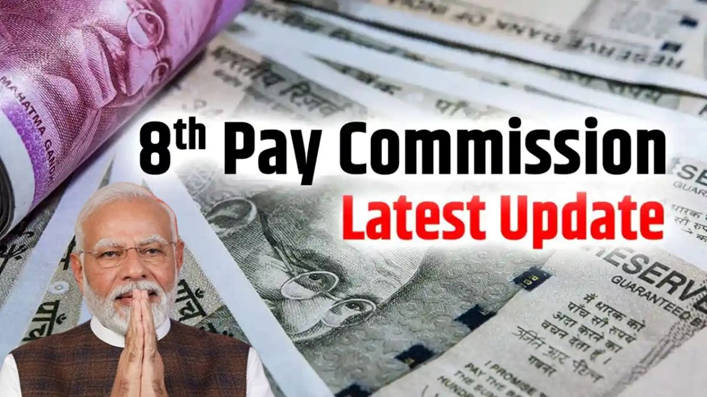
The Union Cabinet, chaired by Prime Minister Narendra Modi, has approved the constitution of the 8th Central Pay Commission, which will evaluate and recommend revised salary structures and allowances for central government employees and pensioners. This early initiative ensures readiness for implementing the recommendations by January 1, 2026. The commission’s scope encompasses over one crore employees and pensioners, aiming to address compensation, pensions, and welfare enhancements.
Approval and Formation
The Union Cabinet, chaired by PM Narendra Modi, has approved the 8th Pay Commission.
A Chairman and two members will be appointed soon, with recommendations ready by January 1, 2026.
Scope and Expectations
Covers salary, allowance, pension revisions, and welfare enhancements for over one crore central government employees and pensioners.
Salary Enhancements: Minimum basic pay may increase from ₹18,000 to ₹51,480.
Fitment Factor: Expected rise from 2.57 to 2.86 for significant pay hikes.
Allowance Revisions: Updates to DA, HRA, and TA in line with inflation.
Pension Reforms: Higher pensions and timely disbursement.
Performance-Based Pay: Likely introduction of productivity-linked incentives.
Health and Welfare: Expansion of insurance and welfare measures.
Historical Context
Pay Commissions review salaries every 10 years, with recommendations based on inflation and economic factors.
The 7th CPC (constituted in 2014) led to major salary reforms implemented in 2016.
7th CPC Summary
Revised Pay: Minimum pay increased to ₹18,000; maximum pay set at ₹2,50,000.
Pay Matrix: Simplified salary progression across 19 levels.
Allowances: Rationalized DA, HRA, and TA.
Pensions: Minimum pension raised to ₹9,000, with reforms aligned to the pay matrix.
Defense: Special provisions for defense personnel to address unique service conditions.
Government’s Proactive Approach: Early constitution of the commission ensures smooth implementation of reforms by 2026.
India-Spain Declare 2026 as ‘Dual Year’ for Culture, Tourism, and AI
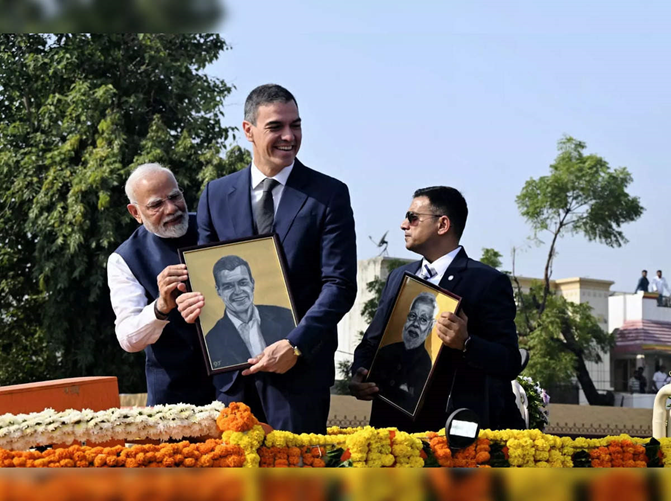
In a significant diplomatic development, External Affairs Minister S. Jaishankar announced that India and Spain will commemorate 2026 as a ‘dual year’ focusing on culture, tourism, and advancements in artificial intelligence (AI). This initiative aims to strengthen bilateral ties and promote mutual understanding between the two nations.
Key Areas of Collaboration
Cultural Exchange
Events include art exhibitions, music and dance performances, literature festivals, and architectural collaborations.
Showcase of rich cultural heritages through exhibitions and programs.
Tourism Promotion
Reciprocal tourism campaigns and direct flight connections.
Highlighting key tourist attractions through joint marketing campaigns and tourism fairs.
AI Collaboration
Joint focus on AI research and development in sectors like healthcare, education, and industry.
Plans to establish AI research centers, host workshops, and organize seminars.
Bilateral Trade and Economic Cooperation
Current Trade Volume: USD 10 billion annually.
Major sectors: Railways, clean technology, drones, and space exploration.
The initiative is expected to further boost economic ties.
Role of the Indian Diaspora
Indian community in Spain contributes significantly to economic and societal integration.
Recognized as a key element in strengthening bilateral relations.
Preparations for 2026
Planning throughout 2025, involving:
Joint committees and funding arrangements.
Coordination with cultural and tourism departments.
Significance
Enhances mutual understanding and partnership in culture, technology, and tourism.
Positions both nations as forward-looking collaborators in AI and innovation.
Strengthens economic, social, and cultural bonds.
Economy news
India Set to Surpass Japan as World’s Fourth-Largest Economy by 2026
India is projected to overtake Japan to become the world’s fourth-largest economy by 2026, according to the PHD Chamber of Commerce and Industry (PHDCCI). This optimistic outlook is underpinned by robust GDP growth forecasts and strategic policy recommendations aimed at enhancing economic resilience and fostering sustainable development.
Economic Growth Projection
PHDCCI Outlook:
India’s GDP growth forecast: 6.8% in FY2024-25 and 7.7% in FY2025-26.
India is expected to surpass Japan to become the 4th-largest economy by 2026.
Tax Reforms Recommendations
Income Tax Adjustments:
Raise income tax exemption limit to ₹10 lakh.
Apply the 30% peak tax rate only for incomes above ₹40 lakh (currently ₹15 lakh).
Business Tax Reductions: Lower tax rates for proprietorships, partnerships, and LLPs from 33% to 25% to enhance business growth.
Monetary Policy Outlook
Inflation Control: CPI inflation expected to fall to 2.5%-4% in the coming quarters.
RBI Measures: Anticipated 25 basis points cut in the benchmark interest rate to reduce borrowing costs and spur economic activity.
Attracting global investments and ensuring long-term progress through environmentally and socially responsible growth strategies.
Significance: This transition highlights India’s economic resilience, policy efficiency, and emerging dominance in global markets.
Banking news
NPCI and Magnati Partner to Boost UPI Use in UAE
NPCI International Payments Ltd (NIPL), the international arm of India’s National Payments Corporation of India (NPCI), has partnered with UAE-based fintech firm Magnati to enable Unified Payments Interface (UPI) transactions for Indian travelers in the UAE. This collaboration aims to integrate UPI into the UAE’s payment ecosystem, allowing Indian visitors to use their preferred payment method seamlessly.
Partnership Overview
Entities Involved: NPCI International Payments Ltd (NIPL) and UAE-based Magnati.
Objective: Enable Unified Payments Interface (UPI) transactions for Indian travelers in the UAE.
Integration: QR-based UPI payments will be accepted through point-of-sale (POS) terminals.
Key Details
Initial Rollout: Launching at Dubai Duty Free, with plans to expand to sectors like retail, hospitality, transport, and supermarkets.
Target Audience: Caters to over 12 million Indian visitors annually, providing a seamless payment experience abroad.
UPI’s Global Reach:
UPI is currently accepted in seven countries, including Bhutan, Mauritius, Nepal, Singapore, Sri Lanka, and France.
Over 16 billion transactions processed in December 2024 alone.
Future Plans:
Collaborations with countries like the UAE and Mauritius to develop card schemes similar to RuPay.
Magnati: A Leader in Payment Solutions
Core Expertise:
Specializes in direct acquiring, issuer processing, and acquiring processing.
Offers next-generation payment platforms to enhance customer experience and operational efficiency.
Global Presence:
Headquartered in Abu Dhabi, Magnati leverages strong international networks to provide transformative payment solutions.
Known for setting new standards in payment innovation.
NPCI International Payments Ltd (NIPL)
Foundation:
Established on April 3, 2020, as a subsidiary of NPCI.
Focuses on taking NPCI’s payment technologies global.
Mission: Deploy real-time payment systems and card schemes in countries seeking advanced payment infrastructure.
science and tech news
ISRO Successfully Docks Satellites, Enters Elite Club
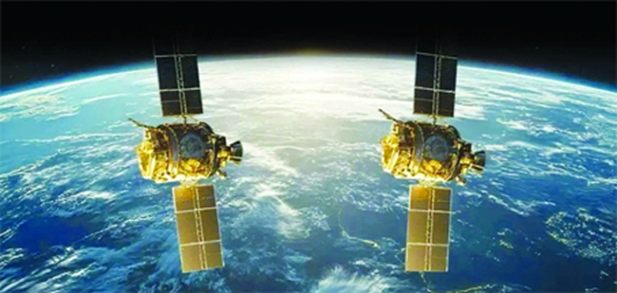
The Indian Space Research Organisation (ISRO) has successfully docked two satellites in space, marking India as the fourth country to achieve this feat after the United States, Russia, and China. The docking process, part of the SpaDeX (Space Docking Exercise) mission, demonstrates ISRO’s capability to conduct autonomous satellite docking. This milestone is critical for future missions like Chandrayaan-4 and the planned Bharatiya Antariksh Station.
Overview
Achievement: India becomes the 4th country to achieve satellite docking in space.
Mission Name: SpaDeX (Space Docking Exercise).
Launch Date: December 30, 2024.
Satellites: SDX01 (Chaser) and SDX02 (Target).
Objective: Demonstrate autonomous satellite docking technology to enable advanced space missions.
India’s Hydrogen Train Engine Sets a Power Benchmark
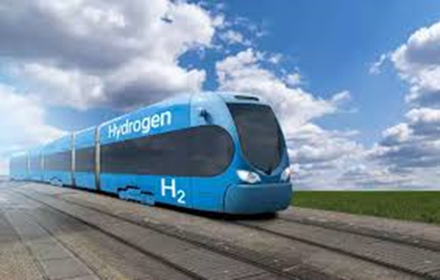
India’s Railway Minister, Ashwini Vaishnaw, recently shared a remarkable achievement in the field of green energy technology during the 18th Pravasi Bharatiya Divas. Indian Railways has developed the world’s most powerful hydrogen fuel-run train engine, setting a new benchmark in global railway innovation. The engine, built with indigenous technology, reflects India’s growing capabilities in green energy and sustainable development.
Key Features
Highest Horsepower:
Engine generates 1,200 horsepower, surpassing the 500-600 horsepower engines of other nations.
Trial Run:
Scheduled for the Jind-Sonipat route in Haryana.
Manufacturing is complete, with system integration underway.
Indigenous Technology and Self-Reliance
Developed entirely with Indian expertise, showcasing advancements in green energy and sustainable transport solutions.
Reflects India’s capability in driving innovation for self-reliance (Aatmanirbhar Bharat).
Broader Applications
The hydrogen-powered engine technology can be adapted for use in other transport sectors, such as:
Trucks.
Tugboats.
Vision for the Future
Prime Minister Narendra Modi’s Aspiration: India aims to manufacture fully indigenous trains, enhancing national pride and economic growth.
State news
Odisha Government Announces ₹20,000 Pension for Emergency Detainees
The Odisha state government has announced a significant welfare measure for individuals who were jailed during the Emergency period from 1975 to 1977. As of January 1, 2025, all surviving detainees from Odisha will receive a monthly pension of ₹20,000, along with medical coverage and other benefits. This move is part of the government’s effort to honor and support those who were imprisoned under the Maintenance of Internal Security Act (MISA) during the Emergency declared by then Prime Minister Indira Gandhi.
Key Provisions
Monthly Pension: ₹20,000 per month for surviving individuals jailed during the 1975-1977 Emergency under the Maintenance of Internal Security Act (MISA).
Medical Benefits: Free medical treatment under the state’s health welfare schemes.
Eligibility:
Individuals jailed during the Emergency and alive as of January 1, 2025.
Required to provide documentation, including an affidavit and co-detainee details.
Application Process:
Beneficiaries must apply through the Collector and District Magistrate.
Selection by state and district-level committees.
Background of the Emergency
Declared on June 25, 1975, by then PM Indira Gandhi.
Involved widespread arrests of political opponents without trial under MISA.
Significance
Recognizes and honors the sacrifices of individuals who opposed the Emergency.
Provides financial assistance and medical support, acknowledging their role in preserving India’s democracy.
Impact
A step towards addressing historical injustices.
Offers practical support to those who endured imprisonment and hardships during a pivotal moment in India’s history.
Award news
Singapore Confers Honorary Citizenship on Tarun Das
Singapore has awarded its highest honor for non-citizens, the Honorary Citizen Award, to Tarun Das, former Director General of the Confederation of Indian Industry (CII), in recognition of his significant contributions to strengthening Singapore-India relations.
Overview
Awarded to: Tarun Das, former Director General of the Confederation of Indian Industry (CII).
Honor: Singapore’s Honorary Citizen Award, its highest accolade for non-citizens.
Date and Location: Presented by President Tharman Shanmugaratnam in New Delhi, January 15, 2025.
Contributions to Bilateral Ties
Economic and Strategic Relations:
Key role in strengthening India-Singapore relations over decades.
Instrumental in initiating India’s “Look East” policy with a delegation of Indian industrialists to Singapore in 1993.
Dialogue Platforms:
Founder of the India-Singapore Strategic Dialogue, promoting collaboration between business leaders, policymakers, and academics.
The dialogue’s 15th edition was held in August 2024, highlighting its lasting importance.
People-to-People Connections:
Director of the Singapore-India Partnership Foundation, fostering youth and academic exchanges.
Launched the Students Immersion Programme in 2023, involving students from the Singapore University of Social Sciences.
Recognition of Achievements
Previous Honor: Received the Singapore Public Service Medal in 2004.
Significance of Award: Reflects his pivotal role in advancing economic, strategic, and cultural partnerships between the two nations.
Personal Reflection: Das expressed deep gratitude, emphasizing his 31-year journey with Singapore and the evolution of a multi-faceted partnership, which he referred to as the “Singapore-India Fever.”
Impact
Strengthened bilateral trade, policy alignment, and cultural understanding.
Cemented India’s position as a strategic partner for Singapore in Southeast Asia.
Sports news
Smriti Mandhana Smashes India’s Fastest Women’s ODI Century!
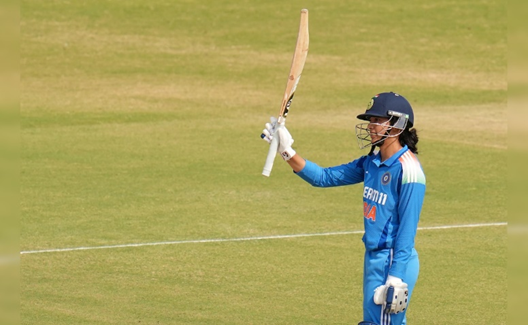
Indian opener Smriti Mandhana broke multiple records in the 3rd ODI against Ireland Women at the Niranjan Shah Stadium, Rajkot. Leading the team in the absence of Harmanpreet Kaur,Mandhana scored the fastest century by an Indian in women’s ODIs, showcasing her dominance. Her record-breaking performance and partnership with Pratika Rawal contributed to India’s strong showing in the series.
Key Records by Smriti Mandhana
Fastest Century by an Indian in Women’s ODIs: Scored 100 off just 70 balls, surpassing Harmanpreet Kaur’s 87-ball record.
First Indian Woman with 10 ODI Centuries: Joins Tammy Beaumont (Australia) in third place on the all-time list.
Most ODI Hundreds: Fourth position overall, tied with Suzie Bates (10 centuries).
Aggressive Batting:
Hit 7 sixes and 12 fours, equaling the record for most sixes in a Women’s ODI innings.
Partnership Milestone
233-run opening stand with Pratika Rawal:
India’s third-highest partnership in Women’s ODIs.
Historical Comparisons
Most Hundreds in Women’s ODIs:
15: Meg Lanning.
13: Suzie Bates.
10: Tammy Beaumont, Smriti Mandhana.
Highest Partnerships for India-W in ODIs:
320: Punam Raut & Deepti Sharma vs Ireland (2017).
258:* Mithali Raj & Reshma Gandhi vs Ireland (1999).
233: Smriti Mandhana & Pratika Rawal vs Ireland (2025).
Significance
Smriti Mandhana’s performance underscores her status as one of the world’s finest batters in women’s cricket.
Her leadership and aggressive batting style set a benchmark for future Indian cricketers.
The Mandhana-Rawal partnership further solidifies India’s dominance in women’s ODI cricket.
Arjun Erigaisi Stuns Chess World with Wins Against Carlsen, Caruana
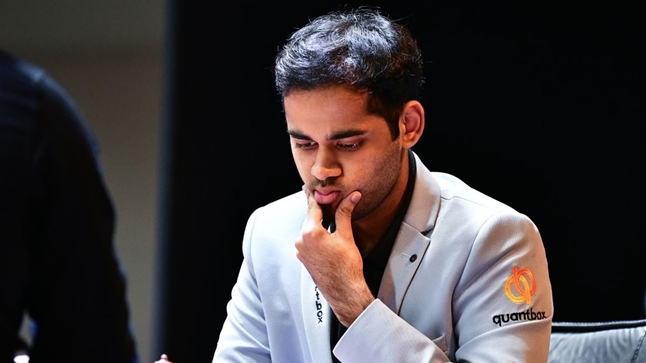
Indian grandmaster Arjun Erigaisi achieved a remarkable feat in the online chess community by defeating World No. 1 Magnus Carlsen and World No. 2 Fabiano Caruana in the Titled Tuesday weekly blitz competition conducted by Chess.com. This competition, held in the early hours of Tuesday, was fiercely contested, and Erigaisi’s performance stood out as he finished with 10 points out of 11 rounds, marking his dominance in the event.
Key Highlights
Remarkable Wins:
Round 10: Victory against Magnus Carlsen.
Round 11: Victory against Fabiano Caruana.
Performance Summary:
Final Points: Tied at 10 points with Hikaru Nakamura but secured the top spot on tiebreaks.
Only Loss: Against Hikaru Nakamura in round 7.
Participation: Over 900 players, including top grandmasters, participated.
Nakamura’s Praise:
Described the event as “the world’s strongest tournament.”
Arjun’s Achievements in 2024
Chess Olympiad: Played a crucial role in India’s Chess Olympiad victory.
WR Chess Masters Cup: Won the prestigious title in London.
Elo Rating: Became the second Indian (after Viswanathan Anand) to surpass the 2800 Elo rating mark.
FIDE Rapid Championship: Finished fifth in the championship but missed qualifying for the 2026 Candidates Tournament.
Significance
Global Recognition: Arjun’s victory in a highly competitive blitz event showcases his growing dominance in the global chess community.
Consistency: His performances in both rapid and classical formats highlight his all-round ability.
Indian Chess Legacy: Continues to strengthen India’s presence on the global chess stage, following in the footsteps of Anand.
Defence news
Indian Army Conducts Exercise ‘Devil Strike’
The Indian Armed Forces are set to conduct a major military exercise, Exercise Devil Strike, from January 16 to 19, 2025. The exercise, which is being organized under the leadership of the Indian Army, aims to enhance the combat readiness of the forces by simulating high-intensity combat operations. This exercise is expected to feature advanced strategies and innovative combat techniques to strengthen national security and ensure effective defense against external threats. It also serves as a test of the synchronization between various branches of the Indian military, ensuring a well-coordinated response to potential challenges.
Objectives
Operational Enhancement: Strengthen combat readiness, particularly in high-altitude terrains.
Joint Force Coordination: Involves Army, Air Force, and Special Forces for synchronized operations.
Advanced Tactics: Focus on real-time simulations, technological integration, and response to complex warfare scenarios.
Significance
Strategic Relevance: Crucial in addressing security challenges in northern and western sectors, especially amid rising geopolitical tensions.
Modernization: Highlights India’s push towards integrating high-tech equipment and advanced warfare techniques.
Building on Past Exercises
Previous Efforts: Exercises like Shakti and Vajra Prahar emphasized joint force collaboration and counter-terrorism.
New Dimension: Devil Strike focuses on advanced battlefield strategies and high-intensity combat simulations, tailored for evolving defense scenarios.
We at Edusprint Academy are committed to bringing you the most relevant and updated 14th and 15th January 2025 current affairs curated from trusted and official sources. These updates are designed to keep you ahead in your exam preparation journey.
Our comprehensive Current Affairs of 14th and 15th January 2025 coverage aims to enhance your knowledge and boost your scores in Banking, Insurance, SSC, Railways, UPSC, and all State Government Exams. Explore our Current Affairs tailored to simplify your exam preparation
Piyush Goyal Inaugurates National Turmeric Board for ‘Golden Spices’
On 14 January 2025, the National Turmeric Board was formally inaugurated by Piyush Goyal, the Union Minister for Commerce and Industry, through a video conference in New Delhi. The headquarters of the National Turmeric Board is located in Nizamabad, Telangana, a major contributor to India’s turmeric production, accounting for around 30% of the country’s turmeric exports.
Key Details:
Ministry: The National Turmeric Board operates under the Department of Commerce, Union Ministry of Commerce and Industry.
Chairperson and Composition:
Chairperson: The first chairperson of the board is Palle Ganga Reddy, appointed by the government of India.
The Board will consist of members from various ministries, including:
Union Ministry of AYUSH
Department of Pharmaceuticals
Union Ministry of Agriculture & Farmers Welfare
Union Ministry of Commerce and Industry
The board will also include:
Representatives from three major turmeric-growing states (on a rotating basis).
National and state institutions involved in turmeric research.
Turmeric farmers and exporters.
The Secretary appointed by the Department of Commerce.
Functions of the National Turmeric Board:
Promote Research and Development (R&D): Focus on boosting yields and production of turmeric.
Boost Exports: Promote R&D in new turmeric products and value addition, ensuring smooth logistics and a robust supply chain for international markets.
Raise Awareness: Highlight the essential and medical properties of turmeric.
Ensure Quality Standards: Maintain the quality and safety of turmeric production and exports to reinforce India’s position as the world’s leading exporter of high-quality turmeric.
Farmer Development: Focus on capacity building and skill development for turmeric farmers.
India’s Role in Turmeric Production and Exports:
India is the world’s largest producer, exporter, and consumer of turmeric.
In 2023-24, India exported 1.62 lakh tonnes of turmeric, worth ₹1,875.86 crore or $226.5 million.
The top buyers of Indian turmeric include Bangladesh, followed by UAE, Malaysia, and USA.
Target for 2030: The government aims for ₹8,000 crore in turmeric exports by 2030.
The Ministry of Rural Development has sanctioned 56 new Watershed Development Projects under the Pradhan Mantri Krishi Sinchayee Yojana (PMKSY) with a total investment of ₹700 crore.These projects span 10 high-performing states: Rajasthan, Madhya Pradesh, Karnataka, Odisha, Tamil Nadu, Assam, Nagaland, Himachal Pradesh, Uttarakhand, and Sikkim.
Scope and Coverage:
Each project covers approximately 5,000 hectares, with smaller areas in hill states.
A total of 280,000 hectares will benefit from these projects.
Activities Undertaken:
Ridge area treatment and drainage line treatment.
Soil and moisture conservation, rainwater harvesting, and pasture development.
Livelihood support for asset-less individuals.
Objectives and Outcomes:
Agricultural Productivity: Enhanced soil health and water availability to improve crop yields and farmers’ incomes.
Land Degradation: Rehabilitation of degraded lands and promotion of sustainable practices.
Climate Resilience: Strengthened water conservation and soil fertility to combat climate change impacts.
Historical Context:
Builds on the success of PMKSY 1.0, which improved groundwater, surface water availability, and agricultural productivity.
The current phase, PMKSY-WDC 2.0, aims to continue sustainable rural development with these newly approved projects.
C-DOT & IIT Mandi to Develop Wideband Spectrum Sensor Chip
The Centre for Development of Telematics (C-DOT), in collaboration with IIT Mandi and IIT Jammu, has signed an agreement to develop a Wideband Spectrum-Sensor ASIC-Chip. This project aims to enhance spectrum utilization efficiency and expand broadband access, especially in rural India, under the Telecom Technology Development Fund (TTDF) scheme.
Project Goals:
Development of a chip to improve spectrum efficiency.
Focus on hardware-friendly algorithms for wideband spectrum sensing.
Target spectrum beyond 2 GHz bandwidth to exploit unused bands or white spaces.
Support rural broadband expansion by leveraging underutilized spectrum.
Technological Innovations: Spectrum sensing enables Cognitive Radio to adapt dynamically without interfering with primary networks.
Efficient hardware architectures for:
Short sensing time
High data throughput
Improved hardware efficiency
Initial designs emulated in FPGA; subsequent development of ASIC chips.
Demonstration of a cognitive radio module for the 6 GHz satellite band (5.925–7.125 GHz).
Key Benefits:
Increases cognitive radio network throughput.
Enhances spectrum utilization for communication systems.
Develops intellectual property for dynamic spectrum access technology.
Aligns with the India Semiconductor Mission.
Supporting Vision and Schemes:
Funded under TTDF, Department of Telecommunications (DoT).
Supports Make-in-India and Atmanirbhar Bharat initiatives.
Bridges India’s digital divide by enhancing rural connectivity.
Key Attendees and Remarks:
Dr. Raj Kumar Upadhyay (CEO, C-DOT): Stressed the significance of indigenous spectrum sensing technologies.
Dr. Rahul Shrestha (IIT Mandi) & Dr. Rohit B. Chaurasiya (IIT Jammu): Emphasized commitment to research in dynamic spectrum access technology.
Other notable attendees: Dr. Pankaj Kumar Dalela and Ms. Shikha Srivastava, Directors at C-DOT.
This initiative underscores India’s technological advancements in telecommunications, fostering innovation and self-reliance.
Kappad and Chal Beaches Receive Prestigious Blue Flag Certification
Kerala’s Kappad beach (Kozhikode) and Chal beach (Kannur) have received the prestigious Blue Flag certification, a globally recognized eco-label awarded by the Foundation for Environmental Education (FEE), Denmark. This recognition highlights their commitment to environmental protection, safety, and sustainability, boosting Kerala’s reputation as a hub for sustainable tourism.
Key Highlights:
Blue Flag Certification: Awarded by the FEE, established in 1985 to promote sustainable coastal development.
Recognizes adherence to 33 stringent criteria in four categories:
Environmental Education and Information
Bathing Water Quality
Environmental Management
Conservation and Safety Services
Significance for Kerala:
Global Recognition: Enhances the state’s international appeal as a sustainable tourism destination.
Eco-Friendly Practices: Both beaches maintain high hygiene, safety, and eco-conscious standards.
P.A. Mohamed Riyas: Highlighted the achievement as a milestone for Kerala’s sustainable tourism.
India’s Blue Flag Beaches: With Kappad and Chal, India now boasts 13 Blue Flag beaches, reflecting its dedication to eco-friendly tourism.
About Blue Flag Certification:
Authority: Awarded by FEE and validated by an international jury comprising representatives from:
United Nations Environment Programme (UNEP)
United Nations World Tourism Organisation (UNWTO)
International Union for Conservation of Nature (IUCN)
Global Reach: Over 4,000 beaches worldwide hold this certification, with Spain leading at 729 beaches.
The Blue Flag certification recognizes beaches that adhere to stringent environmental, safety, and sustainability standards. As of 2025, India has 13 certified beaches:
Shivrajpur Beach, Dwarka, Gujarat (Certified in 2020)
Golden Beach, Puri, Odisha (Certified in 2020)
Ghoghla Beach, Diu, Gujarat (Certified in 2020)
Kasarkod Beach, Uttara Kannada, Karnataka (Certified in 2020)
Padubidri Beach, Udupi, Karnataka (Certified in 2020)
Rushikonda Beach, Visakhapatnam, Andhra Pradesh (Certified in 2020)
Radhanagar Beach, Havelock Island, Andaman & Nicobar Islands (Certified in 2020)
Kovalam Beach, Chennai, Tamil Nadu (Certified in 2020)
Eden Beach, Puducherry (Certified in 2020)
Minicoy Thundi Beach, Lakshadweep (Certified in 2022)
Kadmat Beach, Lakshadweep (Certified in 2022)
Kappad Beach, Kozhikode, Kerala (Certified in 2025)
Chal Beach, Kannur, Kerala (Certified in 2025)
International news
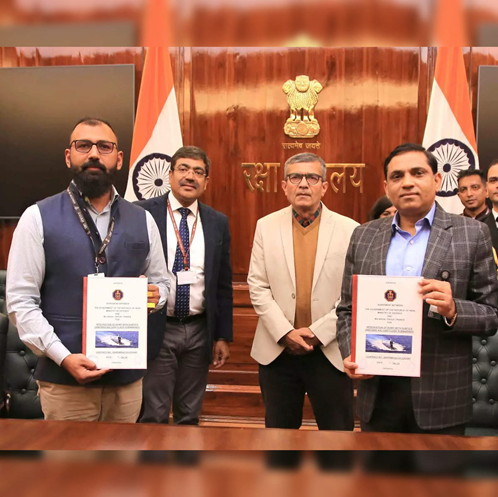
India-U.S. Sonobuoy Production Line Set for 2027
India and the United States have announced a co-production initiative to enhance the Indian Navy’s undersea domain awareness through the assembly of U.S.-specification sonobuoys in India. This collaboration aims to provide India with advanced technology for submarine detection and undersea warfare capabilities, strengthening India’s defense readiness and regional security.
Key Details:
Co-Production Agreement:
The co-production agreement focuses on assembling U.S. sonobuoys in India to bolster the Indian Navy’s capabilities for detecting submarines.
The operational production line for these sonobuoys is expected to be fully functional by 2027.
Collaboration Partners: Ultra Maritime, a leading U.S. defense company, has partnered with Bharat Dynamics Limited (BDL), an Indian defense public sector undertaking, for the final assembly of the sonobuoys in India.
Technology Transfer: As part of the U.S.-India Initiative on Critical and Emerging Technologies, this collaboration includes technology transfer, enabling the development of new sonobuoy systems customized for the Indian Ocean environment.
Operational Compatibility:
The sonobuoys will be designed to be compatible with various military platforms, including:
U.S. and Indian platforms such as the P-8 aircraft and MH-60R helicopters.
Allied military platforms for broader interoperability in joint operations.
Geopolitical Significance:
The partnership strengthens India-U.S. defense ties, particularly as China’s naval presence expands in the Indian Ocean.
This development is also aligned with **India’s role in the Quad and its increasing focus on regional security and undersea warfare.
Future Outlook: The initiative opens up opportunities for Indian suppliers to integrate into the global supply chain for undersea warfare technologies, promoting self-reliance and fostering defense industrial growth within India.
India to Host the 28th CSPOC in 2026
India will host the 28th Conference of Speakers and Presiding Officers of Parliaments of Commonwealth Countries (CSPOC) in New Delhi in 2026, as announced by Om Birla, the Speaker of the Lok Sabha, on January 10, 2025 during the CSPOC Standing Committee Meeting held in Guernsey.
Focus of the 28th CSPOC:
The conference will focus on the application of Artificial Intelligence (AI) and social media in parliamentary operations.
The aim is to enhance cooperation among Commonwealth member countries using these technologies.
It will also highlight regional language translations for Members of Parliament (MPs) and provide access to parliamentary papers in various languages.
India’s Role in Global Economy:
India, now the 5th-largest economy in the world and the 3rd-largest startup ecosystem, is rapidly growing in sectors like agriculture, fintech, AI, and research and innovation.
The hosting of the CSPOC further solidifies India’s leadership in global discussions on technology and parliamentary reforms.
Cultural Significance: India’s selection as the host for this prestigious event reflects its rich cultural heritage, rooted in the philosophy of Vasudhaiva Kutumbakam – “the whole world is one family.”
India’s Previous Hosting of CSPOC: India has previously hosted the CSPOC in 1970-71, 1986, and 2010, showcasing its longstanding commitment to fostering international dialogue and cooperation.
Banking news
IBBI Mandates Use of eBKray Platform for Asset Auctions in Liquidation
On January 10, 2025, the Insolvency and Bankruptcy Board of India (IBBI) announced that starting April 1, 2025, all asset auctions under the liquidation process must be conducted using the eBKray platform, now rebranded as the Bank Asset Auction Network (BAANKET). This initiative aims to enhance transparency, improve auction efficiency, and increase recovery rates in liquidation cases.
Key Points:
Mandatory Use of eBKray Platform:
IBBI has instructed Insolvency Professionals (IPs) to list unsold assets from ongoing liquidation cases on the eBKray platform by March 31, 2025.
This move is intended to streamline the auction process, improve buyer access, and foster greater accountability in the liquidation process.
Addressing Auction Issues: The initiative aims to address the challenges with manual and fragmented auctions, creating a more efficient and uniform process.
About the eBKray Platform:
Launched in 2019, the eBKray (now BAANKET) is an advanced property listing and e-auction platform.
It is designed to help banks and lending institutions recover non-performing assets (NPAs) by facilitating the digital auction of distressed assets.
IBBI Extends Deadline for E-Forms Submission:
IBBI has also extended the deadline for electronic form submissions related to liquidation and voluntary liquidation processes to March 31, 2025 due to technical issues raised by insolvency professionals and agencies.
About IBBI:
Formation: Established in 2016 under the Ministry of Corporate Affairs (MCA).
On January 13, 2025, the Industrial Development Bank of India (IDBI) launched the ‘IDBI Chiranjeevi-Super Senior Citizen Fixed Deposit (FD)’ scheme in Mumbai, Maharashtra. This special fixed deposit scheme is designed for individuals aged 80 years and above, offering them higher interest rates to meet their unique financial needs.
Key Features of the Scheme:
Target Group:
Exclusively for super senior citizens (aged 80 years and above).
Provides a safe and secure investment option with guaranteed returns.
Special FD Buckets & Interest Rates:
375 Days: 7.90% p.a.
444 Days: 8.00% p.a.
555 Days: 8.05% p.a.
700 Days: 7.85% p.a.
Eligibility and Terms:
Not applicable to Non-Resident Ordinary (NRO) or Non-Resident External (NRE) term deposits.
Premature withdrawal and closure are allowed but will incur a penalty of 1% on the applicable rate.
All other terms and conditions of the FD remain unchanged.
Validity of Rates:
The special interest rates will remain valid only for the duration of the respective Utsav FD buckets (300 days, 375 days, 444 days, and 555 days).
Other IDBI FD Schemes:
Utsav Callable FD Scheme:
Offers varied interest rates based on the tenure.
A recent addition is the 555-day tenure, which offers 7.40% for general citizens and 7.90% for senior citizens, available until March 31, 2025.
About IDBI Bank:
Managing Director & CEO: Rakesh Sharma
Headquarters: Mumbai, Maharashtra
Established: July 1, 1964
Taglines:
“Banking for all, Aao Sochein Bada”
“Bank Aisa Dost Jaisa”
PNB Launches 1st ‘Cybersecurity Hackathon 2024-25’ to Combat Malware Threats
On January 2025, Punjab National Bank (PNB), headquartered in Mumbai, Maharashtra, launched its 1st-ever ‘Cybersecurity Hackathon 2024-25’ with the theme “Code Against Malware”. The hackathon aims to tackle the increasing threat of malware in the banking sector by inviting innovators, researchers, and academicians from across India to develop cutting-edge solutions.
Key Points:
Objective:
The primary goal is to strengthen India’s cybersecurity defenses in the banking sector, particularly in the fight against malware attacks.
It encourages the development of innovative solutions to detect, mitigate, and prevent malware threats effectively.
Government Support:
This initiative is being held under the Ministry of Finance (MOF), following the directive from the Department of Financial Services (DFS), which mandates Public Sector Banks (PSBs) to host annual hackathons.
The directive was issued on December 9, 2024, encouraging PSBs to promote cybersecurity through innovation.
Focus Areas:
Intelligence-powered malware detection and removal
Real-time threat monitoring and mitigation
Ransomware resilience solutions
Next-generation antivirus tools and attack surface management
Significance of the Hackathon:
The hackathon will serve as a platform for collaboration and innovation in the cybersecurity field, focusing on improving the resilience of India’s banking sector against evolving cyber threats.
By involving academia and industry experts, the initiative aims to generate high-quality, actionable solutions to enhance the security framework of the banking ecosystem.
This cybersecurity hackathon underscores PNB’s commitment to advancing digital security and protecting the financial infrastructure of India from emerging cyber threats.
Ranking and report news
India Ranks 3rd Globally in Fintech Funding Despite Decline in 2024
According to the Annual India Fintech Report 2024 by Tracxn Technologies Limited, India ranked 3rd globally in terms of funding received in the fintech sector, despite a 33% decline year-over-year (YoY). The country garnered USD 1.9 billion in fintech funding in 2024, down from USD 2.8 billion in 2023.
Key Points:
Global Fintech Funding Rankings:
USA topped the global fintech funding rankings.
The UK secured the 2nd position, while India came in 3rd despite the decline.
Factors Behind the Decline:
The 33% YoY decline in India’s fintech funding is mainly attributed to:
Top Indian Cities for Fintech Funding: Bengaluru (Karnataka) emerged as the leading hub for fintech funding, followed by Mumbai (Maharashtra) and Delhi (Delhi).
About Tracxn Technologies Limited:
Managing Director & Chairperson: Neha Singh
Headquarters: Bengaluru, Karnataka
Overview: Tracxn Technologies is a global market intelligence platform that tracks funding and investment trends in various sectors, including fintech.
Appointment news
Venezuela’s Maduro Sworn in Amid Electoral Controversy
Nicolas Maduro, the President of Venezuela (46th President), was sworn in for a third six-year term following a contentious election. His opponent, Edmundo Gonzalez, claimed voter fraud and declared himself the rightful winner of the July elections. Despite international pressure and sanctions, particularly from the United States, Maduro’s inauguration took place amid widespread controversy and public protests.
Anju Bobby George Named Chairperson of AFI Athletes Commission
Anju Bobby George, a legendary long jumper and 2003 World Championships bronze medalist, has been appointed as the Chairperson of the Athletics Federation of India (AFI) Athletes Commission. The nine-member commission is notable for its emphasis on gender parity, with six women members.
Anju Bobby George’s Role:
Appointed as Chairperson of the AFI Athletes Commission.
Tasked with advocating for athletes and ensuring greater representation in AFI.
Bahadur Singh Sagoo, AFI president and 2002 Asian Games shot put gold medalist.
Economy news
India’s Retail Inflation Drops to 5.22% in December
India’s retail inflation, measured by the Consumer Price Index (CPI), fell to 5.22% in December 2024, down from 5.48% in November, reaching its lowest point in four months. This decline is largely driven by a slowdown in food price increases, particularly in vegetables, cereals, and pulses.
Food Inflation: The Consumer Food Price Index (CFPI) recorded an 8.39% year-on-year increase in December, down from 9% in November.
Significant decreases observed in:
Vegetables: Inflation reduced to 26.6% from 29%.
Pulses: Inflation at 3.8%.
Cereals: Inflation at 6.51%.
Increases were noted in:
Meat: 5.3%.
Eggs: 6.85%.
Edible Oils: 14.6%.
Fruits: 8.5%.
Core Inflation:
Excluding volatile food and fuel prices, core inflation moderated to 3.5% in December, reflecting reduced domestic demand pressures.
Regional Variations:
Rural Inflation: Higher at 5.76%.
Urban Inflation: Lower at 4.58%.
Implications for Monetary Policy:
The decline in inflation raises expectations that the Reserve Bank of India (RBI) may consider reducing interest rates in its upcoming February policy review.
However, risks such as:
A depreciating rupee.
Global trade uncertainties.
may influence future inflation trends and the RBI’s decisions.
This moderation in inflation provides a positive outlook for consumers but requires cautious monitoring of external and domestic economic factors.
State news
Odisha Integrates with Ayushman Bharat
On January 13, 2025, Odisha became the 34th state to implement the Ayushman Bharat Pradhan Mantri Jan Arogya Yojana (AB PM-JAY), marking a transformative step in the state’s healthcare sector. The integration was formalized through an MoU between the National Health Authority (NHA) and Odisha’s Department of Health and Family Welfare.
Key Highlights:
Convergence with Gopabandhu Jan Arogya Yojana (GJAY):
AB PM-JAY merges with Odisha’s GJAY to provide comprehensive health coverage.
Benefits: ₹5 lakh per family annually, with an additional ₹5 lakh for women.
Coverage:
1.03 crore families to benefit.
67.8 lakh families supported by the Union Government.
Enhanced Healthcare Access in Odisha:
Residents previously accessed around 900 empaneled hospitals.
Post-integration, cashless treatment is available in over 29,000 government and private hospitals nationwide.
Benefits expected to reach 86% of Odisha’s population, significantly improving healthcare accessibility.
National Impact of AB PM-JAY: Launched in 2018, PM-JAY is the world’s largest health coverage scheme.
Achievements:
8.19 crore hospital admissions since inception.
₹1.13 lakh crore spent on healthcare for marginalized communities.
Covers 2,000 medical procedures across 27 specialties, including major surgeries like bypasses and knee replacements.
Leadership Remarks:
Union Health Minister JP Nadda: Highlighted the scheme’s scale and rapid implementation.
Odisha Chief Minister Mohan Charan Majhi: Emphasized the scheme’s potential to transform the health status of the state’s residents.
About Ayushman Bharat PM-JAY:
Objective: Provide financial protection for healthcare to economically vulnerable families.
Coverage: ₹5 lakh per family annually for secondary and tertiary care.
Access: Cashless and paperless treatment in 29,000+ hospitals nationwide.
Focus: Inclusion of marginalized communities in quality healthcare services.
Science and tech news
Indichip Semiconductors and Yitoa Micro Technology to Establish India’s First Private Semiconductor Manufacturing Facility
In January 2025, Indichip Semiconductors Limited (Noida, Uttar Pradesh) and its Joint Venture partner Yitoa Micro Technology Limited (YMTL) (Japan) signed a Memorandum of Understanding (MoU) with the Government of Andhra Pradesh (AP) to establish India’s first private semiconductor manufacturing facility at the Orvakal Mega Industrial Hub in Kurnool, Andhra Pradesh. The project, with an investment of over Rs 14,000 crores, marks a significant step toward strengthening India’s semiconductor manufacturing capabilities.
Key Details:
MoU Signatories:
Piyush Bichhoriya, Managing Director (MD) of Indichip Semiconductors.
Saikanth Varma, CEO of the AP Economic Development Board (APEDB).
Alignment with AP’s Semiconductor Policy:
The project is in line with Andhra Pradesh’s Semiconductor Policy, launched in November 2024, which aims to position AP as a hub for electronics and semiconductor manufacturing.
It supports India’s Aatmanirbhar Bharat vision, reducing reliance on semiconductor imports.
Investment and Infrastructure:
The AP government will allocate land in the Orvakal Mega Industrial Hub for the facility.
The state will provide necessary infrastructure and support to ensure the project’s success.
Specialization in Silicon Carbide (SiC) Chips:
The facility will specialize in manufacturing Silicon Carbide (SiC) chips, crucial for energy-efficient technologies, Electric Vehicles (EVs), and Renewable Energy (RE) systems.
The initial production capacity will be 10,000 wafers per month, with plans to scale to 50,000 wafers per month in the next 2-3 years.
Economic Impact: The development is expected to create significant local employment opportunities, drive technological advancements, and contribute to India’s self-reliance in the semiconductor industry.
Key Facts:
Gujarat Semiconductor Policy (2022-2027): Launched in November 2024, Gujarat also aims to establish India’s first semiconductor manufacturing hub in Sanand district, Gujarat.
AI-Enabled Semiconductor Plant: India’s first AI-enabled semiconductor fabrication plant has begun construction in Dholera, Gujarat.
About Andhra Pradesh (AP):
Chief Minister: N. Chandrababu Naidu
Governor: Syed Abdul Nazeer
Capital: Amaravati
National Parks: Sri Venkateswara NP, Papikonda NP
Pixxel launches India’s 1st private satellite constellation with SpaceX
On 14 January 2025 (15 January in India), Pixxel, an Indian space start-up backed by Google, became the first private Indian company to launch a commercial satellite constellation named Firefly. The satellites were launched alongside another satellite by Digantara for space object surveillance on SpaceX’s Transporter-12 rideshare mission.
Launch Details:
Rocket: SpaceX Falcon 9.
Mission: Transporter-12 rideshare mission.
Launch Site: Vandenberg Space Force Base, California, USA.
Firefly Constellation Details:
About the Constellation:
Developed by Pixxel, a Bengaluru-based company.
World’s highest-resolution hyperspectral satellite constellation, capturing data at 5-meter resolution (most hyperspectral satellites have 30-meter resolution).
Captures data across 150+ spectral bands, allowing detailed analysis of Earth’s chemical compositions, vegetation health, water quality, and atmospheric conditions.
Deployment Plan:
First Phase: Three satellites launched on 14 January 2025.
Second Phase: Three more satellites to be launched in Q2 of 2025.
Future Plans: Addition of 18 satellites to complete the constellation.
Orbit: Satellites placed in sun-synchronous orbit at 550 km altitude.
Significance: First private Indian company to offer hyperspectral imaging services, a domain previously exclusive to ISRO.
Hyperspectral Imaging Satellites:
Use technology to capture highly detailed Earth data across hundreds of light bands.
Enable detection of subtle changes in:
Chemical compositions.
Vegetation health.
Water quality.
Atmospheric conditions.
Customers and Applications:
The Firefly constellation is poised to benefit sectors like:
Agriculture: Improve crop yields and monitor vegetation health.
Mining: Track and assess resource extraction sites.
Environmental Monitoring: Monitor oil spills, water quality, and geographic boundaries.
Defence: Offer precise surveillance and data for strategic planning.
1st astronomical observatory of Eastern India inaugurated in Bengal
The Satyendra Nath Bose Astronomical Observatory, the first astronomical observatory of Eastern India, was inaugurated atop Panchet Hill in the Garpanchkot area of Purulia district, West Bengal. This observatory is the sixth in India and is a significant addition to the nation’s growing network of space research facilities.
Key Details:
Location & Importance:
The observatory is located at an altitude of 600 meters above sea level in a non-polluted area, away from city lights.
Positioned at approximately 86° East longitude, it fills a gap along this longitude that stretches from the Arctic Ocean to Antarctica.
History & Development:
The project commenced in 2012 and was developed on 4.9 acres of land.
The observatory is named after Satyendra Nath Bose, a renowned Indian scientist, and is managed by the Satyendra Nath Bose National Centre for Basic Sciences.
An MoU has been signed with Sidhu Kanu Birsa University, Purulia for managing the observatory and sharing resources.
Equipment & Facilities:
The observatory currently houses a 14-inch diameter telescope, with plans to install a 1-metre diameter telescope soon.
It includes an automatic weather forecast centre to measure rainfall and other atmospheric conditions, supporting research in Astronomy, Astrophysics, and Atmospheric Sciences.
Significance for Scientific Research:
The observatory will facilitate basic research in space sciences, offering opportunities for students and scientists to conduct advanced studies in Astronomy and Astrophysics.
It will also contribute to the study of weather patterns and the atmosphere.
Part of India’s Expanding Astronomical Network: This observatory is the sixth in India, joining others in Ladakh, Nainital (Uttarakhand), Mount Abu (Rajasthan), Girbani Hills (Pune), and Kavalur (Tamil Nadu).
About the Satyendra Nath Bose National Centre for Basic Sciences:
Established in 1986 by the Department of Science and Technology, Government of India in Kolkata, West Bengal.
It is a leading institution in scientific research in the field of Basic Sciences.
Defence news
India tests micro missile system Bhargavastra to counter Swarm drone
India has successfully tested the indigenously developed Bhargavastramicro missile system on 12th and 13th January 2025 at the Gopalpur Seaward Firing Range in Odisha. The tests were conducted in the presence ofsenior Indian Army officers, marking a significant step toward enhancing India’s defense capabilities against modern threats like swarm drone attacks.
Key Details about Bhargavastra:
Purpose: Developed to counter swarm drone attacks, which involve multiple drones coordinated to overwhelm enemy defenses.
Developer:
Designed and developed by Economic Explosives Ltd (EEL), a subsidiary of the Nagpur-based Solar Group.
Fully indigenized, providing a low-cost solution for drone defense.
Current Status:
Yet to be inducted into the Indian Army, as further testing and approval processes are pending.
The Indian government will decide on induction after the Army’s approval.
Understanding Swarm Drone Attacks:
What is a Swarm Drone Attack?
A tactic involving multiple unmanned aerial vehicles (UAVs) controlled by a single operator to launch a coordinated attack.
Highly effective in confusing enemy radars due to the large number of simultaneous aerial targets.
Global Usage:
United States: First used drones for precision strikes in Afghanistan.
Iran: Successfully breached Israel’s Iron Dome system using swarm drones.
Ukraine and Russia: Frequently deploy swarm drones with loiter munitions in ongoing conflicts.
Advantages of Swarm Drones:
Cost-effective: Drones are cheaper than traditional missile systems.
Overwhelming capability: Confuses enemy radars and overwhelms defense systems.
Challenges in Countering Swarm Drones:
Existing defense systems like missiles are expensive and may not efficiently counter the large number of drones.
Nations worldwide are searching for cost-effective anti-drone solutions.
We at Edusprint Academy are committed to bringing you the most relevant and updated 9th January 2025 current affairs, curated from trusted and official sources. These updates are designed to keep you ahead in your exam preparation journey.
Our comprehensive Current Affairs of 9th January 2025 coverage aims to enhance your knowledge and boost your scores in Banking, Insurance, SSC, Railways, UPSC, and all State Government Exams. Explore our Current Affairs tailored to simplify your exam preparation
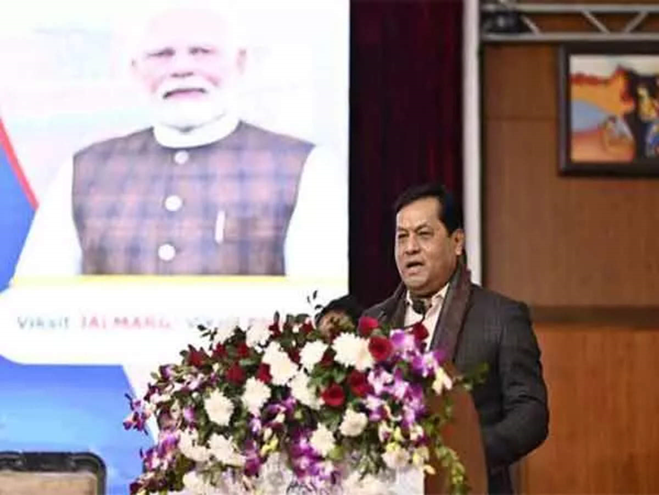
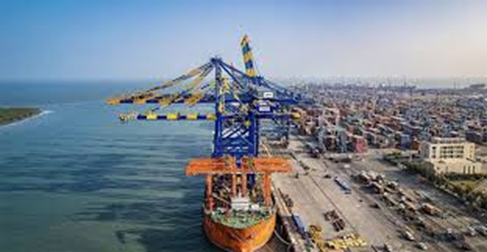
Kandla port soon to become hub of green hydrogen: Union Minister Sarbananda Sonowal
Union Minister for Ports, Shipping, and Waterways Sarbananda Sonowal stated that the Deendayal Port in Kandla will become a mega terminal port and a key hub for green hydrogen once its cargo carrying capacity reaches 300 million metric tonnes.
Projects Launched
Green Hydrogen Excellence Centre: The foundation stone for the Green Hydrogen Excellence Centre was laid at Deendayal Port. This will position the port as a significant player in the green hydrogen sector.
Waste Recycling Plant: A waste recycling plant was inaugurated as part of the sustainability efforts at the port.
New Kendriya Vidyalaya Building: The new building of the Kendriya Vidyalaya was also inaugurated, enhancing infrastructure at the port.
New Announced Projects
Mega Terminal Port: A new mega terminal port worth Rs 27,000 crore will be constructed outside the bay at Kandla.
Ship-Building Project: A ship-building project worth Rs 30,000 crore will also be developed at the port, expanding its maritime capabilities.
Total Investment
A total investment of Rs 57,000 crore has been announced for these projects, indicating a significant expansion and modernization effort for Deendayal Port.
These developments are expected to enhance the port’s capacity, contribute to sustainable energy (green hydrogen), and strengthen India’s maritime infrastructure.
Gujarat:
Capital: Gandhinagar
Chief minister: Bhupendra Patel
Governor: Acharya Devvrat
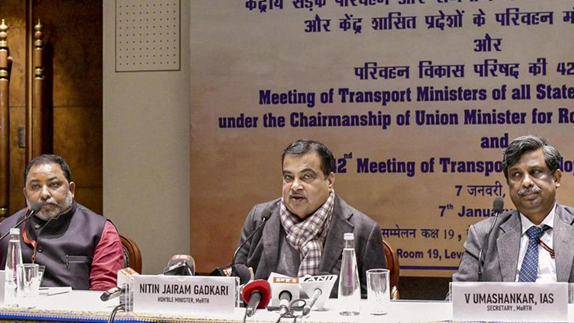
Saving Lives on Highways: Cashless Treatment Plan Announced by Gadkari
Union Minister of Road Transport and Highways, Nitin Gadkari, announced a significant initiative to provide cashless treatment of up to ₹1.5 lakhfor seven days for road accident survivors. The scheme is expected to be expanded across all states by March 2025. The minister also revealed new tech-based interventions for heavy vehicles to reduce road accidents and improve safety standards. Gadkari highlighted India’s rising road fatalities and proposed solutions to tackle the shortage of skilled drivers, along with updates on emission norms and vehicle safety standards.
Cashless Treatment Scheme for Road Accident Survivors
Provides cashless treatment up to ₹1.5 lakh for seven days.
Pilot initiative active in Assam, Chandigarh, Punjab, Uttarakhand, Puducherry, and Haryana.
Benefitted 6,840 people so far; nationwide expansion by March 2025.
Aims to save 50,000 lives by ensuring treatment during the golden hour.
Tech-Based Safety Systems for Heavy Vehicles
Audio Warning System: Alerts drowsy drivers.
Electronic Stability Control: Stabilizes vehicles during steering issues.
Automatic Emergency Braking: Activates brakes to prevent collisions.
Addressing Shortage of Skilled Drivers
India has a deficit of 22 lakh skilled drivers.
30,000 deaths caused by unauthorized drivers annually.
1,250 new driving learning centres to be established with central government funding.
Reward for Good Samaritans: Reward for helping accident victims to be increased from ₹5,000.
Air Ambulance Facilities: Collaboration with the Civil Aviation Ministry to:
Set up helipads at highway amenities.
Equip hospitals for air ambulance use.
Emission Norms and Vehicle Safety Standards
Bharat Stage 7 (BS7): Draft norms by 2025; consultations in mid-2025.
E-Rickshaws: New standards for safety and longevity.
Scrappage Policy: Introduction of a carbon credit-like system for vehicles.
Road Accident and Fatality Statistics
1.72 lakh fatalities in 2023, a 4.2% rise from 2022.
33,000 deaths caused by truck impacts; 30,000 by unauthorized drivers in 2022.
This initiative aims to reduce road fatalities through improved treatment, safety measures, and better driver training.
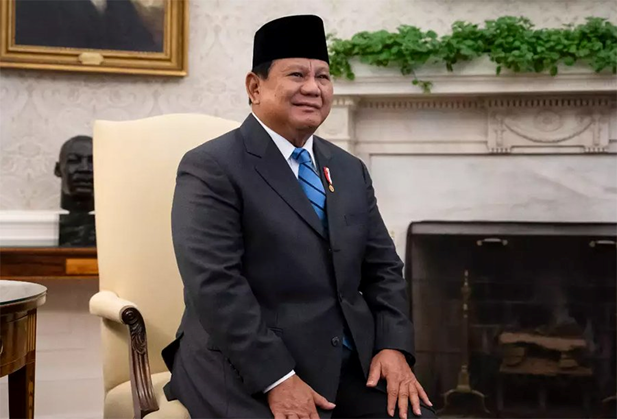
Prabowo Subianto to Be Republic Day Chief Guest in 2025
Indonesian President Prabowo Subianto has formally accepted New Delhi’s invitation to be the chief guest at India’s 2025 Republic Day parade. His visit marks a significant step in enhancing India-Indonesia relations, signaling the importance of the Act East Policy in Prime Minister Narendra Modi’s third term. The two countries are expected to bolster their strategic cooperation, defense ties, and economic engagement during this visit.
1. Historical Significance
Indonesia’s First President Sukarno was the chief guest at India’s first Republic Day in 1950.
Shared cultural ties spanning 2,000 years, including influences from Hinduism, Buddhism, and Islam.
Indonesian art and traditions are inspired by the Ramayana and Mahabharata.
2. Modern Strategic Ties
Comprehensive Strategic Partnership established in 2018 during PM Modi’s Jakarta visit.
Focus on maritime security and defense cooperation in the Indo-Pacific through the ‘Shared Vision on Maritime Cooperation’.
2025 visit to further strengthen defense relations and strategic ties.
3. Economic Relations
Bilateral Trade (2023-24): USD 26.69 billion.
India’s Imports from Indonesia: Coal, crude palm oil, minerals, rubber, hydrocarbons.
India’s Exports to Indonesia: Refined petroleum, vehicles, telecom equipment, agricultural products, meat, steel.
Over 30 Indian joint ventures operate in Indonesia.
4. Significance of the 2025 Visit
Marks the first Republic Day guest of PM Modi’s third term.
Highlights India’s focus on maritime cooperation and the Act East Policy.
Expected to boost defense partnerships and attract new investment opportunities.
5. Cultural and Diplomatic Importance
Indonesia is India’s largest trading partner within ASEAN.
The visit builds on historical connections and enhances modern economic and strategic cooperation.
Indonesia:
Capital: Jakarta
Official language: Indonesian
President: Prabowo Subianto
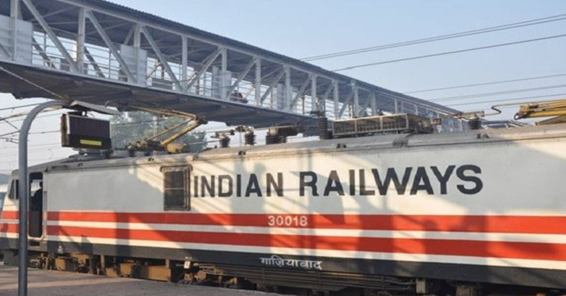
Indian Railways’ Capital Expenditure in FY25
Indian Railways has achieved a significant milestone in the fiscal year 2024-25 (FY25) by surpassing ₹2 lakh crore in capital expenditure (capex), accounting for 76% of its budgetary allocation.
Capital Expenditure (Capex) Achievement
Surpassed ₹2 lakh crore in capex by December 2024, achieving 76% of its FY25 budgetary allocation.
Includes:
₹1.91 lakh crore from Gross Budgetary Support (GBS).
₹824 crore from external resources.
₹8,733 crore from extra-budgetary resources.
Budgetary Allocation for FY25
₹2.65 lakh crore total allocation.
₹2.52 lakh crore allocated as GBS.
Focus on Infrastructure Development: Investment directed toward capacity augmentation, facility modernization, and safety enhancements.
Historical and Future Outlook:
Reflects steady growth in capital investments over recent years.
On track to meet or exceed the FY25 budgetary targets.
Aims to enhance efficiency and service quality across Indian Railways.
International News
Indonesia’s Addition Strengthens BRICS Alliance
Indonesia has officially become a full member (11th) of the BRICS group of emerging economies. Brazil, holding the presidency of BRICS for 2025, announced this development, noting that Indonesia’s candidacy was endorsed by BRICS leaders at the Johannesburg summit in 2023. Indonesia’s membership aligns with the ongoing efforts to reform global governance institutions and deepen cooperation within the Global South, key priorities for Brazil’s BRICS presidency. This expansion marks a significant moment in the evolving dynamics of global economic power.
Indonesia’s Membership
Officially becomes the 11th member of BRICS, enhancing the group’s presence in Southeast Asia.
Membership aligns with BRICS priorities of reforming global governance and fostering Global South cooperation.
2. Endorsement at Johannesburg Summit (2023)
BRICS leaders endorsed Indonesia’s candidacy during the summit.
Reflects the group’s commitment to strengthening ties within the Global South.
3. Brazil’s Statement on Indonesia’s Inclusion: Brazil, holding the BRICS presidency for 2025, welcomed Indonesia, highlighting shared goals of global governance reform and enhanced cooperation.
4. Indonesia’s Role in BRICS
Largest economy and most populous country in Southeast Asia.
Shares common priorities with BRICS nations, such as reforming global governance systems.
5. BRICS Expansion Indonesia’s inclusion follows the group’s 2024 expansion, which added Egypt, Ethiopia, Iran, Saudi Arabia, and the UAE.
6. BRICS Background and Milestones
Formation (2006): Initiated after a meeting between Russia, India, and China in St. Petersburg.
First Summit (2009): Held in Yekaterinburg, Russia.
South Africa’s Inclusion (2010): Transitioned the group to BRICS.
Major Expansions:
2010: South Africa joined.
2024: Addition of Egypt, Ethiopia, Iran, Saudi Arabia, and the UAE.
BRICS:
Founders: Russia, China, India, Brazil
Founded: 16 June 2009
Formerly called: BRIC
Economy news
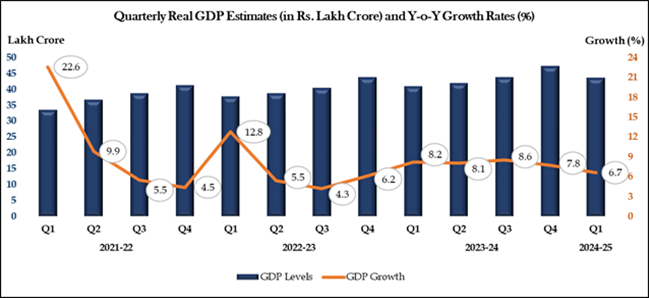
India’s Projected GDP Growth for FY 2024-25
The National Statistical Office (NSO) projects India’s real GDP growth for FY 2024-25 at 6.4%, a slowdown from the 8.2% growth recorded in FY 2023-24.
Comparison with RBI’s Forecast: This is below the Reserve Bank of India’s (RBI) forecast of 6.6% for the same period.
Sector-wise Performance
Manufacturing & Services: The dip in GDP growth is attributed to weaker performance in the manufacturing and services sectors.
Agriculture and Allied Sectors: These sectors are expected to see a rebound, with a growth projection of 3.8%, compared to 1.4% in FY 2023-24.
Construction: The construction sector is projected to grow at a robust rate of 8.6%.
Financial, Real Estate, and Professional Services: These sectors are forecasted to grow by 7.3%.
Gross Value Added (GVA)
Real GVA Growth: The real GVA for FY 2024-25 is expected to grow by 6.4%, down from 7.2% in FY 2023-24.
Nominal GVA Growth: Nominal GVA is projected to grow by 9.3%, slightly exceeding the 8.5% growth in FY 2023-24.
Budget Implications: The NSO’s first advance GDP estimates could influence key decisions in the upcoming Union Budget 2025-26, which will be presented by Finance Minister Nirmala Sitharaman on February 1, 2025.
Key Dates: The second advance GDP estimates for FY 2024-25, along with quarterly GDP estimates for Q3 2024-25 (October-December 2024), will be released on February 28, 2025.
Sectoral Outlook
Agriculture: Expected to grow at 3.8% in FY 2024-25.
Construction: Expected to grow at 8.6%.
Financial, Real Estate, and Professional Services: Expected growth of 7.3%.
Manufacturing and Services: Weaker performance anticipated, contributing to the overall slowdown in growth.
Fiscal Deficit Target on Track Despite Revised GDP Growth
Despite a downward revision in India’s GDP growth forecast for the fiscal year 2024-25, the government’s fiscal deficit target of 4.9% of GDP remains attainable. The National Statistics Office (NSO) has projected a nominal GDP growth of 9.7% for FY25, slightly below the earlier estimate of 10.5%. This adjustment is expected to have a minimal impact on the fiscal deficit, as the government plans to reduce capital expenditure to offset the lower GDP growth.
GDP Growth Revision
Revised Nominal GDP Growth:
Adjusted to 9.7% for FY25, slightly below the earlier estimate of 10.5%.
This revision reflects a more cautious economic outlook but is not expected to significantly affect fiscal deficit management.
Capital Expenditure Reduction: The government plans to reduce capital expenditure by ₹1–1.5 trillion from the budgeted ₹11.1 trillion to offset the lower GDP growth, aiming to maintain fiscal discipline.
Fiscal Deficit Target
Fiscal Deficit Target for FY25: ₹16.13 trillion (4.9% of GDP), which is achievable despite the GDP growth adjustment.
The fiscal deficit is expected to stay within the targeted range due to reduced capital expenditure and controlled revenue patterns.
Revenue Performance: As of November 2024, the central government utilized 52.5% of the fiscal deficit target (₹8.5 trillion), which is 6.6% lower than the same period in the previous year.
Tax Revenue Trends
Net tax revenues: Reached 56% of the budgeted estimate for April–November FY25, slightly down from 62% in the same period last year.
Income-tax collections: Increased by 24% year-on-year.
Corporate tax collections: Decreased by 1% year-on-year.
This approach indicates that the government is proactively managing its fiscal position despite the revised growth forecast.
State news
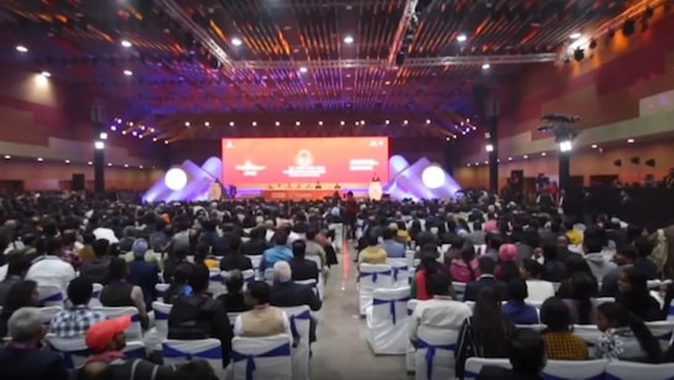
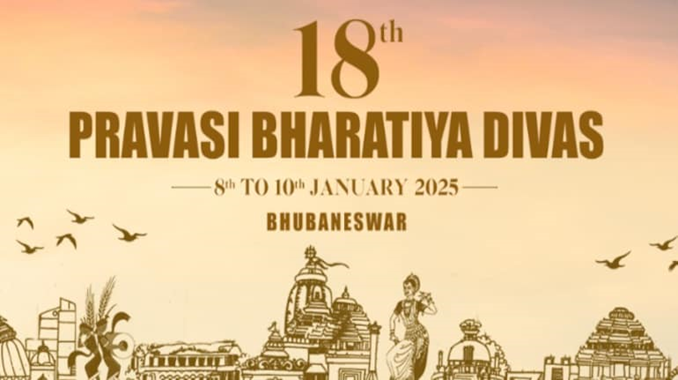
Bhubaneswar to host the 18th Pravasi Bhartiya Divas Convention 2025
Bhubaneshwar the capital city of Odisha will host the 18th Pravasi Bhartiya Divas Convention from 8-10 January 2025. It is the first time that Bhubaneswar is hosting the biannual Pravasi Bhartiya Divas Convention.
As part of the Bharatiya Divas Convention, the Youth Pravasi Bharatiya Divas will be held in Bhubaneshwar on 8 January 2025.
Organizers
Main Organizers: The Union Ministry of External Affairs (MEA) in association with the Odisha state government.
Youth Pravasi Bharatiya Divas Organizers: The MEA, in partnership with the Ministry of Youth Affairs and Sports and the Odisha government.
Chief Guests
Pravasi Bhartiya Divas: The Chief Guest will be Christine Carla Kangaloo, President of Trinidad & Tobago, who will address the convention virtually on 9 January 2025.
Youth Pravasi Bharatiya Divas: The Chief Guest will be Dr. Dev Pragad, CEO of Newsweek, USA.
Inauguration & Valedictory Session
Inauguration: The convention will be inaugurated by Prime Minister Narendra Modi on 9 January 2025. He will virtually flag off the Pravasi Bharatiya Express, a special tourist train for the Indian diaspora, departing from Nizamuddin Railway Station in Delhi.
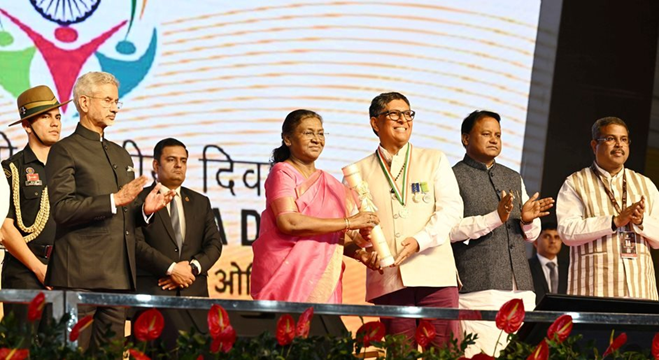
Valedictory Session: President Droupadi Murmu will address the valedictory session on 10 January 2025 and present the Pravasi Bharatiya Samman Award to 27 distinguished individuals for their contributions.
Pravasi Bharatiya Samman Award: The Pravasi Bharatiya Samman Award recognizes Non-Resident Indians (NRIs), Persons of Indian Origin (PIOs), or organizations run by them for outstanding achievements both in India and abroad.
Theme of 18th Pravasi Bhartiya Divas: The theme for this year is “Diaspora’s Contribution to a Viksit Bharat”, emphasizing the role of the Indian diaspora in contributing to India’s development.
Significance of Pravasi Bhartiya Divas
Historical Background: 9 January was chosen to commemorate the return of Mahatma Gandhi to India from South Africa aboard the S.S. Arabia in 1915.
First Convention: The first Pravasi Bhartiya Divas was held in 2003 in New Delhi from 9-11 January. Since 2015, the convention has been held biannually.
Previous Convention: The 17th Pravasi Bhartiya Divas Convention took place in Indore, Madhya Pradesh from 8-10 January 2023.
Odisha:
Chief minister: Mohan Charan Majhi
Capital: Bhubaneswar
Governor: Hari Babu Kambhampati
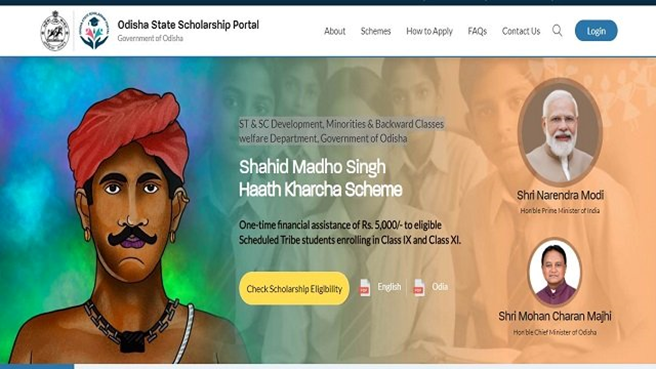
Shahid Madho Singh Haath Kharcha Scheme
On January 7, 2025, Odisha Chief Minister Mohan Charan Majhi inaugurated the Shahid Madho Singh Haath Kharcha Scheme at the Adivasi Mela in Bhubaneswar. This initiative aims to reduce dropout rates among Scheduled Tribe (ST) students by providing a one-time financial assistance of ₹5,000 to those enrolling in Class IX and Class XI. The scheme targets students from families with an annual income not exceeding ₹2,50,000.
Launch and Purpose
Inaugurated: January 7, 2025, by Odisha Chief Minister Mohan Charan Majhi at the Adivasi Mela in Bhubaneswar.
Aim: To reduce dropout rates among Scheduled Tribe (ST) students and provide financial support for continued education.
Financial Assistance: A one-time grant of ₹5,000 for students enrolling in Class IX and Class XI.
Target Group: ST students from families with an annual income not exceeding ₹2,50,000.
2. Objectives of the Scheme
Promote educational continuity: Encourages tribal students to continue their education beyond the upper primary level, addressing high dropout rates.
Financial Incentives: Provides an incentive to support students during critical educational transitions (Class IX and Class XI).
3. Eligibility Criteria
Student Status: Must be from the Scheduled Tribes category and enrolled in government or government-aided schools.
Family Income: The annual family income must not exceed ₹2,50,000.
Disbursement: The ₹5,000 assistance will be credited directly to the student’s bank account.
Application Process: School Principals/Headmasters will recommend eligible students, who will apply through the Odisha State Scholarship Portal.
4. Historical Context: Madho Singh
Background: Born around 1786 in Ghess, Bargarh district, Madho Singh was a zamindar who ruled 20 villages.
Resistance Leader: He fought against British colonial rule, particularly after the mistreatment of his family.
Role in 1857 Uprising: During the First War of Indian Independence (1857), he led tribal resistance against the British using guerrilla tactics and strategic warfare.
Capture and Legacy: Captured and executed on December 31, 1858, his bravery remains a symbol of tribal courage and resilience.
Appointment news
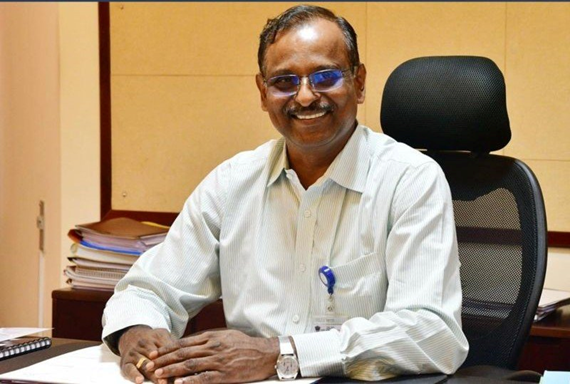
Govt. Appoints V Narayanan as 11th Chairman ISRO & Secretary of DOS
The government of India has appointed a senior Indian Space Organisation (ISRO scientist V. Narayanan as the 11th chairman of ISRO and secretary of the Department of Space (DOS). He will succeed the current chairman S.Somanth and assume office on 14 January 2025.
The name of V. Narayanan was approved by the apex Appointments Committee of the Cabinet in a meeting held on 7 January 2025 in New Delhi. The meeting was chaired by Prime Minister Narendra Modi and attended by the Union Minister for Home Affairs and of Cooperation, Amit Shah.
Tenure: Term: V. Narayanan has been appointed for a term of two years, effective from 14 January 2025, or until further orders.
About ISRO (Indian Space Research Organisation)
Establishment: Founded on 15 August 1969 as India’s national space agency.
Primary Objective: Conduct research in space science and develop space technologies for the socio-economic benefit of India.
Headquarters: Located in Bengaluru, Karnataka.
Space Commission and Department of Space (DOS)
Space Commission: Apex body for policy-making in the field of space science and technology.
DOS: Implements policies made by the Space Commission through five institutions, including ISRO and others such as PRL, NARL, SCL, and NE-SAC.
Historical Context of ISRO Chairs
Founder: Dr. Vikram Sarabhai, the first Chairman and father of the Indian space programme.
Longest-serving Chairman: Professor Satish Dhawan.
Shortest Tenure: Prof. M.G.K. Menon served as Chairman for only 9 months.
ISRO’s Launch Site: ISRO’s rockets are launched from Sriharikota, Andhra Pradesh.
Science and tech news
e-Shram Portal Expands to 22 Scheduled Languages
The e-Shram portal, designed to provide unorganised workers with seamless access to various government schemes, has been upgraded to support all 22 scheduled languages. This enhancement, launched by Union Minister of Labour and Employment Dr. Mansukh Mandaviya, aims to make the portal more accessible to workers across India.
Multilingual Upgrade
The e-Shram portal now supports all 22 scheduled languages in India, making it more accessible to unorganised workers across the country.
Previous languages: English, Hindi, Kannada, and Marathi.
Bhashini project: The Ministry of Electronics and Information Technology facilitated this expansion, enabling workers to access information and register in their native languages.
Increased Registrations
The portal has gained significant traction with an average of 30,000 registrations per day by unorganised workers, reflecting growing trust and engagement.
This indicates the platform’s importance in connecting workers to various welfare schemes.
Integration of Welfare Schemes
The e-Shram portal integrates 12 government schemes, including:
One Nation One Ration Card (ONORC)
Indira Gandhi National Disability Pension Scheme (IGNDPS)
Indira Gandhi National Widow Pension Scheme (IGNWPS)
National Family Benefit Scheme (NFBS)
Mahatma Gandhi National Rural Employment Guarantee Act (MGNREGA)
This integration enables easier access to welfare benefits for unorganised workers.
Future Initiatives
Mobile App: A dedicated e-Shram mobile app is planned for easier access.
Single Common Application Form: Will simplify the registration process.
Payment Gateway Integration: To make the process of availing benefits more seamless.
Extension of Outreach: Collaboration with Common Service Centres, bank correspondents, post offices, and MY Bharat volunteers to expand access to the portal.
This upgrade enhances the portal’s usability and furthers its role in providing social security to unorganised workers across India.
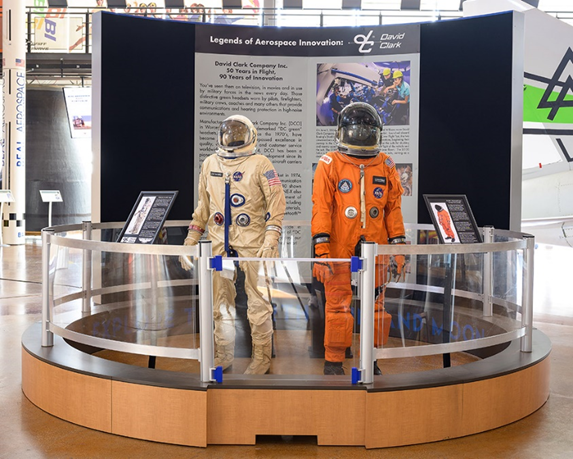
Historic Moon Artifact Donated to Frontiers of Flight Museum
Pravasi Bharatiya Divas, also known as Non-Resident Indian (NRI) Day, is an annual event celebrated on January 9th in India to honour and engage with the Indian diaspora worldwide. This significant occasion aims to strengthen the bonds between India and its overseas citizens, leveraging their expertise and resources for the nation’s development.
Artifact Overview
Artifact: A fragment of the original Wright Flyer fabric, flown at Kitty Hawk in 1903 by the Wright brothers, and later carried by Neil Armstrong during the Apollo 11 mission in 1969.
Significance: This piece symbolizes the connection between early aviation pioneers and the historic achievements of space exploration.
Museum Display
Unveiling Date: The artifact will be publicly displayed starting October 2, 2025.
Location: Frontiers of Flight Museum, 6911 Lemmon Ave, Dallas, Texas.
Complementary Exhibit: Alongside the fabric, an authentic Apollo 11 patch created by Texas Art Embroidery will be displayed, enriching the historical context.
Historical Significance of the Artifact
Composition: Small piece of fabric from the left wing of the Wright Flyer, the first powered airplane to achieve sustained flight in 1903.
Connection to Space: The fabric fragment was carried by Neil Armstrong during his Apollo 11 mission to the Moon in 1969, linking the Wright brothers’ aviation milestone to humanity’s first steps on the Moon.
Event Details
Legacy In-Flight Luncheon:
Date: October 1, 2025.
Speaker: Mark Armstrong, Neil Armstrong’s eldest son, will be the keynote speaker.
Purpose: The event will honor past legacies and support the museum’s aerospace-STEM education programs, benefiting thousands of students annually.
Tickets and Sponsorships: Available through Catharine Recht.
Significance of the Donation: This donation adds a remarkable piece to the museum’s aerospace collection, offering a tangible link between aviation history and space exploration. The journey of the fabric, from Kitty Hawk to the Moon, exemplifies the continuous spirit of innovation and human achievement in both fields.
Important days
Pravasi Bharatiya Divas 2025- Date, Theme, History and Highlights
Pravasi Bharatiya Divas, also known as Non-Resident Indian (NRI) Day, is an annual event celebrated on January 9th in India to honour and engage with the Indian diaspora worldwide. This significant occasion aims to strengthen the bonds between India and its overseas citizens, leveraging their expertise and resources for the nation’s development.
Overview of Pravasi Bharatiya Divas (PBD)
Date of Celebration: Annually on January 9th to honor the Indian diaspora.
Purpose: Strengthens the bond between India and its overseas citizens, leveraging their expertise and resources for the nation’s development.
Pravasi Bharatiya Divas 2025
18th PBD Convention: Held from January 8th to 10th, 2025, in Bhubaneswar, Odisha.
Focus: Encouraged deeper engagement with the diaspora, particularly the youth, and explored avenues for their participation in India’s growth.
Theme for Pravasi Bharatiya Divas 2025
Theme: “Diaspora’s Contribution to a Viksit Bharat”
The theme emphasized the significant contributions made by the Indian diaspora in India’s development and its role in achieving a developed India.
History of Pravasi Bharatiya Divas
Inception: First celebrated in 2003.
Objective: To make the Indian diaspora a partner in India’s development and to promote collaborations.
Significance: Plays a vital role in strengthening relations between India and its overseas community.
Key Events and Discussions at PBD 2025
Youth Pravasi Bharatiya Divas: The convention began with a dedicated day for young diaspora members, focusing on their leadership potential and innovative ideas.
Plenary Sessions: A series of discussions on topics such as:
“Beyond Borders: Diaspora Youth Leadership in a Globalized World”
“Building Bridges, Breaking Barriers: Stories of Migrant Skills”
“Green Connections: Diaspora’s Contributions to Sustainable Development”
“Diaspora Divas: Celebrating Women’s Leadership and Influence – Nari Shakti”
Pravasi Bharatiya Samman Awards: Prestigious awards presented to distinguished diaspora members for their contributions to India and their host countries.
Interactive Sessions: Facilitated networking and knowledge-sharing, encouraging dynamic exchanges of ideas.
Conclusion: Pravasi Bharatiya Divas 2025 served as an important platform for celebrating the role of the Indian diaspora in India’s development journey, while also exploring future collaborations and leadership opportunities for the youth.
INROAD Project: Enhancing Natural Rubber Quality in India’s North-East
The INROAD (Indian Natural Rubber Operations for Assisted Development) project, with a ₹100 crore investment, aims to improve natural rubber quality in India’s North-East by focusing on skill development and infrastructure establishment in collaboration with tyre manufacturers.
Key Features:
Collaborative Initiative: Supported by Apollo, Ceat, JK, and MRF, and implemented by the Rubber Board of India.
Scope: Established 1,25,272 hectares of new rubber plantations across 94 districts in the North-East and West Bengal over four years.
Components:
Skill Development: Training rubber growers through digital platforms to improve rubber tapping and processing techniques.
Infrastructure Development: Model Smoke Houses and Processing and Grading Centres for high-quality rubber production.
Economic Empowerment: Focus on women’s involvement, exemplified by the Bhaishkhuli Pragatishil Mohila Samittee cooperative in Assam, with facilities for quality improvement and training.
Future Goals: To enhance capacity building and develop sustainable models for rubber cultivation through continuous collaboration between the tyre industry and farmers.
Bharat Cleantech Platform Boosts India’s Green Goals
On January 11, 2025, Union Minister of Commerce & Industry, Shri Piyush Goyal, unveiled the Bharat Cleantech Manufacturing Platform at the Bharat Climate Forum 2025 in New Delhi. This initiative aims to enhance India’s cleantech value chains in sectors such as solar, wind, hydrogen, and battery storage, steering the nation towards its sustainability objectives.
Key Highlights:
Focus on Self-Reliance:
Transition from subsidies and PLIs to innovation-driven growth.
Emphasis on reducing dependency on government support.
Platform Objectives:
Promote collaboration and co-innovation among Indian firms.
Facilitate financing opportunities.
Enable exchange of ideas, technologies, and resources to strengthen the cleantech industry.
Renewable Energy Achievements:
200 GW of clean energy capacity achieved, well ahead of the 2030 target.
Ambition to reach 500 GW by 2030.
World’s largest interconnected energy grid.
Gujarat’s Leadership in Solar Energy:
Recognized for pioneering solar adoption through the “3S strategy” (Speed, Scale, and Skill).
Transparency and fair competition have made solar energy affordable.
Future Outlook: The Bharat Cleantech Manufacturing Platform is expected to enhance India’s role in global sustainability, fostering innovation, and accelerating the country’s renewable energy initiatives to meet and exceed its climate commitments.
India Sets New Record with 30 GW Green Energy in 2024
India achieved a record renewable energy capacity addition of 30 GW in 2024, according to data from the Ministry of New & Renewable Energy (MNRE). This marks a 113% increase from 13.75 GW in 2023, highlighting the country’s accelerating shift toward clean energy. The milestone assumes great importance as India targets 500 GW of renewable energy capacity by 2030. The exponential growth reflects India’s commitment to reducing its carbon footprint and building a sustainable future.
Key Achievements:
Record Addition: India added 30 GW of renewable energy capacity in 2024, a 113% increase from 13.75 GW in 2023.
Cumulative Capacity: Total renewable energy capacity reached approximately 218 GW.
Significance of the 2030 Target:
India aims to achieve 500 GW of renewable energy capacity by 2030, requiring an average annual addition of 50 GW over the next six years.
The milestone underscores India’s dedication to reducing its carbon footprint and meeting climate commitments.
Government Initiatives:
The highest capacity addition in a fiscal year (18.48 GW) was recorded in 2023-24.
Significant growth since 2014, when renewable energy capacity stood at 35.84 GW.
Minister’s Remarks:
Pralhad Joshi, Minister of New & Renewable Energy, highlighted the rapid growth as a testament to India’s commitment to a sustainable future.
Collaboration for Green Energy:
BHEL and ONGC Partnership: Collaborative efforts to accelerate renewable energy projects, driving India’s transition to green energy.
Prime Minister Modi inaugurates Z-Morh Tunnel in Kashmir
On January 13, 2025, Prime Minister Narendra Modi inaugurated the Z-Morh Tunnel, located in the Gagangir area of Sonamarg, Ganderbal district, Kashmir. This tunnel is a vital component of the India-China Border Roads initiative, aiming to bolster road infrastructure in the northern and northeastern regions.
About the Z-Morh Tunnel (Sonamarg Tunnel)
Location and Features:
Altitude: 8,652 feet above mean sea level.
Length: 6.5 km two-lane tunnel.
Situated on the Srinagar-Leh National Highway, linking Gagangir to Sonmarg.
Named “Z-Morh” due to the Z-shaped stretch of road it bypasses.
Key Benefits:
Uninterrupted Connectivity: Provides year-round access to Sonmarg and Ladakh by bypassing avalanche-prone sections blocked by winter snowfall.
Reduced Commute Time: Cuts travel time between Gagangir and Sonmarg from over 2 hours to just 15 minutes.
Boosts tourism and facilitates regional development.
Construction Timeline:
Started: May 2015, under the National Highways Authority of India (NHAI).
Completed: February 2024.
Cost: ₹2,400 crore.
Part of the Zoji La Tunnel Project:
Complements the 14-km U-shaped Zoji La Tunnel, aimed at providing year-round access between Srinagar and Ladakh.
Strategic Importance of the Z-Morh Tunnel
Defense Benefits:
Kargil Conflict Lessons: During the 1999 Kargil War, transporting supplies to forward bases was hampered due to road inaccessibility in winter.
Ensures uninterrupted connectivity for troop and supply movement in the Ladakh and Kargil sectors.
Overcoming Geographic Challenges:
Heavy snowfall often isolates Ladakh, making the region reliant on the Indian Air Force for supplies.
The tunnel ensures a dependable land route, strengthening India’s border infrastructure.
Boost to Border Security:
Once both the Z-Morh and Zoji La Tunnels are operational, they will significantly enhance India’s ability to respond swiftly to challenges in sensitive border regions.
UP Govt Teams Up with Google Cloud for AI Agri Network
The Uttar Pradesh government has partnered with Google Cloud (India) to launch theUttar Pradesh Open Network for Agriculture (UPONA), a digital public infrastructure powered by Gemini AI and Beacon technology. This initiative aims to revolutionize agriculture in the state by providing farmers with comprehensive digital support.
Key Highlights
MoU Signing: Signed between UP Chief Secretary Manoj Kumar Singh and Google Cloud (India) VP Anil Bhansali.
Objective: Create a digital platform to empower farmers with advisory services, credit, modern tools, and market connectivity.
Technology:
Powered by Gemini AI and Beacon technology.
Weather stations across tehsils to provide real-time weather and microclimate data.
Benefits to Farmers:
Advisory services on farming practices.
Access to credit from financial institutions.
Mechanization support with modern equipment.
Market connectivity for better prices.
Real-time updates on weather, microclimates, and market trends.
Open and Decentralized Network:
Includes participation from service providers, financial institutions, and government agencies.
Entrepreneurs can develop customized solutions for farmers.
Significance:
First state-level AI initiative in agriculture in India.
Aligns with the government’s vision to double farmers’ income and promote digital empowerment.
Uttar Pradesh:
Capital: Lucknow (Executive Branch)
Chief minister: Yogi Adityanath
Governor: Anandiben Patel
Pravasi Bharatiya Express: A Gift to Indian Diaspora
On January 9, 2025, Prime Minister Narendra Modi flagged off the Pravasi Bharatiya Express from Bhubaneswar, Odisha, to mark the 110th anniversary of Mahatma Gandhi’s return to India from South Africa. This state-of-the-art tourist train, launched under the Pravasi Teerth Darshan Yojana (PTDY), aims to reconnect the Indian diaspora with India’s cultural and religious heritage.
Key Features
Launch Date: January 9, 2025.
Flagged Off By: PM Narendra Modi.
Purpose: Strengthen cultural and religious ties of the Indian diaspora with their ancestral homeland.
Organized By: Ministry of External Affairs and IRCTC.
Eligibility Criteria
Travelers:
Persons of Indian Origin (PIOs) aged 45-65 years.
Priority for low-income PIOs who may not otherwise afford to visit India.
Government Support
Fully Sponsored Tour: All train tour expenses covered by the Indian government.
Return Airfare:
Government covers 90% of the airfare from the PIO’s country of origin to India.
PIOs contribute only 10% of the airfare.
India to Invest ₹50,000 Crore in National Waterways Over 5 Years
In a significant move to enhance the country’s inland water transport infrastructure, the Indian government has announced an investment of ₹50,000 crore over the next five years. This initiative aims to develop and improve national waterways, promoting sustainable and efficient transportation.
Focus Areas:
New Waterways and Green Shipping:
50% of the investment allocated for developing new waterways and promoting green shipping.
Introduction of 1,000 green vessels to encourage eco-friendly transportation.
Expansion of Water Metro Projects:
Inspired by Kochi Water Metro, plans to extend similar projects to 15 cities, including Guwahati.
Focus on improving urban water transport connectivity.
Infrastructure Development:
Construction of six floating steel jetties on River Godavari (National Waterway 4) at locations in Andhra Pradesh, including Gandipochamma Temple, Pochavaram, and Perantapalli village.
Strategic Importance:
Inland Waterways Development Council (IWDC), formed in 2023, fosters central-state collaboration to maximize inland water economic potential.
Historically underutilized waterways despite the 2016 National Waterways Act, which declared 111 waterways as national assets.
Renewed focus aims to boost cargo and passenger movement via waterways.
Viksit Bharat Young Leaders Dialogue 2025 Begins
The Viksit Bharat Young Leaders Dialogue 2025, organized by the Department of Youth Affairs under the leadership of Union Minister Dr. Mansukh Mandaviya, began on January 10, 2025, at Bharat Mandapam, New Delhi. The event, a reimagined version of the National Youth Festival, aims to celebrate youth leadership and engage young leaders from across India in thematic discussions, creative competitions, and cultural experiences. The dialogue seeks to empower the next generation of leaders to contribute to India’s vision of becoming a developed nation by 2047.
Key Highlights:
Participants:
Over 3,000 participants selected from 30 lakh applicants across India.
Opening Session:
Inaugurated with an orientation session.
Address by Smt. Meeta Rajivlochan, Secretary (Youth Affairs), emphasizing the critical role of youth in India’s future.
Competitions and Thematic Presentations:
Creative competitions on Viksit Bharat, including:
Painting, Story Writing, Music and Dance, Declamation, and Poetry.
Aimed to inspire youth to express their visions for a developed India.
Viksit Bharat Exhibition:
Showcased youth-focused initiatives by State and Central Ministries.
Featured themes like Education, Skill Development, Entrepreneurship, and Culture.
Participants explored India’s leadership history and gained insights into its rich heritage.
Significance: The event redefines the National Youth Festival, celebrating youth leadership and fostering innovation, creativity, and collaboration toward building a Viksit Bharat.
India Targets $100B Food & Beverage Exports: Piyush Goyal
India aims to achieve $100 billion in combined exports from the Food & Beverage (F&B), agriculture, and marine product industries within the next five years. Union Minister of Commerce & Industry, Shri Piyush Goyal, highlighted this potential during a keynote address at Indusfood 2025 in New Delhi. He emphasized the importance of industry growth at 14-15% annually to reach the target. The Minister praised the success of Indusfood 2025 and the role of APEDA and MPEDA in achieving India’s $50 billion exports last year.
Key Highlights from Indusfood 2025:
Event Success:
Organized by APEDA and MPEDA, showcasing Indian products to global importers.
Recognized as instrumental in achieving $50 billion exports last year.
FDI in F&B Sector:
100% Foreign Direct Investment allowed.
Simplified work permits for foreign investors and workers.
Focus Areas:
Innovation & Sustainability: Investment encouraged in packaging, hygiene, and high-value nutritional products.
Organic Farming: Simplified certification processes to promote organic products.
Food Testing Infrastructure:
Nationwide setup of food testing labs to ensure quality standards and traceability.
Global Promotion of Indian Products:
Increased international demand for pre-packaged foods like millets, pickles, and spices.
Emphasis on innovation and adherence to global standards.
International news
India and Mongolia Forge Mining Partnership
India is set to sign a Memorandum of Understanding (MoU) with Mongolia in the areas of geology and exploration, aiming to enhance resource security and diversify supply chains. This agreement follows India’s increasing reliance on imports to meet the rising demand for copper and coking coal, essential for power generation, construction, and steelmaking industries.
Key Features:
Scope of the MoU:
Focus on geological studies and exploration activities.
Collaboration between Indian and Mongolian entities in the mining sector.
Strategic Importance:
Mongolia’s rich deposits of copper and coking coal offer India an opportunity to secure high-quality raw materials.
Reduces reliance on traditional suppliers and mitigates geopolitical risks.
Supply Route Options:
Preferred route via Vladivostok, Russia, despite longer distances, over the more direct route through China to ensure geopolitical security.
Implications for Indian Industry:
Diversification of Supply Sources:
Ensures alternative sources for copper and coking coal, vital for industries like power, construction, and electric vehicles.
Enhanced Resource Security:
Provides stable and secure access to critical raw materials, supporting industrial growth and sustainability.
Mongolia:
Capital: Ulaanbaatar
Official language: Mongolian
Currency: Mongolian Tugrik
President: Ukhnaagiin Khürelsükh
IUCN Lists Western Ghats as Key Freshwater Biodiversity Hotspot
The Western Ghats in India has been identified as a key global hotspot for threatened freshwater species by the first multi-taxon global freshwater fauna assessment conducted by the IUCN Red List of Threatened Species. This study highlights significant extinction risks faced by freshwater species worldwide.
Key Findings:
Threatened Freshwater Species:
25% of global freshwater species are at high risk of extinction.
23,496 freshwater species were assessed, including crustaceans, fishes, and odonates.
89 confirmed and 187 suspected extinctions recorded since 1500 AD.
Western Ghats Highlights:
Home to over 300 freshwater fish species, with one-third facing extinction.
Kerala has 74 out of 188 threatened species, making it a critical conservation area.
The Periyar River is a biodiversity hotspot requiring immediate conservation.
Global Hotspots Identified:
Regions with the highest concentrations of threatened freshwater species include:
Lake Victoria (Kenya, Tanzania, Uganda)
Lake Titicaca (Bolivia and Peru)
Sri Lanka’s Wet Zone
India’s Western Ghats
Significance of the Western Ghats:
Recognized for its rich freshwater biodiversity, including two endemic fish families found in subterranean systems.
Habitat for the Humpbacked Mahseer, a critically endangered megafish weighing up to 60 kg.
Major Threats to Biodiversity:
Pollution
Dam construction
Over-extraction of water
Invasive species
Agricultural practices
Economy news
UN report: Indian economy to grow 6.6% in 2025, 6.7% in 2026
The United Nations released its World Economic Situation and Prospects 2025 report on 9 January 2025, providing predictions for global and regional economic growth. Here are the key highlights:
Indian Economy Growth Projections:
India’s economy is predicted to grow by 6.6% in 2025 and 6.7% in 2026.
The growth forecast reflects strong economic performance driven by various factors, including infrastructure development and sectoral growth.
Global Economic Growth:
The global economy is expected to grow by 2.8% in 2025.
South Asian Economic Growth:
Economic growth in the South Asian region is projected to remain strong due to India’s performance. The region is expected to grow by 5.7% in 2025 and 6% in 2026.
Growth in Indian Sectors:
Capital expenditure by the government on infrastructure is expected to have strong multiplier effects, supporting long-term growth.
Manufacturing and services sectors are anticipated to show strong growth.
Exports, particularly in pharmaceuticals and electronics, are expected to continue their robust performance.
A good monsoon in 2024 is expected to boost agricultural output in 2025.
Indian GDP Growth Estimates:
The National Statistical Office (NSO) has estimated a 6.4% GDP growth for India in the fiscal year 2024-25.
The growth rate for India was 7% in 2022-23 and 8.2% in 2023-24.
Summary:
The Indian economy is poised for continued strong growth, with a projected increase of 6.6% in 2025 and 6.7% in 2026, driven by government infrastructure initiatives, strong sectoral growth, and favorable agricultural conditions. The broader South Asian region is also expected to perform well, supported by India’s economic strength. Globally, the economy is expected to grow at a slower pace of 2.8% in 2025.
Appointment news
Lebanon Elects General Joseph Aoun as President After 2-Year Deadlock
On January 9, 2025, General Joseph Aoun was elected as Lebanon’s new president, ending a two-year political vacuum that began after the term of former President Michel Aoun concluded in October 2022.
Election Details
Outcome: General Aoun won 99 out of 128 votes in the second round of parliamentary voting, exceeding the required majority.
Significance: His election ended a prolonged period of political paralysis caused by divisions between Hezbollah and its opponents in parliament.
Lebanon:
Capital: Beirut
Currency: Lebanese pound
Official language: Arabic
Viksit Bharat Young Leaders Dialogue 2025 Begins
The Viksit Bharat Young Leaders Dialogue 2025, organized by the Department of Youth Affairs under the leadership of Union Minister Dr. Mansukh Mandaviya, began on January 10, 2025, at Bharat Mandapam, New Delhi. The event, a reimagined version of the National Youth Festival, aims to celebrate youth leadership and engage young leaders from across India in thematic discussions, creative competitions, and cultural experiences. The dialogue seeks to empower the next generation of leaders to contribute to India’s vision of becoming a developed nation by 2047.
Key Highlights:
Participants:
Over 3,000 participants selected from 30 lakh applicants across India.
Opening Session:
Inaugurated with an orientation session.
Address by Smt. Meeta Rajivlochan, Secretary (Youth Affairs), emphasizing the critical role of youth in India’s future.
Competitions and Thematic Presentations:
Creative competitions on Viksit Bharat, including:
Painting, Story Writing, Music and Dance, Declamation, and Poetry.
Aimed to inspire youth to express their visions for a developed India.
Viksit Bharat Exhibition:
Showcased youth-focused initiatives by State and Central Ministries.
Featured themes like Education, Skill Development, Entrepreneurship, and Culture.
Participants explored India’s leadership history and gained insights into its rich heritage.
Significance: The event redefines the National Youth Festival, celebrating youth leadership and fostering innovation, creativity, and collaboration toward building a Viksit Bharat.
India Targets $100B Food & Beverage Exports: Piyush Goyal
India aims to achieve $100 billion in combined exports from the Food & Beverage (F&B), agriculture, and marine product industries within the next five years. Union Minister of Commerce & Industry, Shri Piyush Goyal, highlighted this potential during a keynote address at Indusfood 2025 in New Delhi. He emphasized the importance of industry growth at 14-15% annually to reach the target. The Minister praised the success of Indusfood 2025 and the role of APEDA and MPEDA in achieving India’s $50 billion exports last year.
Key Highlights from Indusfood 2025:
Event Success:
Organized by APEDA and MPEDA, showcasing Indian products to global importers.
Recognized as instrumental in achieving $50 billion exports last year.
FDI in F&B Sector:
100% Foreign Direct Investment allowed.
Simplified work permits for foreign investors and workers.
Focus Areas:
Innovation & Sustainability: Investment encouraged in packaging, hygiene, and high-value nutritional products.
Organic Farming: Simplified certification processes to promote organic products.
Food Testing Infrastructure:
Nationwide setup of food testing labs to ensure quality standards and traceability.
Global Promotion of Indian Products:
Increased international demand for pre-packaged foods like millets, pickles, and spices.
Emphasis on innovation and adherence to global standards.
International news
India and Mongolia Forge Mining Partnership
India is set to sign a Memorandum of Understanding (MoU) with Mongolia in the areas of geology and exploration, aiming to enhance resource security and diversify supply chains. This agreement follows India’s increasing reliance on imports to meet the rising demand for copper and coking coal, essential for power generation, construction, and steelmaking industries.
Key Features:
Scope of the MoU:
Focus on geological studies and exploration activities.
Collaboration between Indian and Mongolian entities in the mining sector.
Strategic Importance:
Mongolia’s rich deposits of copper and coking coal offer India an opportunity to secure high-quality raw materials.
Reduces reliance on traditional suppliers and mitigates geopolitical risks.
Supply Route Options:
Preferred route via Vladivostok, Russia, despite longer distances, over the more direct route through China to ensure geopolitical security.
Implications for Indian Industry:
Diversification of Supply Sources:
Ensures alternative sources for copper and coking coal, vital for industries like power, construction, and electric vehicles.
Enhanced Resource Security:
Provides stable and secure access to critical raw materials, supporting industrial growth and sustainability.
Mongolia:
Capital: Ulaanbaatar
Official language: Mongolian
Currency: Mongolian Tugrik
President: Ukhnaagiin Khürelsükh
Sri Lanka launch 1st certificate course in Hindi on World Hindi Day
Sri Lanka has launched the first certificate course in Hindi in the country to promote Hindi education in the country. The initiative was launched in Colombo,Sri Lanka on 10 January 2025 on the occasion of the World Hindi Day or Vishwa Hindi Diwas. The World Hindi Day has been observed every year on 10th January since 2006. The certificate course was launched at the Bharat-Sri Lanka Hindi Sammelan held in Colombo on 10th January 2025 on the occasion of the World Hindi Day. The launch of the Hindi course in Sri Lanka was a part of the effort of the Ministry of External Affairs to promote Hindi language around the world.
Who is offering the Hindi Course in Sri Lanka? • The certificate course in Hindi is being launched by the Open University of Sri Lanka in collaboration with the Swami Vivekananda Cultural Centre (SVCC), the cultural arm of the High Commission of India in Colombo, Sri Lanka. • The course was launched by India’s High Commissioner to Sri Lanka,Santosh Jha and Dr.Madhura Seneviratne, Deputy Minister of Education and Higher Education of Sri Lanka.
About the World Hindi Day • World Hindi Day or Vishwa Hindi Diwas has been observed on 10 January every year since 2006. • The date was chosen to mark the anniversary of the first time Hindi was spoken in the United Nations General Assembly (UNGA) in 1949. • The Indira Gandhi government in 1975 organised the first World Hindi Conference on 10th January at Nagpur, Maharashtra to promote Hindi language in the world. • The World Hindi Conference has been held in various parts of the world and the 12th World Hindi Conference was held in Fiji in February 2023. • During Dr Manmohan Singh government, the first World Hindi Day was observed in 2006.
Different from Hindi Diwas • The World Hindi Day or the Vishwa Hindi Diwas is different from Hindi Diwas. • Hindi Diwas is observed on 14th September every year to mark the adoption of Hindi language in devanagari script by the Constituent Assembly of India as the Official language of the country. • First Hindi Diwas was observed by the government of India on 14th September 1953. • Hindi is the largest spoken language in India and third most spoken language in the world after English and Mandarin Chinese.
Sri lanka: • Capitals: Colombo, Sri Jayawardenepura Kotte • Currency: Sri Lankan Rupee • Official languages: Sinhala, Tamil • President: Anura Kumara Dissanayake
PM Modi to Attend AI Action Summit in France Prime Minister Narendra Modi is scheduled to attend the Artificial Intelligence (AI) Action Summit in Paris on February 10-11, 2025. This summit, hosted by French President Emmanuel Macron, aims to foster international dialogue on AI, bringing together global leaders to discuss innovation, regulation, and the future of AI technologies. Summit Overview: • Participants include heads of state, international organizations, CEOs, academics, NGOs, artists, and civil society members. • Focus on five key themes:
Public Interest AI
The Future of Work
Innovation and Culture
Trust in AI
Global AI Governance • Addresses critical issues such as misinformation and AI misuse. • Agenda: o February 10: Stakeholder sessions and formal dinner hosted by President Macron. o February 11: Exclusive leaders’ session for heads of state. India’s Role: • France highlights India as a “very important country” with the potential to leverage AI for impactful societal outcomes. • Collaboration focuses on tackling misinformation and ensuring ethical AI use. • Reflects growing AI partnerships between India and France, reinforcing strategic ties. France: • Capital: Paris • President: Emmanuel Macron • Prime minister: François Bayrou India Joins UN’s Big Data for Official Statistics Committee
India has joined the United Nations Committee of Experts on Big Data and Data Science for Official Statistics (UN-CEBD), marking a significant step in the country’s growing influence in global statistical frameworks. This membership demonstrates India’s commitment to leveraging Big Data and technology for evidence-based policymaking. The committee focuses on exploring how Big Data and data science can be utilized to improve official statistics and track sustainable development goals (SDGs). Key Highlights
India’s Innovations in Big Data • Satellite Imagery & IoT: Enhancing accuracy and modernizing traditional statistical processes. • Machine Learning & AI: Reducing time lags and delivering real-time insights to support governance.
India’s Membership in UN-CEBD • Marks India’s entry into a global platform focusing on using Big Data for official statistics and sustainable development goal (SDG) monitoring. • Highlights India’s role in shaping international standards and practices for integrating advanced data science into governance.
India’s Contribution to UN-CEBD • Representing Body: Ministry of Statistics and Programme Implementation (MOSPI). • Showcased Innovations: o Data Innovation Lab: A government initiative exploring new data collection techniques. o Alternate Data Sources: Integration of satellite imagery, IoT, and machine learning into statistical processes. • India’s participation will influence global statistical modernization strategies.
Mo Farah to Lead 20th Mumbai Marathon as International Ambassador
The Tata Mumbai Marathon, scheduled for January 19, 2025, is set to celebrate its 20th edition with a record-breaking 60,000 participants. In a significant development, Sir Mo Farah, the renowned British long-distance runner, has been appointed as the International Event Ambassador. Farah’s involvement underscores the marathon’s growing global stature and its commitment to promoting health and fitness.
Event Ambassador: Sir Mo Farah, the legendary British long-distance runner, has been appointed as the International Event Ambassador, highlighting the marathon’s global appeal.
Participation Categories:
Full Marathon
Half Marathon
10K Run
Wheelchair Race
Senior Citizens’ Run
Significance:
Promotes health and fitness.
Supports charitable causes, reflecting the values of perseverance and unity.
Mo Farah’s Legacy
Olympic Success:
Four Gold Medals in 5,000m and 10,000m events (2012, 2016).
World Championships:
Six Gold Medals (2013, 2015) in the same events.
Historic Feat:
Achieved the ‘Quadruple-Double’, retaining 5,000m and 10,000m titles at both the Olympics and World Championships.
Marathon Victory:
Winner of the 2018 Chicago Marathon, showcasing his versatility.
Farah’s achievements have cemented his legacy as one of the greatest male distance runners in history.
Justice B.N. Srikrishna to Lead Advisory Board of Equal and OneMoney
Retired JusticeB.N. Srikrishna, a former Supreme Court judge and a leading authority on data protection, has been appointed as the Chairman of the newly formed Advisory Board for Equal and its strategic investee, OneMoney, an account aggregator platform.
This move reflects the government’s emphasis on data privacy and security, coinciding with the release of draft rules under the Digital Personal Data Protection (DPDP) Act.
Advisory Board Composition
The Advisory Board includes eminent figures from diverse sectors:
Justice B.N. Srikrishna
Former Supreme Court Judge.
Chaired the Committee for drafting India’s Data Protection Framework.
Jagdish Capoor
Former Deputy Governor of RBI.
Expert in banking regulations.
Rakesh Mohan
Former Deputy Governor of RBI.
Renowned for contributions to economic policy and monetary strategy.
Anand Sinha
Former Deputy Governor of RBI.
Specialist in financial regulation and banking reforms.
J. Satyanarayana
Former Chairman of UIDAI.
Key architect of India’s digital infrastructure, including Aadhaar.
Ajay Prakash Sawhney
Former Secretary, Ministry of Electronics and IT.
Played a pivotal role in India’s digital transformation via UPI and DigiLocker.
P.H. Ravikumar
Founding CEO of NCDEX.
Experienced leader in financial services.
Anitha Ramachandran
Independent Director and HR expert.
Serves on various corporate boards.
Sunil Kulkarni
Fintech advisor with expertise in digital payments and banking solutions.
Role and Objectives of the Advisory Board
The Advisory Board will provide strategic guidance to Equal and OneMoney in the following areas:
Regulatory Compliance
Align operations with the DPDP Act and other emerging data protection laws.
Ethical Data Practices
Advocate for responsible and transparent handling of user data.
Governance Frameworks
Develop robust structures for data security and risk management.
Technological Innovation
Foster advancements in consent-driven, secure data-sharing solutions.
State news
PARTH Yojana: Preparing Youth for Recruitment in Security Services
The PARTH Yojana (Police Army Recruitment Training & Hunar) is an initiative launched in Madhya Pradesh to equip the state’s youth with skills for recruitment into the Indian Army, Police, and Para-Military forces.
Key Objectives
Provide pre-recruitment training for physical and written tests.
Instill patriotism, discipline, and mental agility.
Enhance personality development and physical fitness.
Training Details
Scope of Training:
Physical Efficiency: Preparation for physical tests.
Written Examinations: Focus on General Knowledge, Mathematics, and English.
Personality Development: Grooming for confidence and effective communication.
Training Centers:
Operated at divisional levels under District Sports and Youth Welfare Officers.
Supported by rural youth coordinators and departmental employees.
Trainer Eligibility
Physical Training:
Trainers must hold BPEd/BPE/NIS Diploma with state-level athletic experience.
Written Test & Personality Development:
Engages subject experts from government/semi-government institutions.
Trainer selection and management handled by the Sports Trainer Welfare Committee.
Fee Structure
Self-financed model:
Trainees pay a fixed monthly fee, as determined by the Sports Trainer Welfare Committee.
MPYP Portal (Madhya Pradesh Youth Portal)
The MPYP Portal serves as a comprehensive platform to connect youth with:
Skill Development Programs
Career Guidance
Employment Opportunities
It provides resources for talent development and career exploration.
Significance
The PARTH Yojana is a transformative step towards youth empowerment in Madhya Pradesh, fostering physical fitness, skill development, and patriotism, while addressing recruitment challenges in defense and law enforcement sectors.
Madhya Pradesh:
Capital: Bhopal (Executive Branch)
Governor: Mangubhai C. Patel
Chief minister: Mohan Yadav
PhonePe, ICICI Lombard Launch Maha Kumbh Mela Insurance
In preparation for the Maha Kumbh Mela scheduled from January 13 to February 26, 2025, in Prayagraj, Uttar Pradesh, PhonePe has partnered with ICICI Lombard General Insurance to introduce a specialized insurance plan for millions of devotees. This initiative ensures affordable, comprehensive coverage for attendees, addressing potential risks during their spiritual journey.
Insurance Plan Highlights
Coverage Options
Train or Bus Travelers: ₹59 per traveler.
Domestic Flight Travelers: ₹99 per traveler.
Coverage Period
Valid from January 13 to February 26, 2025.
Coverage Inclusions
Health and Personal Safety:
Hospitalization: Up to ₹50,000.
Outpatient Department (OPD) Treatment: Up to ₹1,500.
Personal Accident Cover: Up to ₹1 lakh (includes death and permanent total disability).
Travel-Related Protection:
Trip Cancellation: Up to ₹5,000.
Repatriation of Remains: Up to ₹10,000.
Additional Benefits for Domestic Flight Travelers:
Loss of Checked-in Baggage: Up to ₹5,000.
Missed Connecting Flight: Up to ₹5,000.
Significance of the Initiative
Enhanced Safety and Security:
Provides a financial safety net for medical emergencies and travel disruptions.
Accessibility:
Affordable pricing ensures wide accessibility for attendees from all socioeconomic backgrounds.
Convenience:
Integrated into PhonePe’s platform for easy access and purchase.
Tailored for the Event:
Specific inclusions address risks commonly faced by travelers during large-scale gatherings.
Uttar Pradesh:
Capital: Lucknow (Executive Branch)
Chief minister: Yogi Adityanath
Governor: Anandiben Patel
Madhya Pradesh CM launches Swami Vivekananda Yuva Shakti MissionMadhya Pradesh CM launches Swami Vivekananda Yuva Shakti Mission
Madhya Pradesh Chief Minister Mohan Yadav launched the Swami Vivekanand Yuva Shakti Mission on the occasion of the National Youth Yadav on 12 January 2025 in Bhopal. Every year 12 January is observed as National Youth Day since 1985 to mark the birth anniversary of Swami Vivekanand.
Chief Minister Mohan Yadav also inaugurated the world’s largest 3-D rangoli, depicting Swami Vivekananda at the Shaurya Smarak in Bhopal.
About Swami Vivekananda Yuva Shakti Mission
The Swami Vivekananda Yuva Shakti Mission has been launched by the state government keeping in mind Prime Minister Narendra Modi’s guiding principle of GYAN (Focusing on the Poor, Youth, Farmers, and Women) and inspired by the principles of Swami Vivekanand.
The Chief Minister also launched the Swami Vivekananda Yuva Shakti Mission Portal and theme song.
The Portal will give information related to the mission to the general public.
Aim of the Mission
The main aims of the mission are as follows;
The state government will try to provide employment to more than 70% of the youth by 2028.
All youth of the state are to complete education up to class 12th by 2030.
As part of employment generation efforts, vacant job positions of the past three years will be filled in a single year through the Public Service Commission.
Encourage the participation of the youth in social initiatives for the betterment of society.
World’s Largest 3-D Rangoli
Chief Minister Mohan Yadav also inaugurated the world’s largest 3-D rangoli, depicting Swami Vivekananda in the Shaurya Smarak, Bhopal.
The 18,000-square-foot artwork (225 x 80 feet) has been created by renowned rangoli artist Shikha Sharma Joshi and her team and it also features Prime Minister Modi and Chief Minister Yadav.
The Rangoli made of 4,000 kilograms of eco-friendly natural colours conveys the Swami Vivekananda Yuva Shakti Mission motto of Dialogue, Strength, and Prosperity(Samvad, Samarthya, Samriddhi).
Shikha Sharma Joshi is the ambassador of India’s cleanest city, Indore.
About the National Youth Day
Since 1985, every year 12th of January has been observed as the National Youth Festival in the country to mark the birth anniversary of Swami Vivekanand. Swami Vivekanand was born as Narendranath Datta in Kolkata on 12 January 1863.
A disciple of Ramkishna he founded the Ramakrishna Math at Belur near Kolkata. He is credited for introducing the Hindu philosophies of Yoga and Vedanta to the West.
National Youth Festival 2025
A National Youth Festival is organised coinciding with the National Youth Day celebration. The Festival is organised by the Union Ministry of Youth Affairs and Sports in partnership with one of the States/Union Territories. The expenditure is shared between the Centre and the host State/Union Territory..
This year the National Youth Festival 2025 was held in a new format by the Union Ministry of Youth Affairs and Sports 11-12 January 2025 in New Delhi under Viksit Bharat Young Leaders Dialogue.
It was inaugurated by Union Minister of Youth Affairs & Sports and Labour & Employment,Dr. Mansukh Mandaviya on 11 January 2025.
It was also addressed by Prime Minister Narendra Modi on 12 January in which 3,000 dynamic and motivated invited youth participated.
Telangana Government to set up 1000 MW solar plant through women SHG
The Telangana government has set a target to install an additional 1000 MW of solar power in the state through women self-help group (SHG) under its Indira Mahila Shakti Scheme. This was announced by the Telangana Deputy Chief Minister Bhatti Vikramarka while addressing the state District Collectors through video conferencing.
The Indira Mahila Shakti Scheme of the Telangana government was launched in March 2024 by the state Chief Minister A. Revanth Reddy. The scheme seeks to uplift and empower the women of the state by providing aid and skill training through women self help groups.
The Telangana government plans to integrate the solar power generation scheme with the Pradhan Mantri Kisan Urja Suraksha evam Utthan Mahabhiyan (PM-KUSUM) scheme.
About the PM -KUSUM Scheme
ThePradhan Mantri Kisan Urja Suraksha evam Utthan Mahabhiyan (PM-KUSUM) scheme was launched by the government of India in March, 2019 with an objective to encourage the farmers to install solar power plants or other renewable energy plants on their agricultural fields to meet their power needs for running tube wells and other agricultural implements.
Farmers can set up solar power plants upto 2 MW on their own land or in partnership with other farmers /cooperatives etc .
The surplus power is purchased by a power distribution company from the farmer. The central government provides assistance in setting up the solar power plant.
About Self Help Group (SHG)
According to the National Bank for Agriculture and Rural Development (NABARD) a self help group is a small informal group of 10-20 individuals who come from the same social and economic background living in the same village or locality.
In the hilly areas ,tribal dominated regions,a minimum 5 members are required to form a SHGs.
Financing facilities are provided to these SHGs for income generating activities and social activities like building houses,marriage,education etc.
Telangana:
Capital: Hyderabad
Chief minister: Revanth Reddy
Governor: Jishnu Dev Varma
Award news
President Confers Pravasi Bharatiya Samman Award at 18th PBD 2025
On 10 January 2025, the Pravasi Bharatiya Samman Awards were conferred by President Droupadi Murmu during the 18th Pravasi Bharatiya Divas (PBD) Convention in Bhubaneswar, Odisha. This prestigious event, held from 8-10 January 2025, recognized the exceptional contributions of Non-Resident Indians (NRIs), Persons of Indian Origin (PIOs), and institutions founded by them in various fields.
The awards have been instituted by the Government of India to honor outstanding individuals and organizations who have made significant contributions in India or abroad. The winners are selected by a Jury-cum-Awards Committee, headed by the Vice-President of India, with the Minister for External Affairs serving as the vice-chairman.
List of 2025 Pravasi Bharatiya Samman Award Winners
Serial Number
Award Winner
Nationality
Profession
1
Prof. Ajay Rane
Australia
Community Service
2
Dr. Marialena Joan Fernandes
Austria
Education
3
Dr. Philomena Ann Mohini Harris
Barbados
Medical Science
4
Swami Sanyuktanand
Fiji
Community Service
5
Saraswati Vidya Niketan
Guyana
Community Service
6
Dr. Lekh Raj Juneja
Japan
Science & Technology
7
Dr. Prem Kumar
Kyrgyzstan
Medical Science
8
Soukthavy Chowdhury
Lao People Democratic Republic
Business
9
Krishna Savjani
Malawi
Business
10
Dr. Subramaniam K.V. Sathasivam
Malaysia
Politics
11
Dr. Sarita Boodhoo
Mauritius
Community Service
12
Abhaya Kumar
Moldova
Business
13
Dr. Ram Niwas @ Hla Tun
Myanmar
Education
14
Jaggannath Shekhar Asthana
Romania
Business
15
Hindustani Samaj
Russia
Community Service
16
Sudha Rani Gupta
Russia
Education
17
Dr. Syed Anwar Khursheed
Saudi Arabia
Medical Science
18
Atul Arvind Temurnikar
Singapore
Education
19
Robert Masih Nahar
Spain
Community Service
20
Dr. Kaushik Laxmidas Ramaiya
Tanzania
Medicine
21
Christine Carla Kangaloo
Trinidad & Tobago
Public Affairs
22
Ramakrishnan Sivaswamy Iyer
United Arab Emirates
Business
23
Bonthala Subbaiah Setty Ramesh Babu
Uganda
Community Service
24
Baroness Usha Kumari Prashar
United Kingdom
Politics
25
Dr. Sharad Lakhanpal
United States of America
Medicine
26
Dr. Sharmila Ford
United States of America
Community Services
27
Ravi Kumar S.
United States of America
Business
About the Pravasi Bharatiya Divas (PBD)
Since 2003, 9th January has been celebrated as Pravasi Divas to commemorate the return of Mahatma Gandhi to India from South Africa in 1915. The Pravasi Bharatiya Divas Convention is organized by the Ministry of External Affairs and is held biennially since 2015. The convention serves as a platform to connect with the global Indian diaspora, exchange ideas, and discuss issues impacting the Indian community worldwide.
The Pravasi Bharatiya Samman Awards are an integral part of the convention, acknowledging individuals and organizations that have made remarkable contributions in their respective fields, showcasing the strength and success of the global Indian community.
Rank and report news
India’s Ranking in the Henley Passport Index 2025
India’s ranking in the Henley Passport Index 2025 has dropped to 85th, a decline from its 80th position in 2024, indicating reduced global mobility for Indian passport holders.
Key Highlights
Henley Passport Index Overview:
Published by Henley & Partners, a citizenship advisory firm.
Rankings based on data from the International Air Transport Association (IATA).
Covers 199 passports and 227 destinations, with data spanning 19 years.
Reflects global passport mobility and visa-free access.
India’s Ranking Trends:
2025 Rank: 85th.
2024 Rank: 80th.
Best Rank: 71st (2006).
Lowest Rank: 90th (2021).
India and Neighbor Rankings (2025):
China: 60th.
India: 85th.
Bhutan: 90th.
Sri Lanka: 96th.
Bangladesh: 100th.
Nepal: 101st.
Pakistan: 103rd.
Afghanistan: 106th.
Global Rankings (2025):
1st Place: Singapore (retained top spot for the second year).
2nd Place: Japan (top-ranked from 2018-2023).
3rd Place: Finland, France, Germany, Spain, Italy, South Korea (tie).
Singapore remains the most powerful passport with the highest visa-free access.
Japan continues to lead in Asia but slipped to the second position.
US dropped significantly over the decade, from 2nd (2015) to 9th (2025).
Notable Climbers:
China: Rose from 94th (2015) to 60th (2025), gaining 40 visa-free destinations.
Top Fallers:
Venezuela, US, Vanuatu, UK, and Canada saw significant declines in rankings.
Important days
World Hindi Day 2025- Celebrating the Global Significance of Hindi
The World Hindi Day, popularly called the ‘Vishwa Hindi Diwas’, is celebrated on January 10 every year to promote Hindi as one of the most widely spoken languages around the world, along with English and Mandarin.World Hindi Day is an occasion that celebrates Hindi as a global language. Recognized as one of the most spoken languages in the world, Hindi is not merely a medium of communication but an emotion that binds millions of people. With a rich history and cultural significance, Hindi has evolved over the centuries, incorporating words from various languages and becoming more refined and understandable. From the media to contemporary writers, Hindi has established itself as a vital language of expression.
Significance of Hindi
One of the most spoken languages globally, alongside English and Mandarin.
A medium of communication and cultural connection that embodies deep emotions and history.
Evolved through centuries by incorporating words from various languages, making it accessible and refined.
Widely used in media, literature, and cultural expressions.
2025 Theme:
“A Global Voice of Unity and Cultural Pride”
Emphasizes Hindi’s role in fostering global unity and cultural exchange.
2024 Theme:
“Hindi: A Global Voice of Unity and Cultural Pride”
Focused on promoting Hindi in the digital era and fostering a sense of pride in its global presence.
Global Celebrations
The Ministry of External Affairs (MEA) ensures celebrations of World Hindi Day in Indian embassies and cultural centers worldwide, which host:
Cultural Programs: Showcasing Hindi music, dance, and arts.
Language Workshops: Encouraging the learning and use of Hindi.
Seminars and Discussions: Exploring the importance of Hindi in international and linguistic exchanges.
Historical Perspective
Hindi as an Official Language
Adopted on September 14, 1949: The Constituent Assembly chose Hindi in the Devanagari script as an official language of India.
While Hindi holds official status, the Indian Constitution does not recognize any language as the national language. Hindi shares official status with 21 other languages under the Eighth Schedule of the Constitution.
Role of Prominent Figures
Mahatma Gandhi advocated for Hindi as a unifying language for India.
Beohar Rajendra Simha, a key proponent of Hindi, campaigned for its adoption. His birthday inspired the celebration of Hindi Diwas, distinct from World Hindi Day, on September 14.
Rashtrabhasha Prachar Samiti, Wardha
Played a crucial role in promoting Hindi and advocating its adoption as an official language.
National Youth Day January 12th
National Youth Day, also known as Rashtriya Yuva Diwas, is celebrated annually on January 12 to honor the birth anniversary of Swami Vivekananda. Recognized for his contributions to spiritual growth, national integration, and youth empowerment, Swamiji’s life and teachings remain an inspiration to India’s youth. The Government of India declared his birthday as National Youth Day in 1984 to encourage young people to follow his ideals and work towards a progressive, united, and self-reliant India.
History:
Declared By: Government of India in 1984.
First Celebration: January 12, 1985.
Aim: Encourage youth to embrace values like unity, spirituality, and service to humanity inspired by Swamiji’s philosophy.
Significance:
Unites Indian youth for nation-building and spreads awareness about youth rights and responsibilities.
Encourages fearlessness, strength, unity, and harmony.
Promotes holistic learning through workshops, cultural events, and seminars.
Focuses on community service, cleanliness drives, and social awareness programs.
Delivered the iconic Chicago Speech (1893) representing Hinduism.
Founded Ramakrishna Mission in 1897 at Belur Math, Kolkata.
Known For: Spiritual teachings, promoting religious harmony, and empowering youth.
150 Years of India Meteorological Department (IMD)
The India Meteorological Department (IMD), established in 1875, is one of the oldest scientific institutions in India dedicated to weather forecasting and disaster preparedness.As it marks its 150th anniversary on January 15, 2025, the IMD continues to play a pivotal role in tracking weather patterns, issuing cyclone warnings, monitoring earthquakes, and studying atmospheric changes.
Evolution of Meteorology in India
Ancient Roots: Early texts like the Upanishads (circa 3000 B.C.) explored cloud formation, rain cycles, and seasonal changes.
Modern Advances: Began in the 17th century with inventions like the thermometer, barometer, and gas laws.
First Observatory: Established in 1785 in Kolkata (Calcutta) for weather studies.
Foundation of IMD
Reason for Creation: Centralized weather data collection after devastating events like:
The 1864 Calcutta cyclone (60,000 deaths).
The 1866 Orissa famine (failed monsoons).
First Meteorological Reporter: Henry Francis Blanford.
Sports news
Neeraj Chopra named best javelin thrower of the year by US Magazine
Indianjavelin thrower Neeraj Chopra, who clinched a gold medal at the Tokyo 2020 Olympics, has been named the best javelin thrower of 2024 by the esteemed American magazine Track and Field News. The 27-year-old athlete had an outstanding year, competing in six international events, winning two and finishing as runner-up in four.
2024 Achievements of Neeraj Chopra
Olympics Performance:
Silver Medal at the 2024 Paris Summer Olympics, where he finished behind Arshad Nadeem of Pakistan, who won the gold medal.
Competition Highlights:
Doha Diamond League (May 2024): Neeraj finished second, behind Czechia’s Jakub Vadlejch.
Paavo Nurmi Games (June 2024): Neeraj won the gold medal in Finland.
National Federation Senior Athletics Competition (India): Neeraj won the gold.
Lausanne Diamond League (2024): Neeraj set a career-best throw of 89.49 meters and finished second behind Anderson Peters of Grenada.
Brussels Diamond League Final (September 2024): Neeraj again finished second behind Anderson Peters.
Ranking of Other Javelin Throwers
Anderson Peters (Grenada) was ranked second by the magazine in 2024.
Arshad Nadeem (Pakistan), the gold medalist at the 2024 Paris Olympics, was ranked 6th, as he only participated in two international events that year.
Science and tech news
Union Minister Sonowal Unveils National River Traffic & Navigation System
On January 11, 2025, Union Minister of Ports, Shipping, and Waterways, Sarbananda Sonowal, launched the National River Traffic and Navigation System (NRT&NS) during the second meeting of the Inland Waterways Development Council (IWDC) in Kaziranga, Assam. This initiative aims to enhance the safety and efficiency of inland waterway transportation across India.
Key Announcements and Initiatives:
National River Traffic and Navigation System (NRT&NS):
Aimed at enhancing the safety and efficiency of India’s inland waterway transportation.
Investment Commitments:
Over ₹50,000 crore allocated for developing infrastructure along national waterways over five years.
Additional initiatives worth ₹1,400 crore planned across 21 Inland Waterway States.
Policy Initiative – Riverine Community Development Scheme:
Focuses on improving the socio-economic well-being of coastal communities.
Includes infrastructure development, promotion of trade and tourism, and skill enrichment training.
Infrastructure Development:
Plans to establish shipbuilding and repair facilities on all National Waterways.
Aims to reduce logistics costs, boost ancillary industries, and create jobs for riparian communities.
Performance Highlights:
Cargo Movement:
Nearly 7% growth in cargo movement on National Waterways (April–November 2024) compared to the previous year.
Cruise Tourism:
Increase in river cruise vessels from 3 (2013-14) to 25 (2023-24).
Launch of Cruise Bharat Mission, targeting:
10 sea cruise terminals.
100 river cruise terminals.
5 marinas in the next five years.
BMCRI to Set Up South India’s First Infectious Disease Research Lab
Bangalore Medical College and Research Institute (BMCRI) has been selected by the Indian Council of Medical Research (ICMR) to establish South India’s first Infectious Disease Research and Diagnostic Laboratory (IRDL). This initiative aims to enhance the diagnostic and research capabilities for infectious diseases in the region. The laboratory will focus on diseases caused by bacteria, fungi, and parasites, facilitating faster diagnosis and improving healthcare outcomes. This project is part of a larger national effort to build specialized labs in medical colleges across India.
Objective:
Enhance diagnostic and research capabilities for infectious diseases in South India.
Facilitate faster diagnosis and improve healthcare outcomes.
Key Features:
Diagnostic Focus:
Diseases caused by bacteria, fungi, and parasites.
Faster, localized diagnostics eliminating the need to send samples to other states.
Research Focus Areas:
Bacteriology: Study of bacterial pathogens and antibiotic resistance.
Mycology: Research on fungal infections.
Parasitology: Study of tropical parasitic diseases.
Government Support:
Part of a national initiative to establish specialized labs in medical colleges.
Aims to build capacity for advanced diagnostics and treatment, improving overall healthcare delivery.
Earth Breaches 1.5°C Limit for the First Time in 2024
In a landmark event for climate change, 2024 became the first year in recorded history when the mean global temperature exceeded the critical 1.5°C threshold above pre-industrial levels, as reported by the Copernicus Climate Change Service (C3S). This breach marks a dangerous trajectory for global warming, bringing humanity closer to a point of no return. Climate experts warn that if this trend continues without drastic emission cuts, global temperatures could exceed the 2°C limit by 2050, with devastating consequences for ecosystems, economies, and human livelihoods.
Key Highlights:
Record-Breaking Global Temperatures:
Annual global temperature average: 15.1°C, the warmest on record.
1.60°C higher than pre-industrial levels and 0.72°C above the 1991-2020 average.
July 22, 2024: Hottest day recorded, with global temperature of 17.16°C.
All months from January to June 2024 recorded as warmest in history.
Sea Surface Temperature (SST) Records:
Annual average SST: 20.87°C, highest ever recorded.
SSTs were at record highs for the first half of the year and second warmest from July to December.
Role of El Niño:
El Niño began in June 2023, contributing to record temperatures in 2024.
No La Niña cooling effect observed in 2024, exacerbating warming trends.
Impact on Developing Economies:
Increased vulnerability to floods, droughts, and heatwaves.
Limited progress in climate financing at COP29 in Baku, Azerbaijan.
Developing countries face pressure to allocate more resources for climate adaptation, hindering mitigation efforts.
Centennial Recognition for Srinagar Meteorology Centre
Union Minister Dr. Jitendra Singh announced the establishment of a Regional Meteorological Centre in Jammu during a landmark event commemorating the 150th anniversary of the India Meteorological Department (IMD). The announcement signifies a major step toward improving weather forecasting, disaster preparedness, and climate resilience in the Jammu & Kashmir region. The event also highlighted IMD’s remarkable journey from its establishment in 1875 to becoming a global leader in meteorological services, providing critical weather data for sectors like agriculture, aviation, defense, and disaster management. Dr. Singh emphasized India’s growing leadership in climate action, driven by advancements in meteorological infrastructure under the leadership of Prime Minister Narendra Modi.
IMD’s Journey and Achievements:
Founded: 1875, now a global leader in meteorological services.
Impact: Provides critical data for agriculture, aviation, defense, and disaster management.
Technological Growth: Forecast accuracy improved by over 40% since 2014.
Recognition: Srinagar Meteorology Centre is now a WMO Centennial Centre.
Technological Advancements:
Doubling of Automated Weather Stations (AWS) in Jammu & Kashmir over a decade.
Installation of X-band Radars in Jammu, Srinagar, Manihal, and Leh enhances predictions for events like the Amarnath Yatra and Vaishno Devi pilgrimage.
Mission Mausam:
Launched with a ₹2,000 crore budget for 2024–2026 under Modi 3.0.
Aims to make India “weather-ready and climate-smart.”
Focus on improving forecasting tools and outreach programs to position India as a global meteorological hub by 2047.
Collaborations:
Announced MoUs with institutions like the University of Jammu, SKUAST, and Islamic University of Science and Technology, Avantipura.
Goal: Advance research and innovation in meteorological sciences
Kumbhvani FM Channel Launched for Maha Kumbh 2025
On January 10, 2025, Uttar Pradesh Chief Minister Yogi Adityanath inaugurated ‘Kumbhvani‘ (103.5 MHz), a dedicated FM channel by All India Radio, to enhance the Maha Kumbh 2025 experience. The event was attended by Union Minister of State for Information and Broadcasting, Dr. L. Murugan, who participated online.
Channel Overview:
Broadcast Period: January 10 to February 26, 2025
Frequency: FM 103.5 MHz
Operating Hours: 5:55 AM to 10:05 PM daily
Special Programming:
Live Broadcasts:
Coverage of main bathing rituals on January 14, 29, and February 3.
Daily updates from the Kumbh area.
Cultural Presentations:
Serial Shiva Mahima.
Programs showcasing Indian cultural heritage.
Talk Shows:
Namaskar Prayagraj (9:00–10:00 AM).
From the Bank of Sangam (4:00–5:30 PM).
Health Counseling:
Hello Doctor program for live health consultations.
Defence news
DRDO’s HIMKAVACH: Advancing Cold Weather Military Apparel
The Defence Research and Development Organisation (DRDO) has unveiled the HIMKAVACH multi-layer clothing system, engineered to enhance the operational efficiency of military personnel in extreme cold conditions. This innovative apparel has successfully completed user trials, demonstrating its effectiveness in temperatures ranging from +20°C to -60°C.
Design and Features:
Multi-Layered Construction:
Outer Layer: Water and wind-resistant yet breathable for protection and comfort.
Inner Layers: Provide superior insulation by trapping body heat, ensuring warmth in sub-zero temperatures.
Performance: Designed to offer optimal insulation, moisture protection, and breathability for prolonged use in harsh environments.
User Trials and Feedback:
Conducted under actual operational conditions, replicating real-life military scenarios.
Soldiers reported high satisfaction with comfort and functionality.
Successfully met all operational standards for extreme cold-weather apparel.
Strategic Importance:
Himalayan Operations: HIMKAVACH is critical for military personnel stationed in the Himalayan region, where extreme weather poses significant challenges.
Operational Efficiency: Ensures soldier endurance and safety in harsh climates, boosting mission success.
We at Edusprint Academy are committed to bringing you the most relevant and updated 9th January 2025 current affairs, curated from trusted and official sources. These updates are designed to keep you ahead in your exam preparation journey.
Our comprehensive Current Affairs of 9th January 2025 coverage aims to enhance your knowledge and boost your scores in Banking, Insurance, SSC, Railways, UPSC, and all State Government Exams. Explore our Current Affairs tailored to simplify your exam preparation
Kandla port soon to become hub of green hydrogen: Union Minister Sarbananda Sonowal
Union Minister for Ports, Shipping, and Waterways Sarbananda Sonowal stated that the Deendayal Port in Kandla will become a mega terminal port and a key hub for green hydrogen once its cargo carrying capacity reaches 300 million metric tonnes.
Projects Launched
Green Hydrogen Excellence Centre: The foundation stone for the Green Hydrogen Excellence Centre was laid at Deendayal Port. This will position the port as a significant player in the green hydrogen sector.
Waste Recycling Plant: A waste recycling plant was inaugurated as part of the sustainability efforts at the port.
New Kendriya Vidyalaya Building: The new building of the Kendriya Vidyalaya was also inaugurated, enhancing infrastructure at the port.
New Announced Projects
Mega Terminal Port: A new mega terminal port worth Rs 27,000 crore will be constructed outside the bay at Kandla.
Ship-Building Project: A ship-building project worth Rs 30,000 crore will also be developed at the port, expanding its maritime capabilities.
Total Investment
A total investment of Rs 57,000 crore has been announced for these projects, indicating a significant expansion and modernization effort for Deendayal Port.
These developments are expected to enhance the port’s capacity, contribute to sustainable energy (green hydrogen), and strengthen India’s maritime infrastructure.
Gujarat:
Capital: Gandhinagar
Chief minister: Bhupendra Patel
Governor: Acharya Devvrat
Saving Lives on Highways: Cashless Treatment Plan Announced by Gadkari
Union Minister of Road Transport and Highways, Nitin Gadkari, announced a significant initiative to provide cashless treatment of up to ₹1.5 lakhfor seven days for road accident survivors. The scheme is expected to be expanded across all states by March 2025. The minister also revealed new tech-based interventions for heavy vehicles to reduce road accidents and improve safety standards. Gadkari highlighted India’s rising road fatalities and proposed solutions to tackle the shortage of skilled drivers, along with updates on emission norms and vehicle safety standards.
Cashless Treatment Scheme for Road Accident Survivors
Provides cashless treatment up to ₹1.5 lakh for seven days.
Pilot initiative active in Assam, Chandigarh, Punjab, Uttarakhand, Puducherry, and Haryana.
Benefitted 6,840 people so far; nationwide expansion by March 2025.
Aims to save 50,000 lives by ensuring treatment during the golden hour.
Tech-Based Safety Systems for Heavy Vehicles
Audio Warning System: Alerts drowsy drivers.
Electronic Stability Control: Stabilizes vehicles during steering issues.
Automatic Emergency Braking: Activates brakes to prevent collisions.
Addressing Shortage of Skilled Drivers
India has a deficit of 22 lakh skilled drivers.
30,000 deaths caused by unauthorized drivers annually.
1,250 new driving learning centres to be established with central government funding.
Reward for Good Samaritans: Reward for helping accident victims to be increased from ₹5,000.
Air Ambulance Facilities: Collaboration with the Civil Aviation Ministry to:
Set up helipads at highway amenities.
Equip hospitals for air ambulance use.
Emission Norms and Vehicle Safety Standards
Bharat Stage 7 (BS7): Draft norms by 2025; consultations in mid-2025.
E-Rickshaws: New standards for safety and longevity.
Scrappage Policy: Introduction of a carbon credit-like system for vehicles.
Road Accident and Fatality Statistics
1.72 lakh fatalities in 2023, a 4.2% rise from 2022.
33,000 deaths caused by truck impacts; 30,000 by unauthorized drivers in 2022.
This initiative aims to reduce road fatalities through improved treatment, safety measures, and better driver training.
Prabowo Subianto to Be Republic Day Chief Guest in 2025
Indonesian President Prabowo Subianto has formally accepted New Delhi’s invitation to be the chief guest at India’s 2025 Republic Day parade. His visit marks a significant step in enhancing India-Indonesia relations, signaling the importance of the Act East Policy in Prime Minister Narendra Modi’s third term. The two countries are expected to bolster their strategic cooperation, defense ties, and economic engagement during this visit.
1. Historical Significance
Indonesia’s First President Sukarno was the chief guest at India’s first Republic Day in 1950.
Shared cultural ties spanning 2,000 years, including influences from Hinduism, Buddhism, and Islam.
Indonesian art and traditions are inspired by the Ramayana and Mahabharata.
2. Modern Strategic Ties
Comprehensive Strategic Partnership established in 2018 during PM Modi’s Jakarta visit.
Focus on maritime security and defense cooperation in the Indo-Pacific through the ‘Shared Vision on Maritime Cooperation’.
2025 visit to further strengthen defense relations and strategic ties.
3. Economic Relations
Bilateral Trade (2023-24): USD 26.69 billion.
India’s Imports from Indonesia: Coal, crude palm oil, minerals, rubber, hydrocarbons.
India’s Exports to Indonesia: Refined petroleum, vehicles, telecom equipment, agricultural products, meat, steel.
Over 30 Indian joint ventures operate in Indonesia.
4. Significance of the 2025 Visit
Marks the first Republic Day guest of PM Modi’s third term.
Highlights India’s focus on maritime cooperation and the Act East Policy.
Expected to boost defense partnerships and attract new investment opportunities.
5. Cultural and Diplomatic Importance
Indonesia is India’s largest trading partner within ASEAN.
The visit builds on historical connections and enhances modern economic and strategic cooperation.
Indonesia:
Capital: Jakarta
Official language: Indonesian
President: Prabowo Subianto
Indian Railways’ Capital Expenditure in FY25
Indian Railways has achieved a significant milestone in the fiscal year 2024-25 (FY25) by surpassing ₹2 lakh crore in capital expenditure (capex), accounting for 76% of its budgetary allocation.
Capital Expenditure (Capex) Achievement
Surpassed ₹2 lakh crore in capex by December 2024, achieving 76% of its FY25 budgetary allocation.
Includes:
₹1.91 lakh crore from Gross Budgetary Support (GBS).
₹824 crore from external resources.
₹8,733 crore from extra-budgetary resources.
Budgetary Allocation for FY25
₹2.65 lakh crore total allocation.
₹2.52 lakh crore allocated as GBS.
Focus on Infrastructure Development: Investment directed toward capacity augmentation, facility modernization, and safety enhancements.
Historical and Future Outlook:
Reflects steady growth in capital investments over recent years.
On track to meet or exceed the FY25 budgetary targets.
Aims to enhance efficiency and service quality across Indian Railways.
International News
Indonesia’s Addition Strengthens BRICS Alliance
Indonesia has officially become a full member (11th) of the BRICS group of emerging economies. Brazil, holding the presidency of BRICS for 2025, announced this development, noting that Indonesia’s candidacy was endorsed by BRICS leaders at the Johannesburg summit in 2023. Indonesia’s membership aligns with the ongoing efforts to reform global governance institutions and deepen cooperation within the Global South, key priorities for Brazil’s BRICS presidency. This expansion marks a significant moment in the evolving dynamics of global economic power.
Indonesia’s Membership
Officially becomes the 11th member of BRICS, enhancing the group’s presence in Southeast Asia.
Membership aligns with BRICS priorities of reforming global governance and fostering Global South cooperation.
2. Endorsement at Johannesburg Summit (2023)
BRICS leaders endorsed Indonesia’s candidacy during the summit.
Reflects the group’s commitment to strengthening ties within the Global South.
3. Brazil’s Statement on Indonesia’s Inclusion: Brazil, holding the BRICS presidency for 2025, welcomed Indonesia, highlighting shared goals of global governance reform and enhanced cooperation.
4. Indonesia’s Role in BRICS
Largest economy and most populous country in Southeast Asia.
Shares common priorities with BRICS nations, such as reforming global governance systems.
5. BRICS Expansion Indonesia’s inclusion follows the group’s 2024 expansion, which added Egypt, Ethiopia, Iran, Saudi Arabia, and the UAE.
6. BRICS Background and Milestones
Formation (2006): Initiated after a meeting between Russia, India, and China in St. Petersburg.
First Summit (2009): Held in Yekaterinburg, Russia.
South Africa’s Inclusion (2010): Transitioned the group to BRICS.
Major Expansions:
2010: South Africa joined.
2024: Addition of Egypt, Ethiopia, Iran, Saudi Arabia, and the UAE.
BRICS:
Founders: Russia, China, India, Brazil
Founded: 16 June 2009
Formerly called: BRIC
Economy news
India’s Projected GDP Growth for FY 2024-25
The National Statistical Office (NSO) projects India’s real GDP growth for FY 2024-25 at 6.4%, a slowdown from the 8.2% growth recorded in FY 2023-24.
Comparison with RBI’s Forecast: This is below the Reserve Bank of India’s (RBI) forecast of 6.6% for the same period.
Sector-wise Performance
Manufacturing & Services: The dip in GDP growth is attributed to weaker performance in the manufacturing and services sectors.
Agriculture and Allied Sectors: These sectors are expected to see a rebound, with a growth projection of 3.8%, compared to 1.4% in FY 2023-24.
Construction: The construction sector is projected to grow at a robust rate of 8.6%.
Financial, Real Estate, and Professional Services: These sectors are forecasted to grow by 7.3%.
Gross Value Added (GVA)
Real GVA Growth: The real GVA for FY 2024-25 is expected to grow by 6.4%, down from 7.2% in FY 2023-24.
Nominal GVA Growth: Nominal GVA is projected to grow by 9.3%, slightly exceeding the 8.5% growth in FY 2023-24.
Budget Implications: The NSO’s first advance GDP estimates could influence key decisions in the upcoming Union Budget 2025-26, which will be presented by Finance Minister Nirmala Sitharaman on February 1, 2025.
Key Dates: The second advance GDP estimates for FY 2024-25, along with quarterly GDP estimates for Q3 2024-25 (October-December 2024), will be released on February 28, 2025.
Sectoral Outlook
Agriculture: Expected to grow at 3.8% in FY 2024-25.
Construction: Expected to grow at 8.6%.
Financial, Real Estate, and Professional Services: Expected growth of 7.3%.
Manufacturing and Services: Weaker performance anticipated, contributing to the overall slowdown in growth.
Fiscal Deficit Target on Track Despite Revised GDP Growth
Despite a downward revision in India’s GDP growth forecast for the fiscal year 2024-25, the government’s fiscal deficit target of 4.9% of GDP remains attainable. The National Statistics Office (NSO) has projected a nominal GDP growth of 9.7% for FY25, slightly below the earlier estimate of 10.5%. This adjustment is expected to have a minimal impact on the fiscal deficit, as the government plans to reduce capital expenditure to offset the lower GDP growth.
GDP Growth Revision
Revised Nominal GDP Growth:
Adjusted to 9.7% for FY25, slightly below the earlier estimate of 10.5%.
This revision reflects a more cautious economic outlook but is not expected to significantly affect fiscal deficit management.
Capital Expenditure Reduction: The government plans to reduce capital expenditure by ₹1–1.5 trillion from the budgeted ₹11.1 trillion to offset the lower GDP growth, aiming to maintain fiscal discipline.
Fiscal Deficit Target
Fiscal Deficit Target for FY25: ₹16.13 trillion (4.9% of GDP), which is achievable despite the GDP growth adjustment.
The fiscal deficit is expected to stay within the targeted range due to reduced capital expenditure and controlled revenue patterns.
Revenue Performance: As of November 2024, the central government utilized 52.5% of the fiscal deficit target (₹8.5 trillion), which is 6.6% lower than the same period in the previous year.
Tax Revenue Trends
Net tax revenues: Reached 56% of the budgeted estimate for April–November FY25, slightly down from 62% in the same period last year.
Income-tax collections: Increased by 24% year-on-year.
Corporate tax collections: Decreased by 1% year-on-year.
This approach indicates that the government is proactively managing its fiscal position despite the revised growth forecast.
State news
Bhubaneswar to host the 18th Pravasi Bhartiya Divas Convention 2025Fiscal Deficit Target on Track Despite Revised GDP Growth
Bhubaneshwar the capital city of Odisha will host the 18th Pravasi Bhartiya Divas Convention from 8-10 January 2025. It is the first time that Bhubaneswar is hosting the biannual Pravasi Bhartiya Divas Convention.
As part of the Bharatiya Divas Convention, the Youth Pravasi Bharatiya Divas will be held in Bhubaneshwar on 8 January 2025.
Organizers
Main Organizers: The Union Ministry of External Affairs (MEA) in association with the Odisha state government.
Youth Pravasi Bharatiya Divas Organizers: The MEA, in partnership with the Ministry of Youth Affairs and Sports and the Odisha government.
Chief Guests
Pravasi Bhartiya Divas: The Chief Guest will be Christine Carla Kangaloo, President of Trinidad & Tobago, who will address the convention virtually on 9 January 2025.
Youth Pravasi Bharatiya Divas: The Chief Guest will be Dr. Dev Pragad, CEO of Newsweek, USA.
Inauguration & Valedictory Session
Inauguration: The convention will be inaugurated by Prime Minister Narendra Modi on 9 January 2025. He will virtually flag off the Pravasi Bharatiya Express, a special tourist train for the Indian diaspora, departing from Nizamuddin Railway Station in Delhi.
Valedictory Session: President Droupadi Murmu will address the valedictory session on 10 January 2025 and present the Pravasi Bharatiya Samman Award to 27 distinguished individuals for their contributions.
Pravasi Bharatiya Samman Award: The Pravasi Bharatiya Samman Award recognizes Non-Resident Indians (NRIs), Persons of Indian Origin (PIOs), or organizations run by them for outstanding achievements both in India and abroad.
Theme of 18th Pravasi Bhartiya Divas: The theme for this year is “Diaspora’s Contribution to a Viksit Bharat”, emphasizing the role of the Indian diaspora in contributing to India’s development.
Significance of Pravasi Bhartiya Divas
Historical Background: 9 January was chosen to commemorate the return of Mahatma Gandhi to India from South Africa aboard the S.S. Arabia in 1915.
First Convention: The first Pravasi Bhartiya Divas was held in 2003 in New Delhi from 9-11 January. Since 2015, the convention has been held biannually.
Previous Convention: The 17th Pravasi Bhartiya Divas Convention took place in Indore, Madhya Pradesh from 8-10 January 2023.
Odisha:
Chief minister: Mohan Charan Majhi
Capital: Bhubaneswar
Governor: Hari Babu Kambhampati
Shahid Madho Singh Haath Kharcha Scheme
On January 7, 2025, Odisha Chief Minister Mohan Charan Majhi inaugurated the Shahid Madho Singh Haath Kharcha Scheme at the Adivasi Mela in Bhubaneswar. This initiative aims to reduce dropout rates among Scheduled Tribe (ST) students by providing a one-time financial assistance of ₹5,000 to those enrolling in Class IX and Class XI. The scheme targets students from families with an annual income not exceeding ₹2,50,000.
Launch and Purpose
Inaugurated: January 7, 2025, by Odisha Chief Minister Mohan Charan Majhi at the Adivasi Mela in Bhubaneswar.
Aim: To reduce dropout rates among Scheduled Tribe (ST) students and provide financial support for continued education.
Financial Assistance: A one-time grant of ₹5,000 for students enrolling in Class IX and Class XI.
Target Group: ST students from families with an annual income not exceeding ₹2,50,000.
2. Objectives of the Scheme
Promote educational continuity: Encourages tribal students to continue their education beyond the upper primary level, addressing high dropout rates.
Financial Incentives: Provides an incentive to support students during critical educational transitions (Class IX and Class XI).
3. Eligibility Criteria
Student Status: Must be from the Scheduled Tribes category and enrolled in government or government-aided schools.
Family Income: The annual family income must not exceed ₹2,50,000.
Disbursement: The ₹5,000 assistance will be credited directly to the student’s bank account.
Application Process: School Principals/Headmasters will recommend eligible students, who will apply through the Odisha State Scholarship Portal.
4. Historical Context: Madho Singh
Background: Born around 1786 in Ghess, Bargarh district, Madho Singh was a zamindar who ruled 20 villages.
Resistance Leader: He fought against British colonial rule, particularly after the mistreatment of his family.
Role in 1857 Uprising: During the First War of Indian Independence (1857), he led tribal resistance against the British using guerrilla tactics and strategic warfare.
Capture and Legacy: Captured and executed on December 31, 1858, his bravery remains a symbol of tribal courage and resilience.
Appointment news
Govt. Appoints V Narayanan as 11th Chairman ISRO & Secretary of DOS
The government of India has appointed a senior Indian Space Organisation (ISRO scientist V. Narayanan as the 11th chairman of ISRO and secretary of the Department of Space (DOS). He will succeed the current chairman S.Somanth and assume office on 14 January 2025.
The name of V. Narayanan was approved by the apex Appointments Committee of the Cabinet in a meeting held on 7 January 2025 in New Delhi. The meeting was chaired by Prime Minister Narendra Modi and attended by the Union Minister for Home Affairs and of Cooperation, Amit Shah.
Tenure: Term: V. Narayanan has been appointed for a term of two years, effective from 14 January 2025, or until further orders.
About ISRO (Indian Space Research Organisation)
Establishment: Founded on 15 August 1969 as India’s national space agency.
Primary Objective: Conduct research in space science and develop space technologies for the socio-economic benefit of India.
Headquarters: Located in Bengaluru, Karnataka.
Space Commission and Department of Space (DOS)
Space Commission: Apex body for policy-making in the field of space science and technology.
DOS: Implements policies made by the Space Commission through five institutions, including ISRO and others such as PRL, NARL, SCL, and NE-SAC.
Historical Context of ISRO Chairs
Founder: Dr. Vikram Sarabhai, the first Chairman and father of the Indian space programme.
Longest-serving Chairman: Professor Satish Dhawan.
Shortest Tenure: Prof. M.G.K. Menon served as Chairman for only 9 months.
ISRO’s Launch Site: ISRO’s rockets are launched from Sriharikota, Andhra Pradesh.
Science and tech news
e-Shram Portal Expands to 22 Scheduled Languages
The e-Shram portal, designed to provide unorganised workers with seamless access to various government schemes, has been upgraded to support all 22 scheduled languages. This enhancement, launched by Union Minister of Labour and Employment Dr. Mansukh Mandaviya, aims to make the portal more accessible to workers across India.
Multilingual Upgrade
The e-Shram portal now supports all 22 scheduled languages in India, making it more accessible to unorganised workers across the country.
Previous languages: English, Hindi, Kannada, and Marathi.
Bhashini project: The Ministry of Electronics and Information Technology facilitated this expansion, enabling workers to access information and register in their native languages.
Increased Registrations
The portal has gained significant traction with an average of 30,000 registrations per day by unorganised workers, reflecting growing trust and engagement.
This indicates the platform’s importance in connecting workers to various welfare schemes.
Integration of Welfare Schemes
The e-Shram portal integrates 12 government schemes, including:
One Nation One Ration Card (ONORC)
Indira Gandhi National Disability Pension Scheme (IGNDPS)
Indira Gandhi National Widow Pension Scheme (IGNWPS)
National Family Benefit Scheme (NFBS)
Mahatma Gandhi National Rural Employment Guarantee Act (MGNREGA)
This integration enables easier access to welfare benefits for unorganised workers.
Future Initiatives
Mobile App: A dedicated e-Shram mobile app is planned for easier access.
Single Common Application Form: Will simplify the registration process.
Payment Gateway Integration: To make the process of availing benefits more seamless.
Extension of Outreach: Collaboration with Common Service Centres, bank correspondents, post offices, and MY Bharat volunteers to expand access to the portal.
This upgrade enhances the portal’s usability and furthers its role in providing social security to unorganised workers across India.
Historic Moon Artifact Donated to Frontiers of Flight Museum
Pravasi Bharatiya Divas, also known as Non-Resident Indian (NRI) Day, is an annual event celebrated on January 9th in India to honour and engage with the Indian diaspora worldwide. This significant occasion aims to strengthen the bonds between India and its overseas citizens, leveraging their expertise and resources for the nation’s development.
Artifact Overview
Artifact: A fragment of the original Wright Flyer fabric, flown at Kitty Hawk in 1903 by the Wright brothers, and later carried by Neil Armstrong during the Apollo 11 mission in 1969.
Significance: This piece symbolizes the connection between early aviation pioneers and the historic achievements of space exploration.
Museum Display
Unveiling Date: The artifact will be publicly displayed starting October 2, 2025.
Location: Frontiers of Flight Museum, 6911 Lemmon Ave, Dallas, Texas.
Complementary Exhibit: Alongside the fabric, an authentic Apollo 11 patch created by Texas Art Embroidery will be displayed, enriching the historical context.
Historical Significance of the Artifact
Composition: Small piece of fabric from the left wing of the Wright Flyer, the first powered airplane to achieve sustained flight in 1903.
Connection to Space: The fabric fragment was carried by Neil Armstrong during his Apollo 11 mission to the Moon in 1969, linking the Wright brothers’ aviation milestone to humanity’s first steps on the Moon.
Event Details
Legacy In-Flight Luncheon:
Date: October 1, 2025.
Speaker: Mark Armstrong, Neil Armstrong’s eldest son, will be the keynote speaker.
Purpose: The event will honor past legacies and support the museum’s aerospace-STEM education programs, benefiting thousands of students annually.
Tickets and Sponsorships: Available through Catharine Recht.
Significance of the Donation: This donation adds a remarkable piece to the museum’s aerospace collection, offering a tangible link between aviation history and space exploration. The journey of the fabric, from Kitty Hawk to the Moon, exemplifies the continuous spirit of innovation and human achievement in both fields.
Important days
Pravasi Bharatiya Divas 2025- Date, Theme, History and Highlights
Pravasi Bharatiya Divas, also known as Non-Resident Indian (NRI) Day, is an annual event celebrated on January 9th in India to honour and engage with the Indian diaspora worldwide. This significant occasion aims to strengthen the bonds between India and its overseas citizens, leveraging their expertise and resources for the nation’s development.
Overview of Pravasi Bharatiya Divas (PBD)
Date of Celebration: Annually on January 9th to honor the Indian diaspora.
Purpose: Strengthens the bond between India and its overseas citizens, leveraging their expertise and resources for the nation’s development.
Pravasi Bharatiya Divas 2025
18th PBD Convention: Held from January 8th to 10th, 2025, in Bhubaneswar, Odisha.
Focus: Encouraged deeper engagement with the diaspora, particularly the youth, and explored avenues for their participation in India’s growth.
Theme for Pravasi Bharatiya Divas 2025
Theme: “Diaspora’s Contribution to a Viksit Bharat”
The theme emphasized the significant contributions made by the Indian diaspora in India’s development and its role in achieving a developed India.
History of Pravasi Bharatiya Divas
Inception: First celebrated in 2003.
Objective: To make the Indian diaspora a partner in India’s development and to promote collaborations.
Significance: Plays a vital role in strengthening relations between India and its overseas community.
Key Events and Discussions at PBD 2025
Youth Pravasi Bharatiya Divas: The convention began with a dedicated day for young diaspora members, focusing on their leadership potential and innovative ideas.
Plenary Sessions: A series of discussions on topics such as:
“Beyond Borders: Diaspora Youth Leadership in a Globalized World”
“Building Bridges, Breaking Barriers: Stories of Migrant Skills”
“Green Connections: Diaspora’s Contributions to Sustainable Development”
“Diaspora Divas: Celebrating Women’s Leadership and Influence – Nari Shakti”
Pravasi Bharatiya Samman Awards: Prestigious awards presented to distinguished diaspora members for their contributions to India and their host countries.
Interactive Sessions: Facilitated networking and knowledge-sharing, encouraging dynamic exchanges of ideas.
Conclusion: Pravasi Bharatiya Divas 2025 served as an important platform for celebrating the role of the Indian diaspora in India’s development journey, while also exploring future collaborations and leadership opportunities for the youth.
We at Edusprint Academy are committed to bringing you the most relevant and updated 8th January 2025 current affairs, curated from trusted and official sources. These updates are designed to keep you ahead in your exam preparation journey.
Our comprehensive Current Affairs of 8th January 2025 coverage aims to enhance your knowledge and boost your scores in Banking, Insurance, SSC, Railways, UPSC, and all State Government Exams. Explore our Current Affairs tailored to simplify your exam preparation
“Janbhagidari se Jankalyan” is theme of GoI’s New Year calender
The 2025 Government of India Calendar, themed “Janbhagidari se Jankalyan” (Welfare through Public Participation), was unveiled by Information and Broadcasting Minister Ashwini Vaishnaw at Rail Bhawan, New Delhi.
Key Highlights:
The theme emphasizes transformative governance, focusing on poverty alleviation, women empowerment, and infrastructure development.
Transformative governance over the past decade has showcased its impact across various sectors.
The calendar reflects the government’s commitment to inclusivity, transparency, and participatory governance.
Production:
Designed and produced by the Central Bureau of Communication, the calendar celebrates the role of citizen participation in the success of initiatives like:
Swachh Bharat Mission
Ayushman Bharat
Dignitaries Present:
Minister of State for Information and Broadcasting, Dr. L. Murugan, and senior officials including Sanjay Jaju, Dhirendra Ojha, and Yogesh Baweja attended the launch.
This calendar continues the tradition of highlighting India’s progress and governance milestones.
Indusfood 2025 to begin with over 2,300 exhibitors from 30 countries
The country’s farm-to-fork trade exhibition, Indusfood 2025, will kick off tomorrow in Delhi-NCR with the participation of over 2,300 exhibitors from over 30 countries. Union Minister of Food Processing Industries Chirag Paswan will inaugurate the 8th Edition of the festival.
Participation:
Exhibitors: Over 2,300 from 30+ countries.
Visitors: Expected 7,500 international buyers and 15,000 Indian trade visitors.
Special Attendees: 35 international chefs and 100 Indian delegates.
Features and Objectives:
Comprises three concurrent trade fairs designed to promote cross-domain synergies across the farm-to-fork value chain.
Offers networking opportunities, facilitates business expansion, and provides market insights through knowledge-sharing sessions.
Special Highlights:
Hosting of the Asia President’s Forum in collaboration with the Indian Federation of Culinary Associations, marking its first time in India.
Two mega summits focusing on food manufacturing and agritech sectors will run alongside the event.
Indusfood 2025 aims to strengthen India’s position in the global food trade industry through innovation, collaboration, and meaningful partnerships.
Loksabha Speaker Om Birla inaugurates Gandhi Darshan Art Gallery at Rajghat
Loksabha Speaker Om Birla inaugurated the Gandhi Darshan Art Gallery at Rajghat in New Delhi. In the gallery, more than 80 Artists have showcased their art to portray the Father of the nation, Mahatma Gandhi in a unique and modern way.
Event Overview:
Lok Sabha Speaker Om Birla inaugurated the Gandhi Darshan Art Gallery at Rajghat, New Delhi.
The gallery features artwork from over 80 artists portraying Mahatma Gandhi in unique and modern styles.
Significance:
Om Birla emphasized the global relevance of Gandhian Philosophy and its importance for educating today’s youth.
The gallery aims to deepen understanding of Gandhian principles and his contributions to India’s freedom struggle.
Dignitaries Present: Vijay Goel, Vice Chairman of Gandhi Smriti and Darshan Samiti.
Organizers:
The event was organized by:
Ministry of Culture
Lalit Kala Academy
Gandhi Smriti and Darshan Samiti
This initiative celebrates Gandhi’s legacy and inspires new generations to learn from his teachings.
State news
Tamil Nadu CM Announces $1 Million Prize for Deciphering Indus Valley Script
In a significant announcement marking the centenary of the discovery of the Indus Valley Civilisation, Tamil Nadu Chief Minister M.K. Stalin has pledged a $1 million prize for experts or organizations that succeed in deciphering the mysterious Indus Valley script. Speaking at a three-day International Conference in Chennai, the Chief Minister highlighted the importance of unraveling this ancient script and reaffirmed Tamil Nadu’s commitment to supporting research and archaeological endeavors.
Significance of the Indus Valley Civilisation:
Discovered by Sir John Marshall, the civilization predates the Aryan Civilization, with its language potentially being Dravidian.
The Indus Valley Civilisation is a turning point in Indian historical studies.
Research and Recognition:
Iravatham Mahadevan Chair: A ₹2-crore endowed chair will be established to support Indus script research.
Collaborative efforts between the State Department of Archaeology and the Indus Research Centre at Roja Muthiah Library in Chennai.
Two awards to recognize contributions of numismatists and epigraphists to Tamil culture.
Key Cultural Insights:
Over 60% of Tamil Nadu’s graffiti marks align with Indus seals.
90% of South Indian graffiti resemble Indus Valley symbols.
Cultural parallels: Indus bull symbols connect to Tamil Nadu’s jallikattu tradition and ancient Tamil literature references.
Tribute to Sir John Marshall:
Foundation stone laid for a statue in honor of Marshall’s role in uncovering the Indus Valley Civilisation.
This initiative highlights Tamil Nadu’s dedication to advancing historical research and celebrating its cultural heritage.
Odisha Government’s ₹15 Crore Sponsorship Elevates Indian Kho Kho
The Odisha government has announced a significant three-year sponsorship deal worth ₹15 crore for the Indian national kho kho team, aiming to enhance the sport’s prominence both nationally and internationally.
Financial Commitment:
₹15 crore sponsorship deal for the Indian national kho kho team, announced by Odisha Chief Minister Mohan Charan Majhi.
The state will invest ₹5 crore annually from January 2025 to December 2027, funded through the Odisha Mining Corporation.
Strategic Objectives:
The sponsorship aims to:
Develop the team
Improve training infrastructure
Support participation in national and international competitions.
This initiative reflects Odisha’s broader commitment to sports development, following its successful partnership with Indian hockey.
Cultural Significance:
CM Majhi emphasized the importance of supporting indigenous sports like kho kho to preserve cultural heritage and create opportunities for athletes.
This sponsorship is expected to lead to a renaissance for kho kho, similar to the transformation in Indian hockey.
Federation’s Response:
Sudhanshu Mittal, President of the Kho Kho Federation of India (KKFI), welcomed the sponsorship as a turning point for the sport.
The sponsorship comes just ahead of India’s first-ever World Cup for kho kho, scheduled for January 13-19 in New Delhi.
Implications for Odisha: The partnership also offers significant branding opportunities for Odisha at both national and international sporting events, enhancing the state’s reputation as a hub for sporting excellence.
Odisha:
Capital: Bhubaneswar
Chief minister: Mohan Charan Majhi
Governor: Hari Babu Kambhampati
Banking news
RBI’s Strategic Gold Accumulation
In November 2024, the Reserve Bank of India (RBI) added 8 tonnes of gold to its reserves, bringing the total for the year to 73 tonnes and elevating India’s total gold holdings to 876 tonnes.
This makes India the second-largest gold buyer globally in 2024, following Poland, which added 21 tonnes.
Global Central Bank Gold Purchases:
Central banks worldwide added 53 tonnes of gold in November 2024.
Poland: 21 tonnes
Uzbekistan: 9 tonnes
Kazakhstan: 5 tonnes
China: 5 tonnes
RBI’s Gold Reserve Strategy:
The RBI’s strategy to increase its gold reserves is part of a broader global trend among central banks to invest in safe-haven assets amid global economic uncertainties.
This approach is intended to hedge against inflation and mitigate foreign currency risks.
Impact on Global Gold Prices:
The global increase in gold purchases, including those by the RBI, has affected global gold prices.
The decline in gold prices after the U.S. election may have encouraged central banks to accelerate their gold acquisitions in November 2024.
Distribution of RBI’s Gold Reserves:
Total reserves: 876 tonnes
510 tonnes are held within India.
366 tonnes are stored overseas, primarily with the Bank of England and the Bank for International Settlements.
RBI:
Founded: 1 April 1935, Kolkata
Headquarters: Mumbai
Governor: Sanjay Malhotra
Ranks and report news
India has 3rd largest metro network in the world after China and US
India has officially surpassed 1,000 km of operational metro rail network, positioning itself as the third-largest operational metro network in the world after China and the United States. This significant achievement was marked by the inauguration of key stretches by Prime Minister Narendra Modi on 5 January 2024.
Key Developments:
Delhi Metro Phase-IV: Prime Minister Modi inaugurated a 2.8 km stretch between Janakpuri and Krishna Park.
Delhi-Ghaziabad-Meerut Namo Bharat Corridor: A 13 km stretch between Sahibabad and New Ashok Nagar was also inaugurated, expanding the Namo Bharat corridor. This forms part of the larger 82 km Delhi-Ghaziabad-Meerut Regional Rapid Transit System (RRTS), which aims to connect Delhi, Ghaziabad, and Meerut. The first section of this system was launched in October 2023.
Metro Rail Milestones in India:
Kolkata: India’s first metro network was inaugurated in 1984.
Delhi: India’s first modern metro system, operated by Delhi Metro Rail Corporation (DMRC), began operations in 2002 and is now the largest metro network in India with a current operational length of 395 km.
India’s First Underwater Metro: Kolkata became home to India’s first underwater metro, which started operations in March 2024, running under the Hooghly River. The underwater tunnel spans 520 meters and takes 45 seconds for the train to cross.
Ongoing and Future Developments:
Delhi Metro Phase-IV is under construction, with 112.32 km of new metro lines, including the Rithala-Narela-Nathupur (Kundli) line.
Metro Operations Across India: Currently, metro rail services are operational in 23 cities across 11 states, contributing to the total network of 1,000 km.
This milestone signifies the growing expansion of India’s metro network, enhancing urban transportation and contributing to the nation’s infrastructure development.
India Ranked Second for Cyberattacks in 2024
In 2024, India became the second most targeted nation globally for cyberattacks, with 95 entities falling victim to data theft, according to CloudSEK’s ThreatLandscape Report 2024. The United States topped the list with 140 attacks, while Israel ranked third with 57 attacks.
Cyberattack Statistics (2024): India became the second-most targeted country globally for cyberattacks, with 95 entities falling victim to data theft, according to CloudSEK’s ThreatLandscape Report 2024.
Top Countries for Cyberattacks:
United States: 140 attacks
India: 95 attacks
Israel: 57 attacks
Key Findings from the Report:
Sector-Specific Impact:
Finance and Banking: 20 victims
Government: 13 victims
Telecommunications: 12 victims
Healthcare and Pharma: 10 victims
Education: 9 victims
Major Data Breaches:
Hi-Tek Group: Leak of 850 million records of Indian citizen data
Star Health and Allied Insurance: Customer data breach
Telecommunications Consultants India: 2TB of data exposed
Ransomware Incidents:
108 ransomware incidents reported in India: Lockbit was the most active group, responsible for over 20 incidents, followed by Killsec and Ransomhub.
Historical Context: India was second globally for data breaches in 2018, with over 690 million internet subscribers and an increasing number of breaches in both the private and public sectors.
Implications:
The rise in cyberattacks highlights the urgent need for strong cybersecurity measures across all sectors.
The rapid digitization of services has exposed vulnerabilities, making it critical to improve security protocols to protect sensitive data and maintain public trust.
Appointment news
Appointment of Delhi Waqf Board CEO
Azimul Haque, an IAS officer, appointed as the new CEO of the Delhi Waqf Board by Lieutenant Governor V.K. Saxena.
Criticism: L-G criticized the Aam Aadmi Party (AAP) government for procedural lapses and accused it of handling the matter in a casual manner.
Post Vacancy and Impact:
The CEO position had been vacant since November 28, 2024.
This led to delays in salary disbursements for imams and other Board employees, causing hardships.
Criticism of Appointment Process:
L-G pointed out that the proposal for additional charge was sent after a one-month delay.
Emphasized the need for strict adherence to legal procedures in such appointments.
Legal Provisions for Appointment:
As per Section 23 of the Delhi Waqf Act, 1995, the Board must recommend a panel of two names to the state government.
National Capital Civil Service Authority (NCCSA) submitted only one name for L-G’s consideration, bypassing the required legal procedure.
L-G’s Directives:
The appointment proposal needs to be ratified by the Waqf Board before taking effect.
Future proposals for similar appointments must comply with legal requirements.
Asian Games champion Bahadur Singh Sagoo elected as AFI president
Bahadur Singh Sagoo, an Asian Games champion in Men’s Shot Put, has been elected as the new President of the Athletics Federation of India (AFI). His election was announced during the two-day Annual General Assembly Meeting of the federation, which began in Chandigarh.
Key Points:
Successor: Bahadur Singh succeeds Adille Sumariwalla, who had served as the AFI President since 2012.
Challenges Ahead: The newly elected president will take charge at a significant time, as India prepares to host the World Athletics Continental Tour level event for the first time on August 10.
Additional Appointments:
Sandeep Mehta, who previously served as Senior Joint Secretary, was elected as the Secretary of AFI during the Annual General Meeting.
The election marks a new chapter for the AFI, with Bahadur Singh’s leadership poised to guide Indian athletics through a busy year ahead.
Defence news
Indian Navy’s INS Tushil Completes Inaugural Port Visit to Dakar, Senegal
The Indian Navy’s INS Tushil, a guided missile ship, has successfully completed its inaugural port visit to Dakar, Senegal. The visit lasted for three days and highlighted the growing naval cooperation between India and Senegal.
Key Points:
Captain Peter Varghese of INS Tushil engaged with Rear Admiral Abdou Sene, the Chief of Staff of the Senegalese Navy.
Discussions: The meeting focused on strengthening naval cooperation and advancing shared maritime security initiatives between the two nations.
Notable Activities:
Subject Matter Expert Exchange: A key feature of the visit, showcasing NISHAR – MITRA terminal, an Indian Navy technology.
Joint Yoga Session: A cultural exchange that promoted well-being and fostered closer ties between the two navies.
Strategic Importance: The visit underscores the growing importance of cooperative efforts in ensuring regional security and marks a significant step in enhancing the interoperability between the Indian and Senegalese navies.
Senegal:
Capital: Dakar
Currency: West African CFA franc
President: Bassirou Diomaye Faye
Aero India 2025: India’s Aerospace Innovations and Global Ties
Aero India 2025, Asia’s premier aerospace exhibition, is set to take place from February 10 to 14, 2025, at Air Force Station, Yelahanka, Bengaluru. Under the theme “The Runway to a Billion Opportunities,” the event aims to bolster India’s position in the global aerospace sector and foster international partnerships.
Theme: “The Runway to a Billion Opportunities”
Aero India 2025 is poised to showcase India’s growing prominence in the global aerospace sector, with a focus on fostering international collaborations and expanding opportunities for the country’s aerospace industry.
Key Highlights:
Defence Ministers’ Conclave:
Theme: “BRIDGE — Building Resilience through International Defence and Global Engagement”
This conclave will focus on strengthening strategic partnerships with friendly nations, prioritizing mutual prosperity through international cooperation.
Bilateral meetings with key defense officials, including defence ministers and chiefs of defense staff, will provide a platform for high-level discussions.
CEOs’ Round-Table:
Global industry leaders and Indian defense manufacturing executives will convene to explore potential manufacturing collaborations.
This platform aims to facilitate opportunities for foreign OEMs (Original Equipment Manufacturers) to collaborate with Indian defense companies.
Manthan Start-up Event:
This segment will highlight India’s indigenous defense manufacturing capabilities and cutting-edge technologies.
Focus will be placed on showcasing innovations and the country’s commitment to advancing self-reliant defense solutions.
Public Days (February 13-14):
The final two days of the exhibition will be open to the public, featuring impressive air displays and static exhibitions of advanced military platforms.
Visitors will get a chance to witness state-of-the-art defense technologies and aircraft firsthand.
Objective: Aero India 2025 aims to position India as a global leader in the aerospace sector while creating opportunities for collaboration, innovation, and self-reliance within the defense industry.
Award news
Lionel Messi Honoured with the US Presidential Medal of Freedom
Lionel Messi, captain of the Argentina men’s football team and one of football’s greatest players, received the US Presidential Medal of Freedom, the highest civilian award in the United States.
Messi becomes the second footballer to receive this prestigious honor, after American women’s football star Megan Rapinoe in 2022.
Messi, currently playing for Inter Miami CF in Major League Soccer, has a profound global influence on and off the pitch.
Award Ceremony:
The award was presented by US President Joe Biden at the White House.
Messi was unable to attend due to prior commitments, but his recognition is a testament to his impact on football and his global contributions.
Other recipients included:
Hillary Clinton – Former Secretary of State
George Soros – Philanthropist
Denzel Washington – Actor
Michael J. Fox – Actor
Magic Johnson – Basketball player
About the US Presidential Medal of Freedom: The US Presidential Medal of Freedom is the highest civilian award in the United States, akin to India’s Bharat Ratna.
It recognizes individuals for contributions to:
National interest or security
Cultural or significant public or private endeavors
World peace: It was created in 1945 by President Harry Truman and later redefined in 1963 by President John F. Kennedy to include cultural, public, and humanitarian achievements.
Medal Design: The medal is suspended on a blue ribbon and features a white star surrounded by 13 smaller gold stars, symbolizing unity and heritage.
The recipient’s name is engraved on the reverse side of the medal.
Science and tech news
Centre Launches India’s First Organic Fisheries Cluster in Sikkim
Union Animal Husbandry and Fisheries Minister Rajiv Ranjan Singhlaunched the country’s first-ever organic fisheries cluster in Soreng District, Sikkim. This initiative aims to revolutionize the aquaculture industry by promoting ecologically sustainable and chemical-free fish farming practices. The cluster will focus on providing organic, antibiotic-free, and pesticide-free fish, catering to eco-conscious markets globally. This development aligns with Sikkim’s reputation for sustainable agricultural practices, as the state has already embraced organic farming.
Launch of Organic Fisheries Cluster:
Location: Soreng District, Sikkim
Objective: To promote ecologically sustainable, chemical-free, and antibiotic-free fish farming.
Product Focus: Organic, antibiotic-free, pesticide-free fish catering to eco-conscious markets worldwide.
Key Features:
The initiative is Sikkim’s first-ever organic fisheries cluster.
Aligns with Sikkim’s reputation for organic farming and sustainable agricultural practices.
Promotes sustainability in aquaculture with an emphasis on protecting aquatic ecosystems and minimizing environmental pollution.
Government Support and Vision:
Part of the government’s broader effort to boost farmers’ incomes and promote sustainability in fish farming.
Sikkim is expanding its organic vision to include fisheries as a vital sector.
Pradhan Mantri Matsya Sampada Yojana (PMMSY):
Minister Rajiv Ranjan Singh inaugurated 50 projects under PMMSY in the northeastern states (excluding Arunachal Pradesh and Mizoram).
The projects, worth ₹50 crore, aim to promote sustainable fish production.
Sikkim’s Eco-Friendly Practices: Building on the state’s adoption of organic farming, the introduction of organic fisheries strengthens its commitment to environmentally friendly practices.
Sikkim:
Capital: Gangtok
Chief minister: Prem Singh Tamang
Governor: Om Prakash Mathur
Amit Shah to Launch CBI’s BHARATPOL Portal
Union Home Minister and Minister of Cooperation, Shri Amit Shah, will launch the BHARATPOL portal developed by the Central Bureau of Investigation (CBI) on January 7, 2025, at Bharat Mandapam, New Delhi. The portal aims to facilitate real-time international police assistance and enhance India’s efforts to combat transnational crimes. Developed by the CBI, which acts as the National Central Bureau (NCB) for INTERPOL in India, the portal will improve communication between law enforcement agencies (LEAs) across India and INTERPOL.
About the BHARATPOL Portal:
Developed by: Central Bureau of Investigation (CBI)
Purpose: To facilitate real-time international police assistance for Indian law enforcement agencies via INTERPOL.
Access: Available through the CBI’s official website.
Key Objectives of BHARATPOL:
Streamline Communication:
Enables faster communication between CBI, INTERPOL Liaison Officers (ILOs), and Unit Officers (UOs).
Replaces traditional communication methods like letters, emails, and faxes.
Real-Time Assistance:
Facilitates the quicker issuance of INTERPOL Red Notices and other colour-coded notices.
Aids in addressing transnational crimes effectively.
Focus Areas of Crime:
Cybercrime
Financial crimes
Online radicalization
Organized crimes
Drug trafficking
Human trafficking
CBI’s Role as National Central Bureau (NCB): CBI serves as the NCB for INTERPOL in India and coordinates international cooperation in criminal matters with LEAs at Central, State, and Union Territory levels.
Communication is carried out through INTERPOL Liaison Officers (ILOs) and Unit Officers (UOs).
Benefits of the BHARATPOL Portal:
Unified Platform: Brings all stakeholders together for faster, more efficient international assistance.
Enhanced Efficiency: Improves the operational efficiency of police officers at the field level.
Streamlined Requests: Simplifies the process for international cooperation requests, criminal investigations, and issuing INTERPOL notices.
Medal Presentation by Amit Shah:
During the event, Shri Amit Shah will present Police Medals to 35 CBI officers/officials:
President’s Police Medals for Distinguished Service
Union Home Minister’s Medal for Excellence in Investigation
Dignitaries Present:
Senior officials from the Ministry of Home Affairs, Ministry of External Affairs, DoPT (Department of Personnel and Training), Central Vigilance Commission (CVC), and Central Police Organisations.
This initiative marks a significant step towards modernizing India’s law enforcement and improving international collaboration in the fight against transnational crimes.
First Photographic Evidence of Pallas’s Cat in Himachal Pradesh
A recent breakthrough in wildlife photography has provided the first photographic evidence of the elusive Pallas’s cat (Otocolobus manul) in Himachal Pradesh. Captured during a snow leopard survey in the Kinnaur area, these images offer valuable insights into the presence and distribution of this rare feline species in India.
About Pallas’s Cat:
Physical Characteristics:
Size: Small and solitary.
Fur: Dense, silvery-grey fur, which helps them blend into their rocky, cold habitats.
Face: Flat faces with rounded ears.
Behavior: They are nocturnal and elusive, making them challenging to observe and study in the wild.
Habitat and Distribution:
Native Region: Pallas’s cats are primarily found in Central Asia, inhabiting rocky steppes and cold deserts.
Elevation: They are known to live at elevations of up to 5,000 meters.
Known Range: Includes regions in Mongolia, China, Russia, Kazakhstan, and parts of Iran.
Diet: Their diet consists mainly of small mammals like voles and pikas, along with birds and insects.
Conservation Status: IUCN Red List: Listed as ‘Least Concern’.
Despite their relatively stable conservation status, Pallas’s cats are threatened by:
Habitat destruction
Hunting
Climate change
This discovery is significant not only for its rarity but also for contributing to the understanding of Pallas’s cat’s range, potentially informing future conservation efforts.
We at Edusprint Academy are committed to bringing you the most relevant and updated 7th January 2025 current affairs, curated from trusted and official sources. These updates are designed to keep you ahead in your exam preparation journey.
Our comprehensive Current Affairs 7h January 2025 current affairs January 2024 coverage aims to enhance your knowledge and boost your scores in Banking, Insurance, SSC, Railways, UPSC, and all State Government Exams. Explore our Current Affairs tailored to simplify your exam preparation
National news
Empowering Women Entrepreneurs: ‘Faral Sakhi’ Initiative Launched in Mira Bhayandar
The Mira Bhayandar Municipal Corporation (MBMC), in collaboration with NITI Aayog’s Women Entrepreneurship Platform (WEP), has launched the ‘Faral Sakhi’ initiative to empower women entrepreneurs in traditional snack production.
1. Overview: The Mira Bhayandar Municipal Corporation (MBMC), in collaboration with NITI Aayog’s Women Entrepreneurship Platform (WEP), launched the ‘Faral Sakhi’ initiative to empower women entrepreneurs in traditional festive snack production.
2. Comprehensive Support: Women from self-help groups (SHGs) prepare snacks in a central kitchen established by MBMC.
The initiative provides sales spaces and municipal advertisement support.
During Diwali, over 3 tons of snacks were sold due to high quality and taste.
3. Training and Skill Development:
25 women from Mira Bhayandar are receiving technical training in business operations through the CEGP Foundation.
Training focuses on sustainable business practices and economic contribution.
4. WEP’s Role: Launched by NITI Aayog in 2018 and transitioned to a public-private partnership in 2022, WEP supports women entrepreneurs with access to finance, market linkages, training, mentoring, and legal assistance.
The 2023 ‘Award to Reward’ program promotes impactful initiatives, aiding women entrepreneurs in domestic and international markets.
5. Impact: This collaboration aims to create a thriving ecosystem for women-led businesses in Mira Bhayandar, with over 30,000 women entrepreneurs engaged under WEP’s framework.
PM Modi Flags Off Namo Bharat RRTS: 40-Min Delhi-Meerut Ride
Prime Minister Narendra Modi inaugurated a 13-km section of the Delhi-Meerut Regional Rapid Transit System (RRTS) corridor on January 5, 2025. This section connects Sahibabad in Uttar Pradesh to New Ashok Nagar in Delhi and is part of the broader 82-km Delhi-Ghaziabad-Meerut Namo Bharat corridor. The RRTS aims to revolutionize regional transit by significantly reducing travel time between Delhi and Meerut.
Inauguration Details:
Prime Minister Narendra Modi inaugurated a 13-km section of the Delhi-Meerut Regional Rapid Transit System (RRTS) corridor on January 5, 2025.
This section connects Sahibabad (Uttar Pradesh) to New Ashok Nagar (Delhi).
The inauguration marked the first operational use of the Namo Bharat trains in Delhi.
PM Modi also took a ride on the train, interacting with passengers, including children, on the journey.
Operational Details:
The total corridor length of the Delhi-Ghaziabad-Meerut Namo Bharat corridor is 82 km, running from Sarai Kale Khan (Delhi) to Modipuram (Meerut).
The newly opened section comprises 13 km, with a 6 km underground stretch.
Anand Vihar station serves as a crucial transit hub, linking the Delhi Metro’s Blue and Pink Lines, a railway station, and a bus terminal.
Passenger Services:
Passenger services commenced at 5 pm on the day of the inauguration.
Trains operate every 15 minutes, ensuring minimal wait times for passengers.
Fare Structure:
The fare for the stretch from New Ashok Nagar to Meerut South is:
₹150 for standard coach.
₹225 for premium coach.
Corridor Features:
The corridor has 16 Namo Bharat stations and 9 Meerut Metro stations.
The key interchange is the New Ashok Nagar RRTS station, which connects with the Delhi Metro’s Blue Line.
The travel time from New Ashok Nagar to Meerut South is under 40 minutes, significantly reducing the journey time between the two cities.
Significant Milestones:
This follows the opening of a 17-km priority section (Sahibabad to Duhai Depot) on October 20, 2024.
The new section helps reduce the travel time between Delhi and Meerut by one-third.
International news
Hanoi Declared World’s Most Polluted City
On January 3, 2025, AirVisual reported that Hanoi, the capital of Vietnam, has the highest PM2.5 levels globally, reaching 266 micrograms per cubic meter. This level indicates severe air pollution, significantly impacting residents’ health.
Primary Sources of Pollution:
Heavy Traffic: The city’s dense traffic is a major contributor to high air pollution levels.
Trash Burning: Open burning of waste releases harmful pollutants into the air.
Industrial Activities: Emissions from factories and industrial sites exacerbate the deteriorating air quality.
Health Impacts on Residents:
Respiratory Issues: Elderly residents are reporting increased breathing difficulties due to poor air quality.
Reduced Visibility: Young people have noted decreased visibility and discomfort while breathing in the polluted air.
Vietnam:
Capital: Hanoi
Currency: Vietnamese dong
Official language: Vietnamese
Prime minister: Pham Minh Chinh
Banking news
HDFC Bank Secures RBI Approval to Acquire Stakes in Peer Banks
HDFC Bank has received the Reserve Bank of India’s (RBI) approval to acquire up to 9.5% stake in Kotak Mahindra Bank, AU Small Finance Bank, and Capital Small Finance Bank.
Approval Validity: The approval is valid until January 2, 2026.
Aggregate Holding Limit: HDFC Bank’s group entities, including HDFC Mutual Fund, HDFC Life Insurance, HDFC ERGO General Insurance, and HDFC Pension Fund Management, must ensure that their combined stake in each of the target banks does not exceed 9.5%.
Purpose of Investment: These investments are part of HDFC Bank’s group entities’ regular course of business, aimed at diversifying their portfolios and strengthening strategic partnerships within the banking sector.
Context and Implications:
This development follows the merger of HDFC Bank with its parent company, HDFC, in July 2023, significantly expanding HDFC Bank’s loan portfolio.
Post-merger, HDFC Bank’s loan-to-deposit ratio increased to around 110%, highlighting the need for the bank to either boost deposits or moderate loan growth.
In the quarter ending December 31, 2024, HDFC Bank reported a 4.2% increase in deposits to ₹24.53 trillion, outpacing a 0.9% rise in gross advances to ₹25.43 trillion.
Launch of BAANKNET: Revamped E-Auction Portal for Public Sector Bank Assets
On January 3, 2025, Nagaraju Maddirala, Secretary of the Department of Financial Services (DFS), Ministry of Finance (MOF), launched the BAANKNET portal in New Delhi, designed to facilitate the e-auction of properties from all Public Sector Banks (PSBs).
Key Features of BAANKNET:
One-Stop Platform: Serves as a hub for buyers and investors, providing easy access to a wide range of assets.
Diverse Asset Listings: Includes residential properties, commercial spaces, industrial lands, agricultural and non-agricultural land, vehicles, machinery, and more.
Support for PSBs: Assists PSBs in recovering dues, strengthening balance sheets, and enhancing credit availability for businesses and individuals.
Collaboration: Involves PSBs, the Insolvency and Bankruptcy Board of India (IBBI), and Debt Recovery Tribunals (DRTs) for effective implementation.
Training Programs: DFS has conducted training for PSB executives and DRT recovery officers to ensure optimal use of the platform.
Current Status: Over 1,22,500 properties are already listed on the portal, ready for auction.
Agreement news
ICG and AIIMS Delhi Sign MoU to Enhance Medical Training for Coast Guard Officers
In December 2024, the Indian Coast Guard (ICG) and the All India Institute of Medical Sciences (AIIMS) Delhi signed a Memorandum of Understanding (MoU) aimed at enhancing the medical training and capabilities of ICG’s medical officers.
Key Highlights:
MoU Signing: The agreement was signed by Surgeon Commodore Sanjay Dutta from ICG and Dr. Shailendra Kumar, CRTC AIIMS Coordinator, at an event held at AIIMS Delhi in New Delhi.
Primary Objective: The MoU focuses on providing specialized training in Cardiopulmonary Resuscitation (CPR) based on Indian guidelines, ensuring ICG personnel are equipped with critical life-saving skills.
Advanced Training: AIIMS Delhi will offer structured and advanced training to ICG’s medical officers, enhancing their ability to manage medical emergencies, particularly in operationally challenging environments.
Appointment news
TATA AIG General Insurance Appoints Amit Ganorkar as MD & CEO
In January 2025, TATA AIG General Insurance Company Limited, based in Mumbai, Maharashtra, appointed Amit Ganorkar as its Managing Director (MD) and Chief Executive Officer (CEO), effective from January 1, 2025.
Key Highlights:
Successor: Amit Ganorkar succeeds Neelesh Garg, who resigned after leading the company for over nine years.
Previous Roles: Ganorkar previously served as the MD at Royal Sundaram General Insurance in Chennai, Tamil Nadu. He also held the role of Chief Operating Officer (COO) at TATA AIG General Insurance.
Industry Expertise: With over 20 years of experience in the general insurance industry, Ganorkar brings specialized expertise in sales and distribution and product development.
About TATA AIG: TATA AIG General Insurance is a joint venture between the TATA Group and American International Group (AIG). The company began its operations in India on January 22, 2001.
Jyoti Sharma Appointed CEO of NASSCOM Foundation
On January, 2025, Jyoti Sharma was appointed as the Chief Executive Officer (CEO) of the National Association of Software and Service Companies (NASSCOM) Foundation, with immediate effect.
Key Highlights:
Successor: Jyoti Sharma succeeds Nidhi Bhasin, who has been appointed as the CEO of Digital Green Trust.
Experience: Sharma brings over 20 years of experience in driving social impact. She has expertise in program development, resource mobilization, and stakeholder engagement.
Leadership Background: She has held leadership positions in prominent organizations, including:
Organic Cotton Accelerator
European Commission
World Resources Institute
Magic Bus India Foundation
Action Aid
Save the Children
Ranks and report news
Decline in Rural-to-Urban Migration in India
Recent reports highlight a significant decline in rural-to-urban migration in India, marking a reversal of long-standing urbanization trends. According to the Economic Advisory Council to the Prime Minister (EAC-PM), domestic migration decreased by 53.7 million in 2023, an 11.8% drop from 2011 levels. The migration rate fell from 37.6% in 2011 to 28.9% in 2023, with economic migration also declining by 5 million, from 45 million in 2011 to 40 million in 2023.
Increased Dependence on Agriculture
A key factor contributing to this trend is the increased dependence on agriculture. In 2023-24, 46.1% of the workforce was engaged in agriculture, up from 42.5% in 2017-18.
The rise in agricultural dependence has led to higher food demand, reducing urban supplies and driving persistent food inflation.
There is also a rise in disguised unemployment in rural areas, coupled with stagnation in rural wages, particularly among women, whose real wages declined by 2.3% annually over the past five years.
Challenges to Rural Infrastructure Development
Despite claims that improved rural infrastructure would reduce migration, infrastructure growth has been slower than expected.
From FY14 to FY24, 25 million rural houses were added, falling significantly short of the 46.3 million houses that would have been added if earlier growth trends had continued.
Rural electrification and housing construction have also slowed in recent years, further stalling progress.
Implications for Economic Growth
The decline in migration and urbanization has reduced the potential for productivity gains typically seen in urban agglomerations. This could have long-term consequences for economic growth in India, which has traditionally been driven by urbanization.
The economic slowdown is also likely to result in fiscal trade-offs, forcing the government to consider options such as:
Increasing revenue spending
Cutting capital expenditures
Expanding GST coverage to compensate for slower tax revenue generation.
Policy Recommendations
To address these challenges, a dual focus on rural and urban policies is necessary:
Support Rural Incomes: Implement fiscal incentives and employment programs to improve rural livelihoods and reduce the growing income disparity.
Accelerate Urban Growth: Develop policies that encourage urban growth and create more economic opportunities in cities to reverse the rural-to-urban migration slowdown.
Science and tech news
India Welcomes Its First Generation Beta Baby
As the year 2025 brought upon the world the ‘Generation Beta’, India got its first baby of this gen on New Year’s day, January 1, in Mizoram’s Aizawl. The baby, named Frankie Remruatdika Zadeng, is recognized as India’s first child from the so-called Generation Beta. Born at 12:03 AM on January 1, 2025, at Synod Hospital in Durtlang, Aizawl, the healthy newborn weighed a little over 3.12 kilograms.
India’s First Generation Beta Baby:
Baby Name: Frankie Remruatdika Zadeng.
Birth Details: Born on January 1, 2025, at 12:03 AM, at Synod Hospital in Aizawl, Mizoram.
Parents: Ramzirmawii and ZD Remruatsanga, residents of Khatla East, Aizawl.
Health Status: Born healthy, weighing over 3.12 kg.
Timeline: Includes children born between 2025 and 2039.
Significance of Frankie’s Birth:
Marks the symbolic start of a new generational chapter.
Represents the opportunities and challenges awaiting Generation Beta, such as:
Leveraging AI for education, work, and daily life.
Addressing climate change and ecological preservation.
Embracing a transformative approach to education with a focus on STEM and critical thinking skills.
India’s Space Tech: SwetchaSAT-VO and VYOM 2U
In December 2024, Andhra Pradesh (AP)-based startup N Space Tech India Private Limited successfully tested its indigenously developed Ultra-High-Frequency(UHF) communication system, SwetchaSAT-VO.
The test was conducted on the Indian Space Research Organisation’s (ISRO) Polar Satellite Launch Vehicle(PSLV) Orbital Experimental Module (POEM-4) platform at Sriharikota, AP.
SwetchaSAT-VO Communication System Test
In December 2024, N Space Tech India Private Limited, based in Andhra Pradesh (AP), successfully tested its Ultra-High-Frequency (UHF) communication system called SwetchaSAT-VO.
Test Location: The test was conducted on ISRO’s Polar Satellite Launch Vehicle (PSLV) Orbital Experimental Module (POEM-4) platform at Sriharikota, AP.
Purpose: The system is designed to test UHF waves for enhanced communication in remote areas, improving mobile phones, internet, and other communication services.
Data Receipt: On January 1, 2025, N Space Tech received the first data set from SwetchaSAT-VO at ISRO’s Telemetry, Tracking, and Command Network in Bengaluru, Karnataka.
Manastu Space Technologies’ Green Propulsion System Test
On December 31, 2024, Manastu Space Technologies, a start-up founded by IIT Bombay (Maharashtra), successfully test-fired its green propulsion system, VYOM 2U.
Test Location: The test was conducted on the PSLV Orbital Experimental Module-4 (POEM) platform, with the thruster successfully fired from Lucknow, Uttar Pradesh (UP).
Innovation: This self-developed green thruster marks a significant step in environmentally-friendly propulsion technology for space missions.
Key Achievements: N Space Tech India Pvt. Ltd. is known for its development of innovative space technologies, including the SwetchaSAT-VO communication system, tested successfully in December 2024. The company focuses on UHF communication systems for enhancing communication in remote areas.
Key Achievements:Manastu Space Technologies specializes in developing green propulsion systems for space missions. In December 2024, it successfully test-fired its VYOM 2Ugreen propulsion system, marking a significant milestone inenvironmentally-friendly space technology.
Sports news
Inaugural Kho Kho World Cup 2025 Trophies and Mascots Revealed
The Kho Kho Federation of India (KKFI) recently unveiled the trophies and mascots for the inaugural Kho Kho World Cup 2025, scheduled to take place from January 13-19. This global event will feature men’s and women’s teams from 24 countries, showcasing Kho Kho on a global stage. The tournament will be held at the Indira Gandhi Indoor Stadium and will be broadcast live, marking a historic milestone for this indigenous Indian sport.
Event Overview:
Dates: January 13-19, 2025
Location: Indira Gandhi Indoor Stadium, New Delhi
Participants: 21 men’s teams and 20 women’s teams from 24 countries spanning six continents
Governing Body: Organized under the Sports Authority of India (SAI)
Trophies:
Men’s Trophy (Blue):
Symbolizes: Trust, determination, and universal appeal.
Design: Contemporary curves with golden figures.
Women’s Trophy (Green):
Symbolizes: Growth and vitality.
Design: Similar to the men’s trophy, featuring intricate crystal detailing for precision and excellence.
Mascots:
Tejas (Blue): Represents brilliance and energy.
Tara (Orange): Embodies guidance and aspiration.
Significance: Both gazelle mascots showcase traditional Indian motifs, reflecting Kho Kho’s cultural heritage and modern appeal.
Broadcasting and Streaming:
Platforms:
Free live streaming on Disney+ Hotstar.
Free broadcast on DD Sports.
Impact: Aims to promote Kho Kho globally by increasing its accessibility and popularity.
BCCI Will Have New Secretary and Treasurer
Devajit Saikia,a former Assam cricketer, is set to become the new secretary of the Board of Control for Cricket in India (BCCI), while Prabhtej Singh Bhatia from Chhattisgarh State Cricket Sangh (CSCS) will take over as the new treasurer. Both candidates filed their nominations as the lone applicants for their respective posts and are set to be elected unopposed at the BCCI’s Special General Meeting (SGM) on January 12, 2025, in Mumbai.
Key Appointments at BCCI:
Devajit Saikia:
Position: Secretary of BCCI.
Background:
Former Assam cricketer and wicketkeeper.
Advocate General of Assam since May 2021.
Held BCCI’s Joint Secretary position since October 2022.
Appointed interim secretary in December 2024 following Jay Shah’s departure.
Cricketing Career: Played first-class matches in the Col CK Nayudu Trophy and Ranji Trophy for Assam (1990-91). Represented the East Zone alongside Sourav Ganguly.
Prabhtej Singh Bhatia:
Position: Treasurer of BCCI.
Background:
Represents Chhattisgarh State Cricket Sangh (CSCS).
Former member of BCCI’s Apex Council and Disciplinary Committee.
Reason for Vacancies:
Jay Shah: Moved to the International Cricket Council (ICC) as Independent Chairman.
Ashish Shelar: Became a cabinet minister in the Maharashtra government.
Election Details:
Both Saikia and Bhatia filed nominations as lone candidates for their respective posts.
They will be elected unopposed during the BCCI Special General Meeting (SGM) on January 12, 2025, in Mumbai.
West Bengal Wins 33rd Santosh Trophy Title
The Santosh Trophy, India’s premier football competition for state teams, continues to showcase the nation’s football talent and historical rivalries. In the 2024 edition, West Bengal reaffirmed its dominance by securing a record-extending 33rd title with a narrow 1-0 victory over Kerala in the final. Held at Gachibowli Stadium, the match saw Robi Hansda score the winning goal in added time, cementing his position as the tournament’s top scorer.
Champion: West Bengal: Secured a record-extending 33rd title with a 1-0 victory over Kerala.
Runner-Up: Kerala: Narrowly missed out on the title.
Final Score: 1-0 in favor of West Bengal.
Goal Scorer: Robi Hansda: Scored the match-winning goal in added time of the second half, marking his 12th goal of the tournament, and emerging as the top scorer.
Match Venue: Gachibowli Stadium
Tournament Journey: Both West Bengal and Kerala won nine matches and drew one match each on their way to the final.
History of the Santosh Trophy:
Founded: 1941
Organizer: Initially managed by the Indian Football Association (IFA) and later by the All India Football Federation (AIFF).
Named After: Sir Manmatha Nath Roy Chowdhury, Maharaja of Santosh.
Trophies for 2nd and 3rd Places:
Kamla Gupta Trophy: Runner-up award.
Sampangi Cup: Third place award.
Historical Milestones:
The Santosh Trophy was introduced to provide a platform for state-level teams in India.
The inaugural edition in 1941-42 was won by West Bengal (then Bengal), defeating Delhi.
The tournament became a significant platform for showcasing regional football talent.
Notable Records:
Most Successful Team: West Bengal with 33 titles.
Second-Most Successful Team: Punjab with 8 titles.
Third-Most Successful Teams: Kerala and Services, each with 7 titles.
Longest Winning Streak: West Bengal won six consecutive titles from 1993 to 1999.
First Institutional Winner: Services in 1960-61.
Joint Winners: Only instance of joint winners occurred in 1982-83 when West Bengal and Goa shared the title.
First Overseas Final: The 2022-23 final was held in Riyadh, Saudi Arabia, where Karnataka defeated Meghalaya.
The 38th National Games Torch ‘Tejaswini’
Uttarakhand will host the 38th National Games for the first time, marking a significant milestone in the state’s sports history. The event will take place from January 28 to February 14, 2025, at the Rajiv Gandhi International Stadium in Dehradun.
Torch Rally:
The torch rally, named Tejaswini, was flagged off by Chief Minister Pushkar Singh Dhami on December 26, 2024, in Haldwani.
The rally will cover an extensive distance of 3,823 kilometers, visiting 99 locations across 13 districts of Uttarakhand.
The torch’s journey aims to create excitement and raise awareness about the National Games as it travels through significant locations such as Nainital, Pithoragarh, Almora, and Bageshwar.
The journey will culminate in Dehradun on January 25, 2025, three days before the Games begin.
Purpose of the Rally:
The primary objective is to foster community engagement and raise awareness about the Games, with an emphasis on connecting people from different areas to the event.
The rally also aims to inspire youth and athletes, promoting sports culture and building excitement for the upcoming National Games.
The 38th National Games:
Event Dates: January 28 to February 14, 2025.
Main Venue: Rajiv Gandhi International Stadium, Dehradun, will host a variety of competitions across different sports disciplines.
Mascot, Anthem, and Logo:Unveiled by Chief Minister Pushkar Singh Dhami during the inauguration, these elements reflect Uttarakhand’s vibrant culture and commitment to sports excellence.
Obituary news
World’s Oldest Person, Tomiko Itooka, Dies at 116 Years
Tomiko Itooka, a Japanese woman recognized by Guinness World Records as the world’s oldest person, passed away at the age of 116 in January 2025. Born in May 1908, she experienced an extraordinary life, living through major historical events, including both World Wars, technological advancements, and societal changes. Her legacy continues to inspire through her resilience and longevity.
Birth and Early Life:
Born: May 1908, six years before World War I.
Experienced early 20th-century milestones, including the launch of the Ford Model T in the same year.
World War II and Career:
Managed her husband’s textile factory office during World War II.
After her husband’s death in 1979, she lived alone in Nara, Japan.
Personal Life:
Marriage: Married at age 20.
Children: Had two daughters and two sons.
Survivors: One son, one daughter, and five grandchildren.
Longevity and Health:
World Record: Verified as the world’s oldest person by Guinness World Records in September 2024, following the passing of Maria Branyas Morera.
Enjoyed simple pleasures, such as eating bananas and drinking Calpis, a popular Japanese soft drink.
Recognition:
Received the official Guinness World Records (GWR) certificate in September 2024.
Honored during Respect for the Aged Day, a Japanese holiday dedicated to elderly citizens.
Agnes Keleti, World’s Oldest Olympic Champion
On January 2025, World’s Oldest Olympic Champion, Hungarian gymnast and a Holocaust survivor Agnes Keleti passed away at the age of 103 in Budapest, Hungary. She was born on January 9, 1921 in Budapest.
About Agnes Keleti:
Agnes Keleti, a Hungarian gymnast and Holocaust survivor, was the world’s oldest living Olympic gold medalist and the most decorated female Olympian in Hungarian history. She passed away in Budapest at the age of 103. Keleti’s remarkable Olympic career spanned multiple decades, earning her 10 Olympic medals: 5 golds, 3 silvers, and 2 bronzes.
Key Highlights of Her Career:
Early Start:Keleti joined the National Gymnastics Association in 1938 and won her first Hungarian championship in 1940.
Olympic Debut (1952):At the age of 31, she debuted at the 1952 Helsinki Olympics, winning her first gold medal in floor exercise, along with 1 silver and 2 bronze medals.
1956 Melbourne Olympics: Keleti’s most successful Olympic performance came in Melbourne, where she won 4 gold medals and 2 silvers, making her the most successful athlete of the Games.
Life After Olympics:Post-1956, she settled in Israel, where she contributed significantly to the development of gymnastics as a coach and educator.
Retirement: Keleti retired from coaching at age 75 but continued mentoring athletes and remained a beloved figure in the gymnastics world.
Legacy: Agnes Keleti is remembered as one of the greatest gymnasts in history, and following her passing, French cyclist Charles Coste (100) became the oldest living Olympic champion.
We at Edusprint Academy are committed to bringing you the most relevant and updated 4th,5th and 6th January 2025 current affairs, curated from trusted and official sources. These updates are designed to keep you ahead in your exam preparation journey.
Our comprehensive Current Affairs of 4th,5th and 6th January 2025 coverage aims to enhance your knowledge and boost your scores in Banking, Insurance, SSC, Railways, UPSC, and all State Government Exams. Explore our Current Affairs tailored to simplify your exam preparation
National news
Blinkit Launches 10-Minute Ambulance Service in Gurgaon
Blinkit CEO Albinder Dhindsa announced the launch of an instant ambulance service, where residents of Gurgaon can book an ambulance through the Blinkit app and have it arrive within 10 minutes. This initiative aims to address the critical need for quick emergency medical transport in urban areas. The service, which includes Basic Life Support (BLS) ambulances, marks a significant step toward providing fast and reliable medical aid.
Service Overview:
Location: Gurgaon (Gurugram)
Ambulance Arrival Time: Within 10 minutes
Platform: Blinkit App
Type of Ambulances: Basic Life Support (BLS) ambulances
Affordable Pricing: The service is offered at an affordable rate.
Non-Profit Initiative: Profit is not the primary goal; the focus is on providing fast emergency medical support.
Expansion Plans: The service will gradually scale, with Blinkit planning to extend the service to major cities over the next two years.
Project VISTAAR: A Digital Revolution in Indian Agriculture
The Indian Institute of Technology Madras (IIT Madras) has joined forces with the Ministry of Agriculture and Farmers Welfare to launch Project VISTAAR (Virtually Integrated System to Access Agricultural Resources). This initiative aims to improve the efficiency of India’s agricultural extension services by leveraging digital technology, thereby offering farmers better access to innovative technologies and advisory support.
Enhancing Agricultural Extension via Digitalization
Project VISTAAR focuses on empowering farmers through the integration of advanced technologies into the agricultural sector. By digitizing the extension system, it will provide high-quality guidance on crop production, marketing, value addition, and supply chain management. Additionally, it will inform farmers about relevant government schemes in agriculture, rural development, and allied sectors, enabling them to fully capitalize on these opportunities.
Harnessing Start-up Innovations
Start-ups play a pivotal role in tackling agricultural challenges by enhancing productivity, improving supply chains, and facilitating market access.
IIT Madras, through its Centre for Research on Start-ups and Risk Financing, in collaboration with its incubated start-up YNOS Venture Engine, has developed an extensive database of over 12,000 agriculture-focused start-ups.
This database will be incorporated into the VISTAAR platform, enabling farmers and stakeholders to discover innovative solutions, adopt new technologies, and improve agricultural practices.
Ministry of Agriculture and Farmers Welfare: minister: Shri Shivraj Singh Chouhan
Chhattisgarh’s Green GDP Initiative
Chhattisgarh has become the first Indian state to adopt the Green Gross Domestic Product (Green GDP) model, which integrates the ecological services of its forests into its economic planning. This initiative is designed to link environmental contributions—such as clean air, water conservation, and biodiversity—with the state’s economic development. The goal is to ensure sustainable growth while preserving the natural environment for future generations.
Understanding Green GDP
Green GDP is an alternative measure to traditional GDP, which typically omits environmental costs. While GDP measures economic output, Green GDP takes into account the ecological degradation caused by economic activities. This includes factors like resource depletion and pollution, providing a broader perspective on both economic health and environmental well-being.
Objectives of the Green GDP Initiative
Chhattisgarh’s Green GDP initiative focuses on several key objectives:
Enhancing Budget Planning: By recognizing the economic value of ecosystem services, the state aims to improve financial planning and resource allocation.
Policy Formulation: It supports the creation of policies that foster economic growth while ensuring ecological sustainability.
Recognizing the Economic Value of Forests: The initiative acknowledges the critical role forests play in the state’s economy, formalizing the value of forest ecosystem services.
Chattishgarh’s:
Capital: Raipur (Executive Branch)
Governor: Ramen Deka
CM: Shri Vishnu Deo
Government Considers Honorary Senior Ranks for Retiring Paramilitary Personnel
The Indian government is considering the introduction of honorary senior ranks for retiring Central Armed Police Force (CAPF) personnel who have not been promoted due to organizational constraints. The aim of this initiative is to boost morale and acknowledge the service of retiring personnel, especially those who were eligible for promotion but could not be promoted due to vacancies or delays within the system.
Proposal Details
Proposal Origin: Former Director General of the Central Reserve Police Force (CRPF), Anish Dayal Singh, suggested that CAPF personnel who are eligible for promotion but are awaiting a vacancy could be granted the insignia of their next higher rank during their final month of service.
Example: For instance, a Constable eligible for promotion to Head Constable could wear the Head Constable’s insignia during their last month of service. They would also receive the corresponding pay for that rank.
Implementation: This proposal has been approved by Home Minister Amit Shah and is expected to be implemented across all CAPFs soon.
Context and Background: This proposal arises in response to delays in promotions within the CAPFs, which have been a long-standing concern. As of October 30, 2024, there were 100,204 vacant posts across all CAPFs, with 71,231 posts created between 2020 and 2024. Despite the creation of new posts, systemic issues in recruitment and internal promotion processes have led to delays in promotion timelines. The honorary rank initiative serves as a temporary solution while the government works on addressing these systemic challenges.
Historical Perspective
The concept of honorary ranks is not new to India:
In the Indian Army, soldiers who have rendered exemplary service and are nearing retirement have been awarded honorary ranks such as junior commissioned officers shortly before their retirement. This practice, known as ‘brevet,’ has been followed since the British colonial era.
The Indian Army has also conferred honorary ranks on prominent citizens and foreign trainees as a gesture of goodwill and recognition.
Implications of the Proposal
The introduction of honorary senior ranks for retiring CAPF personnel is expected to:
Boost morale: It provides symbolic recognition for those who have not been promoted due to organizational constraints.
Offer temporary relief: While the honorary ranks do not resolve the underlying systemic issues causing delays in promotions, they offer a temporary acknowledgment of service.
Focus on long-term reforms: The government is working on addressing vacancies and improving promotion timelines within CAPFs, which will likely involve a long-term strategy to ensure quicker advancement for personnel.
Jammu is to be the 69th Railway Division of the Indian Railway
The Union Ministry of Railways has announced plans to establish the 69th railway division at Jammu, which will come under the Northern Railway Zone. This was communicated to the Northern Railway Zone in an official notification issued on 1st January 2025.
Currently, India has 68 railway divisions, and Jammu will be the next addition to this network. This initiative highlights the government’s focus on enhancing rail infrastructure in Jammu and Kashmir, further expanding India’s vast railway network.
About the Proposed Jammu Division
Under Northern Railway Zone: Jammu will be the new division under the Northern Railway Zone, which is the largest zone of Indian Railways.
Network Coverage: The division will manage a 742.1 km rail network, which will be formed by reorganizing the existing Firozpur Division.
This division will contribute significantly to enhancing rail services and connectivity in the region, benefiting both passengers and freight transport.
Current Railway System in India
India has the fourth largest rail network in the world, following the United States, China, and Russia.
Indian Railways is the largest railway system under a single management, with around 1.25 million employees.
Railway Zones and Divisions in India
India’s railway operations are divided into 17 Zones and 68 Divisions. The key details of the 17 Railway Zones are as follows:
Central Railway: Mumbai Divisions: Mumbai, Bhusawal, Nagpur, Solapur, Pune
North Western Railway: Jaipur Divisions: Ajmer, Bikaner, Jaipur, Jodhpur
Southern Railway: Chennai Divisions: Chennai, Madurai, Palghat, Trichy, Trivandrum, Salem
South Central Railway: Secunderabad Divisions: Guntakal, Guntur, Hyderabad, Nanded, Secunderabad, Vijayawada
South Eastern Railway: Kolkata Divisions: Adra, Chakradharpur, Kharagpur, Ranchi
South East Central Railway: Bilaspur Divisions: Bilaspur, Nagpur, Raipur
South Western Railway: Hubli Divisions: Bangalore, Hubli, Mysore
Western Railway: Mumbai Divisions: Mumbai, Vadodara, Ratlam, Ahmedabad, Rajkot, Bhavnagar
West Central Railway: Jabalpur Divisions: Bhopal, Jabalpur, Kota
Metro Railway: Kolkata Divisions: Not applicable
Status of Other Railway Zones
Konkan Railway: Operates a 741 km line connecting Mumbai to Mangalore but is managed by Konkan Railway Corporation Limited and is not considered an operational zone of Indian Railways.
South Coast Railway Zone: Announced in 2019, this zone will be headquartered in Visakhapatnam, Andhra Pradesh. However, the official notification for its establishment has not been issued yet.
Significance of Jammu Division: The establishment of the Jammu Division is expected to improve rail connectivity and infrastructure in the Jammu and Kashmir region, which has seen significant demand for better transport services. This move is also in line with India’s broader efforts to enhance transportation networks in border areas, promoting economic growth and regional development.
The proposal for this new division reflects the government’s focus on decentralizing railway operations to streamline management and address growing regional transportation needs.
Summit news
PM Modi inaugurates Grameen Bharat Mahotsav 2025 in New Delhi
Prime Minister Narendra Modi inaugurated the Grameen Bharat Mahotsav being organised in New Delhi on 4 January 2025. During the inaugural ceremony the Union Minister of Finance and Corporate Affairs, Nirmala Sitharaman, and Union Minister of State for Finance, Pankaj Chaudhary were also present.
The Grameen Bharat Mahostav is being held in New Delhi from 4-9 January 2025.
The Grameen Bharat Mahotsav brings together the leaders from the government, rural economy, and industry to discuss ways and strategies to build a prosperous and self-reliant rural India.
Organiser of the Grameen Bharat Mahotsav: The Grameen Bharat Mahotsav has been organised by the Department of Financial Services, the Union Ministry of Finance, and the National Bank for Agriculture and Rural Development (NABARD).
Theme and Motto of the Grameen Bharat Mahotsav
The theme of the Grameen Bharat Mahotsavis “Building a Resilient Rural India for a Viksit Bharat 2024”.
The motto of the Grameen Bharat Mahotsav “If villages grow, the country grows”
Objectives of the Grameen Bharat Mahotsav: The following are the main objectives of the Grameen Bharat Mahotsav.
Explore strategies for the implementation of rural development programs
The Mahotsav will provide a platform for the stakeholders to explore and build strategies to implement four key pillars of rural development; Self-reliance for farmers and artisans; rural women empowerment; skill development for the rural youth; financial inclusion for marginalised rural communities.
International news
India provides $5 Lakh aid to earthquake-hit Vanuatu
The Government of India has announced an aid of $5 lakh to the Pacific Ocean island nation of Vanuatu, which has been severely impacted by two successive earthquakes in December 2024. This aid will support relief, rehabilitation, and reconstruction efforts in the country.
Details of the Earthquakes
First Earthquake (17 December 2024): A 7.3 magnitude earthquake struck Vanuatu, resulting in 14 fatalities and over 200 injuries. The government of Vanuatu imposed a dawn-to-dusk curfew to deal with the aftermath of the destruction.
Second Earthquake (22 December 2024): A second earthquake of 6.1 magnitude caused widespread panic and further damage to infrastructure, including commercial and residential buildings, embassies, and a hospital.
India-Vanuatu Relations
Diplomatic Relations: India established diplomatic relations with Vanuatu in 1986, although India does not have an embassy in the country. The Indian High Commission in Wellington, New Zealand, is responsible for handling Vanuatu-related matters.
Membership in FIPIC: Vanuatu is a member of the Forum for India-Pacific Islands Cooperation (FIPIC), which includes 13 other countries from the Pacific region.
Historical Assistance:
2015: India provided $2.5 lakh to Vanuatu after the devastation caused by Cyclone Pam.
2018: India gave a $2 lakh grant for humanitarian assistance to help in the resettlement of Ambae island residents following a volcanic eruption.
Since 2006: India has contributed US$ 669,093 for various community development projects in Vanuatu.
About Vanuatu
Geography: Vanuatu is an island nation located in the southwestern Pacific Ocean, about 800 km west of Fiji and 1,770 km east of Australia. It consists of 13 main islands and many smaller ones.
Capital: Port Vila
Prime Minister: Charlot Salwai
Currency: Vatu
Independence: Vanuatu gained independence in 1980.
Ethnic Composition: The population is primarily Melanesian.
MoU between India & Indonesia on Non-Basmati White Rice Trade
The Union Cabinet, chaired by Prime Minister Narendra Modi, has approved the Memorandum of Understanding (MoU) between the Union Ministry of Cooperation and the Ministry of Trade of Indonesia. This MoU focuses on the supply of Non-Basmati White Rice from India to Indonesia. The agreement is expected to improve bilateral trade relations and help Indonesia address its domestic rice demand.
Key Terms of the MoU:
Quantity: India will supply one million metric tonnes of Non-Basmati White Rice to Indonesia annually, at the prevailing international market price.
Duration: The MoU will last for four years, with an automatic extension for another four years, ensuring a long-term supply chain agreement.
Supply Mechanism:
The rice will be supplied by National Cooperative Exports Limited (NCEL), a newly established cooperative body.
The rice will be sourced exclusively from cooperative societies across India.
Impact on Trade Balance: The export of rice is expected to improve India’s trade balance, which has been significantly in favor of Indonesia in recent years. In 2023-24, India’s exports to Indonesia stood at USD 5.99 billion, while imports from Indonesia were USD 23.4 billion.
Bilateral Trade Relations:
India and Indonesia are significant trading partners. Indonesia is India’s 8th-largest trading partner, and India is the second-largest buyer of Indonesian coal and crude palm oil.
In 2023-24, the bilateral trade between the two countries amounted to USD 29.4 billion, underscoring the importance of this agreement in enhancing economic ties.
Indian Rice Exports:
India is the largest exporter of rice globally, with Non-Basmati White Rice being a major export variety.
In 2023-24, the total export of Non-Basmati Rice was INR 37,804.48 crore (approximately USD 4.57 billion), with key export markets including Benin, Guinea, Togo, Cote D’Ivoire, and Vietnam.
India also exports Basmati Rice, a premium variety, with major destinations including Saudi Arabia, Iran, Iraq, UAE, USA, and Yemen.
Ban on Non-Basmati Rice Exports:
In July 2023, India imposed a ban on the export of Non-Basmati White Rice to control domestic rice prices.
However, the ban was lifted in September 2024, with the introduction of a minimum export price (MEP) of USD 490 per tonne to ensure the price stability in the domestic market.
National Cooperative Exports Limited (NCEL):
NCEL was established in 2023 as a Multi-State Cooperative Society under the Multi-State Cooperative Societies Act, 2002.
The organization aims to serve as an umbrella body for the cooperative sector’s exports in India.
It was promoted jointly by leading cooperatives such as GCMMF, IFFCO, NAFED, KRIBHCO, and NCDC.
Headquarters: New Delhi
Managing Director: Unupom Kausik
State news
Telangana’s Rythu Bharosa Scheme Expansion
The Rythu Bharosa scheme in Telangana has been expanded to provide financial assistanceto all farmers cultivating crops, with the aim of enhancing agricultural support across the state.
Key Details of the Expansion
Financial Assistance: Each eligible farmer will receive ₹7,500 per acre per crop season. This assistance will benefit around 70 lakh farmers in Telangana.
Implementation Timeline: The government plans to launch the scheme around the Sankranti festival. Gram Sabhas will be conducted from January 5 to 7 to collect applications from eligible farmers.
Financial Implications: The Telangana government intends to raise ₹30,000 crore in market borrowings during the last quarter of the 2024-25 financial year to fund the scheme.
Background and Evolution: Replacement of Rythu Bandhu: The Rythu Bharosa scheme replaces the earlier Rythu Bandhu scheme, which provided ₹5,000 per acre. The Congress party had raised concerns over the misuse of funds under the previous scheme, where ineligible beneficiaries received excess payments. The new scheme focuses only on lands that are actively cultivated to avoid such issues.
Implementation Strategy: A Cabinet sub-committee, led by Deputy Chief Minister Mallu Bhatti Vikramarka, has finalized a report to ensure that only genuine farmers receive benefits, thus preventing leakages and misuse of funds.
Financial Management
The government plans to raise ₹30,000 crore in market borrowings during the final quarter of 2024-25, which will be raised in three tranches of ₹10,000 crore each.
The Reserve Bank of India will conduct securities auctions every Tuesday during this period.
Government Borrowing Restrictions
The Union Finance Ministry has placed limits on state borrowings due to financial management concerns. Although the Telangana government initially projected borrowings exceeding ₹61,000 crore, this figure was revised to ₹49,255 crore. By the end of November 2024, the state had borrowed ₹37,850 crore, with additional borrowings planned for December.
The final approval for exceeding the borrowing ceiling lies with the Government of India, and the finance department has not disclosed whether such approval has been granted.
Telangana:
Capital: Hyderabad
Chief minister: Revanth Reddy
Governor: Jishnu Dev Varma
Assam’s Elephant Population Sees 7-Year Rise
Assam’s Elephant Population Estimate for 2024 reveals a positive growth, with an estimated 5,828 elephants, marking an increase of 109 elephants from the previous count of 5,719 in 2017. This estimate, conducted through a synchronized survey, underscores the stability of Assam’s elephant population despite challenges such as habitat fragmentation and human-elephant conflicts.
Key Findings:
Total Elephant Population: Estimated at 5,828, showing a rise of 109 elephants from 2017 (5,719).
Estimation Process:
The survey was conducted from February 20-27, 2024.
It involved 5,743 personnel across 1,536 survey blocks in 43 forest divisions.
Population Distribution:
82% (4,777 elephants) are found in five Elephant Reserves.
68% of the population resides in protected areas.
30.4% are in managed forests.
1.6% are located in revenue areas.
Elephant Density:
Chirang-Ripu Reserve recorded the highest density with 79 elephants per 100 sq. km.
Dhansiri-Lungding Reserve recorded the lowest density at 6 elephants per 100 sq. km.
Reproduction and Gender Ratios:
Female to Calf Ratio: There are 49 calves per 100 adult females, indicating healthy reproduction rates.
Tusker-to-Makhna Ratio: Improved from 1:2.63 (2017) to 1:1.97 (2024).
Conservation Challenges:
Habitat Degradation and Fragmentation: Particularly in reserves like Dhansiri-Lungding, where habitat is degrading.
Human-Elephant Conflicts: Increased interaction with urban and agricultural areas is contributing to growing conflicts.
Recommendations for Conservation: Strengthen anti-poaching efforts: Enhance measures to protect elephants from illegal activities.
Undertake habitat restoration: Focus on low-density regions for better forest management.
Secure elephant corridors: Notify and protect corridors to ensure safe movement.
Advanced monitoring: Implement techniques like radio-telemetry to study elephant movements.
Adaptive management strategies: Adopt flexible and long-term conservation strategies.
The findings underline the importance of strengthening conservation efforts to address the challenges elephants face while ensuring sustainable coexistence with human populations.
Assam:
Capital: Dispur
Chief minister: Himanta Biswa Sarma
Governor: Lakshman Acharya
Economy news
Nomura Lowers India’s FY25 GDP Growth Forecast to 6.7%
Nomura has revised its GDP growth forecast for India in fiscal year 2025 to 6.7%, down from its earlier estimate of 6.9%. This adjustment follows a slower-than-expected growth of 6.7% in the April-June quarter of 2024, down from the 7.8% growth in the previous quarter.
Key Factors for the Downgrade:
Government Spending: Reduced expenditure during the national elections contributed to the slowdown.
Consumer Demand: Weak urban consumption due to high interest rates and moderating wage growth.
Industrial Activity: Slower industrial growth, reflected in declines in passenger vehicle and commercial vehicle sales.
Comparative Outlook: Goldman Sachs and J.P. Morgan have maintained their forecast for India’s FY25 GDP growth at 6.5%, showing a more optimistic view compared to Nomura.
Implications and Future Outlook:
Nomura expects easing inflation and increased government spending to help support growth in the near future.
However, concerns over lower corporate profit growth and moderated credit growth may continue to pose challenges to the economy.
In summary, while there are some supportive factors, the overall economic outlook for India has been adjusted downwards, with Nomura taking a more cautious stance.
India Revises GDP Base Year to 2022-23
In a significant move to improve the accuracy of economic assessments, the Government of India has announced plans to update the base year for calculating Gross Domestic Product (GDP) from 2011-12 to 2022-23. This revision, the first in over a decade, is intended to better reflect the current economic landscape and structural changes.
Key Developments:
Advisory Committee Formation: A 26-member Advisory Committee on National Accounts Statistics (ACNAS), chaired by Biswanath Goldar, has been established. The committee includes representatives from the Reserve Bank of India (RBI), central and state governments, academia, and researchers. It will focus on identifying new data sources and refining the methodology for compiling the National Accounts Statistics under the revised series.
Implementation Timeline: The revised GDP series, based on the 2022-23 base year, is expected to be implemented by early 2026. This timeline allows for thorough data collection and analysis to ensure the accuracy of the updated series.
Rationale for Revision: Updating the base year is critical to reflect structural changes in the economy, such as shifts in consumption patterns, sectoral contributions, and the emergence of new sectors. Aligning with the economic realities of 2022-23 will enhance the precision of the GDP framework, providing a more accurate basis for policy formulation and economic analysis.
Additional Initiatives: Alongside the base year revision, the Ministry of Statistics and Programme Implementation (MoSPI) will introduce monthly estimates of the Periodic Labour Force Survey (PLFS) starting from January 2025. This will improve data-driven decision-making and the quality of labor market statistics.
Implications:
The revision of the base year and the introduction of monthly PLFS estimates are expected to provide policymakers, researchers, and analysts with more relevant and timely data, enhancing economic planning and decision-making.
Banking news
SBI Introduces ‘Har Ghar Lakhpati’ and ‘SBI Patrons’ Deposit Schemes
The State Bank of India (SBI) has introduced two innovative deposit schemes, ‘Har Ghar Lakhpati’ and ‘SBI Patrons,’ designed to enhance financial inclusion and cater to diverse customer needs.
1. Har Ghar Lakhpati: Pre-Calculated Recurring Deposit Scheme
Objective: The scheme is designed to help customers accumulate ₹1 lakh or multiples thereof, simplifying the process of achieving financial goals.
Key Features:
Available to minors, promoting early financial planning.
Helps customers save consistently and meet their financial aspirations with pre-calculated deposits.
Interest rates: Aligned with the rates offered for fixed deposits.
2. SBI Patrons: Specialized Fixed Deposit for Senior Citizens
Objective: Tailored for senior citizens aged 80 years and above, this scheme offers enhanced interest rates, reflecting SBI’s commitment to rewarding long-standing relationships with its customers.
Key Features:
Eligibility: Available to both existing and new term deposit customers.
Interest Rates: Senior citizens receive an additional 10 basis points (bps) over the regular rates.
Above 1 year: 6.80%
Above 2 years: 7%
Above 3 years to less than 5 years: 6.75%
For 5-10 years: 6.5%
Strategic Objectives of SBI’s Deposit Schemes:
Enhance Financial Inclusion: Offering products that cater to specific customer segments such as minors and senior citizens.
Strengthen Market Leadership: Reinforcing SBI’s position as a leading provider of deposit products.
SBI’s Vision: SBI’s Chairman CS Setty highlighted the bank’s commitment to innovation and technology, emphasizing that these deposit schemes are part of SBI’s broader efforts to empower customers and contribute to India’s journey towards becoming a developed nation by 2047.
RBI Approves Merger of National and Cosmos Co-operative Banks
The Reserve Bank of India (RBI) has approved the merger of National Co-operative Bank (Bangalore) with Cosmos Co-operative Bank (Maharashtra), effective January 6, 2025. This merger is a significant move as part of ongoing efforts to consolidate the banking sector in India, particularly within the co-operative banking space.
Key Points of the Merger:
RBI Approval: The merger has been sanctioned by the RBI under the powers conferred by Sub-Section (4) of Section 44A and Section 56 of the Banking Regulation Act, 1949.
Effective Date: The merger will take effect from January 6, 2025.
Branch Operations Post-Merger:
All 13 branches of National Co-operative Bank in Karnataka will continue to operate but will now function as branches of Cosmos Co-operative Bank.
Previous Mergers: In FY24, Maratha Sahakari Bank and Sahebrao Deshmukh Sahakari Bank were also merged with Cosmos Co-operative Bank.
RBI Restrictions on National Co-operative Bank: In July 2023, the RBI imposed restrictions on National Co-operative Bank due to its weak financial performance, including a limit on deposit withdrawals to ₹50,000 per account. These restrictions were extended up to January 24, 2025.
Merger Rationale: The merger aims to strengthen the financial health and operational reach of both banks. It is part of broader efforts to streamline and improve the efficiency of the co-operative banking sector in India, ensuring better services and sustainability.
This merger is seen as a step forward in India’s ongoing banking sector consolidation, enhancing the resilience and competitiveness of co-operative banks.
SBI Enhances NRI Account Opening with TAB-Based Digital Onboarding
The State Bank of India (SBI) has launched a TAB-based end-to-end digital onboarding process for Non-Resident Indians (NRIs) to streamline the opening of Non-Resident External (NRE) and Non-Resident Ordinary (NRO) accounts. This initiative, introduced on January 2, 2025, eliminates the need for physical paperwork and aims to speed up the account opening process through digital document verification.
Key Features of the New Digital Onboarding Process:
Digital Document Verification: The process allows for the digital verification of documents, reducing paperwork and increasing operational efficiency.
Availability Across Branches: This service is available at SBI branches across India and select foreign offices, providing more access points for NRIs.
Enhanced Customer Convenience: The bank leverages technology to offer a seamless, efficient account-opening experience, making it easier for NRIs to manage their finances.
Real-Time Application Tracking: Customers can track the status of their applications in real time, ensuring transparency throughout the process.
Integration with e-KYC Services: The onboarding process integrates e-KYC services to verify identity and address details via UIDAI (Unique Identification Authority of India). This increases security and accuracy in customer verification.
SBI’s Commitment to Digital Banking: This initiative reflects SBI’s commitment to using advanced technology in its banking services, aiming to set new standards for global banking efficiency and accessibility. By eliminating physical paperwork, the bank continues to modernize and enhance its customer service.
Historical Context and Evolution: SBI’s adoption of digital solutions for onboarding started in 2013 with the launch of Tab Banking for resident Indian customers, enabling representatives to visit customers and complete account formalities using tablets. This new initiative for NRIs marks a further evolution of SBI’s digital banking services.
RBI Reports 98.12% of ₹2,000 Notes Returned
As of December 31, 2024, the Reserve Bank of India (RBI) reported that 98.12% of the ₹2,000 denomination banknotes have been returned to the banking system, with a remaining ₹6,691 crore still held by the public.
Background: On May 19, 2023, the RBI announced the withdrawal of ₹2,000 banknotes from circulation. At that time, the total value of these notes in circulation was ₹3.56 lakh crore.
By the end of 2024, this amount had significantly dropped to ₹6,691 crore, indicating a strong return of currency to the banking system.
Public Exchange Facilities:
The RBI allowed deposit and exchange of ₹2,000 notes at all bank branches until October 7, 2023.
After October 7, 2023, exchange facilities were available only at the 19 issue offices of the RBI, located across major cities in India. These offices also began accepting ₹2,000 notes for deposit from individuals and entities starting October 9, 2023.
The public could also send ₹2,000 notes through India Post from any post office to any RBI issue office for credit to their bank accounts.
Current Status:
As of December 31, 2024, ₹6,691 croreworth of ₹2,000 banknotes remained with the public.
The RBI continues to accept these notes at its 19 issue offices across Ahmedabad, Bengaluru, Belapur, Bhopal, Bhubaneswar, Chandigarh, Chennai, Guwahati, Hyderabad, Jaipur, Jammu, Kanpur, Kolkata, Lucknow, Mumbai, Nagpur, New Delhi, Patna, and Thiruvananthapuram.
This marks a significant phase in the currency withdrawal process, with a large percentage of ₹2,000 notes already returned to the banking system.
Award news
Odia Poet Prativa Satpathy to Receive Gangadhar National Award
The prestigious Gangadhar National Award for Poetry 2023 will be presented to Prativa Satpathy, a renowned Odia poet, by Sambalpur University on its 58th foundation day on January 5, 2025. The award, instituted in 1989, honors exceptional contributions to the field of poetry and is named after the eminent Odia poet Gangadhar Meher.
Key Points:
Recipient:Prativa Satpathy, a distinguished Odia poet and winner of the Sahitya Akademi Award, will be recognized for her significant contribution to poetry.
Award Ceremony: The award will be presented during Sambalpur University’s 58th foundation day celebrations on January 5, 2025.
Award History:
Establishment: The Gangadhar National Award was created in 1989 and was first presented in 1991. It is awarded annually during the foundation day celebrations of Sambalpur University.
Award Details: The award includes a citation, a shawl, and a cash prize of ₹1,00,000.
Previous Recipients: Notable poets who have received the award include Gulzar, Kedar Nath Singh, and Ayyapa Panikar.
About Prativa Satpathy:
Literary Career: Prativa Satpathy gained prominence in the 1960s with her poem ‘Sesha Janha’.
Translations: Her works have been translated into various Indian and foreign languages.
Recognition: In addition to the Gangadhar National Award, she is the recipient of the Sahitya Akademi Award for her contribution to literature.
Award Criteria:
The Gangadhar National Award is conferred for excellence in poetry through a thorough selection process. It recognizes poets who have made significant contributions to the literary world, particularly in the field of poetry.
The award is a prestigious recognition of the literary achievements of poets like Prativa Satpathy, who have enriched the cultural and literary landscape.
Sai Paranjpye to Receive Padmapani Lifetime Achievement Award
Sai Paranjpye, the legendary director and writer in Indian cinema, will be honored with the Padmapani Lifetime Achievement Award at the Ajanta-Ellora International Film Festival (AIFF) 2025. Known for her influential films like Sparsh, Chashme Buddoor, Katha, and Saaz, Paranjpye is considered a key figure in India’s parallel cinema movement, which flourished in the 1970s and 1980s. The award celebrates her remarkable contributions to Indian cinema and Marathi literature.
Key Points:
Award and Event: Sai Paranjpye will receive the Padmapani Lifetime Achievement Award during the 10th edition of the AIFF.
Event Dates and Location: The festival will be held from January 15 to 19, 2025, in Chhatrapati Sambhajinagar. The award will be presented at the opening ceremony on January 15 at the Rukmini Auditorium, MGM University Campus.
Contribution to Cinema:
Paranjpye is known for her slice-of-life films, with a legacy of exploring real, relatable stories through films such as Sparsh, Chashme Buddoor, Katha, and Saaz.
She was a prominent figure in the parallel cinema movement, working alongside Shyam Benegal, Govind Nihalani, and Mani Kaul.
Apart from films, she has also contributed significantly to Marathi literature through her plays, including Jaswandi, Sakkhe Shejari, and Albel.
Career Highlights:
Paranjpye, now 86 years old, has won four National Awards in recognition of her cinematic achievements.
She served as the Chairperson of the Children’s Film Society of India (CFSI) twice.
In 2006, she was awarded the Padma Bhushan for her contributions to Indian cinema.
Paranjpye is also a graduate of Delhi’s National School of Drama.
Award Details:
The Padmapani Lifetime Achievement Award will include a Padmapani memento, a letter of honour, and a monetary reward of ₹2 lakh.
The Padmapani Award Selection Committee includes prominent figures such as Latika Padgaonkar (chairperson), Ashutosh Gowariker, and Sunil Sukthankar.
Ranks and report news
Decline in Student Enrolment: UDISE+ Report 2023-24
The Ministry of Education’s Unified District Information System for Education Plus (UDISE+) report for 2023-24 reveals a significant decline in student enrolment, marking a shift from the stable trends of previous years.
What is UDISE+?
The Unified District Information System for Education Plus (UDISE+) is an online data collection system introduced in 2018-19 by the Department of School Education & Literacy. It replaced the manual, paper-based data collection process, improving data capture, mapping, and verification.
Key Findings:
Overall Enrolment Decline:
The total student enrolment has decreased to 24.8 crore in 2023-24, a drop of over one crore compared to previous years.
This represents a 6% decline from 26.02 crore recorded in 2018-19.
Gender-wise Enrolment Trends:
Boys: Enrolment fell from 13.53 crore in 2018-19 to 12.87 crore in 2023-24, marking a 4.87% decline.
Girls: Enrolment decreased from 12.49 crore in 2018-19 to 11.93 crore in 2023-24, a 4.48% decline.
Regional Variations:
Bihar: Enrolment dropped from over 2.49 crore in 2018-19 to over 2.13 crore in 2023-24, a decrease of 35.65 lakh students.
Uttar Pradesh: Enrolment fell from 4.44 crore in 2018-19 to 4.16 crore in 2023-24, a reduction of 28.26 lakh students.
Maharashtra: Enrolment decreased from over 2.32 crore in 2018-19 to 2.13 crore in 2023-24, a decline of 18.55 lakh students.
School Infrastructure:
90%+ of schools have basic amenities like electricity and gender-specific toilets.
57.2% of schools have functional computers.
53.9% of schools have internet access.
52.3% of schools are equipped with ramps.
Implications:
The substantial drop in enrolment raises concerns regarding the effectiveness of current educational policies and the need for targeted interventions. The data collected through UDISE+ will be vital in guiding future strategies aimed at improving student enrolment and retention rates across various states and demographics, and addressing regional disparities and infrastructure challenges.
Science and tech news
Human Metapneumovirus (HMPV) Outbreak in China
China is currently experiencing a significant increase in cases of Human Metapneumovirus (HMPV), sparking concerns about a potential health crisis. Hospitals are becoming overcrowded, and experts suggest that a combination of multiple viruses, including HMPV, influenza A, Mycoplasma pneumoniae, and COVID-19, may be contributing to the situation. Although some reports suggest a state of emergency, there has been no official confirmation from Chinese authorities.
Understanding HMPV
Human Metapneumovirus (HMPV) is a respiratory virus responsible for both upper and lower respiratory infections. It was first identified in 2001 and affects people of all ages. However, young children, elderly individuals, and those with weakened immune systems are particularly vulnerable to severe infections.
Symptoms of HMPV
The symptoms of HMPV resemble those of other respiratory infections, such as the flu:
Cough
Fever
Nasal congestion
Shortness of breath
In severe cases, HMPV can lead to complications such as:
Bronchitis
Pneumonia
The incubation period typically lasts between three to six days, with symptom duration varying based on the severity of the infection.
Transmission of HMPV
HMPV spreads in similar ways to other respiratory viruses:
Through respiratory secretions from coughing and sneezing.
Close personal contact, such as handshaking or touching.
Contact with contaminated surfaces (e.g., doorknobs, toys) followed by touching the face (mouth, nose, or eyes).
High-Risk Groups
Certain populations are more likely to develop severe infections:
Young children
Older adults
Individuals with compromised immune systems (e.g., cancer patients, organ transplant recipients).
When to Seek Medical Attention
Important days
DRDO’s 67th Foundation Day
The Defence Research and Development Organisation (DRDO) celebrated its 67th Foundation Dayon January 2, 2025. Since its establishment in 1958, DRDO has expanded from a small organization with just 10 laboratories to a vast network of around 52 laboratories and 5 DRDO Young Scientist Laboratories (DYSLs) across India. These laboratories work on advanced defence technologies in areas such as missiles, aircraft, combat vehicles, naval systems, electronics, and life sciences.
Key Highlights of the Event:
Raksha Mantri Shri Rajnath Singh visited the DRDO Headquarters in New Delhi, where he interacted with senior scientists and officials.
Shri Rajnath Singh praised DRDO for its achievements and called for increased collaboration with the private sector and start-ups to boost indigenous defence capabilities.
Raksha Rajya Mantri Shri Sanjay Seth and DRDO Chairman Dr. Samir V. Kamat were also present during the celebrations.
Key Achievements of DRDO:
Mission: Empowering India’s Defense
DRDO’s core mission is to provide India’s armed forces with cutting-edge defence technologies and ensure self-reliance in critical defence systems.
Focus on reducing reliance on foreign imports.
Significant Contributions:
Agni and Prithvi missile series: Capable of carrying nuclear warheads.
Light Combat Aircraft (LCA) Tejas: India’s first indigenous fighter jet.
Arjun Main Battle Tank: Advanced tank designed and developed by DRDO.
INS Arihant: India’s first nuclear-powered submarine.
Advanced radars and electronic warfare systems.
Development of critical medical technologies and remote sensing technologies.
Future Endeavours: DRDO is working on cutting-edge technologies to ensure that India remains at the forefront of defence advancements, including:
Hypersonic missiles.
Directed energy weapons.
Artificial intelligence.
5G networks for the Indian military.
Quantum computing.
Vision for the Future:
Shri Rajnath Singh declared 2025 as the ‘Year of Reforms’, underscoring DRDO’s pivotal role in meeting the country’s defence needs.
He emphasized the importance of completing 2-3 critical projects by 2025, with the goal of 100 projects completed by the next Foundation Day.
World Braille Day: Celebrating Inclusivity and Accessibility
World Braille Day, observed annually on January 4, marks the birth anniversary of Louis Braille, the inventor of the Braille system. Recognized by the United Nations General Assembly (UNGA) in 2018, the day highlights the importance of Braille in promoting literacy, independence, and inclusivity for visually impaired individuals.
Key Points:
Background and History:
Date: January 4 (Louis Braille’s birth anniversary).
First Observed: January 4, 2019.
UN Recognition: Declared by the UNGA in November 2018.
Purpose: To raise awareness about the importance of Braille as a communication tool and a means to ensure human rights for blind and visually impaired individuals.
Who Was Louis Braille?
Born: 1809 in Coupvray, France.
Invention: Braille lost his eyesight due to an accident at a young age and, at 15, developed the Braille system.
Inspiration: The system was inspired by a military night-writing code.
Impact: His six-dot tactile system has become the universal medium for visually impaired people to read and write effectively.
Significance of Braille:
Empowerment: Braille represents independence, literacy, and equality for visually impaired individuals.
Access to Opportunities: It provides access to education, information, and employment, enabling people to lead dignified lives.
Inclusivity: Literacy through Braille helps bridge the gap towards a more inclusive society.
Challenges in Braille Access:
Lack of Resources: Many visually impaired individuals around the world face difficulties in accessing Braille materials.
Developing Nations: Countries with fewer resources struggle with limited availability of Braille books, learning materials, and assistive technologies.
Awareness and Funding: Insufficient funding and low awareness hinder the widespread adoption and accessibility of Braille.
We at Edusprint Academy are committed to bringing you the most relevant and updated 3rd January 2025 current affairs current affairs 2024, curated from trusted and official sources. These updates are designed to keep you ahead in your exam preparation journey.
Our comprehensive Current Affairs 3rd January 2025 coverage aims to enhance your knowledge and boost your scores in Banking, Insurance, SSC, Railways, UPSC, and all State Government Exams. Explore our Current Affairs tailored to simplify your exam preparation
National news
India’s first coastal and wader bird census in Jamnagar, Gujarat
India’s first coastal and wader bird census will be conducted from January 3 to 5, 2025, in the Marine National Park and Marine Sanctuary in Jamnagar, Gujarat. The census is being organized by the Gujarat government’s Forest Department in collaboration with the Bird Conservation Society Gujarat (BCSG).
Key Features of the Census:
Day 1: Speeches by wildlife and forest experts.
Day 2: Bird counting.
Day 3: Knowledge sharing and closing ceremony.
About the Marine National Park and Marine Sanctuary:
Marine Sanctuary: Established in 1980, covering 458 sq km.
Marine National Park: Established in 1982, covering 163 sq km.
Located in the Gulf of Kutch, it includes 42 tropical islands along the northern coast of Jamnagar and southern coast of Kutch.
Geographical Features:
The sanctuary lies in the intertidal zone, where the sea meets the land at high and low tides.
The area is rich in coral reefs, home to 52 coral species.
Bird Species:
The sanctuary, with its mangrove forests, serves as a nesting area for wader birds like Painted Stork, Darter, Black-necked Ibis, Avocets, and Phalaropes.
It also hosts fish-catching birds such as Gulls, Terns, Kingfishers, Osprey, Marsh Harrier, and Palla’s Fish Eagle.
Part of the Central Asian Migratory Birds Flyway.
Gujarat:
Capital: Gandhinagar
Governor: Acharya Devvrat
Chief minister: Bhupendra Patel
Government extends Agriculture Crop insurance scheme till 2025-26
In a boost to the agricultural sector in the country, the government of India has approved several policy decisions including the extension of the major crop insurance scheme- Restructured Weather Based Crop Insurance Scheme and Pradhan Mantri Fasal Bima Yojana.
The government has also approved the creation of FIAT to fund research and development projects in the agricultural sector like YES-TECH, and WINDS.
The decision was taken in a meeting of the Union cabinet chaired by Prime Minister Narendra Modi on 1 January 2025.
Extension of the Crop Insurance Scheme : The central government has extended the central sector crop insurance scheme –Pradhan Mantri Fasal Bima Yojana and Restructured Weather Based Crop Insurance Scheme by one year till 2025-26.
Key Decisions:
Extension of Crop Insurance Schemes:
The Pradhan Mantri Fasal Bima Yojana (PMFBY) and Restructured Weather Based Crop Insurance Scheme have been extended for one more year, until 2025-26.
The total allocation for both schemes from 2021-22 to 2025-26 is Rs. 69,515.71 crore.
PMFBY compensates farmers for crop loss due to unforeseen conditions.
Restructured Weather Based Crop Insurance Scheme insures against crop loss due to adverse weather conditions like rainfall, temperature, frost, and humidity.
Creation of Fund for Innovation and Technology (FIAT):
The government has approved the establishment of FIAT with a corpus of Rs. 824.77 crore.
FIAT will fund research and development projects such as YES-TECH and WINDS.
Key Initiatives Under FIAT:
YES-TECH (Yield Estimation System using Technology):
Uses remote sensing technology to estimate crop yields.
The General Crop Estimation Survey (GCES) will give a 30% weightage to YES-TECH.
Implemented in 9 states, with Madhya Pradesh adopting 100% technology-based estimation.
WINDS (Weather Information and Network Data Systems):
Automatic Weather Stations (AWS) will be set up at the block level, and Automatic Rain Gauges (ARGs) at the panchayat level for data collection.
WINDS is being implemented in 9 states, including Uttar Pradesh, Kerala, Assam, Himachal Pradesh, Karnataka, and more.
The central government will fund 90% of the cost, with states covering the remaining 10%.
International news
Sevdalinka: UNESCO Recognition Highlights Bosnia and Herzegovina’s Intangible Cultural Heritage
In December 2024, Sevdalinka, a melancholic and ancient love song from Bosnia and Herzegovina, was added to the UNESCO National Inventory of Intangible Cultural Heritage (ICH). This recognition highlights the importance of safeguarding and celebrating this cultural tradition on a national and international level.
Key Features of Sevdalinka:
Historical Roots: Dates back to the 16th century, making it a deeply rooted tradition in the region.
Emotional Depth: Often referred to as the ‘Balkan blues’ for its soulful melodies and poignant themes.
Cultural Significance: Represents the rich cultural and artistic heritage of Bosnia and Herzegovina.
Understanding Intangible Cultural Heritage (ICH):
Definition: ICH includes practices, representations, expressions, knowledge, and skills that communities and individuals recognize as part of their cultural heritage.
Purpose: Safeguarding ICH ensures the preservation of cultural diversity and traditions for future generations.
About Bosnia and Herzegovina:
President: Denis Bećirović
Prime Minister: Nermin Nikšić
Capital: Sarajevo
Currency: Bosnia-Herzegovina Convertible Mark (BAM)
This recognition by UNESCO reinforces the global appreciation for Sevdalinka as a vital component of Bosnia and Herzegovina’s cultural identity.
Tourist Tax Rolled Out in Russia From Jan. 1
Russia has introduced a new tourist tax, effective January 1, 2025, replacing the previous resort fee. This tax is designed to enhance regional tourism infrastructure and support local economies. The phased tax plan will begin with a 1% levy on lodging costs, increasing to 3% by 2027.
Key Details:
Implementation Date: Effective from January 1, 2025.
Tax Rates:
Starts at 1% of lodging costs in 2025.
Gradually increases to 3% by 2027.
Minimum daily charge set at 100 rubles (approximately 0.9 USD).
Purpose: To strengthen regional tourism infrastructure and support local economies.
Legislative Background:
Introduced via amendments to the Russian Tax Code in July 2024.
A new chapter titled “Tourist Tax” was added to the code.
Regional Discretion:
Regional authorities can implement the tax as a local levy.
The tax is expected to be widely adopted by regions with thriving or emerging tourism sectors.
Collection Mechanism:
The tax will be paid by hotels and lodging providers, incorporated into accommodation prices.
The cost of the tax will ultimately be borne by tourists.
Transition from Resort Fee: This new tourist tax replaces the earlier resort fee, providing a more structured and scalable framework for tourism funding.
Russia:
Capital: Moscow
Currency: Russian Ruble
Continent: Europe, Asia
Official language: Russian
Prime minister: Mikhail Mishustin
Economy news
Ramesh Chand to head the Working Group on the revision of WPI Base
The Government of India has formed a Working Group to revise the base year of the Wholesale Price Index (WPI) and recommend a roadmap for transitioning to the Producer Price Index (PPI).
Key Points:
Base Year Change: The base year for WPI will shift from 2011-12 to 2022-23.
Notification Date: The government issued this notification on 2 January 2025.
Working Group Composition:
Chairperson: Professor Ramesh Chand (NITI Aayog member).
Members: 16 others, with the Deputy Director General of DPIIT acting as the Member Secretary.
Report Deadline: The Working Group is expected to submit its report to the Office of the Economic Adviser at the Department for Promotion of Industry and Internal Trade (DPIIT) within 18 months.
Terms of Reference for the Working Group:
Commodities for WPI/PPI: Suggest commodities to include in WPI and PPI with the new base year, considering structural changes in the economy.
Price Collection System: Review and propose changes in the existing system of price collection.
Computational Methodology: Suggest methodologies for computing WPI/PPI.
PPI Compilation Methodology: Examine the Technical Advisory Committee’s methodology for PPI and recommend any changes.
Transition Roadmap: Recommend a plan for transitioning from WPI to PPI.
Reliability of Data: Suggest improvements to increase the reliability of WPI/PPI data.
Overview of Current Indices:
WPI (Wholesale Price Index):
Measures the average wholesale prices of goods at the producer level.
Excludes taxes, trade discounts, transport charges, and services.
Used to calculate real GDP.
Published monthly by DPIIT, Ministry of Commerce and Industry.
CPI (Consumer Price Index):
Measures the average price of goods and services consumed by households (retail inflation).
Used to target inflation, revise wages, and determine dearness allowances.
Published monthly by NSO, Ministry of Statistics and Programme Implementation.
PPI (Producer Price Index) (Proposed):
Measures wholesale prices at different production stages.
Includes the service sector, which is absent from WPI.
Commonly used in developed countries to track economic activity.
Aims to improve upon the current WPI methodology for better tracking of price changes.
India Achieves 36% Reduction in GDP Emission Intensity from 2005 to 2020
India has made significant strides in decoupling economic growth from greenhouse gas emissions, achieving a 36% reduction in GDP emission intensity between 2005 and 2020. This progress aligns with the nation’s climate action targets under the Paris Agreement.
Key Highlights
Total Greenhouse Gas Emissions
In 2020, India’s total greenhouse gas emissions, excluding land use, land-use change, and forestry (LULUCF), were 2,959 million tonnes of carbon dioxide equivalent (MtCO2e). Including LULUCF, emissions stood at 2,437 MtCO2e. This represents a 7.93% decrease compared to 2019 but a 98.34% increase since 1994.
Emission Intensity Reduction: The 36% decline in emission intensity of GDP from 2005 to 2020 indicates India’s success in reducing emissions relative to economic growth. This positions the country on track to meet its Nationally Determined Contribution (NDC) target of a 45% reduction by 2030.
Non-Fossil Fuel Energy Capacity: As of October 2024, non-fossil fuel sources accounted for 46.52% of India’s installed electricity generation capacity. The cumulative renewable power installed capacity, including large hydro projects, reached 203.2 gigawatts (GW). This progress supports India’s NDC goal of achieving 50% cumulative electric power installed capacity from non-fossil fuel-based energy resources by 2030.
Carbon Sink Enhancement: Between 2005 and 2021, India created an additional carbon sink of 2.29 billion tonnes through forest and tree cover, contributing to its commitment of generating an additional carbon sink of 2.5 to 3 billion tonnes by 2030.
Sectoral Emissions Breakdown (2020)
Energy Sector: Contributed 75.66% of total emissions.
Agriculture: Accounted for 13.72%.
Industrial Processes and Product Use (IPPU): Made up 8.06%.
Waste: Comprised 2.56%.
Banking news
RBI Introduces New Guidelines for Bank Account Management and Fixed Deposits from January 2025
The Reserve Bank of India (RBI) has issued new guidelines effective from January 1, 2025, aimed at improving banking security and operational efficiency while mitigating fraud.
Closure of Specific Bank Accounts:
The guidelines mandate the closure of three types of bank accounts:
Dormant Accounts
Inactive Accounts
Zero Balance Accounts
This measure is expected to enhance security and optimize banking operations.
Revised Guidelines for Fixed Deposits (FDs) with NBFCs and HFCs: The RBI also introduced new rules for premature withdrawals from FDs with Non-Banking Financial Companies (NBFCs) and Housing Finance Companies (HFCs). The key provisions are:
For Small Deposits (up to ₹10,000):
Withdrawals Allowed: Full withdrawal permitted within three months of deposit.
Interest: No interest will be paid on these withdrawals.
For Larger Deposits (above ₹10,000):
Partial Withdrawals: Allowed up to 50% of the principal amount or ₹5 lakh, whichever is lower, within three months of deposit.
Interest: No interest will be provided on these partial withdrawals.
These changes reflect RBI’s continued efforts to balance depositor flexibility with the operational needs of financial institutions, ensuring a safer and more efficient banking environment.
Ranks and report news
India’s Readiness to Tackle Aging Population: Ranked 123rd Globally
A study published in the renowned medical journal Nature Aging has ranked India 123rd out of 143 countries on the Global Aging Index. The index, which evaluates the readiness of nations to address the challenges of an aging population, underscores the urgency for India to prepare for its demographic transition.
Global Rankings:
Top Performers:
Switzerland:
Secured the 1st position with the highest score of 82.3.
Norway: Ranked 2nd.
Denmark: Ranked 3rd.
Lowest Rankings:
Rwanda: Ranked 143rd (last), with a score of 36.6.
Followed by Togo (142nd), Afghanistan (141st), Benin (140th), and Malawi (139th).
India’s Demographic Profile:
Current Youth Dominance:
Over 50% of India’s population is below the age of 25.
Over 65% is below the age of 35, making India the youngest country in the world.
Future Outlook: India is poised to have the largest senior citizen population globally in the coming decades, necessitating robust aging-related policies.
About the Global Aging Index:
Developed by researchers from:
National University of Singapore (NUS), Singapore.
Columbia University, New York, USA.
The index evaluates countries on parameters that measure their preparedness for the social, economic, and healthcare challenges posed by aging populations.
Science and tech news
Mission MAUSAM: Enhancing India’s Weather and Climate Readiness
Mission MAUSAM is a flagship initiative by the Ministry of Earth Sciences (MoES) aimed at making India “Weather Ready” and “Climate Smart” by 2026. The program positions India as a global leader in weather and climate sciences while adhering to international standards. Approved by the Union Cabinet in September 2024, it has a total budget outlay of Rs 2,000 crore for two years.
Key Objectives:
Infrastructure Expansion:
Installation of 50 Doppler Weather Radars (DWR).
Setup of 60 Radio Sonde/Radio Wind (RS/RW) stations, 100 disdrometers, 10 wind profilers, and 25 radiometers.
Development of 1 urban test-bed, 1 process test-bed, 1 ocean research station, and 10 marine automatic weather stations with upper air observation.
Institutional Implementation:
Implemented by MoES through its premier institutions:
India Meteorological Department (IMD), New Delhi.
National Centre for Medium-Range Weather Forecasting (NCMRWF), Noida, Uttar Pradesh.
Indian Institute of Tropical Meteorology (IITM), Pune, Maharashtra.
Collaborative Support:
Backed by allied institutions of MoES:
Indian National Centre for Ocean Information Services (INCOIS), Hyderabad, Telangana.
National Institute of Ocean Technology (NIOT), Chennai, Tamil Nadu.
Significance:
Transformative Initiative: Boosts India’s capacity for weather and climate-related sciences and services.
Global Standards: Aligns India’s weather preparedness with international benchmarks.
Union Minister of MoES: Dr. Jitendra Singh, Minister of State (Independent Charge), Constituency: Udhampur, Jammu & Kashmir.
Ranks and report news
India’s Coffee Exports Surge to Record High in FY24
India’s coffee exports have reached a new milestone, achieving a record $1.14 billion between April and November in FY24, representing a 29% increase compared to the same period last year. This surge in exports has been driven by a combination of rising global demand for Robusta coffee and supply chain disruptions in major coffee-producing countries like Brazil and Vietnam. Additionally, India’s high-quality coffee, particularly from Karnataka, has found strong demand in premium global markets.
Key Highlights:
Export Growth:
Record exports: $1.14 billion in April-November FY24, up 29% from FY23 ($803.8 million).
Total exports for FY24: Increased by 12.22%, reaching $1.28 billion.
Major export markets: Italy, Russia, UAE, Germany, and Turkey.
Factors Driving Growth:
Rising Robusta Prices: Prices reached a peak of $4,667 per metric ton, a 63% increase from the previous year.
Supply Challenges in Competitor Nations:
Brazil’s coffee production decreased due to droughts and high temperatures.
Vietnam’s coffee yields are below historic levels.
EU Deforestation Regulation: The regulation, which will be enforced in December 2024, prompted stockpiling of coffee, increasing demand for Indian coffee.
India’s Coffee Global Standing:
India ranks as the 8th largest coffee producer globally.
The country produces two main types of coffee:
Arabica: Known for its mild, aromatic flavor and premium market value.
Robusta: Known for its stronger flavor and commonly used in blends, accounting for 72% of India’s total coffee production.
India is the 5th largest producer of Robusta coffee globally.
Regional Contributions:
Karnataka is the largest coffee producer, contributing 71% of India’s coffee.
Kerala follows as the second-largest producer, contributing 20%.
Tamil Nadu contributes 5%, with Nilgiri district known for its Arabica coffee.
Smaller contributions come from Odisha and the northeastern states.
Economic Impact:
Coffee cultivation provides direct employment to over 2 million people.
The export-oriented production helps minimize the impact of domestic consumption trends on the coffee industry.
Challenges Ahead: The EU Deforestation Regulation (EUDR), aimed at preventing imports linked to deforested lands, may challenge India’s coffee exports by increasing costs and complicating the $1.3 billion agricultural export market.
Appointment news
Sanjiv Ranjan Appointed Secretary General of IORA
In a significant diplomatic move, the Ministry of External Affairs (MEA) announced in December 2024 the appointment of Senior IFS Officer Sanjiv Ranjan as the Secretary General of the Indian Ocean Rim Association (IORA) Secretariat in Ebene, Mauritius. He succeeds Salman Al-Farisi of Indonesia.
About Sanjiv Ranjan:
Indian Foreign Service (IFS): Joined the IFS in 1993, building a distinguished career in diplomacy, focusing on multilateral and bilateral cooperation.
Key Diplomatic Assignments (1995–2009):
Held positions in Madrid (Spain) and Lima (Peru).
Represented India at the Permanent Mission of India in New York, USA.
Served as Deputy High Commissioner of India to Mauritius (2006–2009).
About IORA: The Indian Ocean Rim Association (IORA) is an intergovernmental organization aimed at promoting sustainable development and regional cooperation among countries bordering the Indian Ocean. The Secretariat is based in Ebene, Mauritius.
Sanjiv Ranjan’s extensive experience in multilateral diplomacy is expected to enhance IORA’s objectives of fostering regional collaboration and growth.
Bhuvnesh Kumar new CEO of the UIDAI
Bhuvnesh Kumar, a 1995 batch IAS officer from the Uttar Pradesh cadre, took over as the Chief Executive Officer (CEO) of the Unique Identification Authority of India (UIDAI) on 2 January 2025.
Previous Position:Bhuvnesh Kumar replaces Amit Aggarwal, who has been appointed as the Secretary of the Department of Pharmaceuticals, Ministry of Chemicals and Fertilizers, Government of India.
Additional Role: Along with his role as CEO of UIDAI, Bhuvnesh Kumar will also serve as the Additional Secretary in the Ministry of Electronics and Information Technology (MeitY), Government of India.
About Bhuvnesh Kumar:
Bhuvnesh Kumar has held several key positions in the Uttar Pradesh government, including:
Principal Secretary in the Department of Animal Husbandry, Dairy Development, and Fisheries.
Secretary of Finance, MSME, Technical Education, and Divisional Commissioner in the Department of Land Revenue.
About UIDAI:
Establishment:UIDAI was set up in 2009 by the central government under the Planning Commission (now NITI Aayog).
Statutory Body: It became a statutory body in 2016 under the Aadhaar Act.
Current Ministry:UIDAI is currently under the Union Ministry of Electronics and Information Technology (MeitY).
Functions:UIDAI is responsible for issuing Unique Identification numbers (Aadhaar) to Indian residents and managing the Aadhaar enrolment and authentication processes.
About Aadhaar:
Definition: Aadhaar is a 12-digit alphanumeric biometric number used as proof of identity and residence for Indian residents.
Eligibility: A person who has resided in India for at least 182 days in the previous 12 months can apply for Aadhaar. Non-resident Indians (NRIs) and foreign citizens who meet this criteria can also apply.
Use: Aadhaar is mandatory for filing income tax returns in India and is widely used for various welfare and financial services.
Manish Singhal Appointed Secretary General of ASSOCHAM
The Associated Chambers of Commerce and Industry of India (ASSOCHAM), one of India’s oldest apex business chambers (established in 1920), has appointed Manish Singhal as its new Secretary General. Singhal, an industry veteran with over 35 years of experience, takes over from Deepak Sood, who served for five years and transformed the chamber’s operations, leaving behind a robust financial foundation. Singhal’s career spans leadership roles in organizations like Tata Motors, Eicher (Volvo), and FICCI, where he was Deputy Secretary General.
Leadership Transition and Contributions
Incoming Leadership: Singhal brings proven expertise in policy advocacy and international business, expected to help ASSOCHAM scale new heights.
Outgoing Legacy: Deepak Sood is credited with revitalizing ASSOCHAM, ensuring a healthy balance sheet, and enhancing the chamber’s influence.
Strategic Focus and Advocacy
ASSOCHAM continues to advocate for policy measures that bolster India’s economic ecosystem, representing 4.5 lakh members, including large corporations and MSMEs.
Pre-Budget Recommendations: The chamber recently suggested extending presumptive taxation to new-age businesses like data centers and cloud computing to simplify compliance and reduce tax disputes.
MSME Growth: Recommendations include establishing MSME universities for skill development and creating Integrated Infrastructure Townships to revive industrial estate programs.
Sports news
Vaishali bags bronze in 2024 World Blitz Championship Women’s section
R. Vaishali of India won the bronze medal in the women’s section of the 2024 FIDE World Blitz Championships, adding to the gold won by Koneru Humpy in the 2024 World Rapid Championship.
For the time in the history of the World Blitz Championship, the title of the Open section was shared between two players- Magnus Carlsen and Ian Nepomniachtchi. It was the seventh title for Magnus Carlsen while the first for Ian Nepomniachtch The women’s section was won by Chinese chess player Ju Wenjun.
2024 FIDE World Blitz Championship Highlights:
Venue and Date: Held in New York City, USA, on December 30-31, 2024, following the 2024 FIDE World Rapid Championship.
Women’s Section:
Gold: Ju Wenjun (China), who defeated Lei Tingjie (China) in the final.
Silver: Lei Tingjie (China).
Bronze: R. Vaishali (India), who reached the semifinals, defeating Zhu Jiner (China) in the quarterfinals but losing to Ju Wenjun.
Open Section:
Joint Winners: Magnus Carlsen (Norway) and Ian Nepomniachtchi (Russia) shared the title after a tied final (2-2 in four games and 3.5-3.5 in tiebreak). The FIDE President, Arkady Dvorkovich, approved the decision for both to be declared winners due to exhaustion.
About FIDE World Rapid and Blitz Championships:
FIDE organizes these annual championships in the Open and Women’s sections.
First World Rapid and Blitz Championship (Open): Khanty-Mansiysk, Russia (2013).
First Women’s FIDE World Rapid and Blitz Championship: Batumi, Georgia (2012).
Since 2017, both championships have been held simultaneously at the same venue.
About FIDE:
Full Name: International Chess Federation (FIDE), established in 1924 in Paris, France.
Headquarters: Lausanne, Switzerland.
President: Arkady Dvorkovich (Russia).
Deputy President: Viswanathan Anand (India).
Members: 201 national chess federations worldwide.
National Sports Award 2024 announced get the full List
The Union Ministry of Youth Affairs and Sports announced the winners of the 2024 National Sports Awards on 2 January 2025. The award ceremony will be held at Rashtrapati Bhavan in New Delhi on 17 January 2025, where President Droupadi Murmu will felicitate the winners.
About the National Sports Award: The National Sports Award consists of the following categories:
Major Dhyan Chand Khel Ratna Award (the highest sports award in India)
Arjuna Award
Dronacharya Award
Major Dhyan Chand Award
Maulana Abul Kalam Azad Trophy
Rashtriya Khel Protsahan Puruskar
Except for the Rashtriya Khel Protsahan Puruskar, which is given for promoting sports, all other awards are presented to individual sports persons or coaches.
List of Winners of the 2024 National Sports Award:
1. Major Dhyan Chand Khel Ratna Award Winners:
Gukesh D (Chess)
Harmanpreet Singh (Hockey)
Praveen Kumar (Para-Athletics)
Manu Bhaker (Shooting)
2. Arjuna Award Winners:
Jyothi Yarraji (Athletics)
Annu Rani (Athletics)
Nitu Ghanghas (Boxing)
Saweety Boora (Boxing)
Vantika Agrawal (Chess)
Salima Tete (Hockey)
Abhishek (Hockey)
Sanjay (Hockey)
Jarmanpreet Singh (Hockey)
Sukhjeet Singh (Hockey)
Rakesh Kumar (Para-Archery)
Preeti Pal (Para-Athletics)
Jeevanji Deepthi (Para-Athletics)
Ajeet Singh (Para-Athletics)
Sachin Sarjerao Khilari (Para-Athletics)
Dharambir (Para-Athletics)
Pranav Soorma (Para-Athletics)
Hokato Hotozhe Sema (Para-Athletics)
Simran Sharma (Para-Athletics)
Navdeep Singh (Para-Athletics)
Nitesh Kumar (Para-Badminton)
Thulasimathi Murugesan (Para-Badminton)
Nithya Sre Sivan (Para-Badminton)
Manisha Ramadass (Para-Badminton)
Kapil Parmar (Para-Judo)
Mona Agarwal (Para-Shooting)
Rubina Francis (Para-Shooting)
Swapnil Kusale (Shooting)
Sarabjot Singh (Shooting)
Abhay Singh (Squash)
Sajan Prakash (Swimming)
Aman Sehrawat (Wrestling)
3. Arjuna Awards (Lifetime) Winners:
Sucha Singh (Athletics)
Murlikant Petkar (Para-Swimming)
4. Dronacharya Award Winners:
Regular Category:
Subhash Rana (Para-Shooting)
Deepali Deshpande (Shooting)
Sandeep Sangwan (Hockey)
Lifetime Category:
S Muralidharan (Badminton)
Armando Colaco (Football)
5. Rashtriya Khel Protsahan Puraskar Winner: Physical Education Foundation of India
6. Maulana Abul Kalam Azad Trophy Winners:
Overall Winner University: Chandigarh University
1st Runner Up University: Lovely Professional University
2nd Runner Up University: Guru Nanak Dev University, Amritsar
Additional Award:
The Tenzing Norgay National Adventure Award winner will be announced later.
These distinguished awards highlight the exemplary achievements in sports and honor those who have contributed significantly to the development and promotion of sports in India.
Important days news
Global Family Day: A Celebration of Unity, Love, and Peace
Global Family Day is observed every year on January 1, setting the tone for the new year by emphasizing peace, unity, and the importance of families in fostering joy and stability in our lives. The day highlights the connection between world peace, communities, and the strength of families.
History of Global Family Day:
Proposed in November 1997: The day was inspired by the book One Day In Peace.
UN Publication (January 1, 2000): It marked the beginning of the International Decade for the Culture of Peace and Non-Violence for the Children of the World.
Formal Declaration: UN members officially declared the celebration of Global Family Day in 1999.
Significance:
Unity in Diversity: Celebrates harmony and mutual understanding across different cultures and communities worldwide.
Peace Promotion: Highlights the need for peace and aims to reduce violence through awareness and action.
Community Engagement: Encourages activities like educational webinars and local celebrations that unite people for peace.
Global Awareness: Raises awareness of global conflicts and emphasizes the role families play in promoting peace and harmony.
Global Family Day encourages individuals and communities to take action in addressing conflicts, fostering understanding, and strengthening family bonds for a peaceful world.
Books and author news
Syed Kirmani Releases Autobiography “Stumped: Life Behind and Beyond the Twenty-Two Yards”
On December 29, 2024, legendary former Indian cricketer and wicket-keeper Syed Mujtaba Hussein Kirmani released his autobiography titled “Stumped: Life Behind and Beyond the Twenty-Two Yards” at a grand event in Chinnaswamy Stadium, Bengaluru, Karnataka.
Occasion:
The release coincided with Kirmani’s 75th birthday.
The book is published by Penguin Play.
Authorship:
Authored by Syed Kirmani over five years.
Co-authored by Debashish Sengupta and Dakshesh Pathak.
Content:
Chronicles Kirmani’s personal and professional journey, offering a deep dive into the world of 1980s cricket.
Features anecdotes from his 1983 ODI World Cup victory and life both on and off the field.
We at Edusprint Academy are committed to bringing you the most relevant and updated 2nd January 2025 current affairs current affairs 2024, curated from trusted and official sources. These updates are designed to keep you ahead in your exam preparation journey.
Our comprehensive Current Affairs 2nd January 2025 coverage aims to enhance your knowledge and boost your scores in Banking, Insurance, SSC, Railways, UPSC, and all State Government Exams. Explore our Current Affairs tailored to simplify your exam preparation
National news
India’s first glass bridge over sea inaugurated in Kanyakumari
Tamil Nadu Chief Minister M K Stalin inaugurated India’s first glass bridge over the sea in Kanyakumari on 31st December 2024. The glass bridge connects the Vivekananda Rock Memorial and the 133-foot Thiruvalluvar statue in the Kanyakumari district.
Location: Connects Vivekananda Rock Memorial and Thiruvalluvar Statue.
Specifications:
Length: 77 meters
Width: 10 meters
Height: 133 feet
Purpose: Offers an alternative to ferries for tourists; boosts tourism.
Cost: ₹37 crore.
Significance: Marks the Silver Jubilee of Thiruvalluvar Statue’s unveiling.
Longest Glass Bridge in India
Location: Vagamon, Idukki district, Kerala.
Specifications:
Length: 40 meters
Altitude: 3600 feet.
Longest Glass Bridge in the World
Location: Zhangjiajie, Hunan province, China.
Specifications:
Length: 430 meters
Width: 6 meters
Height: 300 meters above the ground.
Thirukkural Week Announcement: CM Stalin declared the last week of December as “Thirukkural Week” to promote poet Thiruvalluvar’s teachings.
India’s greenhouse gas emissions drop 7.93% in 2020, GDP emission intensity down by 36% since 2005
India’s efforts to mitigate greenhouse gas emissions have borne fruit, as the country’s emissions fell by 7.93 per cent in 2020 compared to the previous year. Data submitted to the UN climate change office reveals a decline in the emission intensity of India’s GDP by 36 per cent from 2005 to 2020.
Key Achievements
Emission Reduction in 2020:
A 7.93% decline in emissions compared to 2019.
Total emissions in 2020: 2,959 million tonnes of CO2 equivalent (excluding land use change).
Emission Intensity Decline:
Reduction of 36% in GDP emission intensity from 2005 to 2020.
On track to achieve a 45% reduction by 2030.
Non-Fossil Fuel Capacity Goal: Aiming for 50% of electric power capacity from non-fossil fuels by 2030.
Challenges
Emissions increased by 98.34% since 1994.
Energy production, agriculture, and industry remain major emission sources.
Global Reporting: India submitted its fourth Biennial Update Report (BUR-4) to the UNFCCC.
Outlook: India is successfully decoupling economic growth from emissions, maintaining its development while meeting climate commitments.
Groundwater recharge up by 15 billion cubic meters:Jal Shakti Ministry
The Groundwater recharge in the country has increased by 15 billion cubic meters and the groundwater extraction has declined by 3 billion cubic meters from the 2017 to 2024 period.
The latest status of the groundwater recharge in the country ending 31st December 2024 was released by the Union Ministry of Jal Shakti in its Dynamic Ground Water Resource Assessment Report 2024.
The groundwater assessment was carried out by the Central Ground Water Board(CGWB), under the Union Jal Shakti ministry, in collaboration with the States and Union Territories.
Key Findings from the Report:
Total Groundwater Recharge: The total annual groundwater recharge in India stands at 446.90 billion cubic meters (BCM).
Annual Extractable Groundwater Resource: The extractable groundwater resource annually is 406.19 BCM.
Annual Groundwater Extraction: The annual groundwater extraction for all purposes is 245.64 BCM.
Stage of Groundwater Extraction: The average stage of groundwater extraction in India is 60.47%.
Trends in Recharge from Tanks, Ponds, and Water Conservation Structures: There has been a consistent increase in groundwater recharge from tanks, ponds, and water conservation structures.
From 2017 to 2024, the recharge from these sources increased by 11.36 BCM (from 13.98 BCM in 2017 to 25.34 BCM in 2024).
Compared to 2023, there was an increase of 0.39 BCM in 2024.
Percentage of Safe Assessment Units:
The percentage of assessment units (blocks, mandals, talukas) under the Safe category increased from 62.6% in 2017 to 73.4% in 2024 (up from 73.14% in 2023).
Percentage of Over-Exploited Assessment Units: The percentage of over-exploited units decreased from 17.24% in 2017 to 11.13% in 2024 (down from 11.23% in 2023).
Overall Groundwater Trends: Groundwater recharge has increased by 15 billion cubic meters, while groundwater extraction has decreased by 3 billion cubic meters from 2017 to 2024.
What is Groundwater Recharge?
Groundwater Recharge is the process by which water replenishes the underground water table. This can occur naturally through rainfall, snowmelt, or through artificial methods like rainwater harvesting. If recharge rates are lower than extraction rates, it can lead to a drop in the water table, potentially causing a water crisis.
The findings indicate that the efforts to increase groundwater recharge, such as promoting rainwater harvesting and improving water conservation infrastructure, have had positive results. However, continued attention to sustainable water management is essential to maintaining these gains.
Swiggy Partners with NSE to Empower Delivery Partners with Financial Literacy
On December , 2024, Swiggy Limited, an Indian online food delivery and e-commerce platformheadquartered in Bengaluru, Karnataka, signed a Memorandum of Understanding (MOU) with the National Stock Exchange of India Limited (NSE) to launch a financial literacy program for Swiggy’s delivery partners. This program focuses on empowering women in the workforce.
Key Highlights:
Targeting Women Empowerment: Swiggy aims to have 1 lakh women delivery partners by 2030, offering them financial training led by trainers certified by the Securities and Exchange Board of India (SEBI).
Part of Broader Initiatives: The financial literacy program is a part of Swiggy’s larger efforts, including initiatives like “She the Change” and “Swiggy Skills”, aimed at promoting workforce empowerment and financial inclusion.
Event Guest: Amruta Fadnavis, Vice-President of Axis Bank and wife of Maharashtra Chief Minister Devendra Fadnavis, was the Chief Guest at the event.
About Swiggy:
Founded: 2014
MD & CEO: [Name not specified in the provided text]
Headquarters: Bengaluru, Karnataka
Economy news
Interest rates remain unchanged on National Small Saving Schemes
The National Small Savings Schemes are government-backed financial schemes offered to the public through post offices and certain banks. They offer secure investment options and attractive interest rates, with deposits guaranteed by the Government of India.The interest rates on these schemes are reviewed quarterly by the Ministry of Finance.
Categories of Schemes
The National Small Savings Schemes are divided into three categories:
Post Office Deposits
Savings Certificates
Social Security Schemes
Post Office Deposits & Interest Rates
Savings Accounts
Minimum opening: ₹500 (no maximum limit)
Interest rate: 4% per annum
This is the only savings account not regulated by the RBI.
Recurring Deposit
Minimum opening: ₹100, and ₹10 per month
No maximum limit
Interest rate: 6.7% per annum
Maturity period: 5 years
Time Deposit Accounts
Maturity: 1 to 5 years (interest rate varies from 6.9% to 7.5% depending on the duration)
Minimum opening: ₹1000 (no maximum limit)
Principal and interest are paid at maturity
National Monthly Income Account
Duration: 5 years
Interest rate: 7.4% per annum (paid monthly)
Minimum opening: ₹1000
Maximum limit: ₹9 lakhs for single accounts, ₹15 lakhs for joint accounts
National Citizen Savings Scheme
For persons above 60 years of age
Minimum opening: ₹1000, Maximum: ₹30 lakhs
Interest rate: 8.2% per annum (paid quarterly)
Duration: 5 years
Sukanya Samridhi Yojana
For girls below 10 years of age
Interest rate: 8.2% per annum
Minimum opening: ₹250, Maximum: ₹1.5 lakhs per year
Duration: 15 years, with closure after 21 years or upon marriage after 18 years of age
Use of Deposits: The funds collected from these savings schemes are pooled into the National Small Savings Fund (NSSF), which is used by the government to meet its fiscal deficit.
Banking news
YES Bank Launches ‘YES PowherUp’ Programme to Empower Women Entrepreneurs
In December 2024, YES Bank, India’s 6th largest private sector bank, in collaboration with the Federation of Indian Chambers of Commerce and Industry (FICCI) Ladies Organisation (FLO), launched ‘YES PowherUp’. This specialized MSME programme is designed to empower women entrepreneurs and support the growth of their businesses.
Key Features of ‘YES PowherUp’:
SME Loans: Offers funding solutions with a 50% processing fee waiver for FICCI FLO members.
YES First Business Account: Premium business accounts offering exclusive benefits for women entrepreneurs.
Trade & Forex Solutions: Provides access to international markets with specialized trade and forex services.
Investment Solutions: Enables beneficiaries to trade up to Rs 1.5 crore at zero brokerage for 60 days via YES Securities.
Card Solutions: Business credit cards with low foreign currency markups for domestic and international use.
Insurance Plans: Tailored insurance plans for asset protection, cancer coverage, and discounted term plans.
About YES Bank:
MD & CEO: Prashant Kumar
Headquarters: Mumbai, Maharashtra
Established: 2004
Tagline: “Experience our expertise”
About FICCI Ladies Organisation (FICCI FLO):
President: Joyshree Das Verma
Headquarters: New Delhi, Delhi
Established: 1983
Scheme news
Govt launches ONOS to provide seamless access to digital knowledge resources
The Government has launched the “One Nation, One Subscription” scheme starting today. This initiative aims to provide seamless access to a wide range of digital knowledge resources, including research papers, journals, and academic content, under a single subscription platform.
Key Features
Access for Government Institutions:
1.8 crore students from government-funded higher education institutions, including universities and IITs.
Covers 13,400+ international journals in fields like science, technology, engineering, medicine, social sciences, and humanities.
Phased Expansion: Future phases to extend access to private educational institutions and eventually all individuals in the country.
Budget Allocation:
₹6,000 crore for three years.
₹150 crore/year for authors to publish in selected Open Access journals.
Administration: Centrally negotiated and funded through a National Consortium for electronic journal subscriptions.
Benefits
Eliminates multiple subscription barriers.
Ensures equitable access to global research resources.
Promotes high-quality research and academic publication in India.
Defence news
Defence Ministry declares 2025 as ‘Year of Reforms’ to enhance combat readiness and Technological Advancements
The Ministry of Defence has declared 2025 as the Year of Reforms in order to give impetus to the on-going and future reforms in the Defence Sector.
On the eve of the New Year, Defence Minister Rajnath Singh chaired a crucial meeting with all Secretaries of the Ministry of Defence to review the progress on various key schemes, projects, and reforms.
Overview
Objective: Accelerate ongoing and future reforms in the defence sector.
Launch: Defence Minister Rajnath Singh chaired a review meeting with Ministry Secretaries.
Vision: Transform the Armed Forces into a technologically advanced, combat-ready force for multi-domain integrated operations.
Key Focus Areas
Defence Modernisation:
Adoption of technologies like Artificial Intelligence, drones, and cyber warfare.
Enhancing defence manufacturing and infrastructure.
Improving procurement processes.
Synergy and Integration:
Foster cohesion between various branches of the Armed Forces.
Strengthen public-private partnerships through technology transfer and ease of doing business.
Global Competitiveness:
Position India as a credible exporter of defence products.
Promote Research and Development (R&D) in defence technologies.
Welfare Measures: Optimisation of support systems for veterans.
Expected Outcomes
Enhanced operational efficiency and preparedness.
A robust, self-reliant defence ecosystem.
Strengthened national security with cutting-edge technologies.
Enhancing India’s Naval Capabilities: MoD Signs Contracts for AIP and Torpedo Integration
On December 30, 2024, the Ministry of Defence (MoD) signed two major contracts worth Rs 2,867 crore to enhance the operational capabilities of India’s naval assets:
AIP Plug Construction and Integration:
Value: Rs 1,990 crore.
Contractor: Mazagon Dock Shipbuilders Limited (MDL), Mumbai.
Objective: To construct and integrate the Air Independent Propulsion (AIP) Plug for the DRDO-AIP system on Indian submarines. The AIP technology, developed by DRDO’s Naval Materials Research Laboratory (NMRL), will enhance the endurance of conventional submarines by allowing them to stay submerged longer without requiring atmospheric oxygen.
Integration of Electronic Heavy Weight Torpedo (EHWT) on Kalvari-Class Submarines:
This contract will integrate EHWT onto Kalvari-class (Scorpene) submarines, enhancing their firepower.
Kalvari-Class Submarines: Diesel-electric attack submarines built at MDL with technology transfer from the Naval Group. Capable of conducting a variety of missions, including anti-surface warfare, anti-submarine warfare, long-range strikes, special operations, and intelligence gathering.
Key Organizations Involved: Naval Group: CEO Pierre-Eric Pommellet; Founded in 1631; Headquarters in Paris, France.
Mazagon Dock Shipbuilders Limited (MDL): Chairman & Managing Director Sanjeev Singhal; Established in 1934; Headquarters in Mumbai, Maharashtra.
Science and tech news
India’s Space Economy will grow 5 times from $8.4 billion to $44 Billion by 2033: Dr. Jitendra Singh
India’s space economy is set to grow nearly five times in the next decade, from $8.4 billion to around $44 billion.
Investments: In 2023, investments in India’s space sector reached ₹1,000 crore.
Global Leadership in Space
Space Biology: Under Prime Minister Narendra Modi’s leadership, India aims to lead in space biology.
Foreign Exchange Earnings: India’s space sector has become a significant foreign exchange earner, with 85% of the €220 million earned through launching foreign satellites in the past 8 years.
Space Docking Experiment (SPADEX)
Achievement: ISRO’s Space Docking Experiment (SPADEX) places India alongside global leaders in space docking technology.
Significance:
Aims to develop and demonstrate spacecraft rendezvous, docking, and undocking technologies.
Key for future missions, including satellite servicing, space station operations, and interplanetary exploration.
Future Application: The docking system will be used in the Gaganyaan mission and India’s Space Station program.
Conclusion: India’s space sector is rapidly advancing, with significant investments and breakthroughs, positioning the country as a major global player in space technology.
Appointment news
Cherukumalli Srinivasa Rao Appointed as Director of IARI
In December 2024, Cherukumalli Srinivasa Rao, an agricultural scientist from Andhra Pradesh, was appointed as the Director of the Indian Agricultural Research Institute (IARI), New Delhi. He succeeded Dr. A.K. Singh, who retired in June 2024.
About Indian Agricultural Research Institute (IARI):
Founded: 1905 in Pusa, Bihar; relocated to New Delhi in 1936.
Renaming: The institute was renamed multiple times, becoming the Indian Agricultural Research Institute (IARI) after India’s independence.
Administered by: Indian Council of Agricultural Research (ICAR).
Chairman of ICAR: Ashok Kumar Singh
Headquarters: New Delhi, Delhi
IARI is one of India’s premier agricultural research institutes, playing a key role in agricultural research and development.
Air Marshal Jeetendra Mishra Takes Charge As Chief of IAF’s Western Command
Air Marshal Jeetendra Mishra today assumed command of the Indian Air Force’s Western Air Command. He was Commissioned into the Indian Air Force as a fighter pilot in December 1986. In his 38 years of service, the Air Marshal has tenanted important command and staff appointments.
Career Overview of Air Marshal Jeetendra Mishra
Commissioning: Joined the Indian Air Force in December 1986 as a fighter pilot.
Service Tenure: 38 years of distinguished service.
Key Roles: Held several critical command and staff positions throughout his career.
Books and author news
HM Amit Shah to preside over book release event for ‘Jammu Kashmir and Ladakh: Through the Ages’
Union Home Minister Amit Shah will preside over a book release function in New Delhi today as the Chief Guest. Union Education Minister, Dharmendra Pradhan will be the Guest of Honour. Eminent authors, academicians, officials of the Ministry and other dignitaries will also be present at the event.
Event Details
Occasion: Book release function in New Delhi.
Chief Guest: Union Home Minister Amit Shah.
Guest of Honour: Union Education Minister Dharmendra Pradhan.
Attendees: Eminent authors, academicians, Ministry officials, and dignitaries.
About the Book: Title: Jammu Kashmir and Ladakh: Through the Ages.
Content:
Covers over 3,000 years of the region’s history.
Divided into seven sections presenting a comprehensive narrative.
Languages: Published in Hindi and English.
Collaboration: Joint effort by:
National Book Trust, India.
Indian Council of Historical Research (ICHR).
Sports news
33rd Santosh Trophy title for Bengal as they beat Kerala in the final
The most successful team in the history of the Santosh Trophy, West Bengal added one more to its collection by defeating Kerala in the final of the 78th edition of the Santosh Trophy. It was the 33rd Santosh Trophy for the Bengal team.
The final of the 78th edition of the Santosh Trophy 2024-25 was played at the GMC Balayogi Stadium in Hyderabad, Telangana on 31st December 2024.
Match Summary:
The 78th edition of the Santosh Trophy ended in a dramatic final where West Bengal defeated Kerala 1-0 after extra time. Both teams were locked at 0-0 at the end of regulation time. However, in the 4th minute of extra time, Robi Hansda scored the only goal of the match, securing West Bengal’s 33rd Santosh Trophy victory.
Award Winners:
Winners: West Bengal
Prize: Rs 5 Lakhs
Runners-Up: Kerala
Prize: Kamla Gupta Trophy and Rs 3 Lakhs
Peter Thangaraj Player of the Championship:Robi Hansda (West Bengal)
Tulsidas Balaram Player of the Final:Robi Hansda (West Bengal)
Tournament Details:
The 78th Santosh Trophy was held from 14th to 31st December 2024, hosted by the Telangana Football Association in Hyderabad.
31 teams participated, with the group stage held across various parts of the country.
The top four teams from each group qualified for the quarterfinals.
Groupings in Final Round:
Group A: West Bengal, Manipur, Services, Jammu & Kashmir, Telangana, Rajasthan
Group B: Goa, Delhi, Tamil Nadu, Kerala, Meghalaya, Odisha
Semifinal Results:
West Bengal defeated Services 4-2
Kerala defeated Manipur 5-1
About the Santosh Trophy:
The Santosh Trophy is a premier state-level football tournament for men in India, organized by the All India Football Federation (AIFF).
The tournament was inaugurated in 1941, and its first edition was won by West Bengal.
West Bengal is the most successful team in the history of the tournament, with 33 titles.
Other top teams include Punjab (8 titles), and Kerala and Services, who share the third spot with 7 titles each.
Volodar Murzin & India’s Koneru Humpy Won 2024 FIDE World Rapid C’ship
Koneru Humpy of India and the Russian Volodar Murzin respectively won the women’s and Open titles at the 2024 FIDE World Rapid Championships. It was the second FIDE World Rapid Championship for Humpy while the Russian Volodar Muzrin became the second-youngest player to win the Championship in the Open section.
The 2024 FIDE World Rapid Championship was held in New York City, the United States of America 26-29 December 2024.
The 2024 FIDE World Blitz Championship will be held at the same venue on 30 and 31 December 2024.
Women’s Title – Koneru Humpy:
Champion: Koneru Humpy (India)
Score: 8.5/11 rounds
Second World Rapid Title: This victory marks Koneru Humpy’s second World Rapid Championship title, following her first win in 2019 in Moscow, Russia.
Despite losing her first game, Humpy emerged victorious in the final round, defeating Indonesian International Master Irine Kharisma Sukandar, securing her spot atop the leaderboard.
Dronavalli Harika finished 5th with 8 points.
Open Title – Volodar Murzin:
Champion: Volodar Murzin (Russia)
Score: 10/11 rounds
Maiden Title: The 18-year-old Russian player claimed his first World Rapid Championship by defeating Armenian GM Karen Grigoryan in the final round.
Murzin becomes the second-youngest player to win the World Rapid title, after Nodirbek Abdusattorov (Uzbekistan) won it in 2021 at 17.
Arjun Erigaisi (India) finished in 5th position with 9 points.
Key Highlights:
Grischuk and Nepomniachtchi shared second place in the Open section with 9.5 points.
Russia, despite being banned by FIDE from official competition, had players participate under the FIDE banner due to the ongoing political situation.
FIDE World Championships:
FIDE organizes three World Chess Championships annually in Classical, Rapid, and Blitz formats.
FIDE first organized the Open section of the World Rapid and Blitz Championship in 2013 in Khanty-Mansiysk, Russia.
The Women’s section began in 2012 in Batumi, Georgia.
Indian Chess Achievements:
Viswanathan Anand won the 2017 World Rapid Title (Open section) in Riyadh, Saudi Arabia.
Koneru Humpy has now won the World Rapid title twice (2019, 2024).
India has not yet won a title in the Blitz format.
About FIDE:
FIDE (International Chess Federation) is the global governing body for chess, overseeing worldwide competition.
Headquarters: Lausanne, Switzerland
President: Arkady Dvorkovich (Russia)
Members: 201 national chess federations.
World Boxing Adds Asia as Newest Member, India Takes Key Roles
In December 2024, World Boxing (formerly known as the Association Internationale de Boxe Amateur, AIBA) welcomed Asia as a new member by forming a new Asian Confederation. This move aims to enhance the development, representation, and promotion of boxing across Asia. The decision followed a vote by the Asian Boxing Confederation (ASBC) members during the Congress held in Bangkok, Thailand, to remain part of the International Boxing Association (IBA).
India’s Prominent Role in the Expansion: India emerged as a key player in this strategic expansion, with several key appointments within the new interim Asian Boxing body.
Key Appointments and Their Roles:
Ajay Singh (President of the Boxing Federation of India, BFI) was appointed as a board member of the new Asian Boxing Confederation.
Hemanta Kumar Kalita (Secretary General of BFI) was included in the Olympic Commission.
Digvijay Singh (Treasurer of BFI) was appointed to the Finance and Audit Committee, where he will ensure fiscal oversight and accountability.
Narender Kumar Nirwan (Vice President of BFI, North Zone) will serve on the Constitution Commission, helping to shape the governance structure of the new confederation.
India’s growing prominence in international boxing is reflected in these pivotal roles, signaling a significant step in strengthening boxing’s presence and influence in Asia.
Key Appointments and Roles:
DP Bhatt (Chairman of the Boxing Federation of India’s Disciplinary & Disputes Commission) will join the Sports and Competition Commission.
Dr. Karanjeet Singh will represent India on the newly formed Medical Commission, contributing to the health and well-being of athletes.
Lovlina Borgohain (Tokyo 2020 Olympic bronze medalist) has been appointed to the Athlete Commission. As one of three members, she will advocate for enhanced training facilities, equal opportunities, and robust support systems for boxers across Asia to help them excel on the global stage.
Lovlina Borgohain’s achievements include a bronze medal at the Tokyo 2020 Olympics and a gold medal at the 2022 Commonwealth Games.
Upcoming Events in India: India is set to host two major boxing events:
World Boxing Cup Final 2025 and World Boxing Congress 2025 in New Delhi, scheduled for November 2025. These events will position India as a central hub for global boxing development and increase its prominence in the sport.