Title: No secret affair: on the draft Digital Personal Data Protection Rules, 2025
The draft Digital Personal Data Protection Rules, 2025, is a long overdue advance in the direction of enforcing the fundamental right to informational privacy for Indians, affirmed by the Supreme Court of India in the landmark case, Justice K.S. Puttaswamy vs. Union of India (2017). The Digital Personal Data Protection Act, which these draft rules seek to enforce, was passed in Parliament over a year ago. This seven-year wait has most likely not been without costs for the privacy of the data of Indians, as it coincided with a period that saw a rapid growth in digitisation. The proposed rules offer direction on how online services will be required to: communicate the purposes of their data collection to users; safeguard children’s data online; establish the Data Protection Board of India (DPBI); set the standards for government agencies to follow to be exempt from the Act’s provisions, and spell out the procedures to be observed if personal data is breached by a data fiduciary. The concerns regarding the proposed DPBI’s institutional design have not been resolved by these proposed Rules, and it may not be realistic to expect such an outcome from subordinate legislation.
It is regrettable that the government continues to cloak the rule-making process of a critical policy such as this in secrecy. Since the Justice B.N. Srikrishna committee was convened to draft the first Bill for data protection, the government has consistently declined to place recommendations from stakeholders in the public domain, and has foreclosed such disclosure for these draft rules as well. For legislation where the stakes are high for individual users as well as for large technology firms, an open deliberative process is essential. It can only be facilitated when industry associations and the general public can find equal footing by being equal participants with transparency into each other’s viewpoints during the consultation process. In the short and medium term, it is essential for the government to proceed with these principles in mind, while never departing from the key aims of any data protection law: minimising data collection, promoting disclosures, penalising neglect in protecting user data, and discouraging surveillance practices, both by the private sector and the government. This process must also play out in a timely fashion, as Indians have been waiting far too long to finally obtain the rights that were affirmed for them in 2017. Else, people’s confidence in the government’s seriousness about protecting their data from government agencies as well as private enterprises would be shaken.
Meaning of the word:
Word
Meaning
Synonyms
Antonyms
Breached
The term “breached” has several meanings depending on the context, but it generally refers to a violation or breaking of something.
Penetrated Pierced Overcame Bypassed
Fortified Secured Protected Guarded
Regrettable
“Regrettable” means something that is unfortunate, undesirable, or worthy of regret. It refers to situations, actions, or events that cause disappointment, sadness, or a sense of remorse.
We at Edusprint Academy are committed to bringing you the most relevant and updated 3rd January 2025 current affairs current affairs 2024, curated from trusted and official sources. These updates are designed to keep you ahead in your exam preparation journey.
Our comprehensive Current Affairs 3rd January 2025 coverage aims to enhance your knowledge and boost your scores in Banking, Insurance, SSC, Railways, UPSC, and all State Government Exams. Explore our Current Affairs tailored to simplify your exam preparation
National news
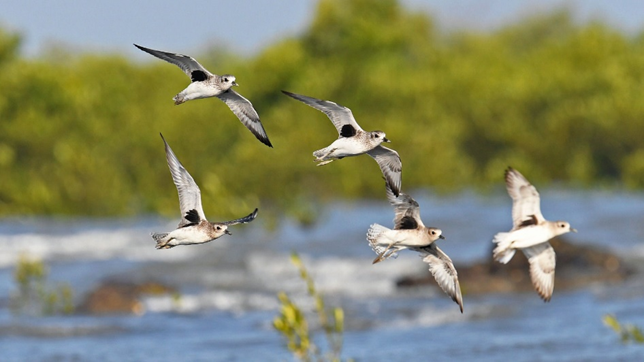
India’s first coastal and wader bird census in Jamnagar, Gujarat
India’s first coastal and wader bird census will be conducted from January 3 to 5, 2025, in the Marine National Park and Marine Sanctuary in Jamnagar, Gujarat. The census is being organized by the Gujarat government’s Forest Department in collaboration with the Bird Conservation Society Gujarat (BCSG).
Key Features of the Census:
Day 1: Speeches by wildlife and forest experts.
Day 2: Bird counting.
Day 3: Knowledge sharing and closing ceremony.
About the Marine National Park and Marine Sanctuary:
Marine Sanctuary: Established in 1980, covering 458 sq km.
Marine National Park: Established in 1982, covering 163 sq km.
Located in the Gulf of Kutch, it includes 42 tropical islands along the northern coast of Jamnagar and southern coast of Kutch.
Geographical Features:
The sanctuary lies in the intertidal zone, where the sea meets the land at high and low tides.
The area is rich in coral reefs, home to 52 coral species.
Bird Species:
The sanctuary, with its mangrove forests, serves as a nesting area for wader birds like Painted Stork, Darter, Black-necked Ibis, Avocets, and Phalaropes.
It also hosts fish-catching birds such as Gulls, Terns, Kingfishers, Osprey, Marsh Harrier, and Palla’s Fish Eagle.
Part of the Central Asian Migratory Birds Flyway.
Gujarat:
Capital: Gandhinagar
Governor: Acharya Devvrat
Chief minister: Bhupendra Patel
Government extends Agriculture Crop insurance scheme till 2025-26
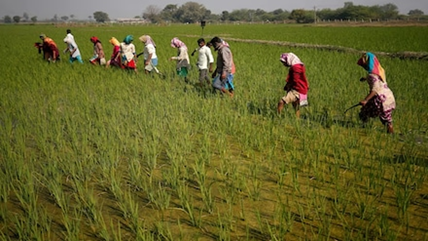
In a boost to the agricultural sector in the country, the government of India has approved several policy decisions including the extension of the major crop insurance scheme- Restructured Weather Based Crop Insurance Scheme and Pradhan Mantri Fasal Bima Yojana.
The government has also approved the creation of FIAT to fund research and development projects in the agricultural sector like YES-TECH, and WINDS.
The decision was taken in a meeting of the Union cabinet chaired by Prime Minister Narendra Modi on 1 January 2025.
Extension of the Crop Insurance Scheme : The central government has extended the central sector crop insurance scheme –Pradhan Mantri Fasal Bima Yojana and Restructured Weather Based Crop Insurance Scheme by one year till 2025-26.
Key Decisions:
Extension of Crop Insurance Schemes:
The Pradhan Mantri Fasal Bima Yojana (PMFBY) and Restructured Weather Based Crop Insurance Scheme have been extended for one more year, until 2025-26.
The total allocation for both schemes from 2021-22 to 2025-26 is Rs. 69,515.71 crore.
PMFBY compensates farmers for crop loss due to unforeseen conditions.
Restructured Weather Based Crop Insurance Scheme insures against crop loss due to adverse weather conditions like rainfall, temperature, frost, and humidity.
Creation of Fund for Innovation and Technology (FIAT):
The government has approved the establishment of FIAT with a corpus of Rs. 824.77 crore.
FIAT will fund research and development projects such as YES-TECH and WINDS.
Key Initiatives Under FIAT:
YES-TECH (Yield Estimation System using Technology):
Uses remote sensing technology to estimate crop yields.
The General Crop Estimation Survey (GCES) will give a 30% weightage to YES-TECH.
Implemented in 9 states, with Madhya Pradesh adopting 100% technology-based estimation.
WINDS (Weather Information and Network Data Systems):
Automatic Weather Stations (AWS) will be set up at the block level, and Automatic Rain Gauges (ARGs) at the panchayat level for data collection.
WINDS is being implemented in 9 states, including Uttar Pradesh, Kerala, Assam, Himachal Pradesh, Karnataka, and more.
The central government will fund 90% of the cost, with states covering the remaining 10%.
International news
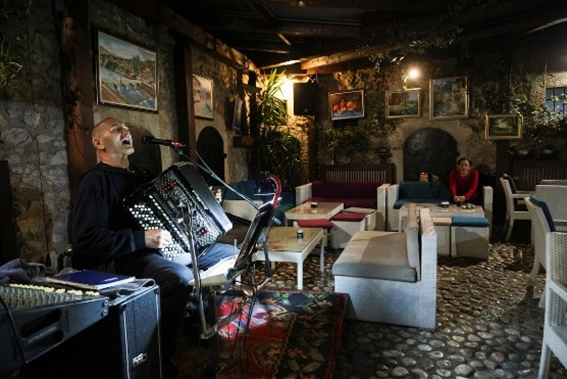
Sevdalinka: UNESCO Recognition Highlights Bosnia and Herzegovina’s Intangible Cultural Heritage
In December 2024, Sevdalinka, a melancholic and ancient love song from Bosnia and Herzegovina, was added to the UNESCO National Inventory of Intangible Cultural Heritage (ICH). This recognition highlights the importance of safeguarding and celebrating this cultural tradition on a national and international level.
Key Features of Sevdalinka:
Historical Roots: Dates back to the 16th century, making it a deeply rooted tradition in the region.
Emotional Depth: Often referred to as the ‘Balkan blues’ for its soulful melodies and poignant themes.
Cultural Significance: Represents the rich cultural and artistic heritage of Bosnia and Herzegovina.
Understanding Intangible Cultural Heritage (ICH):
Definition: ICH includes practices, representations, expressions, knowledge, and skills that communities and individuals recognize as part of their cultural heritage.
Purpose: Safeguarding ICH ensures the preservation of cultural diversity and traditions for future generations.
About Bosnia and Herzegovina:
President: Denis Bećirović
Prime Minister: Nermin Nikšić
Capital: Sarajevo
Currency: Bosnia-Herzegovina Convertible Mark (BAM)
This recognition by UNESCO reinforces the global appreciation for Sevdalinka as a vital component of Bosnia and Herzegovina’s cultural identity.
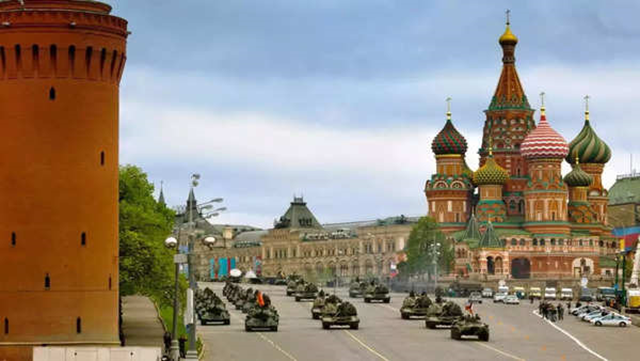
Tourist Tax Rolled Out in Russia From Jan. 1
Russia has introduced a new tourist tax, effective January 1, 2025, replacing the previous resort fee. This tax is designed to enhance regional tourism infrastructure and support local economies. The phased tax plan will begin with a 1% levy on lodging costs, increasing to 3% by 2027.
Key Details:
Implementation Date: Effective from January 1, 2025.
Tax Rates:
Starts at 1% of lodging costs in 2025.
Gradually increases to 3% by 2027.
Minimum daily charge set at 100 rubles (approximately 0.9 USD).
Purpose: To strengthen regional tourism infrastructure and support local economies.
Legislative Background:
Introduced via amendments to the Russian Tax Code in July 2024.
A new chapter titled “Tourist Tax” was added to the code.
Regional Discretion:
Regional authorities can implement the tax as a local levy.
The tax is expected to be widely adopted by regions with thriving or emerging tourism sectors.
Collection Mechanism:
The tax will be paid by hotels and lodging providers, incorporated into accommodation prices.
The cost of the tax will ultimately be borne by tourists.
Transition from Resort Fee: This new tourist tax replaces the earlier resort fee, providing a more structured and scalable framework for tourism funding.
Russia:
Capital: Moscow
Currency: Russian Ruble
Continent: Europe, Asia
Official language: Russian
Prime minister: Mikhail Mishustin
Economy news
Ramesh Chand to head the Working Group on the revision of WPI Base
The Government of India has formed a Working Group to revise the base year of the Wholesale Price Index (WPI) and recommend a roadmap for transitioning to the Producer Price Index (PPI).
Key Points:
Base Year Change: The base year for WPI will shift from 2011-12 to 2022-23.
Notification Date: The government issued this notification on 2 January 2025.
Working Group Composition:
Chairperson: Professor Ramesh Chand (NITI Aayog member).
Members: 16 others, with the Deputy Director General of DPIIT acting as the Member Secretary.
Report Deadline: The Working Group is expected to submit its report to the Office of the Economic Adviser at the Department for Promotion of Industry and Internal Trade (DPIIT) within 18 months.
Terms of Reference for the Working Group:
Commodities for WPI/PPI: Suggest commodities to include in WPI and PPI with the new base year, considering structural changes in the economy.
Price Collection System: Review and propose changes in the existing system of price collection.
Computational Methodology: Suggest methodologies for computing WPI/PPI.
PPI Compilation Methodology: Examine the Technical Advisory Committee’s methodology for PPI and recommend any changes.
Transition Roadmap: Recommend a plan for transitioning from WPI to PPI.
Reliability of Data: Suggest improvements to increase the reliability of WPI/PPI data.
Overview of Current Indices:
WPI (Wholesale Price Index):
Measures the average wholesale prices of goods at the producer level.
Excludes taxes, trade discounts, transport charges, and services.
Used to calculate real GDP.
Published monthly by DPIIT, Ministry of Commerce and Industry.
CPI (Consumer Price Index):
Measures the average price of goods and services consumed by households (retail inflation).
Used to target inflation, revise wages, and determine dearness allowances.
Published monthly by NSO, Ministry of Statistics and Programme Implementation.
PPI (Producer Price Index) (Proposed):
Measures wholesale prices at different production stages.
Includes the service sector, which is absent from WPI.
Commonly used in developed countries to track economic activity.
Aims to improve upon the current WPI methodology for better tracking of price changes.
India Achieves 36% Reduction in GDP Emission Intensity from 2005 to 2020
India has made significant strides in decoupling economic growth from greenhouse gas emissions, achieving a 36% reduction in GDP emission intensity between 2005 and 2020. This progress aligns with the nation’s climate action targets under the Paris Agreement.
Key Highlights
Total Greenhouse Gas Emissions
In 2020, India’s total greenhouse gas emissions, excluding land use, land-use change, and forestry (LULUCF), were 2,959 million tonnes of carbon dioxide equivalent (MtCO2e). Including LULUCF, emissions stood at 2,437 MtCO2e. This represents a 7.93% decrease compared to 2019 but a 98.34% increase since 1994.
Emission Intensity Reduction: The 36% decline in emission intensity of GDP from 2005 to 2020 indicates India’s success in reducing emissions relative to economic growth. This positions the country on track to meet its Nationally Determined Contribution (NDC) target of a 45% reduction by 2030.
Non-Fossil Fuel Energy Capacity: As of October 2024, non-fossil fuel sources accounted for 46.52% of India’s installed electricity generation capacity. The cumulative renewable power installed capacity, including large hydro projects, reached 203.2 gigawatts (GW). This progress supports India’s NDC goal of achieving 50% cumulative electric power installed capacity from non-fossil fuel-based energy resources by 2030.
Carbon Sink Enhancement: Between 2005 and 2021, India created an additional carbon sink of 2.29 billion tonnes through forest and tree cover, contributing to its commitment of generating an additional carbon sink of 2.5 to 3 billion tonnes by 2030.
Sectoral Emissions Breakdown (2020)
Energy Sector: Contributed 75.66% of total emissions.
Agriculture: Accounted for 13.72%.
Industrial Processes and Product Use (IPPU): Made up 8.06%.
Waste: Comprised 2.56%.
Banking news
RBI Introduces New Guidelines for Bank Account Management and Fixed Deposits from January 2025
The Reserve Bank of India (RBI) has issued new guidelines effective from January 1, 2025, aimed at improving banking security and operational efficiency while mitigating fraud.
Closure of Specific Bank Accounts:
The guidelines mandate the closure of three types of bank accounts:
Dormant Accounts
Inactive Accounts
Zero Balance Accounts
This measure is expected to enhance security and optimize banking operations.
Revised Guidelines for Fixed Deposits (FDs) with NBFCs and HFCs: The RBI also introduced new rules for premature withdrawals from FDs with Non-Banking Financial Companies (NBFCs) and Housing Finance Companies (HFCs). The key provisions are:
For Small Deposits (up to ₹10,000):
Withdrawals Allowed: Full withdrawal permitted within three months of deposit.
Interest: No interest will be paid on these withdrawals.
For Larger Deposits (above ₹10,000):
Partial Withdrawals: Allowed up to 50% of the principal amount or ₹5 lakh, whichever is lower, within three months of deposit.
Interest: No interest will be provided on these partial withdrawals.
These changes reflect RBI’s continued efforts to balance depositor flexibility with the operational needs of financial institutions, ensuring a safer and more efficient banking environment.
Ranks and report news
India’s Readiness to Tackle Aging Population: Ranked 123rd Globally
A study published in the renowned medical journal Nature Aging has ranked India 123rd out of 143 countries on the Global Aging Index. The index, which evaluates the readiness of nations to address the challenges of an aging population, underscores the urgency for India to prepare for its demographic transition.
Global Rankings:
Top Performers:
Switzerland:
Secured the 1st position with the highest score of 82.3.
Norway: Ranked 2nd.
Denmark: Ranked 3rd.
Lowest Rankings:
Rwanda: Ranked 143rd (last), with a score of 36.6.
Followed by Togo (142nd), Afghanistan (141st), Benin (140th), and Malawi (139th).
India’s Demographic Profile:
Current Youth Dominance:
Over 50% of India’s population is below the age of 25.
Over 65% is below the age of 35, making India the youngest country in the world.
Future Outlook: India is poised to have the largest senior citizen population globally in the coming decades, necessitating robust aging-related policies.
About the Global Aging Index:
Developed by researchers from:
National University of Singapore (NUS), Singapore.
Columbia University, New York, USA.
The index evaluates countries on parameters that measure their preparedness for the social, economic, and healthcare challenges posed by aging populations.
Science and tech news
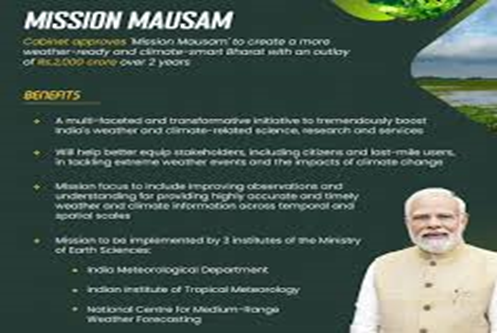
Mission MAUSAM: Enhancing India’s Weather and Climate Readiness
Mission MAUSAM is a flagship initiative by the Ministry of Earth Sciences (MoES) aimed at making India “Weather Ready” and “Climate Smart” by 2026. The program positions India as a global leader in weather and climate sciences while adhering to international standards. Approved by the Union Cabinet in September 2024, it has a total budget outlay of Rs 2,000 crore for two years.
Key Objectives:
Infrastructure Expansion:
Installation of 50 Doppler Weather Radars (DWR).
Setup of 60 Radio Sonde/Radio Wind (RS/RW) stations, 100 disdrometers, 10 wind profilers, and 25 radiometers.
Development of 1 urban test-bed, 1 process test-bed, 1 ocean research station, and 10 marine automatic weather stations with upper air observation.
Institutional Implementation:
Implemented by MoES through its premier institutions:
India Meteorological Department (IMD), New Delhi.
National Centre for Medium-Range Weather Forecasting (NCMRWF), Noida, Uttar Pradesh.
Indian Institute of Tropical Meteorology (IITM), Pune, Maharashtra.
Collaborative Support:
Backed by allied institutions of MoES:
Indian National Centre for Ocean Information Services (INCOIS), Hyderabad, Telangana.
National Institute of Ocean Technology (NIOT), Chennai, Tamil Nadu.
Significance:
Transformative Initiative: Boosts India’s capacity for weather and climate-related sciences and services.
Global Standards: Aligns India’s weather preparedness with international benchmarks.
Union Minister of MoES: Dr. Jitendra Singh, Minister of State (Independent Charge), Constituency: Udhampur, Jammu & Kashmir.
Ranks and report news
India’s Coffee Exports Surge to Record High in FY24
India’s coffee exports have reached a new milestone, achieving a record $1.14 billion between April and November in FY24, representing a 29% increase compared to the same period last year. This surge in exports has been driven by a combination of rising global demand for Robusta coffee and supply chain disruptions in major coffee-producing countries like Brazil and Vietnam. Additionally, India’s high-quality coffee, particularly from Karnataka, has found strong demand in premium global markets.
Key Highlights:
Export Growth:
Record exports: $1.14 billion in April-November FY24, up 29% from FY23 ($803.8 million).
Total exports for FY24: Increased by 12.22%, reaching $1.28 billion.
Major export markets: Italy, Russia, UAE, Germany, and Turkey.
Factors Driving Growth:
Rising Robusta Prices: Prices reached a peak of $4,667 per metric ton, a 63% increase from the previous year.
Supply Challenges in Competitor Nations:
Brazil’s coffee production decreased due to droughts and high temperatures.
Vietnam’s coffee yields are below historic levels.
EU Deforestation Regulation: The regulation, which will be enforced in December 2024, prompted stockpiling of coffee, increasing demand for Indian coffee.
India’s Coffee Global Standing:
India ranks as the 8th largest coffee producer globally.
The country produces two main types of coffee:
Arabica: Known for its mild, aromatic flavor and premium market value.
Robusta: Known for its stronger flavor and commonly used in blends, accounting for 72% of India’s total coffee production.
India is the 5th largest producer of Robusta coffee globally.
Regional Contributions:
Karnataka is the largest coffee producer, contributing 71% of India’s coffee.
Kerala follows as the second-largest producer, contributing 20%.
Tamil Nadu contributes 5%, with Nilgiri district known for its Arabica coffee.
Smaller contributions come from Odisha and the northeastern states.
Economic Impact:
Coffee cultivation provides direct employment to over 2 million people.
The export-oriented production helps minimize the impact of domestic consumption trends on the coffee industry.
Challenges Ahead: The EU Deforestation Regulation (EUDR), aimed at preventing imports linked to deforested lands, may challenge India’s coffee exports by increasing costs and complicating the $1.3 billion agricultural export market.
Appointment news
Sanjiv Ranjan Appointed Secretary General of IORA
In a significant diplomatic move, the Ministry of External Affairs (MEA) announced in December 2024 the appointment of Senior IFS Officer Sanjiv Ranjan as the Secretary General of the Indian Ocean Rim Association (IORA) Secretariat in Ebene, Mauritius. He succeeds Salman Al-Farisi of Indonesia.
About Sanjiv Ranjan:
Indian Foreign Service (IFS): Joined the IFS in 1993, building a distinguished career in diplomacy, focusing on multilateral and bilateral cooperation.
Key Diplomatic Assignments (1995–2009):
Held positions in Madrid (Spain) and Lima (Peru).
Represented India at the Permanent Mission of India in New York, USA.
Served as Deputy High Commissioner of India to Mauritius (2006–2009).
About IORA: The Indian Ocean Rim Association (IORA) is an intergovernmental organization aimed at promoting sustainable development and regional cooperation among countries bordering the Indian Ocean. The Secretariat is based in Ebene, Mauritius.
Sanjiv Ranjan’s extensive experience in multilateral diplomacy is expected to enhance IORA’s objectives of fostering regional collaboration and growth.
Bhuvnesh Kumar new CEO of the UIDAI
Bhuvnesh Kumar, a 1995 batch IAS officer from the Uttar Pradesh cadre, took over as the Chief Executive Officer (CEO) of the Unique Identification Authority of India (UIDAI) on 2 January 2025.
Previous Position:Bhuvnesh Kumar replaces Amit Aggarwal, who has been appointed as the Secretary of the Department of Pharmaceuticals, Ministry of Chemicals and Fertilizers, Government of India.
Additional Role: Along with his role as CEO of UIDAI, Bhuvnesh Kumar will also serve as the Additional Secretary in the Ministry of Electronics and Information Technology (MeitY), Government of India.
About Bhuvnesh Kumar:
Bhuvnesh Kumar has held several key positions in the Uttar Pradesh government, including:
Principal Secretary in the Department of Animal Husbandry, Dairy Development, and Fisheries.
Secretary of Finance, MSME, Technical Education, and Divisional Commissioner in the Department of Land Revenue.
About UIDAI:
Establishment:UIDAI was set up in 2009 by the central government under the Planning Commission (now NITI Aayog).
Statutory Body: It became a statutory body in 2016 under the Aadhaar Act.
Current Ministry:UIDAI is currently under the Union Ministry of Electronics and Information Technology (MeitY).
Functions:UIDAI is responsible for issuing Unique Identification numbers (Aadhaar) to Indian residents and managing the Aadhaar enrolment and authentication processes.
About Aadhaar:
Definition: Aadhaar is a 12-digit alphanumeric biometric number used as proof of identity and residence for Indian residents.
Eligibility: A person who has resided in India for at least 182 days in the previous 12 months can apply for Aadhaar. Non-resident Indians (NRIs) and foreign citizens who meet this criteria can also apply.
Use: Aadhaar is mandatory for filing income tax returns in India and is widely used for various welfare and financial services.
Manish Singhal Appointed Secretary General of ASSOCHAM
The Associated Chambers of Commerce and Industry of India (ASSOCHAM), one of India’s oldest apex business chambers (established in 1920), has appointed Manish Singhal as its new Secretary General. Singhal, an industry veteran with over 35 years of experience, takes over from Deepak Sood, who served for five years and transformed the chamber’s operations, leaving behind a robust financial foundation. Singhal’s career spans leadership roles in organizations like Tata Motors, Eicher (Volvo), and FICCI, where he was Deputy Secretary General.
Leadership Transition and Contributions
Incoming Leadership: Singhal brings proven expertise in policy advocacy and international business, expected to help ASSOCHAM scale new heights.
Outgoing Legacy: Deepak Sood is credited with revitalizing ASSOCHAM, ensuring a healthy balance sheet, and enhancing the chamber’s influence.
Strategic Focus and Advocacy
ASSOCHAM continues to advocate for policy measures that bolster India’s economic ecosystem, representing 4.5 lakh members, including large corporations and MSMEs.
Pre-Budget Recommendations: The chamber recently suggested extending presumptive taxation to new-age businesses like data centers and cloud computing to simplify compliance and reduce tax disputes.
MSME Growth: Recommendations include establishing MSME universities for skill development and creating Integrated Infrastructure Townships to revive industrial estate programs.
Sports news
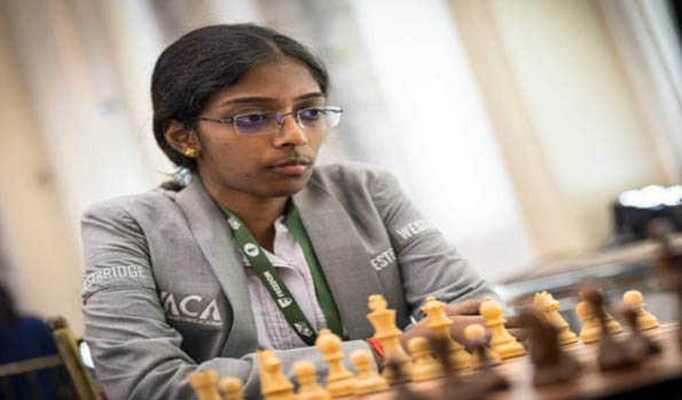
Vaishali bags bronze in 2024 World Blitz Championship Women’s section
R. Vaishali of India won the bronze medal in the women’s section of the 2024 FIDE World Blitz Championships, adding to the gold won by Koneru Humpy in the 2024 World Rapid Championship.
For the time in the history of the World Blitz Championship, the title of the Open section was shared between two players- Magnus Carlsen and Ian Nepomniachtchi. It was the seventh title for Magnus Carlsen while the first for Ian Nepomniachtch The women’s section was won by Chinese chess player Ju Wenjun.
2024 FIDE World Blitz Championship Highlights:
Venue and Date: Held in New York City, USA, on December 30-31, 2024, following the 2024 FIDE World Rapid Championship.
Women’s Section:
Gold: Ju Wenjun (China), who defeated Lei Tingjie (China) in the final.
Silver: Lei Tingjie (China).
Bronze: R. Vaishali (India), who reached the semifinals, defeating Zhu Jiner (China) in the quarterfinals but losing to Ju Wenjun.
Open Section:
Joint Winners: Magnus Carlsen (Norway) and Ian Nepomniachtchi (Russia) shared the title after a tied final (2-2 in four games and 3.5-3.5 in tiebreak). The FIDE President, Arkady Dvorkovich, approved the decision for both to be declared winners due to exhaustion.
About FIDE World Rapid and Blitz Championships:
FIDE organizes these annual championships in the Open and Women’s sections.
First World Rapid and Blitz Championship (Open): Khanty-Mansiysk, Russia (2013).
First Women’s FIDE World Rapid and Blitz Championship: Batumi, Georgia (2012).
Since 2017, both championships have been held simultaneously at the same venue.
About FIDE:
Full Name: International Chess Federation (FIDE), established in 1924 in Paris, France.
Headquarters: Lausanne, Switzerland.
President: Arkady Dvorkovich (Russia).
Deputy President: Viswanathan Anand (India).
Members: 201 national chess federations worldwide.
National Sports Award 2024 announced get the full List
The Union Ministry of Youth Affairs and Sports announced the winners of the 2024 National Sports Awards on 2 January 2025. The award ceremony will be held at Rashtrapati Bhavan in New Delhi on 17 January 2025, where President Droupadi Murmu will felicitate the winners.
About the National Sports Award: The National Sports Award consists of the following categories:
Major Dhyan Chand Khel Ratna Award (the highest sports award in India)
Arjuna Award
Dronacharya Award
Major Dhyan Chand Award
Maulana Abul Kalam Azad Trophy
Rashtriya Khel Protsahan Puruskar
Except for the Rashtriya Khel Protsahan Puruskar, which is given for promoting sports, all other awards are presented to individual sports persons or coaches.
List of Winners of the 2024 National Sports Award:
1. Major Dhyan Chand Khel Ratna Award Winners:
Gukesh D (Chess)
Harmanpreet Singh (Hockey)
Praveen Kumar (Para-Athletics)
Manu Bhaker (Shooting)
2. Arjuna Award Winners:
Jyothi Yarraji (Athletics)
Annu Rani (Athletics)
Nitu Ghanghas (Boxing)
Saweety Boora (Boxing)
Vantika Agrawal (Chess)
Salima Tete (Hockey)
Abhishek (Hockey)
Sanjay (Hockey)
Jarmanpreet Singh (Hockey)
Sukhjeet Singh (Hockey)
Rakesh Kumar (Para-Archery)
Preeti Pal (Para-Athletics)
Jeevanji Deepthi (Para-Athletics)
Ajeet Singh (Para-Athletics)
Sachin Sarjerao Khilari (Para-Athletics)
Dharambir (Para-Athletics)
Pranav Soorma (Para-Athletics)
Hokato Hotozhe Sema (Para-Athletics)
Simran Sharma (Para-Athletics)
Navdeep Singh (Para-Athletics)
Nitesh Kumar (Para-Badminton)
Thulasimathi Murugesan (Para-Badminton)
Nithya Sre Sivan (Para-Badminton)
Manisha Ramadass (Para-Badminton)
Kapil Parmar (Para-Judo)
Mona Agarwal (Para-Shooting)
Rubina Francis (Para-Shooting)
Swapnil Kusale (Shooting)
Sarabjot Singh (Shooting)
Abhay Singh (Squash)
Sajan Prakash (Swimming)
Aman Sehrawat (Wrestling)
3. Arjuna Awards (Lifetime) Winners:
Sucha Singh (Athletics)
Murlikant Petkar (Para-Swimming)
4. Dronacharya Award Winners:
Regular Category:
Subhash Rana (Para-Shooting)
Deepali Deshpande (Shooting)
Sandeep Sangwan (Hockey)
Lifetime Category:
S Muralidharan (Badminton)
Armando Colaco (Football)
5. Rashtriya Khel Protsahan Puraskar Winner: Physical Education Foundation of India
6. Maulana Abul Kalam Azad Trophy Winners:
Overall Winner University: Chandigarh University
1st Runner Up University: Lovely Professional University
2nd Runner Up University: Guru Nanak Dev University, Amritsar
Additional Award:
The Tenzing Norgay National Adventure Award winner will be announced later.
These distinguished awards highlight the exemplary achievements in sports and honor those who have contributed significantly to the development and promotion of sports in India.
Important days news
Global Family Day: A Celebration of Unity, Love, and Peace
Global Family Day is observed every year on January 1, setting the tone for the new year by emphasizing peace, unity, and the importance of families in fostering joy and stability in our lives. The day highlights the connection between world peace, communities, and the strength of families.
History of Global Family Day:
Proposed in November 1997: The day was inspired by the book One Day In Peace.
UN Publication (January 1, 2000): It marked the beginning of the International Decade for the Culture of Peace and Non-Violence for the Children of the World.
Formal Declaration: UN members officially declared the celebration of Global Family Day in 1999.
Significance:
Unity in Diversity: Celebrates harmony and mutual understanding across different cultures and communities worldwide.
Peace Promotion: Highlights the need for peace and aims to reduce violence through awareness and action.
Community Engagement: Encourages activities like educational webinars and local celebrations that unite people for peace.
Global Awareness: Raises awareness of global conflicts and emphasizes the role families play in promoting peace and harmony.
Global Family Day encourages individuals and communities to take action in addressing conflicts, fostering understanding, and strengthening family bonds for a peaceful world.
Books and author news
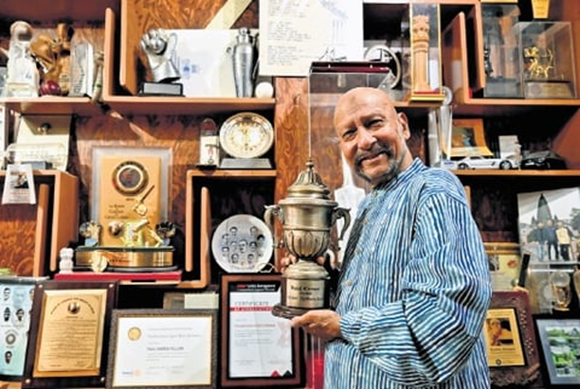
Syed Kirmani Releases Autobiography “Stumped: Life Behind and Beyond the Twenty-Two Yards”
On December 29, 2024, legendary former Indian cricketer and wicket-keeper Syed Mujtaba Hussein Kirmani released his autobiography titled “Stumped: Life Behind and Beyond the Twenty-Two Yards” at a grand event in Chinnaswamy Stadium, Bengaluru, Karnataka.
Occasion:
The release coincided with Kirmani’s 75th birthday.
The book is published by Penguin Play.
Authorship:
Authored by Syed Kirmani over five years.
Co-authored by Debashish Sengupta and Dakshesh Pathak.
Content:
Chronicles Kirmani’s personal and professional journey, offering a deep dive into the world of 1980s cricket.
Features anecdotes from his 1983 ODI World Cup victory and life both on and off the field.
Title: Cost and benefit: On Bangladesh, India and Sheikh Hasina
Amidst signs that New Delhi and Dhaka are trying to resolve other issues that have marred their ties in the last few months, the issue of Bangladesh’s demand that India extradite Sheikh Hasina remains intractable, with neither side budging. In December, Indian Foreign Secretary Vikram Misri was able to convey during his Dhaka visit, that India remains a friend. He also reaffirmed the continuity in ties in trade, energy, infrastructure and connectivity; the two sides appear to have calmed the situation at the border as well. Finally, the government indicated to a parliamentary committee that while Ms. Hasina remains in Delhi as India’s guest, it had no truck with her political pronouncements and messages targeting Mr. Yunus. The situation seemed to shift last week, as Bangladesh sent New Delhi a “note verbale” or diplomatic missive demanding Ms. Hasina’s extradition to face trial for cases that include corruption, and a Dhaka-based International Crimes Tribunal charge that she had perpetrated ‘crimes against humanity’ in ordering a police crackdown on student protesters. The India-Bangladesh extradition treaty of 2013, amended in 2016, sets out the course of procedures quite clearly, which needs to be pursued through a more formal representation from Bangladesh to India. The note verbale appears to be meant only to assuage domestic political constituencies, while India’s External Affairs Ministry’s response — not rejecting it outright — seems to be a non-escalatory way of dealing with the situation.
While the legalities of the request can be the subject of protracted negotiations, it is important to ensure that the issue does not hold India-Bangladesh relations hostage. The Yunus government must understand that the history of India’s relationship with Ms. Hasina and her family is forged in the sacrifices made in both countries for the liberation of Bangladesh. The assassination of her father, Sheikh Mujibur Rahman, and members of her family in 1975, and her first exile in India, strengthened the bond. It is futile to expect that India would simply hand Ms. Hasina over, when she has sought refuge here, and no amount of coercive pressure could force an Indian government to comply. The decision to shelter the Dalai Lama in 1959, for example, has not wavered despite Chinese pressure. Furthermore, bringing Ms. Hasina to account is not the mandate of the interim regime, and should be pursued by a government duly elected by the Bangladeshi people. In Delhi, there must be a recognition that the actions of Ms. Hasina’s government have scarred the nation. The fact that she is making political statements with ease from Indian soil is likely to embitter ties and New Delhi must conduct a full cost-benefit analysis of how helpful these statements are. Given the consequences of a tense border and geopolitical turmoil, both countries must learn to deal with the issue diplomatically — in a separate silo from other aspects of their important relationship.
Meaning of the word:
Word
Meaning
Synonyms
Antonyms
Intractable
The word “intractable” means something that is difficult to manage, deal with, or solve. It is often used to describe problems, situations, or people that are stubborn or resistant to change or control.
Unmanageable Stubborn Obstinate Refractory
Manageable Compliant Flexible Docile
Reaffirmed
“Reaffirmed” means to confirm or assert something again, especially to reinforce a belief, decision, or statement. It is used when someone restates or strengthens a previous commitment, opinion, or promise to emphasize its validity or importance.
Reasserted Confirmed Restated Reconfirmed
Denied Disavowed Rejected Contradicted
Futile
“Futile” means something that is pointless, ineffective, or incapable of producing any useful result. It refers to actions or efforts that are in vain or unlikely to succeed.
We at Edusprint Academy are committed to bringing you the most relevant and updated 2nd January 2025 current affairs current affairs 2024, curated from trusted and official sources. These updates are designed to keep you ahead in your exam preparation journey.
Our comprehensive Current Affairs 2nd January 2025 coverage aims to enhance your knowledge and boost your scores in Banking, Insurance, SSC, Railways, UPSC, and all State Government Exams. Explore our Current Affairs tailored to simplify your exam preparation
National news
India’s first glass bridge over sea inaugurated in Kanyakumari
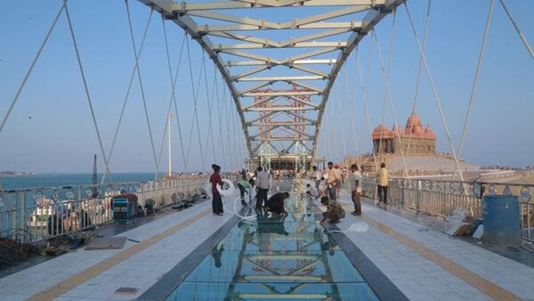
Tamil Nadu Chief Minister M K Stalin inaugurated India’s first glass bridge over the sea in Kanyakumari on 31st December 2024. The glass bridge connects the Vivekananda Rock Memorial and the 133-foot Thiruvalluvar statue in the Kanyakumari district.
Location: Connects Vivekananda Rock Memorial and Thiruvalluvar Statue.
Specifications:
Length: 77 meters
Width: 10 meters
Height: 133 feet
Purpose: Offers an alternative to ferries for tourists; boosts tourism.
Cost: ₹37 crore.
Significance: Marks the Silver Jubilee of Thiruvalluvar Statue’s unveiling.
Longest Glass Bridge in India
Location: Vagamon, Idukki district, Kerala.
Specifications:
Length: 40 meters
Altitude: 3600 feet.
Longest Glass Bridge in the World
Location: Zhangjiajie, Hunan province, China.
Specifications:
Length: 430 meters
Width: 6 meters
Height: 300 meters above the ground.
Thirukkural Week Announcement: CM Stalin declared the last week of December as “Thirukkural Week” to promote poet Thiruvalluvar’s teachings.
India’s greenhouse gas emissions drop 7.93% in 2020, GDP emission intensity down by 36% since 2005
India’s efforts to mitigate greenhouse gas emissions have borne fruit, as the country’s emissions fell by 7.93 per cent in 2020 compared to the previous year. Data submitted to the UN climate change office reveals a decline in the emission intensity of India’s GDP by 36 per cent from 2005 to 2020.
Key Achievements
Emission Reduction in 2020:
A 7.93% decline in emissions compared to 2019.
Total emissions in 2020: 2,959 million tonnes of CO2 equivalent (excluding land use change).
Emission Intensity Decline:
Reduction of 36% in GDP emission intensity from 2005 to 2020.
On track to achieve a 45% reduction by 2030.
Non-Fossil Fuel Capacity Goal: Aiming for 50% of electric power capacity from non-fossil fuels by 2030.
Challenges
Emissions increased by 98.34% since 1994.
Energy production, agriculture, and industry remain major emission sources.
Global Reporting: India submitted its fourth Biennial Update Report (BUR-4) to the UNFCCC.
Outlook: India is successfully decoupling economic growth from emissions, maintaining its development while meeting climate commitments.
Groundwater recharge up by 15 billion cubic meters:Jal Shakti Ministry
The Groundwater recharge in the country has increased by 15 billion cubic meters and the groundwater extraction has declined by 3 billion cubic meters from the 2017 to 2024 period.
The latest status of the groundwater recharge in the country ending 31st December 2024 was released by the Union Ministry of Jal Shakti in its Dynamic Ground Water Resource Assessment Report 2024.
The groundwater assessment was carried out by the Central Ground Water Board(CGWB), under the Union Jal Shakti ministry, in collaboration with the States and Union Territories.
Key Findings from the Report:
Total Groundwater Recharge: The total annual groundwater recharge in India stands at 446.90 billion cubic meters (BCM).
Annual Extractable Groundwater Resource: The extractable groundwater resource annually is 406.19 BCM.
Annual Groundwater Extraction: The annual groundwater extraction for all purposes is 245.64 BCM.
Stage of Groundwater Extraction: The average stage of groundwater extraction in India is 60.47%.
Trends in Recharge from Tanks, Ponds, and Water Conservation Structures: There has been a consistent increase in groundwater recharge from tanks, ponds, and water conservation structures.
From 2017 to 2024, the recharge from these sources increased by 11.36 BCM (from 13.98 BCM in 2017 to 25.34 BCM in 2024).
Compared to 2023, there was an increase of 0.39 BCM in 2024.
Percentage of Safe Assessment Units:
The percentage of assessment units (blocks, mandals, talukas) under the Safe category increased from 62.6% in 2017 to 73.4% in 2024 (up from 73.14% in 2023).
Percentage of Over-Exploited Assessment Units: The percentage of over-exploited units decreased from 17.24% in 2017 to 11.13% in 2024 (down from 11.23% in 2023).
Overall Groundwater Trends: Groundwater recharge has increased by 15 billion cubic meters, while groundwater extraction has decreased by 3 billion cubic meters from 2017 to 2024.
What is Groundwater Recharge?
Groundwater Recharge is the process by which water replenishes the underground water table. This can occur naturally through rainfall, snowmelt, or through artificial methods like rainwater harvesting. If recharge rates are lower than extraction rates, it can lead to a drop in the water table, potentially causing a water crisis.
The findings indicate that the efforts to increase groundwater recharge, such as promoting rainwater harvesting and improving water conservation infrastructure, have had positive results. However, continued attention to sustainable water management is essential to maintaining these gains.
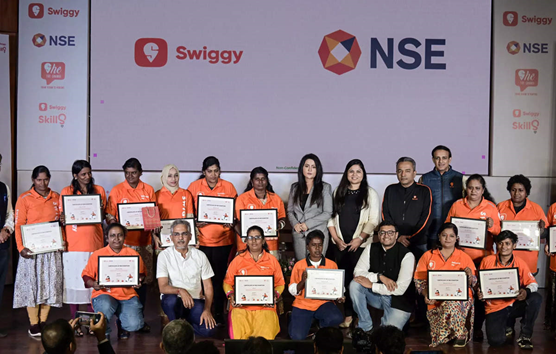
Swiggy Partners with NSE to Empower Delivery Partners with Financial Literacy
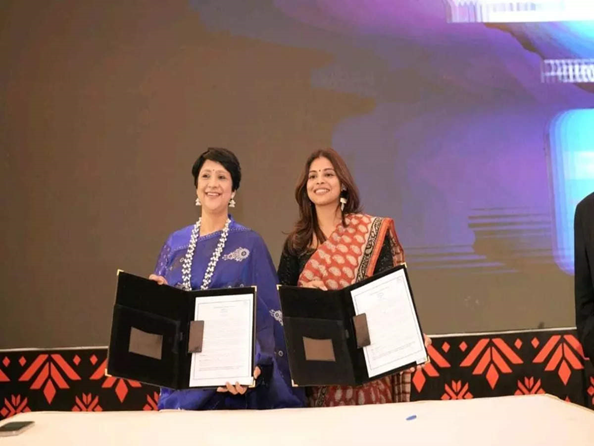
On December , 2024, Swiggy Limited, an Indian online food delivery and e-commerce platformheadquartered in Bengaluru, Karnataka, signed a Memorandum of Understanding (MOU) with the National Stock Exchange of India Limited (NSE) to launch a financial literacy program for Swiggy’s delivery partners. This program focuses on empowering women in the workforce.
Key Highlights:
Targeting Women Empowerment: Swiggy aims to have 1 lakh women delivery partners by 2030, offering them financial training led by trainers certified by the Securities and Exchange Board of India (SEBI).
Part of Broader Initiatives: The financial literacy program is a part of Swiggy’s larger efforts, including initiatives like “She the Change” and “Swiggy Skills”, aimed at promoting workforce empowerment and financial inclusion.
Event Guest: Amruta Fadnavis, Vice-President of Axis Bank and wife of Maharashtra Chief Minister Devendra Fadnavis, was the Chief Guest at the event.
About Swiggy:
Founded: 2014
MD & CEO: [Name not specified in the provided text]
Headquarters: Bengaluru, Karnataka
Economy news
Interest rates remain unchanged on National Small Saving Schemes
The National Small Savings Schemes are government-backed financial schemes offered to the public through post offices and certain banks. They offer secure investment options and attractive interest rates, with deposits guaranteed by the Government of India.The interest rates on these schemes are reviewed quarterly by the Ministry of Finance.
Categories of Schemes
The National Small Savings Schemes are divided into three categories:
Post Office Deposits
Savings Certificates
Social Security Schemes
Post Office Deposits & Interest Rates
Savings Accounts
Minimum opening: ₹500 (no maximum limit)
Interest rate: 4% per annum
This is the only savings account not regulated by the RBI.
Recurring Deposit
Minimum opening: ₹100, and ₹10 per month
No maximum limit
Interest rate: 6.7% per annum
Maturity period: 5 years
Time Deposit Accounts
Maturity: 1 to 5 years (interest rate varies from 6.9% to 7.5% depending on the duration)
Minimum opening: ₹1000 (no maximum limit)
Principal and interest are paid at maturity
National Monthly Income Account
Duration: 5 years
Interest rate: 7.4% per annum (paid monthly)
Minimum opening: ₹1000
Maximum limit: ₹9 lakhs for single accounts, ₹15 lakhs for joint accounts
National Citizen Savings Scheme
For persons above 60 years of age
Minimum opening: ₹1000, Maximum: ₹30 lakhs
Interest rate: 8.2% per annum (paid quarterly)
Duration: 5 years
Sukanya Samridhi Yojana
For girls below 10 years of age
Interest rate: 8.2% per annum
Minimum opening: ₹250, Maximum: ₹1.5 lakhs per year
Duration: 15 years, with closure after 21 years or upon marriage after 18 years of age
Use of Deposits: The funds collected from these savings schemes are pooled into the National Small Savings Fund (NSSF), which is used by the government to meet its fiscal deficit.
Banking news
YES Bank Launches ‘YES PowherUp’ Programme to Empower Women Entrepreneurs
In December 2024, YES Bank, India’s 6th largest private sector bank, in collaboration with the Federation of Indian Chambers of Commerce and Industry (FICCI) Ladies Organisation (FLO), launched ‘YES PowherUp’. This specialized MSME programme is designed to empower women entrepreneurs and support the growth of their businesses.
Key Features of ‘YES PowherUp’:
SME Loans: Offers funding solutions with a 50% processing fee waiver for FICCI FLO members.
YES First Business Account: Premium business accounts offering exclusive benefits for women entrepreneurs.
Trade & Forex Solutions: Provides access to international markets with specialized trade and forex services.
Investment Solutions: Enables beneficiaries to trade up to Rs 1.5 crore at zero brokerage for 60 days via YES Securities.
Card Solutions: Business credit cards with low foreign currency markups for domestic and international use.
Insurance Plans: Tailored insurance plans for asset protection, cancer coverage, and discounted term plans.
About YES Bank:
MD & CEO: Prashant Kumar
Headquarters: Mumbai, Maharashtra
Established: 2004
Tagline: “Experience our expertise”
About FICCI Ladies Organisation (FICCI FLO):
President: Joyshree Das Verma
Headquarters: New Delhi, Delhi
Established: 1983
Scheme news
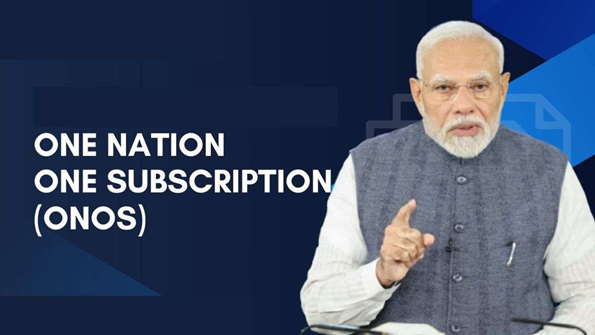
Govt launches ONOS to provide seamless access to digital knowledge resources
The Government has launched the “One Nation, One Subscription” scheme starting today. This initiative aims to provide seamless access to a wide range of digital knowledge resources, including research papers, journals, and academic content, under a single subscription platform.
Key Features
Access for Government Institutions:
1.8 crore students from government-funded higher education institutions, including universities and IITs.
Covers 13,400+ international journals in fields like science, technology, engineering, medicine, social sciences, and humanities.
Phased Expansion: Future phases to extend access to private educational institutions and eventually all individuals in the country.
Budget Allocation:
₹6,000 crore for three years.
₹150 crore/year for authors to publish in selected Open Access journals.
Administration: Centrally negotiated and funded through a National Consortium for electronic journal subscriptions.
Benefits
Eliminates multiple subscription barriers.
Ensures equitable access to global research resources.
Promotes high-quality research and academic publication in India.
Defence news
Defence Ministry declares 2025 as ‘Year of Reforms’ to enhance combat readiness and Technological Advancements
The Ministry of Defence has declared 2025 as the Year of Reforms in order to give impetus to the on-going and future reforms in the Defence Sector.
On the eve of the New Year, Defence Minister Rajnath Singh chaired a crucial meeting with all Secretaries of the Ministry of Defence to review the progress on various key schemes, projects, and reforms.
Overview
Objective: Accelerate ongoing and future reforms in the defence sector.
Launch: Defence Minister Rajnath Singh chaired a review meeting with Ministry Secretaries.
Vision: Transform the Armed Forces into a technologically advanced, combat-ready force for multi-domain integrated operations.
Key Focus Areas
Defence Modernisation:
Adoption of technologies like Artificial Intelligence, drones, and cyber warfare.
Enhancing defence manufacturing and infrastructure.
Improving procurement processes.
Synergy and Integration:
Foster cohesion between various branches of the Armed Forces.
Strengthen public-private partnerships through technology transfer and ease of doing business.
Global Competitiveness:
Position India as a credible exporter of defence products.
Promote Research and Development (R&D) in defence technologies.
Welfare Measures: Optimisation of support systems for veterans.
Expected Outcomes
Enhanced operational efficiency and preparedness.
A robust, self-reliant defence ecosystem.
Strengthened national security with cutting-edge technologies.
Enhancing India’s Naval Capabilities: MoD Signs Contracts for AIP and Torpedo Integration
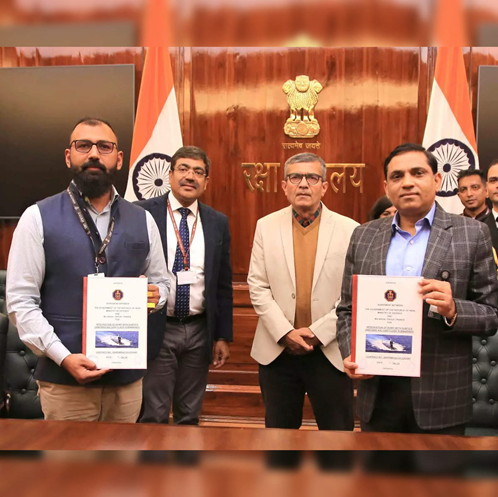
On December 30, 2024, the Ministry of Defence (MoD) signed two major contracts worth Rs 2,867 crore to enhance the operational capabilities of India’s naval assets:
AIP Plug Construction and Integration:
Value: Rs 1,990 crore.
Contractor: Mazagon Dock Shipbuilders Limited (MDL), Mumbai.
Objective: To construct and integrate the Air Independent Propulsion (AIP) Plug for the DRDO-AIP system on Indian submarines. The AIP technology, developed by DRDO’s Naval Materials Research Laboratory (NMRL), will enhance the endurance of conventional submarines by allowing them to stay submerged longer without requiring atmospheric oxygen.
Integration of Electronic Heavy Weight Torpedo (EHWT) on Kalvari-Class Submarines:
This contract will integrate EHWT onto Kalvari-class (Scorpene) submarines, enhancing their firepower.
Kalvari-Class Submarines: Diesel-electric attack submarines built at MDL with technology transfer from the Naval Group. Capable of conducting a variety of missions, including anti-surface warfare, anti-submarine warfare, long-range strikes, special operations, and intelligence gathering.
Key Organizations Involved: Naval Group: CEO Pierre-Eric Pommellet; Founded in 1631; Headquarters in Paris, France.
Mazagon Dock Shipbuilders Limited (MDL): Chairman & Managing Director Sanjeev Singhal; Established in 1934; Headquarters in Mumbai, Maharashtra.
Science and tech news
India’s Space Economy will grow 5 times from $8.4 billion to $44 Billion by 2033: Dr. Jitendra Singh
India’s space economy is set to grow nearly five times in the next decade, from $8.4 billion to around $44 billion.
Investments: In 2023, investments in India’s space sector reached ₹1,000 crore.
Global Leadership in Space
Space Biology: Under Prime Minister Narendra Modi’s leadership, India aims to lead in space biology.
Foreign Exchange Earnings: India’s space sector has become a significant foreign exchange earner, with 85% of the €220 million earned through launching foreign satellites in the past 8 years.
Space Docking Experiment (SPADEX)
Achievement: ISRO’s Space Docking Experiment (SPADEX) places India alongside global leaders in space docking technology.
Significance:
Aims to develop and demonstrate spacecraft rendezvous, docking, and undocking technologies.
Key for future missions, including satellite servicing, space station operations, and interplanetary exploration.
Future Application: The docking system will be used in the Gaganyaan mission and India’s Space Station program.
Conclusion: India’s space sector is rapidly advancing, with significant investments and breakthroughs, positioning the country as a major global player in space technology.
Appointment news
Cherukumalli Srinivasa Rao Appointed as Director of IARI
In December 2024, Cherukumalli Srinivasa Rao, an agricultural scientist from Andhra Pradesh, was appointed as the Director of the Indian Agricultural Research Institute (IARI), New Delhi. He succeeded Dr. A.K. Singh, who retired in June 2024.
About Indian Agricultural Research Institute (IARI):
Founded: 1905 in Pusa, Bihar; relocated to New Delhi in 1936.
Renaming: The institute was renamed multiple times, becoming the Indian Agricultural Research Institute (IARI) after India’s independence.
Administered by: Indian Council of Agricultural Research (ICAR).
Chairman of ICAR: Ashok Kumar Singh
Headquarters: New Delhi, Delhi
IARI is one of India’s premier agricultural research institutes, playing a key role in agricultural research and development.
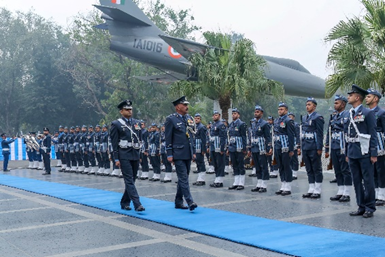
Air Marshal Jeetendra Mishra Takes Charge As Chief of IAF’s Western Command
Air Marshal Jeetendra Mishra today assumed command of the Indian Air Force’s Western Air Command. He was Commissioned into the Indian Air Force as a fighter pilot in December 1986. In his 38 years of service, the Air Marshal has tenanted important command and staff appointments.
Career Overview of Air Marshal Jeetendra Mishra
Commissioning: Joined the Indian Air Force in December 1986 as a fighter pilot.
Service Tenure: 38 years of distinguished service.
Key Roles: Held several critical command and staff positions throughout his career.
Books and author news
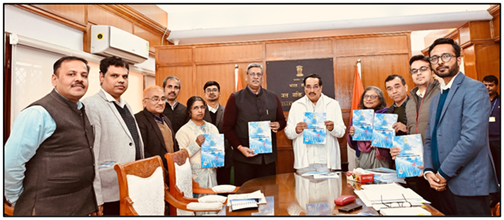
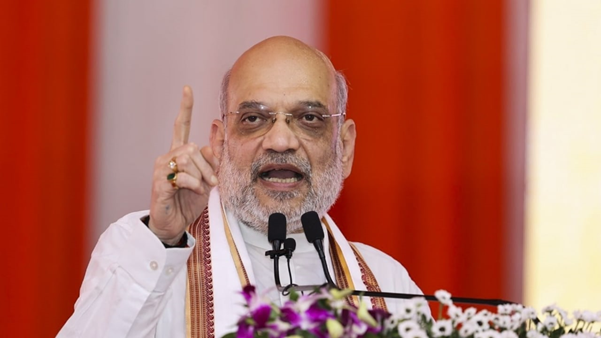
HM Amit Shah to preside over book release event for ‘Jammu Kashmir and Ladakh: Through the Ages’
Union Home Minister Amit Shah will preside over a book release function in New Delhi today as the Chief Guest. Union Education Minister, Dharmendra Pradhan will be the Guest of Honour. Eminent authors, academicians, officials of the Ministry and other dignitaries will also be present at the event.
Event Details
Occasion: Book release function in New Delhi.
Chief Guest: Union Home Minister Amit Shah.
Guest of Honour: Union Education Minister Dharmendra Pradhan.
Attendees: Eminent authors, academicians, Ministry officials, and dignitaries.
About the Book: Title: Jammu Kashmir and Ladakh: Through the Ages.
Content:
Covers over 3,000 years of the region’s history.
Divided into seven sections presenting a comprehensive narrative.
Languages: Published in Hindi and English.
Collaboration: Joint effort by:
National Book Trust, India.
Indian Council of Historical Research (ICHR).
Sports news
33rd Santosh Trophy title for Bengal as they beat Kerala in the final
The most successful team in the history of the Santosh Trophy, West Bengal added one more to its collection by defeating Kerala in the final of the 78th edition of the Santosh Trophy. It was the 33rd Santosh Trophy for the Bengal team.
The final of the 78th edition of the Santosh Trophy 2024-25 was played at the GMC Balayogi Stadium in Hyderabad, Telangana on 31st December 2024.
Match Summary:
The 78th edition of the Santosh Trophy ended in a dramatic final where West Bengal defeated Kerala 1-0 after extra time. Both teams were locked at 0-0 at the end of regulation time. However, in the 4th minute of extra time, Robi Hansda scored the only goal of the match, securing West Bengal’s 33rd Santosh Trophy victory.
Award Winners:
Winners: West Bengal
Prize: Rs 5 Lakhs
Runners-Up: Kerala
Prize: Kamla Gupta Trophy and Rs 3 Lakhs
Peter Thangaraj Player of the Championship:Robi Hansda (West Bengal)
Tulsidas Balaram Player of the Final:Robi Hansda (West Bengal)
Tournament Details:
The 78th Santosh Trophy was held from 14th to 31st December 2024, hosted by the Telangana Football Association in Hyderabad.
31 teams participated, with the group stage held across various parts of the country.
The top four teams from each group qualified for the quarterfinals.
Groupings in Final Round:
Group A: West Bengal, Manipur, Services, Jammu & Kashmir, Telangana, Rajasthan
Group B: Goa, Delhi, Tamil Nadu, Kerala, Meghalaya, Odisha
Semifinal Results:
West Bengal defeated Services 4-2
Kerala defeated Manipur 5-1
About the Santosh Trophy:
The Santosh Trophy is a premier state-level football tournament for men in India, organized by the All India Football Federation (AIFF).
The tournament was inaugurated in 1941, and its first edition was won by West Bengal.
West Bengal is the most successful team in the history of the tournament, with 33 titles.
Other top teams include Punjab (8 titles), and Kerala and Services, who share the third spot with 7 titles each.
Volodar Murzin & India’s Koneru Humpy Won 2024 FIDE World Rapid C’ship
Koneru Humpy of India and the Russian Volodar Murzin respectively won the women’s and Open titles at the 2024 FIDE World Rapid Championships. It was the second FIDE World Rapid Championship for Humpy while the Russian Volodar Muzrin became the second-youngest player to win the Championship in the Open section.
The 2024 FIDE World Rapid Championship was held in New York City, the United States of America 26-29 December 2024.
The 2024 FIDE World Blitz Championship will be held at the same venue on 30 and 31 December 2024.
Women’s Title – Koneru Humpy:
Champion: Koneru Humpy (India)
Score: 8.5/11 rounds
Second World Rapid Title: This victory marks Koneru Humpy’s second World Rapid Championship title, following her first win in 2019 in Moscow, Russia.
Despite losing her first game, Humpy emerged victorious in the final round, defeating Indonesian International Master Irine Kharisma Sukandar, securing her spot atop the leaderboard.
Dronavalli Harika finished 5th with 8 points.
Open Title – Volodar Murzin:
Champion: Volodar Murzin (Russia)
Score: 10/11 rounds
Maiden Title: The 18-year-old Russian player claimed his first World Rapid Championship by defeating Armenian GM Karen Grigoryan in the final round.
Murzin becomes the second-youngest player to win the World Rapid title, after Nodirbek Abdusattorov (Uzbekistan) won it in 2021 at 17.
Arjun Erigaisi (India) finished in 5th position with 9 points.
Key Highlights:
Grischuk and Nepomniachtchi shared second place in the Open section with 9.5 points.
Russia, despite being banned by FIDE from official competition, had players participate under the FIDE banner due to the ongoing political situation.
FIDE World Championships:
FIDE organizes three World Chess Championships annually in Classical, Rapid, and Blitz formats.
FIDE first organized the Open section of the World Rapid and Blitz Championship in 2013 in Khanty-Mansiysk, Russia.
The Women’s section began in 2012 in Batumi, Georgia.
Indian Chess Achievements:
Viswanathan Anand won the 2017 World Rapid Title (Open section) in Riyadh, Saudi Arabia.
Koneru Humpy has now won the World Rapid title twice (2019, 2024).
India has not yet won a title in the Blitz format.
About FIDE:
FIDE (International Chess Federation) is the global governing body for chess, overseeing worldwide competition.
Headquarters: Lausanne, Switzerland
President: Arkady Dvorkovich (Russia)
Members: 201 national chess federations.
World Boxing Adds Asia as Newest Member, India Takes Key Roles
In December 2024, World Boxing (formerly known as the Association Internationale de Boxe Amateur, AIBA) welcomed Asia as a new member by forming a new Asian Confederation. This move aims to enhance the development, representation, and promotion of boxing across Asia. The decision followed a vote by the Asian Boxing Confederation (ASBC) members during the Congress held in Bangkok, Thailand, to remain part of the International Boxing Association (IBA).
India’s Prominent Role in the Expansion: India emerged as a key player in this strategic expansion, with several key appointments within the new interim Asian Boxing body.
Key Appointments and Their Roles:
Ajay Singh (President of the Boxing Federation of India, BFI) was appointed as a board member of the new Asian Boxing Confederation.
Hemanta Kumar Kalita (Secretary General of BFI) was included in the Olympic Commission.
Digvijay Singh (Treasurer of BFI) was appointed to the Finance and Audit Committee, where he will ensure fiscal oversight and accountability.
Narender Kumar Nirwan (Vice President of BFI, North Zone) will serve on the Constitution Commission, helping to shape the governance structure of the new confederation.
India’s growing prominence in international boxing is reflected in these pivotal roles, signaling a significant step in strengthening boxing’s presence and influence in Asia.
Key Appointments and Roles:
DP Bhatt (Chairman of the Boxing Federation of India’s Disciplinary & Disputes Commission) will join the Sports and Competition Commission.
Dr. Karanjeet Singh will represent India on the newly formed Medical Commission, contributing to the health and well-being of athletes.
Lovlina Borgohain (Tokyo 2020 Olympic bronze medalist) has been appointed to the Athlete Commission. As one of three members, she will advocate for enhanced training facilities, equal opportunities, and robust support systems for boxers across Asia to help them excel on the global stage.
Lovlina Borgohain’s achievements include a bronze medal at the Tokyo 2020 Olympics and a gold medal at the 2022 Commonwealth Games.
Upcoming Events in India: India is set to host two major boxing events:
World Boxing Cup Final 2025 and World Boxing Congress 2025 in New Delhi, scheduled for November 2025. These events will position India as a central hub for global boxing development and increase its prominence in the sport.
We at Edusprint Academy are committed to bringing you the most relevant and updated 1st January current affairs 2025, curated from trusted and official sources. These updates are designed to keep you ahead in your exam preparation journey.
Our comprehensive Current Affairs 1st January 2025 coverage aims to enhance your knowledge and boost your scores in Banking, Insurance, SSC, Railways, UPSC, and all State Government Exams. Explore our Current Affairs tailored to simplify your exam preparation
National news
ECI Publishes Detailed Data for Lok Sabha and Assembly Polls 2024
The Election Commission of India (ECI) released comprehensive data for the 2024 Lok Sabha elections, including 42 statistical reports. Voter turnout increased, with 64.64 crore votes polled, a 7.43% rise in registered electors, and higher participation from women and third-gender voters. The number of polling stations increased to 10.53 lakh, and the number of nominations rose to 12,459. Women electors now comprise 48.62% of the electorate, and the number of female candidates contesting elections grew to 800. Inclusive elections saw significant increases in third-gender and PwD electors. National parties secured 63.35% of valid votes, while independent candidates performed modestly, with 7 elected out of 3,921 contestants.
Electors and Voters
Registered Electors:
2019: 91.19 crore
2024: 97.98 crore
Votes Polled: 2024: 64.64 crore (compared to 61.4 crore in 2019)
Male: 32.94 crore
Female: 31.28 crore
Third Gender: 13,058
Postal Ballots: 42.82 lakh
Turnout Highlights:
Highest Turnout: Dhubri (Assam) – 92.3%
Lowest Turnout: Srinagar (J&K) – 38.7% (up from 14.4% in 2019)
NOTA Votes: 63.71 lakh (0.99%, down from 1.06% in 2019)
Transgender Voter Turnout: 27.09% (up from 14.64% in 2019)
2. Polling Stations
Number of Polling Stations:
2019: 10.37 lakh
2024: 10.53 lakh (Increase of 14,816 stations)
Repolling: Only 40 stations (0.0038%) needed repolling, compared to 540 in 2019
Electors per Polling Station: Average 931
States with Most Polling Stations: Uttar Pradesh (1.62 lakh)
States with Least Polling Stations: Lakshadweep (55)
3. Nominations and Contesting Candidates
Nominations Filed:
2019: 11,692
2024: 12,459
Contestants:
2019: 8,054
2024: 8,360 (after rejections and withdrawals)
Highest Nominations in a PC: 114 (Malkajgiri, Telangana)
Lowest Nominations in a PC: 3 (Dibrugarh, Assam)
4. Women Electors and Contesting Candidates
Women Registered Electors:
2019: 43.85 crore
2024: 47.63 crore
Female Electorate Share:
2019: 48.09%
2024: 48.62%
States with Highest Female Elector Percentage:
Puducherry: 53.03%
Kerala: 51.56%
Female Voter Turnout: 65.78% (slightly higher than male voter turnout of 65.55%)
Women Contesting Candidates:
2024: 800 (up from 726 in 2019)
States with Most Female Contestants: Maharashtra (111), Uttar Pradesh (80), Tamil Nadu (77)
PCs with No Female Contestants: 152 out of 543
5. Inclusive Elections
Third Gender Electors:
2024: 48,272 (up from 39,075 in 2019)
State with Most Third Gender Electors: Tamil Nadu (8,467)
Transgender Voter Turnout: 27.09% (up from 14.64% in 2019)
Persons with Disabilities (PwD) Electors: 2024: 90.29 lakh (up from 61.67 lakh in 2019)
The Election Commission of India (ECI) is an autonomous constitutional authority responsible for administering election processes in India at both the national and state levels.
Establishment:
The Election Commission of India was established on 25th January 1950.
This date is now celebrated as National Voters’ Day.
Composition:
The Election Commission consists of:
Chief Election Commissioner (CEC): The highest-ranking officer.
Election Commissioners: Two additional members are appointed by the President of India.
Appointment:
The Chief Election Commissioner and the Election Commissioners are appointed by the President of India.
They hold the position for a term of 6 years or until they reach the age of 65, whichever is earlier.
They can be removed only by a process of impeachment.
The number of members can vary, but traditionally, it consists of three members.
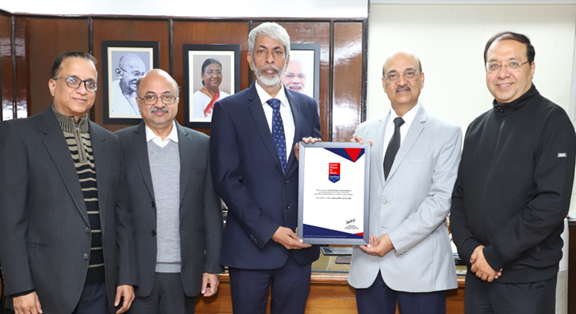
SAIL Earns Great Place to Work Recognition for Second Year
Steel Authority of India Limited (SAIL) has achieved a significant milestone by being re-certified as a ‘Great Place to Work’ for the period January 2025 to January 2026. This recognition, awarded by the Great Place to Work Institute, India, highlights SAIL’s dedication to fostering a positive and empowering work environment. The re-certification marks SAIL’s second consecutive recognition, following its first certification for the period December 2023 to December 2024.
Key Highlights
Certification Period: January 2025 to January 2026
Awarded By: Great Place to Work Institute, India
Consecutive Certification: SAIL was first recognized for the period December 2023 to December 2024.
Recognition Criteria: The award is based on direct employee feedback, reflecting trust, collaboration, and employee empowerment within the organization.
Innovative HR Initiatives Contributing to Success
SAIL’s success in securing this certification is attributed to several employee-focused initiatives that enhance the overall workplace culture:
Work Other than Workplace (WoW): This scheme offers employees flexibility in work location, enabling a better work-life balance.
Flexible Work Timings: City-based employees are given the flexibility to adjust their work hours, promoting a healthy work-life integration.
Self-paced Learning: Access to platforms like LinkedIn Learning Hub and E-Pathshala helps employees upgrade their skills at their own pace.
Digital Training: SAIL offers high-end IT training in collaboration with NASSCOM, empowering employees with cutting-edge technological skills.
Leadership Development: The company partners with IIMs and ASCI to conduct leadership development programs, helping to nurture and grow future leaders.
Employee Assistance Programs: These include e-counseling services to support the mental well-being of employees.
Healthcare Enhancement: SAIL has made significant improvements to its healthcare services, ensuring better access to health facilities for employees.
Leadership Coaching: Tailored coaching programs are offered to senior executives to enhance their leadership capabilities.
Statement from SAIL Chairman: Shri Amarendu Prakash, Chairman of SAIL, shared his thoughts on the certification: “SAIL’s consecutive certification as a ‘Great Place to Work’ reaffirms SAIL’s ongoing dedication to foster an exceptional workplace culture and provide a positive employee experience built on trust, collaboration, and employee empowerment.”
SAIL:
Headquarters: New Delhi
CEO: Shri Prakash (31 May 2023–)
Founded: 24 January 1973
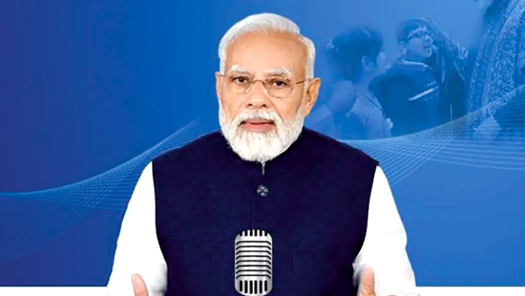
116th Mann Ki Baat- Welcoming a Milestone Year
As 2025 approaches, India stands on the threshold of significant celebrations and achievements. The year marks the 75th anniversary of the Constitution of India, a testament to the vision and dedication of the nation’s founding fathers. The Prime Minister, through the 116th episode of his monthly radio address Mann Ki Baat, shared insights and aspirations for the country’s progress and unity, covering diverse themes ranging from cultural heritage to health and sports.
75 Years of the Indian Constitution
Significance: Marks the 75th anniversary on 26th January 2025.
Initiatives: Launch of constitution75.com for citizens to engage with the Preamble and access the Constitution in multiple languages.
Message: PM encourages youth to explore this milestone and connect with the legacy.
Maha Kumbh 2025
Date & Venue: Starts 13th January 2025 in Prayagraj.
Theme: “Maha Kumbh of Unity,” emphasizing inclusivity and diversity.
Digital Features: AI-driven navigation, chatbots, and real-time updates.
Campaign: Selfie initiative with #EktaKaMahakumbh to promote unity.
Krish, Trish, and Baltiboy – Bharat Hain Hum
Content: Animated series highlighting freedom struggle heroes.
Outreach: Available on Doordarshan and OTT platforms, broadcast in multiple languages.
WAVES Summit 2025
Objective: Showcase India’s media and entertainment industry globally.
Participants: Bollywood, regional cinema, gaming, and technology sectors.
Impact: Boosts India’s vision of a $5 trillion economy.
Global Outreach of Indian Culture
Art in Egypt: Painting competition involving 23,000 students.
Ayurveda in Paraguay: Ayurveda consultations gaining popularity in South America.
Tamil in Fiji: Tamil teaching program launched after 80 years.
Bastar Olympics
Participation: Over 165,000 players from seven districts.
Impact: Transforms lives through sports like archery and kabaddi.
Symbolism: Represents resilience and cultural heritage.
Healthcare Achievements
Malaria:
80% reduction in cases (2015-2023).
Awareness initiatives in Assam and Haryana played a pivotal role.
Cancer:
Ayushman Bharat Yojana ensures timely treatment for 90% of patients.
Agricultural Transformation in Kalahandi
Vegetable Revolution:
Kisan Utpad Sangh FPO generates ₹1.5 crores in annual turnover.
Empowering 200+ farmers, including 45 women, with modern techniques.
These milestones reflect India’s diverse progress in culture, healthcare, sports, and economic empowerment as the nation steps into 2025.
Economy news
GDP to Grow at 6.6% in FY25: RBI
The Reserve Bank of India (RBI) projected India’s GDP growth at 6.6% for FY25, emphasizing economic resilience amidst global and domestic challenges. The report highlights robust fundamentals, improved asset quality in banks, and stable financial indicators, although risks like urban demand moderation and global uncertainties persist.
Economic Insights
GDP Growth Projections
FY25 Growth: Estimated at 6.6%,
driven by:
Revival in rural consumption.
Increased government spending.
Strong services exports.
H1 FY25 Performance: Growth moderated to 6% from 8.2% in H1 FY24, reflecting global headwinds and softer industrial activity.
Inflation Trends
Positive Drivers: A bumper kharif harvest and robust rabi prospects are expected to stabilize foodgrain prices.
Potential Risks: Geopolitical tensions and extreme weather events could disrupt inflation dynamics.
Banking Sector Strengths
Decline in NPAs
Gross NPAs: Reached a 12-year low of 2.6% (September 2024).
Net NPAs: Reduced to 0.6%, showcasing improved asset quality.
Capital Adequacy
CET1 Ratio: Strong at 14%, well above the regulatory minimum of 8%.
Stress Resilience: Macro stress tests indicate that SCBs, mutual funds, and clearing corporations can withstand adverse conditions.
Banking news
RBI Introduces Name Lookup for NEFT and RTGS
The Reserve Bank of India (RBI) has introduced a name lookup facility for Real-Time Gross Settlement (RTGS) and National Electronic Funds Transfer (NEFT) systems, aiming to enhance accuracy, security, and user confidence in digital transactions. This feature aligns NEFT and RTGS with the functionality already available in Unified Payments Interface (UPI) and Immediate Payment Service (IMPS) platforms.
Key Highlights of the Facility
1. Current vs. Proposed System
Current State: NEFT and RTGS transactions do not provide users with a pre-transaction name verification feature, increasing the chances of errors and fraudulent transfers.
Proposed Feature: Users will now see the beneficiary’s name before completing a transfer, enabling verification and reducing risks.
2. Operational Framework
The facility will function by cross-referencing the account number and IFSC code entered by the remitter.
The receiving bank’s core banking system will fetch and display the beneficiary’s name for verification.
Data privacy is prioritized—query-related data will be stored by the respective banks, with no storage by NPCI.
3. Implementation Timeline
Banks are mandated to implement the system by April 1, 2025.
The National Payments Corporation of India (NPCI) will develop the infrastructure and facilitate onboarding.
4. Accessibility
The feature will be available via:
Internet banking.
Mobile banking apps.
Physical bank branches.
It will be a free service for all users.
RBI:
Founded: 1 April 1935, Kolkata
Headquarters: Mumbai
Governor: Sanjay Malhotra
Appointment news
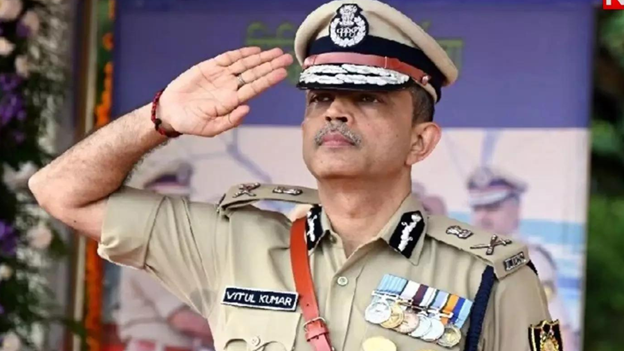
Vitul Kumar Appointed Officiating DG of CRPF
Vitul Kumar, a 1993-batch IPS officer from the Uttar Pradesh cadre, has been appointed as the officiating Director General (DG) of the Central Reserve Police Force (CRPF), succeeding Anish Dayal Singh, who retired on December 31, 2024. Kumar, currently serving as Special Director General, will oversee the CRPF during a critical phase marked by challenges in Chhattisgarh and Manipur, ensuring leadership continuity until a permanent DG is appointed.
CRPF:
Headquarters: New Delhi
Founded: 27 July 1939
Rajat Verma Appointed as CEO of DBS Bank India
Effective March 1, 2025, Rajat Verma will take over as the new CEO of DBS Bank India, succeeding Surojit Shome, who is retiring after a successful tenure. Verma’s appointment is subject to approval from the Reserve Bank of India (RBI) and marks a significant leadership transition as DBS India continues to strengthen its position in the Indian market.
Key Highlights of Leadership Transition
Surojit Shome’s Legacy
Tenure Highlights:Shome, who led DBS India since 2015, was instrumental in transforming the bank’s operations in India.
Notable Achievements: Under his leadership, DBS India launched digibank, India’s first mobile-only bank in 2016, expanding its presence to over 350 locations across 19 states, making it one of the most prominent players in the Indian banking sector.
Rajat Verma’s Appointment
Role and Experience: Verma, who joined DBS India in June 2023, has led the Institutional Banking Group and driven substantial growth in this sector.
Awards and Recognition: He played a key role in DBS India winning the title of “Best Bank for Sustainable Finance – India” by Global Finance in 2024.
Previous Experience:Verma has over 27 years of banking experience and previously spent 26 years at HSBC India, leading commercial banking operations.
DBS Bank:
Headquarters: Singapore
CEO: Piyush Gupta (9 Nov 2009–)
Founder: Government of Singapore
Founded: 16 July 1968, Singapore
Science and tech news
China Unveils World’s Fastest High-Speed Train Prototype
China has unveiled the CR450, the world’s fastest high-speed train prototype, designed to achieve a commercial speed of 400 km/h and test speeds of up to 450 km/h. Surpassing the current CR400 Fuxing trains (350 km/h), this innovation demonstrates significant advancements in speed, energy efficiency, safety, and passenger comfort. The CR450 aligns with China’s ambitious goal of expanding its high-speed rail network to 70,000 km by 2035, further cementing its leadership in global rail technology.
Key Features of CR450
Unparalleled Speed and Performance
Maximum test speed: 450 km/h.
Developed after 200,000 km of tests, 3,000 simulations, and 2,000 platform evaluations.
Energy Efficiency and Stability
Incorporates water-cooled permanent magnet traction systems and high-stability bogie systems.
Reduces energy consumption by over 20% while maintaining exceptional stability.
Enhanced Passenger Experience: Features noise reduction technologies, larger cabins, and accessibility for bicycles and wheelchairs.
India’s defence exports have experienced unprecedented growth, reaching a record ₹21,000 crore in 2024 from ₹2,000 crore a decade ago.Defence Minister Rajnath Singh, during a visit to the Army War College (AWC) in Mhow Cantonment,set a bold target of ₹50,000 crore in defence exports by 2029, reinforcing India’s status as a global defence production leader.
Key Highlights and Future Targets
Defence Export Milestones
Growth from ₹2,000 crore (2014) to ₹21,000 crore (2024).
Targeting ₹50,000 crore annually by 2029.
Technological Advancements
Focus on mastering frontier technologies like AI, cybersecurity, and space warfare to address unconventional threats.
Integration of AI-based systems, electromagnetic warfare, and information warfare into defence strategies.
Vision of Self-Reliance
Emphasis on Aatmanirbhar Bharat to enhance indigenous defence manufacturing.
Strengthened domestic production capacities to meet national and international defence demands.
Sports news
Hemanth Muddappa Secures 3 National Titles, Extends Record to 15
Hemanth Muddappa, renowned as the “Drag King” in Indian motorsport, made history by securing a triple crown victory in the final round of the MMSC FMSCI Indian National Motorcycle Drag Racing Championship at the Madras International Circuit (MIC). This triumph marked his 15th National title, making him the most decorated motorsport athlete in India.
Despite enduring the challenge of a fractured right thumb from a previous crash, Muddappa showcased immense resilience, clinching titles across multiple categories with the support of his team, Mantra Racing.
Key Achievements:
Total National Titles: 15, solidifying his legacy in Indian motorsport.
Triple Crown Victory: Won three National titles in one event.
Raced Despite Injury: Competed with a fractured thumb after obtaining medical clearance, relying on painkillers to manage the injury.
Event Details:
Venue: Madras International Circuit (MIC)
Team: Mantra Racing, who provided strong support through bike preparation and performance optimization.
Categories Won:
Unrestricted Class: Muddappa completed the race in 7.837 seconds, clinching first place.
851cc – 1050cc (SS): Completed in 7.926 seconds, securing a win in this category.
361cc – 550cc (SS Indian): Muddappa tied with Mohammed Riyaz in the 551cc – 850cc (SS) category, both clocking identical times. However, his faster reaction time allowed him to take the victory.
Kerala Wins Senior National Men’s Handball Championship
Kerala has made history by winning its first-ever Senior National Men’s Handball Championship title, defeating Chandigarh 34-31 in a thrilling final. This marks a major achievement for Kerala, as it was the team’s first appearance in the final of this prestigious tournament. Kerala’s victory was a result of a cohesive team effort, with several standout individual performances contributing to their success.
Key Highlights
Final Score: Kerala 34-31 Chandigarh
Venue: Senior National Men’s Handball Championship, Kerala
Road to the Final
Kerala defeated Services 23-21 in the semi-finals to reach the final.
Chandigarh triumphed over Indian Railways 32-30 in their semi-final match.
Awards
Best Player of the Championship: Devendar (Kerala) – for his outstanding attacking performance.
Best Goalkeeper: Rahul (Kerala) – for his crucial saves in goal throughout the tournament.
Match Progression
First Half: The match was closely contested, with Kerala maintaining a narrow lead going into the break.
Second Half: Kerala extended their advantage in the second half and managed to hold off Chandigarh’s late rally to secure the victory.
Key Performances
Devendar: Played a pivotal role in Kerala’s offensive strategies, contributing significantly to their score and earning the Best Player award.
Rahul: Produced crucial saves in the final, ensuring Kerala maintained their lead and earning the Best Goalkeeper accolade.
Kerala:
Capital: Thiruvananthapuram
Chief minister: Pinarayi Vijayan
Haryana Steelers Clinch Maiden PKL Title
On 29th December 2024, the Haryana Steelers achieved a historic milestone by winning their first-ever Pro Kabaddi League (PKL) title, defeating the Patna Pirates 32-23 in a thrilling final at the Shree Shiv Chhatrapati Sports Complex in Pune. The match was a showcase of excellent performances from both teams, but Haryana Steelers ultimately emerged victorious with solid strategies on both offense and defense.
Key Highlights of the Game
Final Score: Haryana Steelers 32-23 Patna Pirates
Venue: Shree Shiv Chhatrapati Sports Complex, Balewadi, Pune
Haryana Steelers Performers
Shivam Patare: 9 points (Outstanding performance in raiding)
Mohammadreza Shadloui: 7 points (Crucial contributions in both offense and defense)
Vinay: 6 points (Key role in the offensive strategies)
Title: Learning lessons: on the air crash in South Korea
The grim footage of a Boeing 737-800 sliding across the runway at Muan airport, to end as a fireball extinguishing 179 lives, will forever be a reminder of an air crash that holds important lessons for everyone from airport authorities to aviation regulators to airline pilots. Jeju Air flight 7C2216, on a scheduled flight from Thailand’s Suvarnabhumi airport, was on approach to Muan international airport in South Korea’s southwestern corner after air traffic control cleared its landing on the single runway. There was also a caution of bird activity. The airfield’s environs — an oceanic setting, with also some wetland — are known to host a variety of avian life. The airport uses non-lethal and lethal bird scare techniques during operating hours. From that point on, the aircraft transitioned from what seemed a stable approach to a phase of multiple issues, with “mayday, mayday, mayday, bird hit” being one such call by the crew who were in apparent distress. The go around and subsequent landing have led aviation experts to raise questions about the responses by the crew and also that of air traffic control. The touchdown, with the landing gear up, had the crippled craft hurtling on its fuselage and engines, and impacting a concrete structure at the runway end housing crucial ground-based landing aids. In focus is the ‘unusual concrete wall’, which the Korean authorities have said is ‘found in other airports in Korea’, and was built according to the country’s code. Whether this follows ICAO’s Annex 14 (Standards – Aerodrome) will need investigation. Some accident investigators have called this the key factor that trumped operational safety, overwhelming the ‘flapless gearless’ landing.
The accident, South Korea’s worst in decades, comes amidst a political crisis. However, the new acting President, Choi Sang-mok, seems to be steering the response with a task force in place and the authorities having been instructed to review aviation operations and inspect airline fleets. The Ministry of Transport’s highlighting of several issues would need a thorough probe, especially with representatives from the U.S.’s NTSB, the FAA, and the aircraft manufacturer, Boeing, on board. Boeing will again find the spotlight back on its workhorse, the 737. While the accident is the first for Jeju Air, a popular 41-jet budget airline, air safety in South Korea is generally considered to be of industry best practice. Every accident has its lessons, and for India too, with air travel on the rise, there must be a thorough review of every aspect of crew training as well as of runway safety at its 157 operational airports.
Meaning of the word:
Word
Meaning
Synonyms
Antonyms
Extinguishing
The term “extinguishing” generally means putting an end to something or causing it to cease
Quenching Dousing Smothering Suppressing
Igniting Kindling Sparking Reviving
Amidst
The term “amidst” means in the middle of or surrounded by something.
Test your knowledge with the latest quiz on current affairs from 18th January 2025 Current Affairs Quiz ! Stay updated and challenge yourself with key events and happenings around the world.
1) Who is the new member appointed to the Atomic Energy Commission (AEC) as Member (Finance) in 2024?.
Explanation: Pankaj Mishra was appointed as the new Member (Finance) for the Atomic Energy Commission (AEC) in 2024, as part of the reconstitution of the commission by the Government of India. The reconstituted AEC also includes T.V. Somanathan (Cabinet Secretary) and Manoj Govil (Expenditure Secretary) as ex-officio members. This restructuring aims to strengthen the leadership of the AEC to enhance India’s capabilities in the field of atomic energy.
2) What is the primary purpose of the National Broadband Mission 2.0 (NBM 2.0) initiative unveiled by the Department of Telecommunications in January 2025?
A) To enhance digital connectivity across India, focusing on broadband access for rural areas. B) To provide free internet access to every household in India. C) To develop mobile applications for digital payments. D) To introduce a new telecommunications infrastructure for urban areas. E) To increase the number of mobile towers in India.
A) To enhance digital connectivity across India, focusing on broadband access for rural areas.
Explanation: The National Broadband Mission 2.0 (NBM 2.0) aims to improve digital connectivity in India by connecting the remaining 1.7 lakh villages and ensuring broadband access to rural households. The mission focuses on providing faster broadband connections, with a minimum download speed of 100 Mbps for fixed connections. This initiative plays a crucial role in bridging the digital divide and promoting inclusive growth in India, particularly in rural and underserved areas.
3) What is the primary purpose of the “Bharat Ranbhoomi Darshan” app and website launched on January 15, 2025?
A) To provide information about India’s military history and promote tourism in battlefront areas. B) To offer online education to military personnel. C) To provide a platform for virtual training for defense forces. D) To offer real-time updates on military operations. E) To sell souvenirs related to India’s military history.
A) To provide information about India’s military history and promote tourism in battlefront areas.
Explanation: The “Bharat Ranbhoomi Darshan” app and website have been developed to help civilians explore key battlefield locations and learn about India’s military history, including the sites of major wars like those in 1962, 1971, and 1999, as well as significant conflict zones such as Siachen and Galwan Valley. The initiative aims to transform border regions into tourist hubs, offering a deeper connection to the sacrifices of India’s armed forces and promoting national pride and awareness.
4) On January 16, 2025, the Lokpal of India celebrated its inaugural Foundation Day, marking how many years since its establishment?
A) 5 years B) 10 years C) 11 years D) 12 years E) 15 years
Explanation: The Lokpal of India celebrated its inaugural Foundation Day on January 16, 2025, marking 11 years since its establishment on January 16, 2014, under the Lokpal and Lokayuktas Act, 2013.
5) According to the latest report by the PHD Chamber of Commerce and Industry (PHDCCI), India is set to surpass Japan and become which rank in the world’s largest economies by 2026?
Explanation: According to the report titled ‘Economic Outlook 2025’, India is projected to surpass Japan and become the 4th largest economy in the world by 2026. This growth is driven by strong macroeconomic fundamentals and policy reforms.
6) The International Monetary Fund (IMF) has revised India’s economic growth forecast for FY25 to what percentage?
Explanation: The IMF has revised India’s economic growth forecast for FY25 to 6.5%, down from earlier projections. This revision reflects challenges such as global economic uncertainties, domestic inflationary pressures, and other factors affecting India’s economic momentum.
7) Where was the ‘Entrepreneurship Development Conclave’ inaugurated in January 2025?
A) New Delhi B) Mumbai C) Pune D) Ahmedabad E) Bengaluru
Explanation: The ‘Entrepreneurship Development Conclave’ was inaugurated in Pune, Maharashtra at the G.D. Madgulkar Natyagruha. The event was organized by the Ministry of Fisheries, Animal Husbandry, and Dairying (MoFAHD) and focused on empowering entrepreneurs in transforming livestock economies.
8) Which company did the Ministry of Defence sign a contract with for the supply of Medium-Range Surface-to-Air Missiles (MRSAM) for the Indian Navy?
A) Bharat Heavy Electricals Limited (BHEL) B) Bharat Dynamics Limited (BDL) C) Larsen & Toubro (L&T) D) Hindustan Aeronautics Limited (HAL) E) Tata Defence
Explanation: The Ministry of Defence (MoD) signed a Rs. 2,960 crore contract with Bharat Dynamics Limited (BDL) for the supply of Medium-Range Surface-to-Air Missiles (MRSAM) to the Indian Navy. The contract was signed in New Delhi in the presence of Defence Secretary Rajesh Kumar Singh. BDL, based in Hyderabad, is a key player in missile manufacturing for India.
9) What new measures did the Reserve Bank of India (RBI) introduce on January 16, 2025, under the Foreign Exchange Management Act (FEMA) 1999?
A) Increased the interest rates for international borrowings B) Encouraged the use of Indian Rupee (INR) and other local currencies for international trade C) Introduced new guidelines for cross-border investments D) Allowed foreign companies to open bank accounts in India without restrictions E) Eliminated tax on international transactions using INR
B) Encouraged the use of Indian Rupee (INR) and other local currencies for international trade
Explanation: On January 16, 2025, the Reserve Bank of India (RBI) introduced new measures under the Foreign Exchange Management Act (FEMA) 1999. These changes aim to encourage the use of the Indian Rupee (INR) and other local currencies for international trade, enhancing the international standing of the INR. This initiative was part of a detailed review of the FEMA regulations, conducted in collaboration with the Government of India (GoI). The goal is to reduce dependence on global currencies like the US Dollar for trade, fostering a more diverse and stable financial environment for India.
We at Edusprint Academy are committed to bringing you the most relevant and updated 31st December current affairs 2024, curated from trusted and official sources. These updates are designed to keep you ahead in your exam preparation journey.
Our comprehensive Current Affairs December 2024 coverage aims to enhance your knowledge and boost your scores in Banking, Insurance, SSC, Railways, UPSC, and all State Government Exams. Explore our Current Affairs tailored to simplify your exam preparation
National news
Indian Army Unveils Chhatrapati Shivaji Statue at Pangong Tso
The Indian Army installed a statue of Chhatrapati Shivaji Maharaj at Pangong Tso, Ladakh, on December 26, 2024.
Represents the Maratha king’s legacy of valor and foresight, while asserting India’s strategic and cultural stance near the Line of Actual Control (LAC).
Strategic Significance
Symbol of Commitment: Positioned at 14,300 feet, the statue underscores India’s dedication to securing its borders amidst tensions with China.
Infrastructure Push: Aligns with efforts to bolster surveillance, mobility, and defensive readiness in the Ladakh region, following the 2020 standoff at Pangong Tso.
Local Concerns
Cultural Relevance: Local leaders like Chushul Councillor Konchok Stanzin have raised concerns about the lack of consultation and the statue’s alignment with Ladakh’s unique heritage.
Environmental Impact: Questions about ecological preservation in a sensitive region have also emerged.
Broader Strategic Context
The statue aligns with India’s ongoing disengagement talks with China, particularly after progress at key points like Demchok and Depsang.
Highlights India’s commitment to territorial integrity while asserting its strategic parity with China.
This move blends national symbolism with strategic posturing, though it also calls for addressing local and ecological concerns.
Indian army
India army head: Manoj Pande
Indian army founded: 1 April 1895
State News
Sikkim’s Kagyed Dance Festival
The Kagyed Chaam Dance Festival, one of Sikkim’s most revered Buddhist celebrations, is held annually at Tsuklakhang Palace in Gangtok. Marked by elaborate masked dances performed by Buddhist monks and lamas, the festival symbolizes the destruction of negative forces and the ushering in of peace and prosperity for the new year. Enacted on the 28th and 29th day of the 10th month of the Tibetan Lunar Calendar (early December), it is a vibrant cultural event drawing both locals and international tourists seeking spiritual blessings. The festival concludes with the ritualistic burning of effigies, representing the victory of good over evil.
Historical Significance
Tibetan Buddhism Roots: Linked to Guru Padmasambhava, who introduced Buddhism to Sikkim.
Symbolic Masks: Dances depict tales from Buddhist mythology using masks of deities, humans, and animals.
Timing and Venues
Date: Early December, two days before the Losoong Festival.
Locations: Tsuklakhang Palace, Rumtek Monastery, and Phodong Monastery.
Highlights and Rituals
Masked Dances: Monks perform in ornate costumes to drumbeats and trumpets.
Effigy Burning: Marks the festival’s conclusion, symbolizing the triumph of good over evil.
The festival attracts both locals and tourists, offering spiritual blessings and a vivid cultural experience.
Sikkim:
Capital: Gangtok
Chief minister: Prem Singh Tamang
Governor: Om Prakash Mathur
International news
Sauraha Hosts 18th Elephant Festival
The 18th Elephant and Tourism Festival held in Sauraha, Chitwan, Nepal, has drawn both local and international visitors with its exciting blend of wildlife events and cultural activities. The five-day festival, aligning with New Year and Christmas celebrations, took place near the Chitwan National Park and concluded on December 30, boosting tourism in the region.
Key Highlights:
Location and Timing:
Held in Sauraha, Chitwan, at the Baghmara Intermediate Community Forest.
The event coincides with the English New Year and Christmas.
Runs for five days, concluding on December 30.
Major Attractions:
Elephant-Centric Events:
Elephant parades, beauty contests, and football competitions with over 80 elephants participating.
Notable elephants such as Champakali, Basnatikali, and Ramkali featured in penalty shootouts.
Elephant picnics allowing visitors to bond with and feed the elephants.
Cultural Activities: Traditional costume performances and music showcasing Nepal’s rich cultural heritage.
Nepal:
Capital: Kathmandu
Currency: Nepalese Rupee
Prime minister: KP Sharma Oli
Economy news
Deloitte Projects Indian Economy to Grow at 6.5-6.8% in FY25
The Indian Army installed a statue of Chhatrapati Shivaji Maharaj at Pangong Tso, Ladakh, on December 26, 2024.
Represents the Maratha king’s legacy of valor and foresight, while asserting India’s strategic and cultural stance near the Line of Actual Control (LAC).
Strategic Significance
Symbol of Commitment: Positioned at 14,300 feet, the statue underscores India’s dedication to securing its borders amidst tensions with China.
Infrastructure Push: Aligns with efforts to bolster surveillance, mobility, and defensive readiness in the Ladakh region, following the 2020 standoff at Pangong Tso.
Local Concerns
Cultural Relevance: Local leaders like Chushul Councillor Konchok Stanzin have raised concerns about the lack of consultation and the statue’s alignment with Ladakh’s unique heritage.
Environmental Impact: Questions about ecological preservation in a sensitive region have also emerged.
Broader Strategic Context:
The statue aligns with India’s ongoing disengagement talks with China, particularly after progress at key points like Demchok and Depsang.
Highlights India’s commitment to territorial integrity while asserting its strategic parity with China.
This move blends national symbolism with strategic posturing, though it also calls for addressing local and ecological concerns.
Banking news
SEBI Approves Enlighten Angel Fund as an AIF to Support Early-Stage Startups
In December 2024, the Securities and Exchange Board of India (SEBI) approved Enlighten Angel Fund to operate as an Alternative Investment Fund (AIF). The platform aims to support early-stage startups in India, with a focus on emerging technologies, smart manufacturing, and the electric vehicle sectors.
Key Developments
Rs. 200 Crore Micro Venture Capital (VC) Fund: Enlighten has launched a Rs. 200 crore fund, with an additional Rs. 100 crore greenshoe option to strengthen its support for emerging entrepreneurs in India.
Greenshoe Option: This facility allows underwriters in IPOs to purchase up to 15% more shares than initially offered, providing flexibility and support in market conditions.
Company’s Evolution: Enlighten Angel Fund has rebranded itself as Enlighten Capital Micro VC, signaling the start of its growth phase within the expanding startup ecosystem.
In the past two years, it has facilitated over 10 startup investments, contributing to India’s growing entrepreneurial landscape.
SEBI:
Founded: 12 April 1988
Headquarters: Mumbai, Maharashtra
Agency executive: Madhabi Puri Buch, Chairperson
Bajaj Allianz Launches Innovative Motor Insurance Add-Ons for Enhanced Coverage and Sustainability
Bajaj Allianz General Insurance Limited has introduced two new motor insurance add-on covers:‘Eco Assure – Repair Protection’ and ‘Named Driver Cover’. These offerings aim to provide personalized coverage, convenience, and sustainability, catering to the growing demand for motor insurance in India.
Eco Assure – Repair Protection: This unique add-on focuses on eco-friendly and cost-effective vehicle repairs without the need for compulsory deductibles.
Sustainability and Quality: Prioritizes eco-friendly vehicle repairs and replacements, ensuring high-quality service while contributing to environmental conservation.
Eligibility and Coverage: Available for private cars up to 12 years old, offering an affordable repair option with a Green Certificate of Acknowledgement (GCA) for environmental contribution.
Additional Features:
One-year repair protection
Door-to-door vehicle pick-up and drop-off
Repairs at Bajaj Allianz’s preferred workshops without depreciation costs
Additional Benefits:
24/7 roadside assistance
Engine and gearbox protection
Special care for electric and hybrid vehicles
Coverage for consumables, fuel adulteration damage, and rodent bites
Additional coverage for legal costs, personal baggage, and lost keys
About Bajaj Allianz General Insurance Company Limited
Overview: Bajaj Allianz General Insurance Company Limited is a joint venture between Bajaj Finserv Limited (an Indian financial services company) and Allianz SE (a leading global insurer based in Germany).
Inception: Bajaj Allianz General Insurance received its Certificate of Registration (COR) from the Insurance Regulatory and Development Authority of India (IRDAI) in May 2001, allowing it to operate in India.
Management: The company is led by Tapan Singhel, who serves as the Managing Director (MD) and Chief Executive Officer (CEO).
Headquarters: Bajaj Allianz General Insurance is headquartered in Pune, Maharashtra.
Aditya Birla Capital Becomes the First BFSI Company to Offer Financial Services on ONDC Network
Aditya Birla Capital Limited (ABCL), based in Mumbai, has achieved a significant milestone by becoming the first Banking, Financial Services, and Insurance (BFSI) company to offer its core financial services—lending, insurance, and Mutual Fund (MF) investments—on the Open Network for Digital Commerce (ONDC) platform.
Key Highlights
Financial Inclusion: This move aims to enhance financial inclusion by offering a wide range of financial products, making them accessible to underserved markets across the country.
Live Buyer Applications: The ONDC network will now enable various live buyer applications to provide customers with Mutual Funds (MF), health insurance, and personal loans from ABCL.
Early Adoption of Credit Integration: Aditya Birla Finance Limited (ABFL) was an early adopter of credit integration during ONDC’s pilot phase, while Aditya Birla Health Insurance Company Limited (ABHICL) and Aditya Birla Sun Life Asset Management Company (ABSLAMC) were among the first to offer health insurance and Mutual Fund services on the platform.
Agreement news
DPIIT Partners with boAt to Boost Startup Ecosystem in India
The Department for Promotion of Industry and Internal Trade (DPIIT) has partnered with boAt, a leading Indian audio and wearables brand, to bolster innovation and support startups, particularly in the Direct-to-Consumer (D2C) and manufacturing sectors. The collaboration seeks to mentor and empower startups to scale locally and internationally, aligning with the government’s ‘Make in India’ initiative.
Key Features of the Partnership
Mentorship Programs:
Tailored programs for startups to receive guidance on critical stages like prototype development.
Expert insights and hands-on support from boAt and DPIIT.
Global Expansion Opportunities: Facilitation of connections and resources to help startups explore international markets.
Commitment to Innovation: Aims to build globally competitive brands while fostering innovation and entrepreneurship.
Industry Leadership’s Vision
DPIIT’s Perspective: Sanjiv Singh, Joint Secretary of Startup India, highlighted the partnership’s role in enhancing startup efficiency and advancing India’s global manufacturing ambitions.
boAt’s Contribution: Aman Gupta, Co-founder of boAt, emphasized the company’s commitment to nurturing the startup ecosystem and driving innovation, particularly in product-based ventures.
Significance: This strategic collaboration is set to empower Indian startups with mentorship, global opportunities, and resources, reinforcing their role in making India a global hub for innovation and manufacturing.
Sports news
Bumrah Breaks Record for Fastest 200 Wickets by an Indian
Jasprit Bumrah achieved a historic milestone during the Border-Gavaskar Trophy at the Melbourne Cricket Ground (MCG), becoming the fastest Indian bowler to reach 200 Test wickets. He accomplished this feat in just 44 Tests, surpassing Mohammed Shami’s record.
Key Highlights
Fastest Indian to 200 Test Wickets
Bumrah achieved this milestone with his 8,484th delivery, showcasing exceptional speed and efficiency.
200 Wickets in 44 Tests
Bumrah joins the ranks of elite bowlers like Pat Cummins and Kagiso Rabada, who also reached 200 wickets in 44 Tests.
Impressive Bowling Average: Bumrah holds a sub-20 bowling average (19.56), making him the first bowler to achieve 200 wickets with such an outstanding average.
Comparison with Fast Bowlers: Globally, Bumrah is the fourth-fastest to reach 200 wickets, following legends Waqar Younis, Dale Steyn, and Kagiso Rabada.
Wickets in World Test Championship: A top performer in the ICC World Test Championship, Bumrah has secured 151 wickets, further solidifying his dominance.
New Indian Benchmark: Bumrah set a new benchmark for Indian pacers, breaking Shami’s record for the least number of balls to achieve 200 Test wickets.
Significance: Bumrah’s milestone reflects his exceptional skill, consistency, and impact on Indian cricket. His performance, including a pivotal role in the Boxing Day Test against Australia, cements his legacy as one of the finest bowlers in the history of the game.
Bihar to Host Women’s Kabaddi World Cup 2025
In March 2025, Bihar will host the Women’s Kabaddi World Cup at the Rajgir Sports Academy, marking the second time the state will organize the prestigious event. Bihar previously hosted the inaugural edition of the World Cup in 2012 at the Patliputra Sports Complex in Patna.
Key Details:
Event Overview: The Women’s Kabaddi World Cup is an international competition organized by the International Kabaddi Federation (IKF), showcasing the talent of women kabaddi teams from around the world.
Participants: The 2025 edition will feature 14 countries, including India, China, Japan, South Korea, Nepal, Pakistan, Iran, Indonesia, Sri Lanka, Thailand, Poland, Argentina, South Africa, and South America.
Objective: The tournament aims to promote kabaddi as a global sport and provide an international platform for women’s teams to demonstrate their skills and passion for the sport.
Bihar:
Capital: Patna
Chief minister: Nitish Kumar
Governor: Arif Mohammed Khan
Ranks and report news
Household Consumer Expenditure Survey 2023-24:
In December 2024, the Ministry of Statistics and Programme Implementation (MOSPI) released the Household Consumer Expenditure Survey 2023-24 (HCES: 2023-24), providing insights into the average consumption expenditure of Indian households.
Key Highlights
Average Monthly Per Capita Consumption Expenditure (MPCE):
Rural India: Rs 4,122
Urban India: Rs 6,996
Growth in MPCE:
Urban areas: 9% increase (from 2022-23)
Rural areas: 8% increase (from 2022-23)
Urban-Rural Gap
MPCE Gap:
2011-12: 84%
2022-23: 71%
2023-24: 70%
This indicates a decreasing gap, reflecting sustained consumption growth in rural India.
State-wise Data
Highest MPCE:
Sikkim:
Rural: Rs 9,377
Urban: Rs 13,927
Lowest MPCE:
Chhattisgarh:
Rural: Rs 2,739
Urban: Rs 4,927
Conclusion: The survey highlights growing consumption in rural India, with notable regional variations in MPCE, marking Sikkim as the highest and Chhattisgarh as the lowest.
the Ministry of Statistics and Programme Implementation: Shri Rao Inderjit Singh
Science and tech news
ISRO successfully launches SpaDeX mission from Sriharikota
Indian Space Research Organisation (ISRO) successfully launched the Space Docking Experiment (SpaDeX) mission last night. ISRO’s PSLV-C60 rocket carrying two spacecraft that would aid in demonstration of space docking lifted off from the Satish Dhawan Space Centre in Sriharikota.
Mission Objectives
Demonstrate Space Docking Technology: A critical capability for future missions, including lunar expeditions and the Bharatiya Antariksh Station (BAS).
Develop Advanced Capabilities: Strengthens India’s ability for complex orbital operations and interplanetary missions.
Key Developments
Satellites successfully deployed in low Earth orbit.
Panels of both satellites successfully deployed post-launch.
Over the next 10 days: Satellites will travel 20 km before initiating rendezvous and docking.
ISRO:
Founded: 15 August 1969
Headquarters: Bengaluru
Head: Sreedhara Panicker Somanath
Books and author news
Abhijit Banerjee Launches New Book “Chhaunk on Food, Economics, and Society”
Nobel Prize laureate Abhijit Vinayak Banerjee launched his new book titled “Chhaunk On Food, Economics and Society” during the curtain raiser of the Apeejay Kolkata Literary Festival (AKLF), held at the Oxford Bookstore in Kolkata, West Bengal. The book, co-authored by Cheyenne Olivier, is published by Juggernaut Publications.
Key Highlights:
Book Theme: “Chhaunk On Food, Economics and Society” explores Indian culinary traditions, weaving together personal memories, food, and economic insights. The book is a conversational and accessible read, featuring delicious recipes, and is particularly nostalgic for those who lived through the 1970s and 80s.
Author: Abhijit Vinayak Banerjee, an Indian-American economist, was awarded the 2019 Nobel Memorial Prize in Economic Sciences for his experimental work in poverty alleviation and economic development. He co-authored this book alongside Cheyenne Olivier.
Title: Queen’s gambit: on Koneru Humpy’s chess win
There was almost a sense of inevitability to the World rapid chess championship that concluded in New York on Sunday (India time). Given the astonishing year that India has had in chess, it was as if there had to be an Indian champion, and Koneru Humpy ensured there was one. The 37-year-old from Vijayawada won the women’s World rapid championship after defeating Indonesia’s Irene Sukandar in the final round. This is the second World rapid title for Humpy, which she won first in 2019. This is even more remarkable as she had been seeded 10th and had to face several younger rivals. Chess is getting younger and younger. D. Gukesh proved it just a fortnight ago in Singapore, when he became the youngest world champion in history at 18. Gukesh’s victory came in the classical variety of chess, while Humpy’s was in a format of much shorter time control. The fact that it has not been her favourite format — which remains classical — makes her success even more special. Ironically, she has never won the classical World championship, though she has come close in the past. The latest triumph should inspire her to mount another challenge for the trophy that matters the most.
Humpy’s success is only the latest reminder about India’s stature as the superpower in international chess. In September this year, India’s men’s and women’s teams emerged as champions at the Chess Olympiad, in which just about every country took part. Only the former Soviet Union and China have claimed a twin gold at the Olympiad before. India is now to world chess what the Soviet Union was for decades. The country may still have to go a long way before it could rival the popularity that chess enjoyed in the USSR during its golden days but India is churning out world beaters with remarkable consistency. An active chess federation despite the internal quibbles, a familiar tale for Indian sport, huge parental support, increasing interest from the corporate sector and the availability of Grandmasters as coaches across the country have all contributed to the Indian chess revolution, which was begun by five-time World champion Viswanathan Anand. But for India to retain its position as the global giant in the mind game, more has to be done. Except for a few States such as Tamil Nadu, chess still does not get the recognition it deserves. Recently, Tania Sachdev, a member of the victorious Indian women’s team at the Olympiad, had to go public about the lack of support for chess from the Delhi government.
Meaning of the word:
Word
Meaning
Synonyms
Antonyms
Inevitability
The term inevitability refers to the quality or state of being certain to happen or unavoidable. It describes a situation, event, or outcome that cannot be prevented or evaded, often due to natural, logical, or circumstantial forces.
Certainty Unavoidability Necessity Predestination
Uncertainty Avoidability Contingency Doubt
Despite
The term despite is a preposition that means even though or in spite of, indicating a contrast between two ideas or situations.