Title: A gift horse’s teeth: on allocations and scientific research
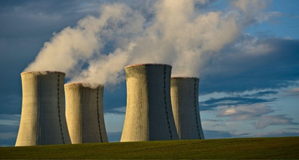
The Budget 2025-26 announcements suggest a potential bonanza for scientific research and development. The Finance Minister outlined ₹20,000 crore budgetary support for developing small modular reactors, with the goal of readying five such reactors by 2033. Another major initiative is the Research, Development, and Innovation fund, included in the Department of Science and Technology (DST)’s expected expenditure. This substantial allocation is expected to benefit start-ups and sunrise sectors, though these remain undefined. The expectation is that private sector entities will receive financial support to boost R&D, a domain historically dominated by government spending. India’s R&D landscape has long suffered from low private sector participation. While government funding has driven most scientific advancements, private investment in research has remained inadequate. Currently, private sector R&D contribution is only 36%; overall R&D spending in India was 0.64% of GDP in 2020, the lowest since 1995. Over the last five years, business enterprises have accounted for around 40% of government R&D expenditure. Public sector R&D units allocated only 0.30% of their sales turnover to research, compared to 1.46% by the private sector in 2020-21, according to DST estimates.
The government’s ₹20,000 crore infusion hikes the DST’s total budgetary allocation to around ₹28,000 crore, over three times last year’s allocation and seven times the actual expenditure in 2023-24. These figures are encouraging, but a key concern is whether such massive investments can be effectively absorbed. Despite India’s strengths in technology-driven sectors such as fuel, metallurgy, pharmaceuticals, textiles, IT, and biotechnology, returns from core R&D and intellectual property generation are still meagre. Though the government has launched ambitious missions in quantum computing, artificial intelligence, and other cutting-edge technologies, the supporting infrastructure remains inadequate. India still lacks the essential building blocks, chipsets, semiconductor fabs, a skilled engineering workforce, and a strong innovation ecosystem, to fully capitalise on these investments. Without these, the lofty targets set for R&D growth risk falling short. The government must present a clear road map on how private sector entities can access these funds and what tangible benefits the public can expect. Increased funding alone will not guarantee success unless structural bottlenecks are addressed. To truly transform India into a research powerhouse, the focus must shift to strengthening foundational infrastructure, incentivising private innovation, and ensuring long-term, sustainable engagement from industry leaders.
Meaning of the word:
Word
Meaning
Synonyms
Antonyms
Substantial
“Substantial” means large in amount, size, or importance. It can also mean strong, solid, or significant.
Significant Considerable Massive Extensive
Insignificant Minor Negligible Small
Ambitious
“Ambitious” means having a strong desire to achieve success, power, or a goal. It can also describe something that requires a lot of effort and determination.
Title: A tough call: On the RBI MPC’s first policy review of 2025
The Reserve Bank of India’s Monetary Policy Committee (MPC) will conclude its first policy review of 2025 on Friday (February 7, 2025), in significantly different circumstances from its December 2024 meet. For one, the key personnel have changed. The RBI has a new Governor, with former Revenue Secretary Sanjay Malhotra replacing Shaktikanta Das soon after the last review. Deputy Governor Michael Patra, an MPC member who was in charge of monetary policy, also retired last month. With the Centre yet to name his successor, navigating this review is going to be a tad tricky for the new central bank boss, with another deputy holding additional charge of monetary policy. Second, the rupee is in a free fall of sorts. After hitting 85 to the U.S. dollar on December 19, 2024, it slipped to 86 on January 13, 2025 and crossed 87 on February 3, partly due to the third factor at work. The strengthening dollar is driven by U.S. President Donald Trump’s overdrive to ‘Make America Great Again’ with higher tariffs on major trade partners, and other disruptive economic plans such as exiting global tax accords, shutting aid flows, et al.
The Reserve Bank of India’s Monetary Policy Committee (MPC) will conclude its first policy review of 2025 on Friday (February 7, 2025), in significantly different circumstances from its December 2024 meet. For one, the key personnel have changed. The RBI has a new Governor, with former Revenue Secretary Sanjay Malhotra replacing Shaktikanta Das soon after the last review. Deputy Governor Michael Patra, an MPC member who was in charge of monetary policy, also retired last month. With the Centre yet to name his successor, navigating this review is going to be a tad tricky for the new central bank boss, with another deputy holding additional charge of monetary policy. Second, the rupee is in a free fall of sorts. After hitting 85 to the U.S. dollar on December 19, 2024, it slipped to 86 on January 13, 2025 and crossed 87 on February 3, partly due to the third factor at work. The strengthening dollar is driven by U.S. President Donald Trump’s overdrive to ‘Make America Great Again’ with higher tariffs on major trade partners, and other disruptive economic plans such as exiting global tax accords, shutting aid flows, et al.
One thing has not changed — the clamour for an interest rate cut from industry and government honchos. In December, this noise was heightened after a sharp growth blip in the July-September quarter when GDP grew just 5.4%. Now, with 2024-25 GDP growth downgraded to just 6.4%, and the no marked uptick in economic metrics in the December-ending quarter, growth worries remain entrenched. In the interim, there has been some back and forth between North Block and Mint Street on the factors responsible for stumbling economic activity. The Finance Ministry sought to lay some of the blame for an urban demand slump on tight monetary policy. RBI officials, in the central bank’s January bulletin, said the “one way” to spark a growth rebound and a virtuous cycle of fresh private investments, is to boost consumption through higher disposable incomes, especially for the urban middle class that has been pining for relief from food inflation. With the Budget delivering on this front with income tax cuts, the ball is back in the RBI’s court. Inflation has been over 5% in the last five months, but may have eased closer to the RBI’s 4% target in January. But a rate cut could also hurt the rupee further, and spur higher imported inflation. It is an unenviable situation for the new RBI chief to be in; he might be tempted to take a cue from Mr. Das who had surprised markets with a rate cut in the first review under his watch in 2019, reversing his predecessor’s stance.
Meaning of the word:
Word
Meaning
Synonyms
Antonyms
Disruptive
“Disruptive” means causing disturbance or interruption, often in a way that changes the usual order of things.
Disturbing Troublesome Unsettling Revolutionary
Calm Peaceful Constructive Harmonious
Honchos
“Honchos” is an informal term meaning leaders, bosses, or people in charge of an organization or group.
Bosses Leaders Chiefs Executives
Subordinates Followers Employees Workers
Virtuous
“Virtuous” means having or showing high moral standards, righteousness, or goodness. It describes a person or action that aligns with ethical and moral principles.
Title: Power and prestige: On the Delhi Assembly elections 2025
Delhi is not much more than a Union Territory with limited powers for its legislature and government. The division of powers between the Lieutenant Governor and the provincial government has been a matter of perennial debate, and has curtailed the role of the latter. Yet, the Delhi Assembly elections are no less prestigious than that of any other State. Hosting the capital city and a humongous population that has burgeoned significantly, as the National Capital Region remains a magnet for employment, commerce and livelihoods, Delhi is a melting pot. Increasingly, class and welfare issues have become salient in Delhi’s elections even as identity issues have become less determinant of political fortunes. Delhi has urbanised dramatically, with some of India’s highest net worth families in posh neighbourhoods, living cheek by jowl alongside slums housing the working class and the urban poor. There is a large middle class no longer just employed in the massive government apparatus in the capital city. The metropolis is also host to small businesses, factories and services employing the many migrants from the hinterlands of north India. Civic concerns abound in each of these segments, making the Delhi elections unique. The three main political parties, AAP, the BJP and the Congress, must address these concerns in their campaigns and cannot focus on just identity and patronage politics.
As Delhi gets to vote today, it will be known whether the pattern of voting in recent election cycles, for the BJP at the Centre and favouring AAP in the Assembly will remain. AAP has managed to successfully get the support of a coalition of middle and lower class voters through its welfarist measures and by fostering an image of being a crusader for clean governance, helping it rule the roost in the past two elections. This time, however, its anti-corruption plank and image have taken a beating after its key leaders, Arvind Kejriwal and Manish Sisodia, were arrested for their roles in the liquor policy case. “Stand-in” Chief Minister Atishi has sought to reorient the party’s image even as it has doubled down on its welfarist message with a slew of sops targeting its core support base. The BJP has had to focus on emphasising its own welfarism in response while the Congress has tried hard to regain its lost base. Yet, the campaigns have been full of vituperation and mudslinging with little by way of a clear position on how to tackle the core issues — the air pollution in particular. As the dust clears, the electorate will have to choose candidates who are able to rise above narrow mindedness and cater to the aspirations of residents of what could well be India’s most populous city today.
Meaning of the word:
Word
Meaning
Synonyms
Antonyms
Perennial
Definitions of perennial. adjective. lasting an indefinitely long time; suggesting self-renewal
Everlasting, Enduring, Persistent, Continuous
Temporary, Ephemeral, Momentary, Short-lived
Burgeoned
Burgeoned(verb – past tense of burgeon) means to grow rapidly, expand, or develop quickly.
Title: First resort: On Donald Trump’s mass deportation drive
Donald Trump’s mass deportation drive hit its first hurdle on Sunday (January 26, 2025) when Colombian President Gustavo Petro refused permission to two United States military planes carrying migrants to land. A furious Mr. Trump announced that the U.S. would impose a 25% tariff on all Colombian goods, which would be raised to 50%. The U.S. also threatened to impose banking and financial sanctions and issue travel bans on Colombian officials and associates. Mr. Petro, a former guerrilla, responded in kind by saying Colombia would also impose tariffs up to 50% on American goods and refused to “shake hands with white slaveholders”. But Bogota, under pressure, eventually accepted to take back the migrants “with dignity and respect”. A trade war would have been bad news for both countries whose bilateral trade stood at $53.5 billion in 2022, with a $4 billion surplus for the U.S. High tariffs would have been a body blow for Colombia, as the U.S. is its largest trading partner. With tariffs and financial and political sanctions, America could cripple Colombia’s economy and destabilise its polity at a time when its fight with guerrillas is escalating after a lull. Unsurprisingly, Mr. Petro backtracked and agreed to accept what the White House said was “all its terms”.
Colombia and other South American countries have been taking undocumented migrants back from the U.S. in recent years. In January, there were 90 deportation flights from the U.S. to its southern neighbours, eight of which landed in Colombia. But what turned a regular exercise into a controversy was the handling of the deportation by the Trump administration — the use of mostly military planes, which angered the Colombians. Mr. Petro also raised concerns about the way migrants were treated by the U.S. Earlier, Brazil had also raised complaints of “degrading treatment” of its deported citizens. They were handcuffed, and some of them were not given water or allowed to use the washroom during the flight, according to Brazilian officials. But Mr. Trump does not seem to care. He wanted to make an example of Colombia so that other neighbours will not challenge his handling of the mass deportation. He may have forced Colombia to backtrack for now, using America’s economic muscle, but this kind of coercion could backfire in the long run in a region where America has always tried to maintain its geopolitical hegemony. And the inhumane conditions in which hundreds of migrants are being deported everyday is a blot on America’s tall claims of protecting human rights. A better way of handling this crisis is through diplomacy. Instead of imposing his will on other countries through threats of tariffs and sanctions, Mr. Trump could use the diplomatic channel, seek consensus and then implement his policy in a much more cordial way. But for Mr. Trump, alas, coercion is the first resort.
Meaning of the word:
Word
Meaning
Synonyms
Antonyms
Hurdle
Something that makes progress or achievement more difficult; a challenge or problem to overcome.
Obstacle Barrier Difficulty Impediment
Advantage Aid Support Assistance
Destabilise
Destabilize means to make something unstable or less steady. It refers to actions or events that weaken the stability of a system, structure, organization, or situation, often causing chaos or disruption.
Unsettle Disrupt Weaken Sabotage
Stabilize Strengthen Secure Fortify
Deportation
Deportation refers to the act of formally removing a person from a country, typically because they have violated immigration laws, committed a crime, or are considered a threat to public safety.
Title: India with Indonesia: on ancient ties to a new phase
Indonesian President Prabowo Subianto’s visit to India, as chief guest at the Republic Day parade, was replete with the symbolism of historically important ties between the two countries, albeit short on concrete outcomes. India and Indonesia’s ancient ties, that rest on trade and travel to the spread of an adapted form of Javanese Hinduism, as well as the use of Vedic scriptures and Sanskrit works, have given the two countries a formidable engagement. In the previous century, it was their solidarity against imperialism, which led to independent India’s support to Indonesian leaders fighting Dutch colonialism, with Prime Minister Jawaharlal Nehru banning Dutch overflights and sending Indian planes to evacuate the Indonesian Prime Minister and Vice President — in an article in The Hindu on January 5, 1950, Indonesia’s first President, Sukarno, wrote about Indonesia’s gratitude. Next, India and Indonesia were united by their aversion to great power politics. They supported the creation of the non-aligned movement (NAM), beginning with the Bandung Conference. Ties were also forged by their innate similarities as two Asian nations that dominated South Asia and South-East Asia by size. Both were countries where large religious majorities practised tolerance towards sizable minorities, as well as economic powerhouses committed to an equitable development of their large populations. In the recent past, ties have been spurred by common concerns over western sanctions after the start of the Ukraine war, U.S.-China rivalry and China’s aggression in the Indo-Pacific, worries over “food, fertilizer and fuel” security and a weakening multilateral order. Their efforts to forge consensus at the G-20 summits in Bali (2022) and Delhi (2023), will now be put to further use as Indonesia has joined BRICS. In that sense, Mr. Subianto’s visit, in the 75th year of bilateral ties, is a full circle: from Bandung to an enlarged BRICS.
Given the historical, strategic and geopolitical importance of relations, the announcements were more modest than expected. There were five MoUs in health, traditional medicine, maritime security, digital development and cultural cooperation and the joint statement referred to strengthening defence cooperation. However, no specific progress was announced on the sale of India’s Brahmos missile, or on the Sabang port project and Aceh-Andamans connectivity initiatives. The joint statement was also pointedly non-committal on their world view, despite their similar positions on recent geopolitical conflicts, and initiatives to engage the Trump administration and China. India’s Republic Day invitation and Mr. Subianto’s visit, fresh in his presidential term, are, however, an important statement for both capitals to make. There is the impetus for the two Asian powers to forge the next phase in their ties.
Meaning of the word:
Word
Meaning
Synonyms
Antonyms
Replete
Replete means full, often in a satisfying way.
FullFilled Abundant Sated
Empty Devoid Lacking Deficient
Formidable
The word “formidable” refers to something or someone that inspires fear, admiration, or respect due to being impressively large, powerful, intense, or capable
Intimidating Daunting Imposing Fearsome
Weak Feeble Unimpressive Easy
Impetus
A driving force or stimulus that causes something to happen or progress
Title: WHO is right: On the U.S. leaving the World Health Organization
President Donald Trump’s decision to withdraw the United States from the World Health Organization (WHO), based on charges of bias, is stunningly short sighted, and deeply concerning to the global health community. Pundits are predicting that this move, if not withdrawn, or reconsidered, may well unleash the butterfly effect — a cascading set of unpredictable consequences arising from even the smallest of changes in a system. Soon after his inauguration, Mr. Trump wasted no time in announcing the beginning of the process of ending the U.S.’s membership of WHO. In language that smacked of petulance, Mr. Trump, as he signed his first batch of executive orders, declared: “The World Health [Organization] ripped us off.” The U.S. will now leave the United Nations health agency in 12 months’ time and stop all financial contributions to its work. He accused the organisation of mishandling the COVID-19 pandemic, and of being partisan towards China, though the U.S. contributed more to its coffers. The move has not been entirely unexpected: during his previous term as U.S. President, he relentlessly criticised WHO for acting slow and being “owned and controlled by China”; in 2020 he initiated a move to halt funding to WHO, though it was scuppered as his term came to an end.
Why is the withdrawal of the U.S. significant? For starters, Mr. Trump is right — the U.S., which is a founding member of WHO, is also its biggest financial backer, contributing around 18% of its overall funding. Withdrawal of these funds will seriously impact health programmes being implemented across the world, including interventions for HIV/AIDS, tuberculosis and the eradication of certain infectious diseases. WHO is also involved in ensuring equity of access to life-saving drugs for people across the world, building stronger health systems, detecting and preventing disease outbreaks. If Mr. Trump could set his petulance aside, it would be clear that global health does not operate in silos, and neither a stern countenance nor physical boundaries can keep pathogens out of one’s own geography. If any lessons have been learned at all from the COVID-19 pandemic, it is that no one is safe until everyone is safe, and that collaboration among nations, and open sharing of data and technology are essential to tackle pandemics. WHO has reached out to the U.S., hoping that it will reconsider its decision and engage once again with it. As fantastic as it may sound, medicine is no stranger to miracles of science, and the health community hopes one more will restore the U.S. back to WHO’s fold.
Meaning of the word:
Word
Meaning
Synonyms
Antonyms
Stunningly
Stunningly means in a way that is extremely impressive, beautiful, or surprising, often to the point of awe or amazement.
Amazingly Incredibly Beautifully Remarkably
Ordinarily Unimpressively Plainly Dully
Unleash
Unleash means to release something that has been held back, restrained, or controlled, allowing it to be expressed or acted upon freely. It often implies a sudden or powerful release of energy, emotions, or forces.
Release Let loose Liberate Unchain
Restrain Suppress Confine Hold back
Petulance
Petulance refers to a quality of being easily irritated, annoyed, or showing childish sulkiness, especially over trivial matters.
Title: An exit of bluster: On the U.S. and the climate change fight
President Donald Trump has fired his howitzers at multilateralism by signing into decree the United States’ withdrawal from the 2015 Paris Agreement. This sets records that are in a class of their own. The U.S. is the only country to have withdrawn thrice from a climate agreement — beginning with George W. Bush’s withdrawal, in 2001, from the Kyoto Protocol. Mr. Trump, of course, sets a new low by being the only President to withdraw from a climate agreement twice. In the run-up to the decree, there is a pall of gloom in the climate world over what the U.S.’s latest exit might mean, particularly when the globe has finished its first full calendar year above the 1.5° Celsius mark.
The U.S. is the second largest emitterof greenhouse gases. By virtue of being the most powerful economy, it has arrogated to itself the mantle of ‘global leadership’ in addressing climate change. But now that the leader has had the spottiest track record of keeping to the terms of a significant agreement — one, whose rule book the U.S. played a major role in compiling — perhaps it is time for the rest of the world to reassess America’s role in addressing climate change. Under both Republican and Democratic governments, U.S. domestic policy on greenhouse gas emissions has been subservient to business interests. Oil and gas production increased under the Biden administration. The U.S. remains the world’s largest crude oil producer, achieving record production in 2023. The country is also the world’s largest producer of gas and, in 2022, became the world’s largest exporter for liquified natural gas (LNG). Mr. Trump has only committed to add on to this already substantial base. The U.S. is critically short of achieving its target of greenhouse gas emissions. As of 2022, the U.S. has achieved only about one-third of its 2030 emissions reduction target. In the last weeks of his Presidency, Mr. Biden increased the U.S.’s emission-reduction commitments to 61%-66% of 2005 levels by 2035. This too, calculations suggest, will be insufficient to meet a 1.5° C target. Private capital propping up renewable energy has grown exponentially since Mr. Bush, and is now too substantial for Mr. Trump and his financial backers to ignore. While it will take a year for the exit to be formalised, it is likely that the U.S.’s behind-the-scenes engagement — especially at the next climate meet (COP 30) in Brazil in November 2025 — will continue. The politics of Mr. Trump suggests that he is not averse to running with the hare and hunting with the hounds.
Meaning of the word:
Word
Meaning
Synonyms
Antonyms
Engagement
Refers to actively being involved in an activity, event, or interaction.
Participation Interaction Connection Involvement
Disengagement Detachment Withdrawal Indifference
Arrogated
Arrogated means to take or claim something without justification or right. It is often used in contexts where someone assumes authority, power, or privileges that they are not entitled to.
Title: The price of success: on Kerala’s demographic transition
There can be too much of a good thing, after all. The demographic transition that Kerala has heralded in the country has now delivered a sucker punch to the State, with its maternal mortality ratio climbing. Kerala led the shift to the phase of low fertility and low mortality in India, and got further, first. As the fertility level dropped, the number of births came down, thereby skewering the best maternal mortality rate (calculated as the number of deaths for every 1,00,000 live births) of the country, in Kerala. The State led the demographic transition by achieving the total replacement level fertility rate in 1987-88, and the other southern States followed in the mid-2000s. A TFR of 2.1 is considered the replacement level, indicating the number of children a woman must have in order for the society to maintain its size across generations. Below this level the population size falls. In fact, this has led to moments of anxiety, politically for the southern States that feel that with their sub-replacement level fertility rates, they will be at a disadvantage when it comes to the proposed delimitation exercise of Lok Sabha seats based on population figures. In theory, demographic transition occurs when a historical shift happens from high birth rates and high death rates to low birth and death rates, aided by advancements in education, economic development and technology. Such a transition is said to have occurred in most parts of the world, allowing the world to stabilise from the unprecedented growth forecast by Malthus, and then move on to reduce population growth, and birth rates. The theory posits four stages – moving from stable population to a rapid population growth, levelling out and finally, a decline.
Nations that have reached there, including South Korea, are struggling to revive population growth, and even incentivising childbearing does not seem to have the intended effect, as the fertility rate continues to drop. While it is impossible to stop a demographic transition in its tracks, governments must prepare for the trail of consequences that it will bring in its wake. There will be far-reaching economic and societal consequences as the proportion of the working-age population comes down and the aged population increases, placing an inordinate burden on the resources of nations. It is, therefore, important to strengthen public finances and social support systems in preparation for a growing elderly population. Health-care financing will have to be improved, and policies that support equal participation in household chores must be prioritised.
Meaning of the word:
Word
Meaning
Synonyms
Antonyms
Delimitation
Delimitation refers to the process of fixing or redefining boundaries, limits, or dividing lines. It is often used in a formal or legal context to specify or clarify the extent or scope of a particular area, jurisdiction, or authority.
DemarcationDefinitionBorderingPartitioning
UnificationAmalgamationIntegrationConsolidation
Incentivising
Incentivising refers to the act of providing motivation, encouragement, or rewards to persuade someone to take a specific action, adopt a behavior, or achieve a goal. It involves creating incentives that make a particular course of action more appealing or desirable.
Title: Capex quandary: on the economic data, policy
Since the COVID-19 pandemic, the Centre has been using public capital expenditure on infrastructure to pump prime the economic recovery. The mantra has been that infrastructure building will stoke demand for products such as cement and steel, generate jobs in construction, and together trigger a strong multiplier effect on the economy, eventually creating conducive conditions for private investors to plan greenfield and brownfield projects. In Budget 2024-25, Finance Minister Nirmala Sitharaman said the government will endeavour to maintain strong fiscal support for infrastructure over the next five years, in conjunction with imperatives of other priorities and fiscal consolidation. She announced ₹11.11 lakh crore of capex spends this year, amounting to 3.4% of GDP. That goal is unlikely to be attained partly due to spending curbs in the poll-affected first quarter. While industry has urged the Centre to continue the capex push in 2025-26 as well, it has failed to respond to the government’s constant nudges and persuasions to ramp up their own operations.
Data show that two of this year’s first three quarters have recorded a notable sequential decline in private investment plans, particularly by domestic industry. In Q1, private capex plans dropped to multi-year lows, and though the July-September quarter recorded a recovery in investment intentions, that uptick has dissipated in Q3. Projects Today data suggest domestic investments’ value dropped 1.4% from Q2, while new projects’ value dropped over 22% from a year ago as per the Centre for Monitoring Indian Economy. There are many factors playing on corporate risk-taking capacity — weak Q2 results, global uncertainties, spiking costs and waning demand in more lucrative urban markets. Going by current indications, including the early bird Q3 results, demand has not really improved, nor is there ostensible pressure on factory capacities to warrant expansions. For a sustainable breakout from this slowdown, private capital should take the driving seat because there are limits to enhancing public capex while maintaining fiscal rectitude and providing for myriad welfare schemes. The government must accept that exhortations to industry are unlikely to spur fresh outlays, and incentives focused on themes such as import-substitution are insufficient. Not one new rupee will be deployed if a project is unviable and demand flaky. Policy focus should remain firmly on ensuring the ground is ripe to instigate investments and easing the realisation of such plans into billowing chimneys and new jobs. For that, boosting incomes and consumption is critical as is expediting macro- and micro-level reforms. That an economic policy framework outlining next generation reforms, promised in the Budget, has not been heard of since then, is not very comforting.
Meaning of the word:
Word
Meaning
Synonyms
Antonyms
Endeavour
An attempt or effort to achieve a goal or accomplish something.
Attempt Effort Pursuit Strive
Idleness Neglect Inaction Indifference
Imperatives
An essential or urgent thing; something that is of utmost importance or necessity.
Necessity Requirement Obligation Command
Option Choice Triviality Insignificance
Exhortations
A strong encouragement, urging, or appeal to persuade someone to do something.
We at Edusprint Academy are committed to bringing you the most relevant and updated 18th January 2025 current affairs curated from trusted and official sources. These updates are designed to keep you ahead in your exam preparation journey.
Our comprehensive Current Affairs of 18th January 2025 coverage aims to enhance your knowledge and boost your scores in Banking, Insurance, SSC, Railways, UPSC, and all State Government Exams. Explore our Current Affairs tailored to simplify your exam preparation
Government of India Reconstitutes High-Powered Atomic Energy Commission (AEC)
In January 2025, the Government of India (GOI) has reconstituted the high-powered Atomic Energy Commission (AEC) to include new members Cabinet Secretary T.V. Somanathan and Expenditure Secretary Manoj Govil as ex-officio member of AEC. The newly reconstituted AEC also included Pankaj Mishra, who took over charge of member (Finance) for AEC in 2024
Key Highlights
Reconstitution of AEC: The Government of India (GoI) has reconstituted the Atomic Energy Commission (AEC), appointing new members to strengthen its leadership.
Pankaj Mishra has taken over as Member (Finance) for AEC in 2024.
Leadership:
Chairman: Ajith Kumar Mohanty, Secretary of the Department of Atomic Energy (DAE), remains the chairman of the reconstituted AEC.
Ex-Officio Members:
Ajit Kumar Doval – National Security Advisor (NSA) of India
Dr. Pramod Kumar Mishra – Principal Secretary to Prime Minister
Vikram Misri – Foreign Secretary
Vivek Bhasin – Director, Bhabha Atomic Research Centre (BARC), Mumbai, Maharashtra
Other Members:
Dr. M.R. Srinivasan – Former Chairman of AEC
Professor P. Rama Rao – Former Secretary, Department of Science and Technology (DoS&T), Ministry of Science and Technology (MoS&T)
Dr. Anil Kakodkar – Former Chairman of AEC, Chairman of Rajiv Gandhi Science & Technology, Mumbai
Dr. Ravi B. Grover – Former Principal Advisor, DAE
Dr. K. Kasturirangan – Former Chairman of the Space Commission
Appointment Process: The appointment of other members of the AEC is made each calendar year based on recommendations from the Chairman and approved by the Prime Minister of India.
About Atomic Energy Commission (AEC)
Establishment: The AEC was originally set up in August 1948 as part of the Department of Scientific Research. The Department of Atomic Energy (DAE) was formed on August 3, 1954, under the direct charge of the Prime Minister.
Resolution: In March 1958, the GoI introduced a resolution to establish AEC under the administrative control of the DAE.
Primary Responsibility: The AEC is tasked with formulating and implementing policies related to atomic energy in India.
Chairman: Ajith Kumar Mohanty
Headquarters: Mumbai, Maharashtra
India’s Digital Leap: NBM 2.0 & Sanchar Saathi App
On January 2025, the Department of Telecommunications (DoT) unveiled two significant initiatives aimed at enhancing India’s digital connectivity and security: the National Broadband Mission (NBM) 2.0 and the Sanchar Saathi mobile application.
National Broadband Mission 2.0 (NBM 2.0)
Objective: To enhance digital connectivity across India.
Targets:
Connect the remaining 1.7 lakh villages in India.
Ensure 60 out of every 100 rural households have broadband access.
Achieve a minimum broadband download speed of 100 Mbps for fixed connections.
Impact: Bridges the digital divide and promotes inclusive growth.
2. Sanchar Saathi Mobile Application
Purpose: Empowers citizens to secure telecom resources and combat fraud.
Features:
Report Suspected Fraud Communications (SFC) like calls and SMS.
Manage all mobile connections linked to a user’s name.
Block lost or stolen devices, and trace or recover them.
Verify the authenticity of mobile handsets.
Availability: Supports Android and iOS platforms, enhancing telecom security.
3. Intra-Circle Roaming (ICR) at DBN-Funded 4G Sites
Functionality: Enables 4G access across telecom providers (BSNL, Airtel, and Reliance) via a single DBN-funded tower.
Benefit: Enhances connectivity and offers users freedom of choice.
These initiatives collectively aim to strengthen India’s digital infrastructure and ensure secure, widespread access to connectivity.
Govt Launches App to Boost Battlefield Tourism
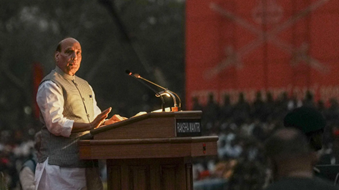
In a significant initiative to connect civilians with the valorous history of India’s armed forces, the government has launched the “Bharat Ranbhoomi Darshan” app and website on January 15, 2025, coinciding with Army Day celebrations in Pune, Maharashtra. Developed jointly by the Ministries of Defence, Tourism, and the Indian Army, the app allows civilians to visit key battlefield locations, including those of the 1962, 1971, and 1999 wars, and significant conflict zones like Siachen base camp and Galwan valley. This effort aims to transform border regions into tourist hubs, offering citizens a closer connection to India’s military history and its soldiers’ sacrifices.
Launch Details
App Name: Bharat Ranbhoomi Darshan
Launch Date: January 15, 2025 (Army Day)
Launched By: Defence Minister Rajnath Singh
Developed By: Ministries of Defence, Tourism, and the Indian Army
Launch Location: Pune, Maharashtra
Key Tourist Locations
1962 War Sites:
Rezang-La (Ladakh)
Kibithoo and Bum-La (Arunachal Pradesh)
1971 War Zones: Select locations to be detailed later.
1999 Kargil War: Kargil, Batalik, and Drass regions for trekking.
Other Notable Locations:
Siachen Base Camp (world’s highest battlefield)
Galwan Valley (2020 clash site)
Doklam (2017 standoff site)
Objective and Features
Purpose:
Promote tourism in border areas.
Foster national pride by connecting civilians with India’s military history.
Features:
App and website offer guides to plan trips.
Restricted areas open for controlled access.
Educational content to enhance understanding of India’s military achievements.
Four Pillars of the Initiative
Infrastructure: Building tourist-friendly amenities in remote areas.
Communication: Providing seamless access and real-time information.
Tourism: Transforming border regions into hubs for military heritage tours.
Education: Spreading awareness of India’s armed forces’ valor and sacrifices.
This initiative bridges the gap between civilians and the country’s military heritage while supporting the holistic development of border regions.
Lokpal of India Commemorates First Foundation Day
On January 16, 2025, the Lokpal of India celebrated its inaugural Foundation Day at the Manekshaw Centre in New Delhi, marking 11 years since its establishment on January 16, 2014, under the Lokpal and Lokayuktas Act, 2013.
Key Dignitaries Present
Chief Guest: Chief Justice of India, Justice Sanjiv Khanna.
Justice N. Santosh Hegde (Former Supreme Court Judge and Ex-Lokayukta of Karnataka).
Padma Bhushan awardee Anna Hazare (participated virtually).
Attorney General of India, R. Venkataramani.
Judges from the Supreme Court and High Courts, Lokayuktas, and officials from CAG, CBI, and CVC.
Chairperson’s Address (Justice A.M. Khanwilkar)
Focus Areas:
Simplifying complaint registration.
Using AI and advanced technologies for efficient data handling.
Recruiting experts in forensic accounting and cyber investigations.
Collaborating with CBI, CVC, and judiciary to combat corruption.
Vision: Evolve and adapt to the changing nature of corruption to enhance effectiveness.
Chief Justice’s Remarks
Highlighted the importance of Lokpal in:
Ensuring accountability and transparency in governance.
Upholding democratic principles and maintaining public trust.
Stressed the need for Lokpal’s independence, objectivity, and high performance.
Looking Ahead
The Lokpal is committed to a corruption-free India by:
Strengthening its processes through technological advancements.
Building public confidence in its mission.
The event reflected on past achievements and reaffirmed the Lokpal’s evolving role in combating corruption.
Economy news
PHDCCI Report ‘Economic Outlook 2025’: India to Become the 4th Largest Economy by 2026
According to New Delhi (Delhi)-based PHD Chamber of Commerce and Industry (PHDCCI)’s latest report titled ‘Economic Outlook 2025’, India is set to become the World’s 4th largest economy by 2026, surpassing Japan.
The report has further projected that India’s Gross Domestic Product (GDP) will grow at 6.8% in Financial Year 2024-25(FY25) and 7.7% in FY26.
This growth projection is mainly driven by strong macroeconomic fundamentals and policy reforms.
Key Highlights
Economic Growth Projections:
India’s Ranking: India is set to surpass Japan to become the 4th largest economy by 2026.
GDP Growth: Projected to grow at 6.8% in FY25 and 7.7% in FY26, driven by strong macroeconomic fundamentals and policy reforms.
Future Economy Size:
USD 7 trillion by 2030.
USD 10 trillion by 2034.
USD 34 trillion by 2047.
Exports Target: Expected to achieve USD 2 trillion exports by 2030.
Inflation and Economic Stability:
Inflation:
FY25: Projected at 4.5%.
FY26: Projected at 4%.
Consumer Price Index (CPI): Expected to decrease significantly to 2.5%-4% in the coming quarters.
Gross Fixed Capital Formation (GFCF): At 33.5% of GDP, indicating strong industrial growth and sustainable capacity expansion.
Taxation Suggestions Ahead of Union Budget FY26:
Peak income tax rate of 30% should apply to individuals earning above Rs 40 lakh (currently applies to income above Rs 15 lakh).
Reduce tax rate on proprietorships, partnerships, and LLPs from 33% to 25%.
5-Pronged Growth Strategy by PHDCCI:
Increased capital expenditure.
Enhancing the ease of doing business.
Reducing the cost of doing business.
Improving labour-intensive manufacturing.
Promoting a resilient export ecosystem.
About PHDCCI
Type: Non-governmental organization promoting industry, trade, and entrepreneurship in India.
President: Hemant Jain
Headquarters: New Delhi, Delhi
Established: 1905
India’s FY25 Growth Forecast Cut to 6.5% by IMF
The International Monetary Fund (IMF) has revised India’s economic growth forecast for FY25, reducing it to 6.5%, down from earlier projections. Despite this downward revision, the IMF retained a stable growth outlook for FY26. The adjustment reflects current challenges, including global economic uncertainties and domestic inflationary pressures, which may impact India’s growth trajectory. This revision comes in the context of the country’s ongoing recovery post-pandemic, with the IMF also citing inflation, investment slowdown, and geopolitical risks as key factors that could affect economic momentum.
Key Updates
Growth Forecast for FY25: Revised down to 6.5%, citing global uncertainties and inflationary pressures.
Global Challenges: Uncertainty in the global economy and geopolitical tensions.
Domestic Issues: Inflation and moderating investment rates affecting economic momentum.
India’s Economic Landscape
Previous Optimism: Earlier forecasts reflected stronger growth driven by consumption and post-pandemic recovery.
Current Scenario: The revision underscores a cautious approach due to financial turbulence and slower investment growth.
Future Risks: Inflation, geopolitical events, and global economic challenges remain potential disruptors to growth.
Summary: Despite a downward revision for FY25, India’s economic growth outlook for FY26 remains stable, reflecting resilience in the face of global and domestic challenges. The IMF highlights the need for vigilance and proactive measures to sustain economic momentum.
Submit news
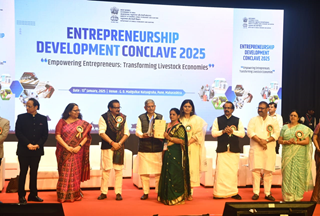
Entrepreneurship Development Conclave Inaugurated in Pune by Union Minister Rajiv Ranjan Singh
In January 2025, Union Minister Rajiv Ranjan Singh alias Lalan Singh, Ministry of Fisheries Animal Husbandry and Dairying (MoFAHD) and Ministry of Panchayati Raj(MoPR), inaugurate the ‘Entrepreneurship Development Conclave’ at G.D. Madgulkar Natyagruha in Pune, Maharashtra.
Launch of Projects: 40 Projects were launched by Union Minister Rajiv Ranjan Singh:
20 Projects under the National Livestock Mission (NLM)
20 Projects under the Animal Husbandry Infrastructure Development Fund (AHIDF)
Total Outlay: Rs 545.04 crores
New Launches: The NLM-Entrepreneurship Development Programme (EDP) Dashboard was introduced, offering an organized summary of project details to the public.
Ministry Overview
Union Minister: Rajiv Ranjan Singh (Constituency – Munger, Bihar)
Ministers of State (MOS):
Satya Pal Singh Baghel (Constituency – Agra, Uttar Pradesh)
George Kurian (Rajya Sabha – Madhya Pradesh)
Conclusion: The Entrepreneurship Development Conclave is a significant step towards empowering entrepreneurs in the livestock sector, with the inauguration of new projects and the launch of an online platform aimed at streamlining project information and fostering innovation in the industry.
Agreement news
MoD Signs Rs. 2,960 Crore Contract with Bharat Dynamics Limited for MRSAM Supply
On January , 2025, the Ministry of Defence (MoD) signed a Rs. 2,960 crore contract with Hyderabad (Telangana) based Bharat Dynamics Limited (BDL) for the supply of Medium- Range Surface-to-Air Missiles (MRSAM) for the Indian Navy (IN) in New Delhi(Delhi).
The contract was signed by MoD and BDL officials in the presence of Rajesh Kumar Singh, Defence Secretary, MoD.
Key Highlights
Contract Details:
Value: Rs. 2,960 crore
Supplier: Bharat Dynamics Limited (BDL)
Recipient: Indian Navy (IN)
The contract was signed in the presence of Rajesh Kumar Singh, Defence Secretary, MoD.
MRSAM System:
The Medium-Range Surface-to-Air Missile (MRSAM) system is jointly developed by the Defence Research and Development Organisation (DRDO) and Israel Aerospace Industries (IAI).
It involves collaboration with Indian industries, including public and private sectors, and Micro, Small, and Medium Enterprises (MSMEs).
Aatmanirbhar Bharat: The supply of missiles will be under the ‘Buy (Indian)’ category, with indigenous components, promoting self-reliance under the Aatmanirbhar Bharat initiative.
Deployment: MRSAM will be installed on various Indian Naval Ships (INS) and integrated into future naval platforms.
Operational History:
The Indian Army (IA) established its first MRSAM regiment in 2023 in the Eastern Sector.
In December 2020, DRDO successfully launched the Army Version of MRSAM.
About Bharat Dynamics Limited (BDL)
Type: Miniratna I Central Public Sector Enterprise (CPSE)
Founded: 1970
Headquarters: Hyderabad, Telangana
Chairman & Managing Director: Commodore A Madhavarao (Retd.)
Role: BDL manufactures guided missile systems and allied equipment for the Indian Armed Forces (IAF).
Banking news
RBI Introduces New Measures to Promote Use of Indian Rupee (INR) in International Trade
On January 16, 2025, the Reserve Bank of India (RBI) introduced new measures under the Foreign Exchange Management Act (FEMA) 1999, to encourage the use of the Indian Rupee (INR) and other local currencies for international trade. These changes are the result of a detailed review of FEMA regulations 1999, conducted in collaboration with the Government of India (GoI).
Key Highlights
Objective:
The Reserve Bank of India (RBI) introduced new measures under the Foreign Exchange Management Act (FEMA) 1999 to encourage the use of the Indian Rupee (INR)and other local currencies for international trade.
These changes are a result of a comprehensive review of FEMA regulations, conducted in collaboration with the Government of India (GoI).
New Changes:
Overseas INR Accounts: Overseas branches of Indian banks can now open INR accounts for individuals or entities outside India. These accounts can be used for permissible current and capital account transactions with Indian residents.
Settling Transactions with Non-Residents: Non-residents can settle legitimate transactions with other non-residents using balances in their repatriable INR accounts, such as Special Non-Resident Rupee Accounts (SNRR) and Special Rupee Vostro Accounts (SRVA).
Investment Flexibility: The balances in these accounts can be used for investments, including Foreign Direct Investment (FDI) in non-debt instruments.
Indian Exporters: Indian exporters now have the flexibility to open foreign currency accounts abroad, which can be used to receive export payments and pay for imports, making trade settlements easier.
Agreements to Promote Local Currency Trade:
The RBI has signed Memoranda of Understanding (MoUs) with the central banks of UAE, Indonesia, and the Maldives to promote trade in local currencies between India and these countries.
RBI’s Record Forex Intervention in November 2024
In November 2024, the Reserve Bank of India (RBI) sold a record $20.2 billion in the foreign exchange market to stabilize the rupee amid significant foreign portfolio investor (FPI) outflows. This intervention increased the RBI’s net short position in the forward market to $58.9 billion by the end of the month, up from $49.18 billion in October.
Key Highlights
Record Sale of USD:
The Reserve Bank of India (RBI) sold $20.2 billion in the foreign exchange market to stabilize the rupee amidst heavy foreign portfolio investor (FPI) outflows.
This increased the net short position in the forward marketto $58.9 billion, up from $49.18 billion in October 2024.
Spot Market Transactions:
RBI purchased $30.8 billion and sold $51.1 billion, signaling aggressive intervention.
Despite these efforts, the rupee depreciated by 0.48% against the US dollar during November.
FPI Outflows and Dollar Strength:
Foreign investors net sold $2.1 billion worth of Indian equities.
The US dollar strengthened due to the Federal Reserve’s limited rate cuts, with only a 25 basis point reduction in early December.
Comparative Analysis
Shift in Strategy: In the first half of FY 2024-25, RBI was a net buyer of $8.52 billion in the spot market. By November, it became a net seller, offloading $20.9 billion.
Forward Market Deficit: The forward market shortfall of $58.9 billion reflects RBI’s approach to managing rupee volatility amid global uncertainties.
RBI:
Founded: 1 April 1935, Kolkata
Headquarters: Mumbai
Governor: Sanjay Malhotra
Science and tech news
First Black-eyed Pea Sprouts in Space by ISRO
The Indian Space Research Organisation (ISRO) achieved a significant milestone in space agriculture by successfully germinating black-eyed pea (lobia) seeds aboard its Compact Research Module for Orbital Plant Studies (CROPS). This breakthrough underscores the potential for cultivating sustainable food sources for long-duration space missions, essential for meeting the nutritional and psychological needs of astronauts during extended periods in space.
Key Highlights
CROPS Initiative:
Objective: To explore plant growth in space and simulate Earth-like conditions, excluding gravity.
The CROPS-1 Mission achieved successful germination of black-eyed pea (lobia) seeds aboard the spacecraft, marking a significant milestone in space agriculture.
Challenges of Space Agriculture:
Microgravity: Roots struggle to grow downward, and water clings to surfaces instead of reaching the roots.
Radiation: High levels of space radiation can damage DNA, hindering plant growth.
Temperature Fluctuations: Extreme temperature variations impact plant development.
Light Conditions: Limited sunlight can affect photosynthesis, especially in deep-space missions.
Methods of Cultivation in Space:
Hydroponics: Nutrients delivered through liquid solutions.
Aeroponics: Mist-based nutrient delivery, reducing water and fertilizer use.
Soil-like Media: Mimics Earth’s soil to provide a familiar growth environment.
CROPS-1 Technical Specifications
Mini Greenhouse Setup: The spacecraft featured soil-like media with porous clay pellets.
Atmospheric Controls: Earth-like conditions with 20-30°C temperature and 16-hour day/8-hour night light cycles.
Water Delivery: Precise moisture control through electric valves.
Germination Process
Water Injection: Water was injected into the medium after launch.
Growth Monitoring: Sensors tracked CO₂ and O₂ levels.
Results: Seeds sprouted on Day 4, and two leaves emerged by Day 5
Ideal Plants for Space Cultivation
Leafy Greens: Lettuce, spinach (quick-growing and nutrient-rich).
Legumes: Beans, peas (protein-rich and nitrogen-fixing).
Root Vegetables: Radishes, carrots (suitable for compact spaces).
Grains: Wheat, rice (essential for long-term sustenance).
ISRO:
Headquarters: Bengaluru
Founded: 15 August 1969
Founder: Vikram Sarabhai
Head: Incumbent V Narayanan
Appointment news
Justice Arun Mishra Appointed as Ombudsman and Ethics Officer of BCCI
Justice Arun Mishra, a former Supreme Court judge, has been appointed as the Ombudsman and Ethics Officer of the Board of Control for Cricket in India (BCCI). The announcement was made and marking another significant milestone in his illustrious career. Justice Mishra’s extensive legal expertise and leadership experience make him well-suited for the dual responsibilities of ensuring ethical practices and addressing disputes within the BCCI.
BCCI Elections and Appointments
Devajit Saikia was elected as the new Secretary of BCCI, replacing Jay Shah, who became the ICC Chairman.
Prabhtej Singh Bhatia was elected as the Treasurer of BCCI.
Saikia’s Background: He has previously served as BCCI Joint Secretary and Assam Cricket Association Secretary.
BCCI Updates
These appointments come ahead of India’s home series against England, which includes five T20Is and three ODIs.
The changes signal a refresh in Indian cricket governance, with an emphasis on strengthening the administrative framework.
BCCI:
President: Roger Binny
Headquarters: Mumbai
Founded: December 1928
Sports news
Djokovic Breaks Federer’s Record for Grand Slam Match Count
Novak Djokovic, one of tennis’ greatest players, added another milestone to his illustrious career on January 17, 2025, by breaking a tie with Roger Federer for the most Grand Slam matches played in tennis history. The Serbian tennis star achieved his 430th Grand Slam match during the second round of the Australian Open, where he won a challenging match against Portuguese qualifier Jaime Faria. This victory added to Djokovic’s growing list of records, highlighting his unparalleled success in tennis.
Key Highlights
New Record: Novak Djokovic broke the tie with Roger Federer for the most Grand Slam matches played in tennis history, with a total of 430 matches.
Match Victory: Djokovic defeated Jaime Faria (Portugal) in the second round of the 2025 Australian Open with a score of 6-1, 6-7 (4), 6-3, 6-2.
Career Grand Slam Record:
379 wins and 51 losses, with an .881 winning percentage.
Federer’s previous record: 429 matches, 369 wins, and 60 losses with a .860 winning percentage.
Djokovic’s Career Milestones
Most Grand Slam Singles Titles: Djokovic holds the record with 24 titles.
Most Weeks Ranked No. 1: Dominated the ATP rankings for the longest period.
Grand Slam Finals: Played in 37 finals, surpassing Federer’s record by 6 finals.
Upcoming Achievements
25th Grand Slam Title: Djokovic could set a new record if he wins another title.
Australian Open Titles: A potential 11th Australian Open title could match Margaret Court’s record.
Oldest Grand Slam Winner: Djokovic is on track to break Ken Rosewall’s record and become the oldest man to win a Grand Slam singles title.
100th Tour-Level Title: Djokovic is closing in on his 100th title, following behind Jimmy Connors (109) and Roger Federer (103).
Challenges at the Australian Open
Tough Matches: Djokovic faced young debutantes in his first two matches, both pushing him to four sets.
Against Nishesh Basavareddy (19, ranked 107th).
Against Jaime Faria (21, ranked 125th).
Adaptation: Despite the challenges, Djokovic maintained control, particularly in the third and fourth sets.